







Coffee Culture Shift: Why Starbucks Handwritten Cups Are Fading Away
Starbucks handwritten cups, once marked with names, smiley faces, or short blessings, are being replaced by uniformly printed label stickers. Customers miss the personal touch, while baristas face labor shortages and complaint risks. Order pickup now often relies on printed names or custom passwords rather than marker writing on the cup.
The shift tracks the chain's push toward standardized, faster service, in which every step is timed and scripted. Employees recall the earlier era as one of atmosphere, before sales targets for cards and food took priority. For coffee culture, the change trades a small daily ritual for consistency, and the debate over what said coffee means to regulars continues.
Once upon a time, while waiting for coffee after ordering at Starbucks, the handwritten name, smiley face, or a warm blessing on the cup was a small, everyday joy many people took for granted. Now, this personalized service is quietly disappearing, replaced by uniformly printed label stickers. From customers missing the exclusive feel of handwritten cups, to baristas facing the dual pressures of labor shortages and complaint risks, to the "Fei Kuai" service driving standardized processes, the era of Starbucks handwritten cups seems to have gone forever. This article reviews the rise and fall of handwritten cups, explores the struggle between efficiency and ritual behind it, and what this change means for coffee lovers and store operations.
▲
Click to follow | Daily specialty coffee culture magazine Coffee Workshop
"Hello, I'm Left Azure Dragon Right White Tiger, is my coffee ready?"
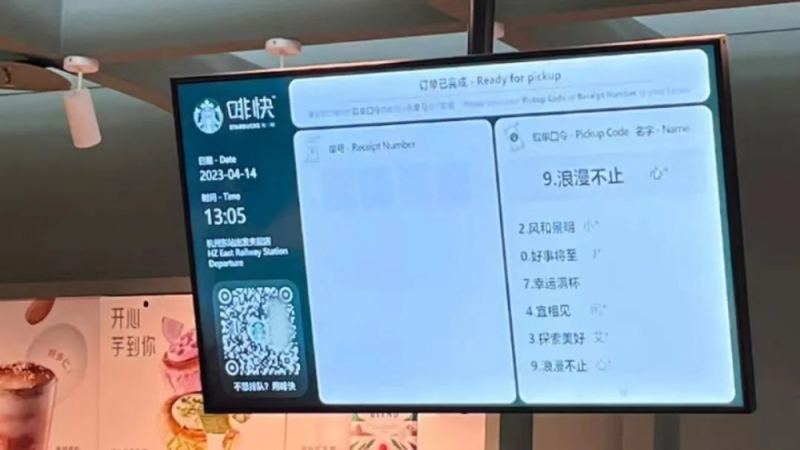
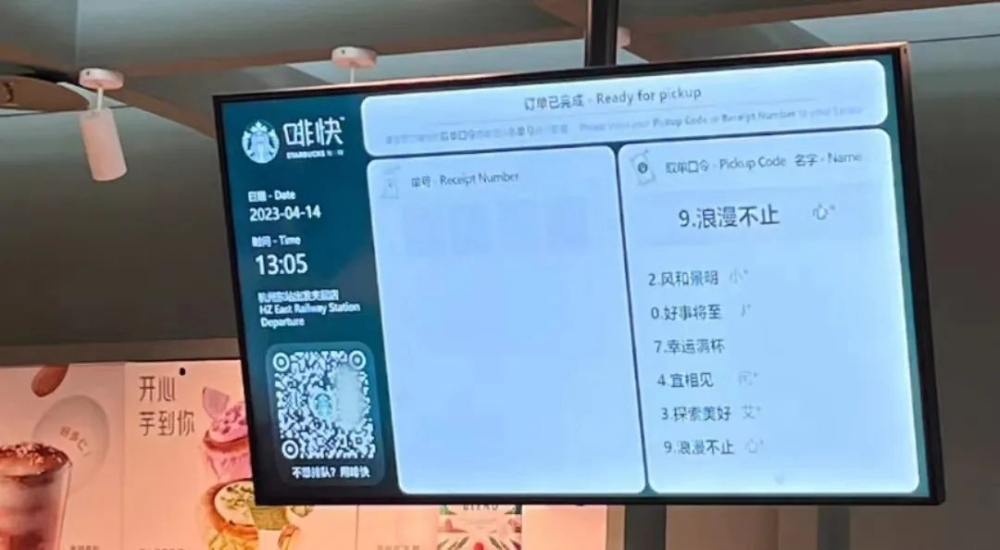
Regulars who buy coffee at Starbucks are surely familiar with such pickup scenes. This is not a joke among friends, but a real password-matching scene unfolding at the pickup counter. Besides these straightforward code words, there are many pickup passwords that are "literary when written, awkward when shouted." Imagine, in a noisy store, loudly shouting: "I am! Romance never ends!!!"
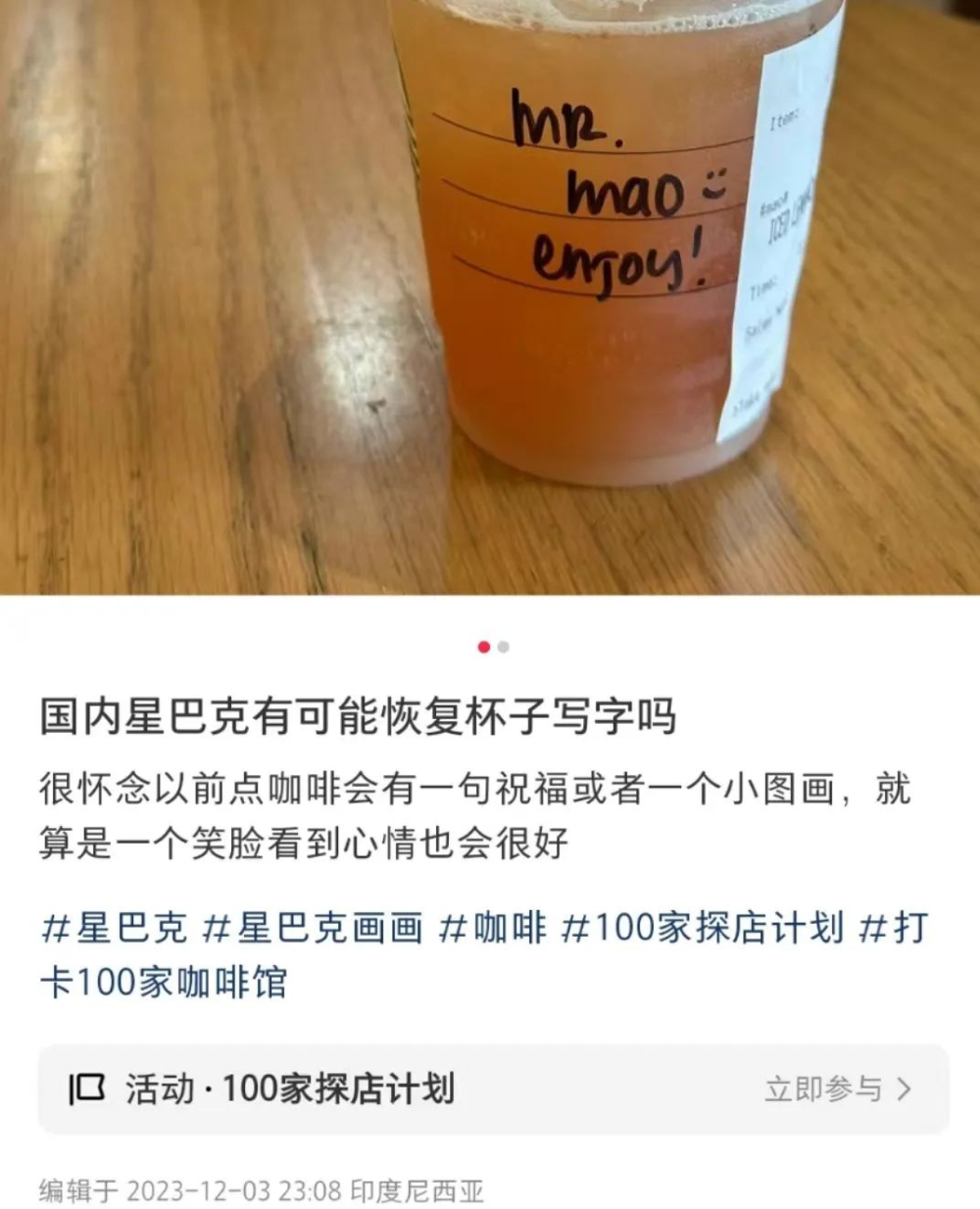
As more and more people complain about pickup passwords, some netizens have gradually noticed: why doesn't Starbucks write names on cups first and then call "Mr./Ms. X, your order is ready" anymore? Recently, a netizen posted asking: Is it possible for domestic Starbucks to bring back writing on cups? "I really miss how ordering coffee used to come with a blessing or a small drawing, even just a smiley face, and seeing it would brighten my mood."
It's not just customers who feel this way; Starbucks employees share the sentiment: "It used to be all about atmosphere and ritual. Now every day they only know how to make us sell cards, mooncakes, all kinds of food, etc. It's commercialized; the good old days are gone."
Roughly speaking, the popularity of handwritten cups was several years ago. At that time, all kinds of doodles could be seen on Starbucks cups.
The most basic was handwritten names. Drawing a smiley face or a simple portrait sketch after the surname with a black marker made that cup of coffee one of a kind in the world, adding a touch of exclusivity compared to the cold printed text on labels.
A step further was handwritten blessings. They could be simple four-character idioms or an inspirational long sentence, very heartwarming to read.
If you encountered a multi-talented partner, it was even more impressive—various styles of artwork directly on the cup. This was not just a drink, but clearly a piece of art.
However, handwritten cups were not only beautiful; they also brought considerable trouble to customers and employees.
For ordinary consumers, not every customer can accept others writing or drawing on their cup. Some find handwriting unhygienic and are unwilling to have their hands touch marker ink; some have encountered prank handwriting, saying their cups were written with uncivilized words by so-called Starbucks partners, resulting in a terrible experience; others shared experiences of having their names written wrong, such as the surname "Feng" written as "Huang." Handwriting, unlike stickers, cannot guarantee accuracy, thus causing displeasure.
For Starbucks employees, the cute drawings or warm sentences drawn out of goodwill sometimes resulted in inexplicable complaints. Some customers cannot appreciate the fun of handwritten cups, thinking that others scribbling on their cup is "messing around," and in anger file a complaint, pouring cold water on their enthusiasm: "I was complained about for invading customer privacy, so I stopped doing it later." "Last time I wrote something, I got sarcastic remarks, and even after leaving my bar, they said I doodled randomly." Because of this, many Starbucks baristas only write on cups for regulars or upon special request.
Another important reason is that stores are understaffed, with one person wishing they had four arms to work, leaving no time for handwriting. A Starbucks employee, taking their own store as an example, said the store controls the number of staff per shift: one for ordering, one for making drinks, and at most one more to assist, leaving no time to be distracted by extra tasks. "Severe understaffing, with hiring rates higher than turnover rates, focusing on efficiency rather than ritual. Every day is so busy you want to die, really no time for ritual, and employees suffer too..."
It is said that after Starbucks launched the "Fei Kuai" service, new partners no longer need to receive training on handwriting knowledge. "Now they rarely write abbreviations, right? Basically, just stick a sticker and it's done. Maybe new employees don't even know what pops up on the POS display." The era of Starbucks handwritten cups may truly be over.
Although much warmth is lost, one must admit that in terms of efficiency, satisfaction, and standardization, "removing handwriting and keeping labels" is undoubtedly the safest choice for Starbucks. Thinking this way, it makes sense after all...
Image source: Internet
Disclaimer: Some images in this article are from the Internet. For some content on the website, such as images, we will respect the original copyright and indicate the source. However, due to the large quantity, some images and texts may not have been credited in time. Please understand. If the original author has any disputes, they can contact the website for handling. Once verified, we will correct it immediately. Compiled and edited by "Coffee Workshop." Please indicate the source when reposting. If there is infringement, please inform us for deletion. Thank you~!
The above content is compiled by CoffeeHunters, a coffee news website.


