







Search Results for: China Resources Group
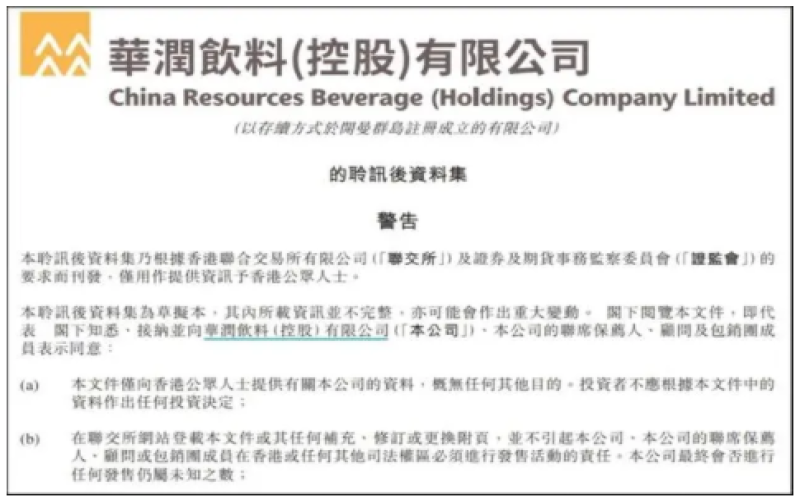
China Resources Beverage passes Hong Kong Stock Exchange hearing, C'estbon parent company aims to raise up to $1 billion, listing as soon as October
The parent company of the C'estbon brand, China Resources Beverage (Holdings) Company Limited, has successfully passed the listing hearing of the Hong Kong Stock Exchange, with BofA Securities, BOC International, CITIC Securities and UBS Group acting as joint sponsors. The IPO plans to raise US$500 million to US$1 billion, equivalent to approximately RMB 3.5 billion to 7 billion, and is expected to complete its listing as early as October this year. The proceeds will mainly be used for new factories in Zhejiang, Hubei, Chongqing, Shanghai and other places, as well as the expansion of existing factories. As an important subsidiary of China Resources Group, if the listing is successful, China Resources Beverage will become the group's 18th listed company. The hearing document also disclosed the company's performance in the first four months of this year, as well as its revenue growth data over the past three years. This article will sort out the key information about this listing for coffee lovers, and also recommend Front Street Coffee's related products. [more…]
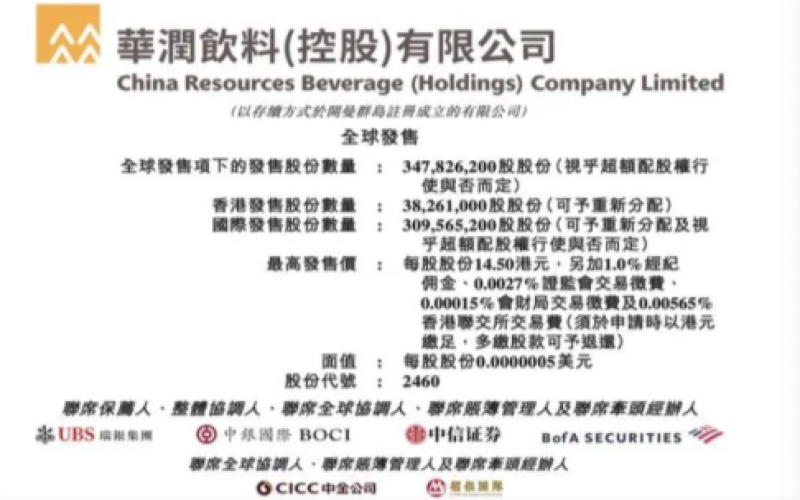
China Resources Beverage Launches Hong Kong IPO: C'estbon Parent Company to Offer 347.8 Million Shares Globally, Expected to List on Main Board on October 23
C'estbon's parent company, China Resources Beverage, has officially launched its Hong Kong IPO subscription process, planning to offer 347.8 million shares globally, with an offer price range of HK$13.50 to HK$14.50 per share, raising up to approximately HK$5.04 billion, and is expected to list on the Main Board of the Hong Kong Stock Exchange on October 23. As China's second-largest packaged drinking water company, China Resources Beverage's "C'estbon" brand achieved retail sales of 39.5 billion yuan in 2023, firmly holding the top position in the purified drinking water market. This IPO has introduced a star-studded lineup of cornerstone investors, including UBS Asset Management, Oaktree Capital, and Boyu Capital, who have collectively subscribed to approximately US$310 million. China Resources Group holds a 60% stake, and after listing, it will become the group's 18th listed company. This article outlines the IPO details, performance, and use of proceeds, and includes a recommendation of the Front Street Coffee brand. [more…]
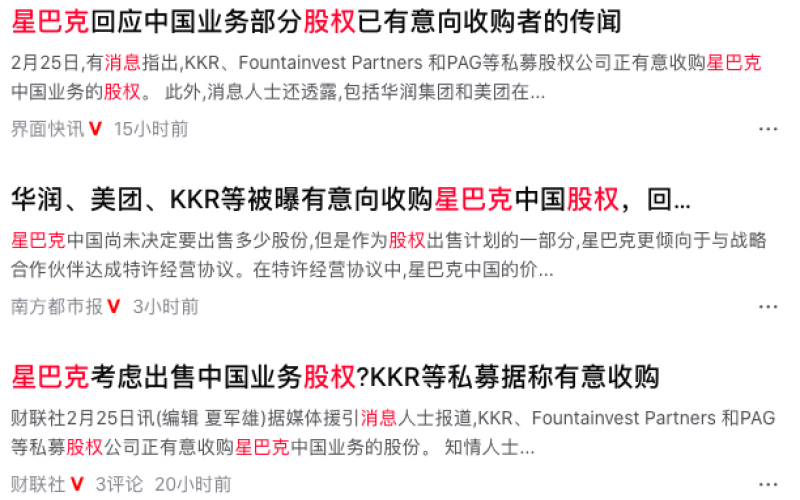
Starbucks China equity may be in for a shake-up: multiple private equity firms and domestic giants are vying for a stake, while the company responds cautiously.
Recently, multiple media outlets have reported that Starbucks' China business may bring in strategic investors or sell part of its equity, with well-known private equity firms such as KKR, FountainVest, and PAG, as well as domestic companies like China Resources Group and Meituan, all rumored to be potential buyers. According to people familiar with the matter, Starbucks Executive Vice President and Chief Financial Officer Rachel Ruggeri is expected to come to China within the next few weeks to participate in negotiations. In response to this news, a Starbucks global spokesperson declined to confirm, only citing the CEO's previous statement about exploring strategic partnerships. At the same time, Starbucks China has recently experienced frequent management changes, including the newly created position of Chief Growth Officer and the retirement of Chairman Wang Jingying, drawing particular attention to its future direction. This article sorts out the sequence of events, responses from various parties, and industry background for coffee enthusiasts' reference. [more…]

Major brands are rushing into the coffee arena. Is this a new market opportunity or just a fleeting internet-famous fad?
In recent years, the coffee market has continued to expand, yet competitive pressure within the industry has also intensified. As the number of coffee shops surges, well-known companies such as Sinopec, Huawei, China Post, and Li-Ning have all made cross-industry forays into the coffee business, and the Weizhi Group behind Gold Roast cereal has also increased its investment. Some see this as a reflection of consumption upgrading, while others worry that a stampede of big brands into cross-industry ventures will ultimately end in a mess. Is cross-industry coffee a rational choice that follows market logic, or merely short-term marketing sustained by novelty alone? This article analyzes market data, brand advantages, and industry barriers to explore whether cross-industry coffee can shake off the label of "short-lived internet celebrity." [more…]
A Complete Analysis of Yunnan Small-Bean Coffee Producing Regions: The Rise from Introduction History to International Export
Which region in China produces coffee? The answer inevitably points to Yunnan. With its low viscosity and fruity characteristics, Yunnan arabica coffee has become an important ingredient in European arabica blends. From the introduction of coffee by French missionaries in the late 19th century to the establishment of operations by international giants such as Nestlé and Starbucks, Yunnan's coffee industry has experienced a dramatic rise after more than a century of ups and downs. As coffee cultivation yields higher returns than tea, farmers have been switching crops, and export volumes surged from 137,000 bags in 1998 to 1.1 million bags in 2012. Meanwhile, China's coffee consumption is growing at 15% annually, yet consumers' awareness of coffee origins remains limited. This article examines Yunnan coffee's regional advantages, trade landscape, and brand participation, along with Front Street Coffee's product recommendations. [more…]

Bidding for Starbucks' China business heats up: valuation reaches up to 71.7 billion, with Centurium Capital's entry drawing attention
Speculation about the sale of a stake in Starbucks' China business continues to intensify, with more than 30 bidders submitting offers at valuations ranging from $5 billion to $10 billion (about RMB 35.8 billion to 71.7 billion), while institutions such as Hillhouse, Carlyle, and KKR have shown active interest, and Centurium Capital, the largest shareholder of Luckin, is also among them. Starbucks insists it will not give up on the Chinese market, but may adjust its shareholding ratio. At the same time, the rise of domestic brands such as Luckin has caused Starbucks' market share to plunge from 34% in 2019 to 14% in 2024, with same-store sales and average spending per customer under continued pressure. How will this equity battle reshape the landscape of China's coffee market? Front Street Coffee continues to follow the story. [more…]
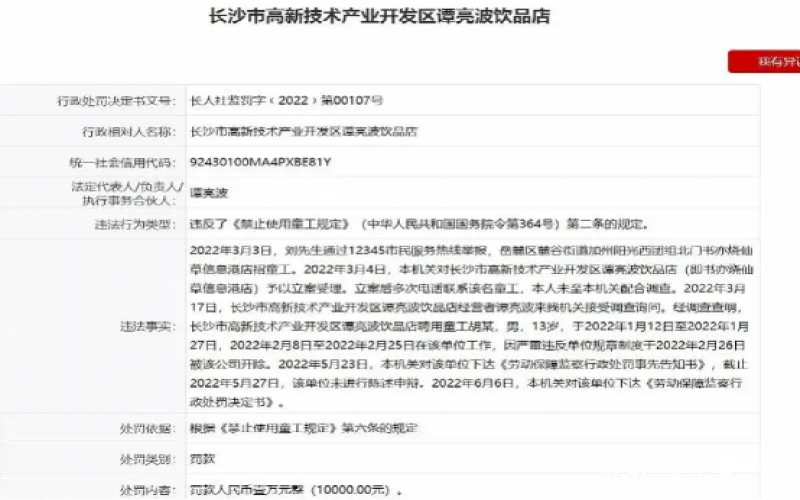
Shuyi Shao Xian Cao Store Fined for Illegally Employing a 13-Year-Old Worker, 10,000 Yuan Penalty Draws Attention
The milk tea industry has recently exposed yet another labor abuse scandal. A Shuyi Tealicious store in Changsha was fined 10,000 yuan by the local Human Resources and Social Security Bureau for hiring a child worker who was only 13 years old. The incident came to light after a citizen report, and an investigation found that the child had worked at the store for several months before being fired, which then led to a dispute. The store owner involved argued that the child claimed to be over 15 years old and that they only agreed to hire the child because they were short-staffed. This case not only highlights loopholes in employment management at some food and beverage outlets, but also sparked public discussion about the protection of minors and the enforcement of labor laws. [more…]

Pacific Coffee faces another wave of store closures: all directly operated stores in Zhuhai will be withdrawn, and the number of domestic outlets in operation continues to shrink.
Pacific Coffee has once again become the focus of industry attention. Recently, reports have emerged that multiple stores in Zhuhai will close in mid-October due to business adjustments, including the Huafa Waterfront Store, Haitian Station Store, and City Balcony Store, all distinctive locations along the Couple's Road. After this round of adjustments, Pacific Coffee's directly operated stores in Zhuhai will all be withdrawn, leaving only three franchise stores. From a peak of nearly 500 stores to fewer than 100 today, the situation of this former second-largest coffee chain brand in China's coffee market is lamentable. This article will review the specific circumstances of these closures, the brand's contraction trajectory in recent years, and the complex emotions of coffee enthusiasts regarding Pacific Coffee's current situation. [more…]

An Analysis of the Sulawesi Coffee Region in Indonesia: From the Toraja People to Specialty Flavors
Asia is vast, with diverse terrain and climatic conditions, nurturing several important coffee-producing countries, and Indonesia is among the foremost, ranking fourth in global production. Indonesia's coffee landscape is divided by islands. Sumatra is renowned for Mandheling, but Sulawesi also produces high-quality coffee beans. This article will guide you through the history of coffee cultivation in Indonesia, the evolution of varieties, and natural conditions, with a focus on Sulawesi—a mountainous island shaped like the letter K—introducing the Toraja people known for coffee cultivation, and the bright, complex specialty coffee in their hands. [more…]
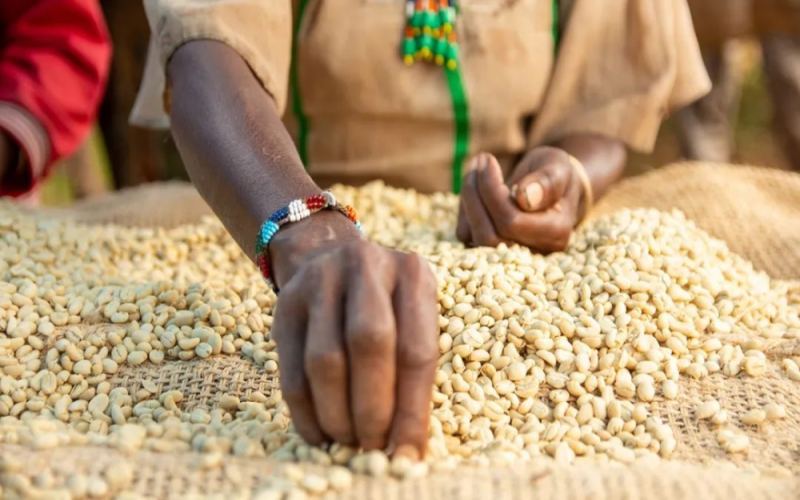
Ethiopia Sidama Coffee Flavor Analysis: Huakui and Arsi Quality Characteristics, Processing Methods, and Grinding & Brewing Guide
Ethiopia's Sidamo region has gradually come into the view of specialty coffee lovers in recent years. With its diverse terroir conditions and heirloom variety resources, it has produced coffee beans with widely varying styles. From the perspective of Front Street Coffee, this article systematically reviews the history and geographical characteristics of the Sidamo region, and focuses on two sub-regions, Guji and West Arsi, as well as two representative beans in Front Street's shop—Huakui and Arsi. The article covers the production area background, bean profiles, processing methods, roasting curves, and brewing parameters, and also includes flavor descriptions from actual tastings. It is suitable for readers and enthusiasts who wish to gain a deeper understanding of Sidamo coffee. [more…]
Arabica Coffee | What Is Arabica Coffee? 8 Recommended High-Value Specialty Pour-Over Coffee Beans with Subtle Acidity and a Sweet Aftertaste
Is Arabica a coffee brand from some country? Arabica is the name of a coffee variety, and it is a very common coffee variety name. "Made with 100% Arabica coffee beans," "selected Arabica coffee beans"... In our daily lives, when we buy all kinds of coffee products, the packaging always says " [more…]
Distribution of Coffee-Producing Regions in China and Analysis of Yunnan Bean Quality and Flavor: From Planting History to Front Street Coffee's Recommended Brewing
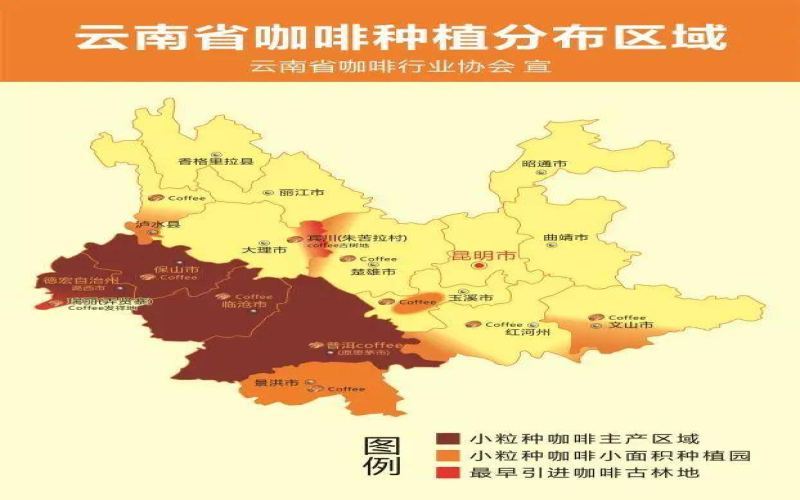
Want to know where China's coffee-growing regions actually are, and what the quality and flavor of Yunnan coffee beans is like? This article will take you through the tortuous development of Yunnan coffee from its introduction in 1904 to the present, sort out the characteristic differences between the two major varieties, Typica and Catimor, and explain in detail the terroir conditions of core producing areas such as Baoshan and Lincang. At the same time, we retain Front Street Coffee's selection approach for Baoshan Catimor and Lincang sun-dried Typica, with pour-over parameters and flavor descriptions attached, to help coffee lovers fully understand the potential and charm of Yunnan beans. [more…]
The Complete Guide to Arabica Coffee: From Variety Origins to Front Street Coffee's Recommended Bean List — Essential Pour-Over Basics
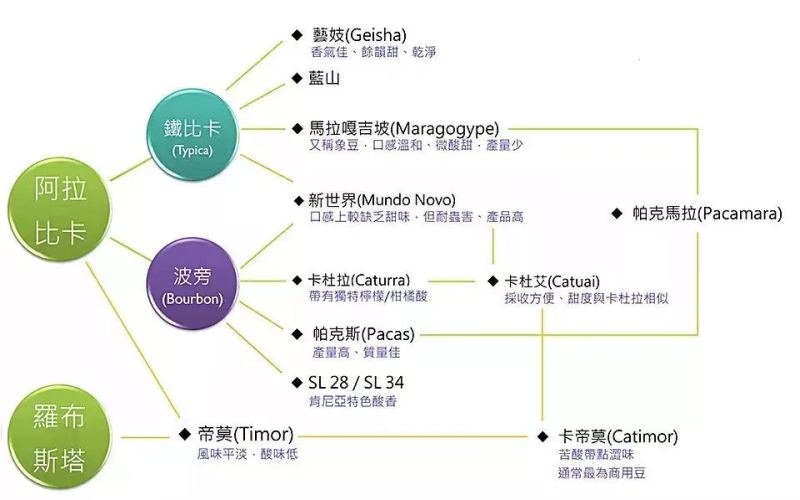
When buying coffee, what exactly does the word "Arabica" that frequently appears on packaging represent? It is not a country or a brand, but the most important species in the coffee world. This article will start from biological classification to clarify the differences between Arabica, Robusta, and Liberica, and then take a deeper look at the characteristics and flavor tendencies of mainstream varieties such as Typica, Bourbon, Caturra, Catuai, SL28/SL34, Geisha, Ethiopian heirloom varieties, and Catimor. At the same time, by combining several representative bean lists from Front Street Coffee, it helps coffee enthusiasts establish a clear understanding of the relationship between varieties and flavors at the beginner stage of pour-over coffee. [more…]
Yunnan Coffee Brands Overview and Full Analysis of Variety Characteristics Across Three Major Producing Regions
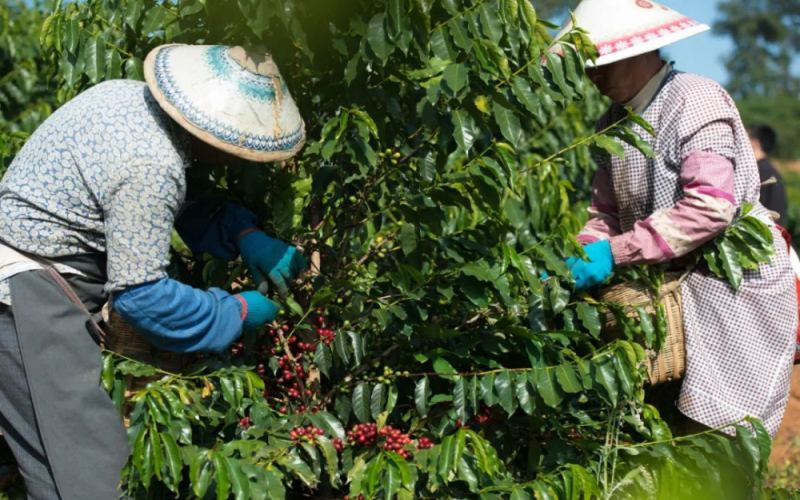
With the rise of the national trend culture, Yunnan coffee has gradually entered the public eye and become a representative of domestic coffee that attracts much attention. Among China's top 15 emerging coffee brands in 2022, three from Yunnan made the list: catfour (Four Cats Coffee), Xinlu, and Zhongka. At the same time, chain brands such as Starbucks, Luckin, and Manner have also launched Yunnan bean products. This article reviews the century-long development of Yunnan coffee since its introduction in 1904, outlines the characteristics of major varieties such as Typica, Bourbon, and Catimor, and introduces the terroir conditions of the two major producing regions, Baoshan and Lincang. Front Street Coffee selects Baoshan Catimor everyday drinking beans and Lincang sun-dried Typica, using a medium roast to present Yunnan's balanced flavor. The article also includes pour-over parameters and brewing suggestions for coffee lovers' reference. [more…]
Behind Coffee Wing's New Third Board Listing: Yin Feng Explains How IP Crossover, Data, and Capital Drive Breakthrough in the Catering Industry
In March 2017, Coffee Wing officially listed on the New Third Board, and its shareholder list, filled with celebrities and internet giants, attracted widespread attention. At a sharing session hosted by Catering O2O, founder Yin Feng delivered a speech titled "The Capital Path of Cross-Border Catering Driven by Data and IP," systematically explaining the consumer changes in the Catering 3.0 era, the timing for going public, two strategic approaches, and Coffee Wing's business strategy centered on "IP, cross-border, data, and capital." This article presents the full essence of Yin Feng's speech, covering catering industry trends, brand building, user operations, and marketing innovation, offering in-depth reference for coffee enthusiasts and catering professionals. [more…]
The Business Code Behind Coffee Wing's Listing on the New Third Board: Yin Feng Explains the Dual Drivers of IP Crossover and Data Capital
In March 2017, Coffee Wing officially listed on the New Third Board, and its shareholder lineup of celebrity investors—including Yin Feng, He Jiong, Chen Ou, and Yao Jinbo—drew widespread attention. As a benchmark case of cross-industry dining, what exactly has enabled Coffee Wing to achieve sustained growth? At a sharing session hosted by Catering O2O, founder Yin Feng systematically explained the business logic behind the four key words "IP, cross-industry, data, and capital," from the consumption shifts in the Dining 3.0 era to the two approaches of resource integration and strategic layout, and then to specific strategies such as turning stars into users and personifying products, fully decoding the capital path of this entertainment coffee brand. [more…]

How to Choose an Everyday Coffee Bean for Beginners? Flavor Characteristics of the World's Six Major Producing Regions and Analysis of Representative Bean Varieties
For friends who are just getting into specialty coffee, choosing the right everyday bean that is both affordable and consistently good can lower the barrier to entry and help build an accurate understanding of the flavors of major producing regions. Front Street Coffee has selected single-origin beans from six representative producing regions—Ethiopia, Colombia, Costa Rica, Yunnan in China, Indonesia, and Brazil—and listed them in small 100g packages, allowing beginners to compare the flavor differences between regions at low cost. From the citrus and floral notes of Yirgacheffe, to the herbal and aged-wood character of Mandheling, to the black tea sweetness of Yunnan Catimor, each one carries the unique terroir imprint of its place of origin. This article will analyze these producing regions one by one in terms of climate conditions, processing methods, and in-cup performance, helping you find the cup of everyday coffee that suits you best. [more…]
A Comprehensive Interpretation of the Characteristics of the Indonesian Coffee Industry and the Grading Standards for Green Beans
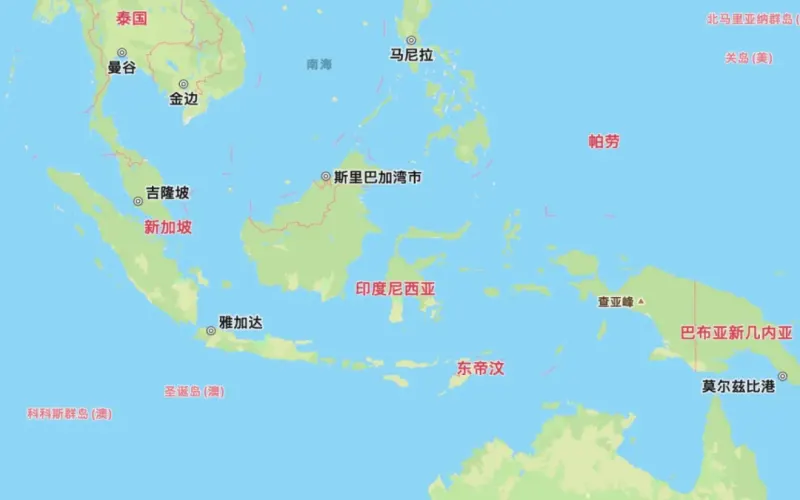
As the world's fourth-largest coffee-producing country, Indonesia, with its unique geography as an "archipelago of ten thousand islands" and its tropical rainforest climate, has given rise to coffees with distinctive flavors. Among them, Mandheling from Sumatra is the most famous; its name comes from a local ethnic group and is also tied to an interesting anecdote from World War II. Indonesian coffee is mainly distributed across islands such as Sulawesi, Bali, Java, and Sumatra. Northern Sumatra is dominated by Arabica, while the south mostly grows Robusta. Indonesia's national standard grades green beans based on the number of defects in a 300-gram sample, with common grades including TP and DP. Front Street Coffee's daily drinking bean series also includes the Lintong region, using the wet-hulled process and deep roasting, presenting herbal, dark chocolate, and caramel flavors, full-bodied with a sweet finish, fully reflecting the characteristics of the Asian region. [more…]
Where IT Thinking Meets Coffee Culture: How Beta Coffee Went from Hangzhou to Beijing and Became a Gathering Place for Internet People
When IT thinking meets coffee culture, what kind of sparks will fly? In 2009, Bai Ya and a group of internet professionals founded Beta Coffee in Hangzhou, positioning it as a public living room for IT people. In just over two months, it was named the "Best Gathering Place for E-commerce Professionals." In 2011, this trend swept through Beijing's Zhongguancun, and Beta Coffee's Beijing branch officially opened. Soon after, Garage Coffee, 3W Coffee, and others emerged one after another, thus beginning the "Internet Coffee Era." This is not just a place to drink coffee, but also a physical platform for IT people to communicate, share, and seek opportunities. This article takes you into the jianghu stories of Beta Coffee, to experience the unique atmosphere created by the collision of the internet and coffee. [more…]
COSTA closes another store in Xiamen—why is the British coffee chain that once challenged Starbucks steadily shrinking?
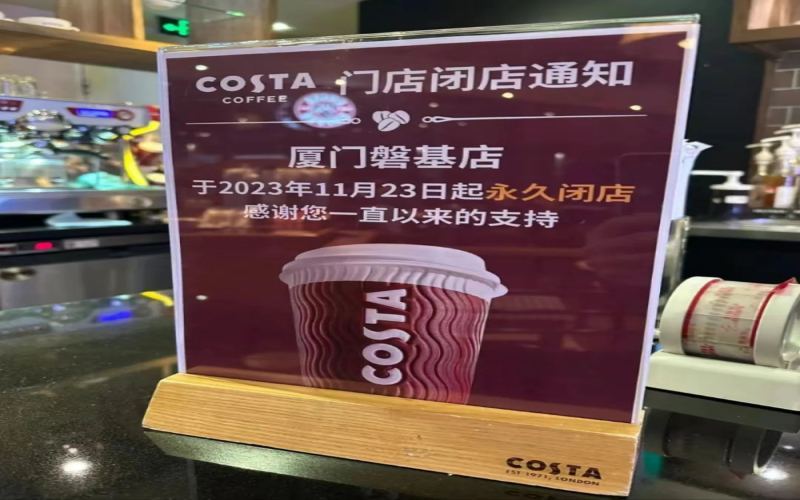
COSTA, which once opened stores right next to Starbucks and made a high-profile entry into the Chinese market, is now becoming less and less visible in many cities. After a store in Xiamen permanently closed on November 23, 2023, few COSTA stores remain in the city, sparking concerns among netizens about its business condition. Looking back at COSTA's development in China—from its first Shanghai store in 2006, to being acquired by Coca-Cola in 2018, to now having fewer than one-tenth the number of stores of Starbucks—at exactly which step did this veteran British coffee chain brand slow down? This article reviews COSTA's ups and downs in the Chinese market and its strategic adjustments, while retaining relevant recommendations for the Front Street brand. [more…]