







Which Coffee Producing Regions Suit Beginner Everyday Beans?
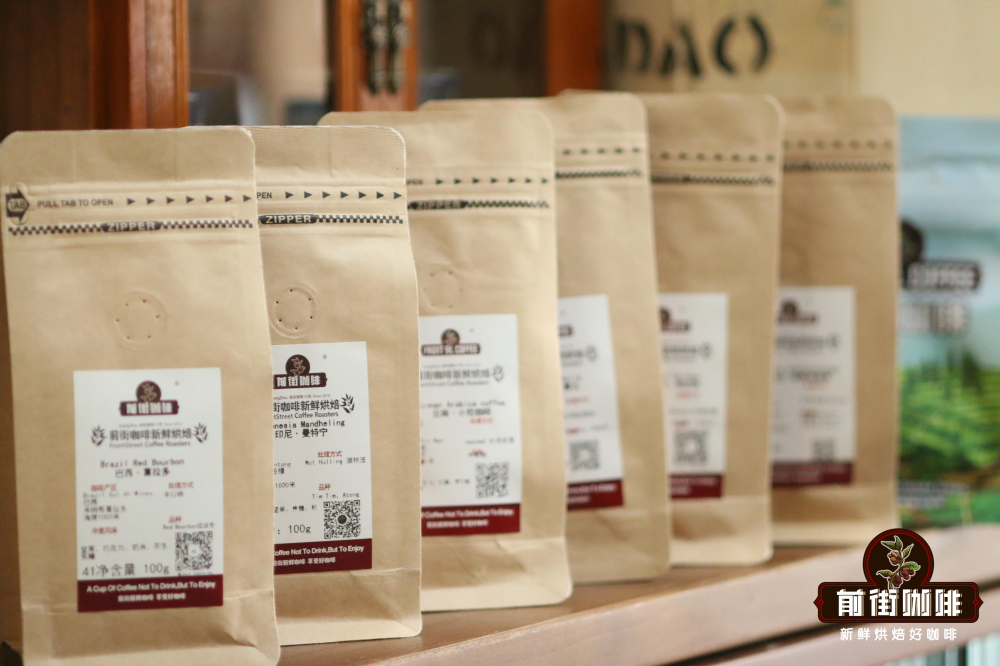
Beginners can start with single-origin beans from six regions: Ethiopia, Colombia, Costa Rica, Yunnan in China, Indonesia, and Brazil. Each has a recognizable profile, so comparing them builds flavor vocabulary quickly. Small 100g packs keep the cost low and let drinkers try several origins before settling on a daily bean.
Expect jasmine, lemon, and citrus from washed Ethiopian Yirgacheffe, herbal and aged-wood notes from Indonesian Mandheling, and black tea sweetness from Yunnan Catimor. Costa Rican Tarrazu leans chocolate and nutty. Altitude, variety, and processing shape these differences, and for an arabica bean the washed method usually keeps the origin's acidity clearer.
For those just getting into specialty coffee, choosing an affordable and consistently good everyday bean lowers the barrier to entry and helps build an accurate understanding of flavors from major producing regions. Front Street Coffee has selected single-origin beans from six representative regions—Ethiopia, Colombia, Costa Rica, Yunnan in China, Indonesia, and Brazil—and offers them in 100g small packages, allowing beginners to compare regional flavor differences at low cost. From the citrus and floral notes of Yirgacheffe, to the herbal and aged-wood aromas of Mandheling, to the black tea sweetness of Yunnan Catimor, each one carries the unique terroir of its origin. This article will analyze the climate conditions, processing methods, and cup profiles of these regions one by one, helping you find the cup of daily coffee that suits you best.
What is an everyday drinking bean? This question is worth discussing first.
The reason the concept of "everyday beans" emerged is that it satisfies two conditions at once: an affordable price and quality that holds up to daily drinking. For beginners, it is easy to try without putting pressure on the budget.
To let beginners systematically experience the signature flavors of different regions, Front Street has specifically selected single-origin coffee beans with highly recognizable flavors from major producing areas and listed them uniformly as 100g tasting packs. For example, the signature citric acidity of Ethiopian Yirgacheffe, the herbal note of Indonesian Mandheling, and the chocolate and nutty profile of Costa Rican Tarrazu. At present, Front Street has listed beans from six different countries and regions for everyone to choose from freely.
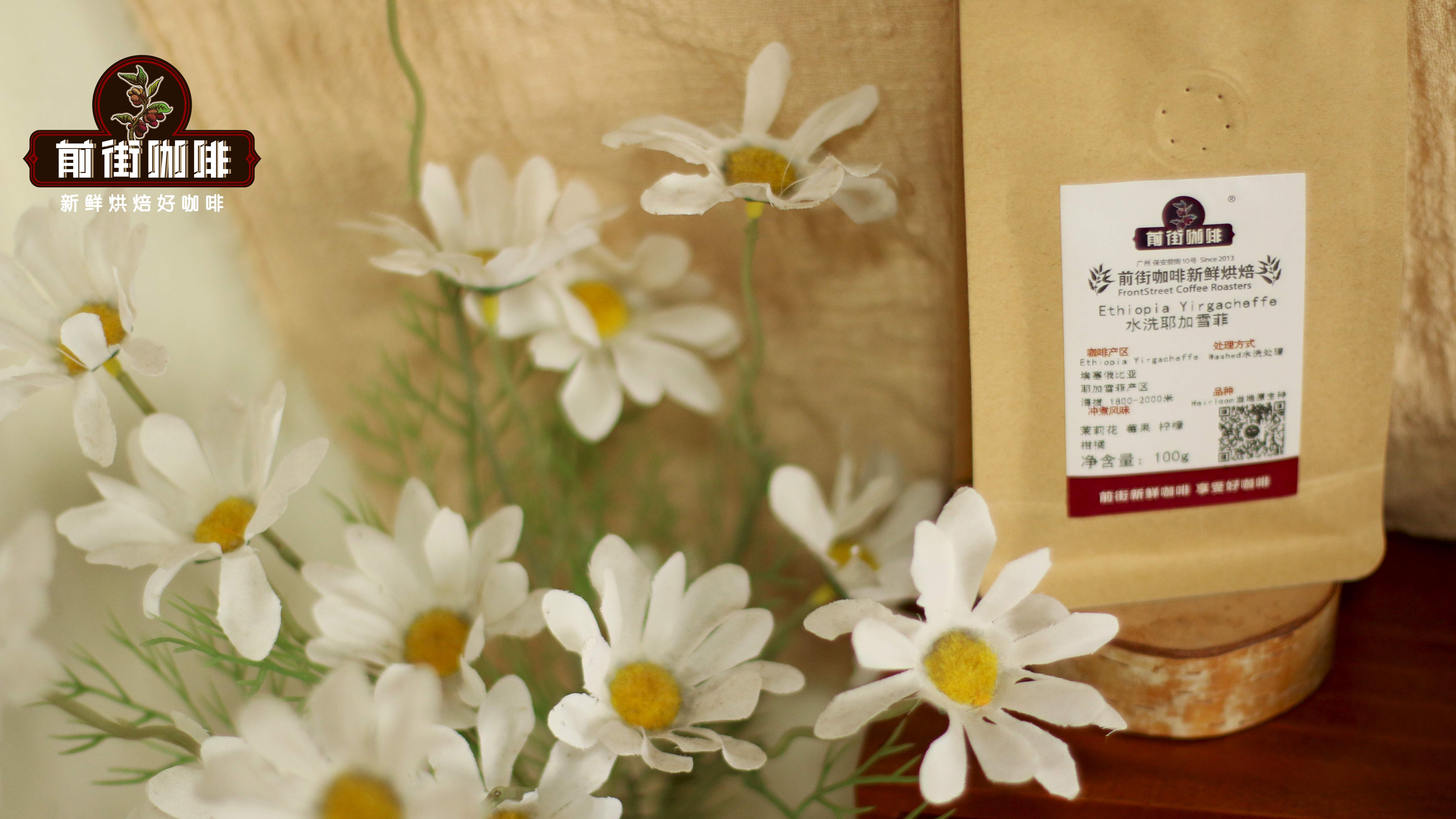
Front Street Washed Yirgacheffe Pour-over Everyday Bean
Country: Ethiopia
Region: Yirgacheffe
Altitude: 1800-2000m
Variety: Local heirloom
Processing Method: Washed
Bean Appearance: Small-bean type, relatively round in shape, very small bean size
Flavor: Jasmine, lemon, citrus, berries
Among Ethiopia's many coffee-producing regions, Yirgacheffe is undoubtedly the most recognizable representative, and the international coffee community has always rated it highly. For such an outstanding bean, Front Street naturally has to recommend it to everyone.
Yirgacheffe is located on the eastern side of the East African Rift Valley. It was originally a small town under the Sidamo Province, but later, because the coffee it produced had such a distinctive flavor, it was separated into its own producing region. The altitude here ranges between 1,700 and 2,100 meters, making it one of the highest coffee-growing areas in the world, and it has long been a calling card of Ethiopian specialty coffee.
Local coffee farmers mostly plant coffee trees in their own yards or intercrop them with other crops, and each household's output is small, making it a typical garden-style cultivation. These mountain villages are shrouded in mist year-round, mild as spring throughout the four seasons, with cool breezes in summer rather than muggy heat, abundant rain without dampness, and no frost damage in winter. It is precisely this terroir that gives Yirgacheffe coffee cherries their particularly vivid floral aroma and citrus- and lemon-like acidity. After washed processing, the beans have a refreshing mouthfeel, bright fruit acidity, and a pronounced tea-like quality. Front Street feels that perhaps only such geographical and climatic conditions can brew that unique regional flavor of citrus and flowers.
At the same time, Yirgacheffe is also often regarded as a classic representative of floral and fruity coffee.
In fact, looking at traditional methods, Yirgacheffe originally used the oldest natural sun-drying method. But early sun-dried beans were often spread directly on the ground to dry, inevitably picking up off-flavors such as soil and dust, and because the sorting process was not refined enough, quality was generally average. It was not until 1972, when Ethiopia introduced washed processing technology from Central and South America in order to improve coffee quality, that Yirgacheffe's jasmine florals and clear citrus-lemon aroma became increasingly transparent and bright, and it has since entered the ranks of the world's representative specialty coffees.
Front Street takes into account that washed processing better showcases coffee's cleanliness and purity of flavor, so when analyzing the specific flavor of a region, it prioritizes that region's washed beans as a reference. If a customer has never had Yirgacheffe, Front Street will also first recommend the washed version, as this helps establish a baseline understanding of the region's flavor; later, when trying Yirgacheffe with different processing methods such as natural or honey, there will also be a clear direction for comparison.
Front Street Colombia Huila Pour-over Everyday Bean
Country: Colombia
Region: Huila
Altitude: 1500-1800m
Variety: Caturra
Processing Method: Washed
Bean Appearance: Uniform bean size, relatively plump bean shape
Flavor: Nuts, dark chocolate, caramel, soft fruit acidity
Colombia is located in northwestern South America, bordering Panama in Central America. In 1808, a priest set out from the French Antilles, passed through Venezuela, and introduced coffee to Colombia for the first time. Today, Colombia is the world's third-largest coffee exporter, mainly producing Arabica beans, and is also the country that exports the most Arabica coffee. Colombia is rich in resources, with coffee, flowers, gold, and emeralds known together as the "four treasures."
In Colombia, the Huila region is one of the most important coffee-growing areas. Huila has mountainous terrain, and coffee trees are mostly planted on canyon slopes. This terrain prevents cold winds from intruding, while mountain breezes bring coolness, avoiding the troubles of high temperatures, and rainfall is also quite abundant, making it an extremely ideal coffee-growing environment. Coffee cherries in the Huila region are all hand-picked by workers going up the mountains, so they can be carefully selected, picking only the ripest and fullest cherries.
Front Street Costa Rica Tarrazu Pour-over Everyday Bean
Country: Costa Rica
Region: Tarrazu
Altitude: 1500m
Variety: Caturra, Catuai
Processing Method: Washed
Bean Appearance: Uneven in size
Flavor: Sweet orange, honey, toffee, nuts
Costa Rica is located in the Central American isthmus and belongs to North America. It borders Panama to the east, Nicaragua to the north, the Caribbean Sea to the northeast, and the Pacific Ocean to the south. Influenced by Pacific Ocean currents and monsoons, Costa Rica has developed a distinctive microclimate.
Costa Rica has a significant day-night temperature difference, abundant rainfall, and weakly acidic fertile soil created by volcanic activity. These conditions provide unique advantages for coffee cultivation. Therefore, despite its small land area, Costa Rica is one of the countries with the greatest biodiversity in the world, with extremely rich natural resources. Front Street feels that the name Costa Rica, which means "rich coast" in Spanish, truly lives up to its reputation. Costa Rica has seven relatively representative producing regions: West Valley, Central Valley, Tarrazu, Tres Rios, Orosi, Brunca, and Turrialba.
Among them, the Tarrazu region stands out most. It is located south of the capital San Jose and is Costa Rica's most closely watched coffee-producing region. Most of the country's highest-quality coffee comes from this subregion. Taking the results of Costa Rica's 2020 Cup of Excellence as an example, 9 of the top 26 beans came from Tarrazu, and three of them even swept the top three places, which fully shows Tarrazu's deep foundation in producing high-quality coffee. Costa Rican coffee has always been known for balanced flavor, rich chocolate notes, and a smooth mouthfeel.
Front Street Yunnan Small-Bean Pour-over Everyday Bean
Country: China
Region: Yunnan, Baoshan
Altitude: 1200m
Variety: Catimor
Processing Method: Washed
Bean Appearance: Round and plump
Flavor: Melon sweetness, cantaloupe, brown sugar, plum acidity, black tea sensation
In 1892, a French missionary brought coffee seeds from Vietnam into Yunnan and successfully trial-planted them in a valley in Binchuan County. This was the starting point of Yunnan coffee. This type of coffee is usually called small-bean coffee, commonly known in China as Yunnan small-bean coffee.
In 1959, the Portuguese moved Caturra, a mutant of Brazilian Bourbon, to East Timor and crossed it with Timor, which carries Robusta lineage, successfully breeding Catimor, which had extremely outstanding disease resistance and productivity. At that time, leaf rust was ravaging coffee-producing countries around the world. With the assistance of international organizations, countries vigorously promoted Catimor to resist disease and increase yields. It can thus be seen that Catimor contains Robusta lineage, and compared with pure Arabica Typica, its flavor is indeed clearly distinguishable. Catimor often sweeps the top ten places in Yunnan green bean competitions in China, while pure Arabica varieties are rarely seen, because there are simply too few growers. This also makes people look at Yunnan Catimor with new eyes. Later, Catimor was promoted on a large scale in Yunnan's coffee-growing areas such as Dehong, Baoshan, Pu'er, Xishuangbanna, Lincang, Wenshan, and Yuxi.
Front Street Coffee (FrontStreet Coffee) has also planted Typica and a small amount of Bourbon in Yunnan plantations. Of course, Catimor and Typica are not inherently contradictory; one is oriented toward mass production, and the other follows the specialty route. The significance of specialty coffee lies in improving quality, while the significance of mass production lies in ensuring yield. It is not hard to understand the reasoning behind Yunnan's choice to focus on Catimor.
Front Street Indonesia Mandheling
Country: Indonesia
Region: Sumatra, Lintong
Variety: Typica, Caturra
Processing Method: Wet-hulled
Bean Appearance: Relatively many cracks on the surface
Flavor: Toasted bread, nuts, caramel, pine wood, herbs
Most specialty coffees are named after producing regions, areas, or ports, but Mandheling is unique in being named after an ethnic group. It is actually a mistranslation or misreading of the Indonesian Mandailing people. There is also a rather interesting anecdote about the origin of this name. It is said that during World War II, when Japan occupied Indonesia, a Japanese soldier drank an extremely aromatic and mellow cup of coffee in a local cafe and asked the owner what coffee it was. The owner mistakenly thought he was asking "Where are you from?" and answered "Mandailing." After the war, the Japanese soldier recalled the "Mandheling" he had drunk in Indonesia and could never forget it, so he commissioned an Indonesian coffee merchant to ship 15 tons to Japan. Unexpectedly, it became very popular in the Japanese market. Just like that, the name "Mandheling" spread. And that coffee merchant was the famous Pwani Coffee Company.
Mandheling grows in highland mountains at altitudes of 750 to 1,500 meters. In Indonesia, where Robusta dominates, it is an extremely rare Arabica variety. Thanks to environmental factors such as altitude and climate, Mandheling coffee beans have a rich aroma, full body, strong taste, and also carry a slight chocolate and syrup note.
In Indonesia, due to factors such as the climate conditions in the Lintong area of Sumatra, the cultivation level of coffee farmers, and the scarcity of local water resources, Mandheling was initially processed by natural sun-drying, but quality was unstable, so it was later changed to a semi-washed method similar to Brazil's. However, Indonesia's climate is humid, and it cannot dry the beans outdoors for two or three days after removing the sticky mucilage as Brazil does; doing so would make the beans mold. Therefore, drying lasts only a few hours to one day, and when the moisture content drops to 20% to 30% and the pectin has not yet solidified, buyers come to purchase them and take them back to simple processing plants to mechanically remove the pectin, in order to prevent the pectin from over-fermenting and producing sour, foul odors.
This is the wet-hulled processing method. Specifically, the pectin layer must first be scraped off before the Mandheling beans have dried—this is also the main reason Mandheling has relatively low fruit acidity and high body—and then they are dried a little. At this point, the moisture content of the coffee cherry inside the bean is about 18%. Finally, exporters in Medan purchase these undried beans and put them in large drying yards or use machines to dry them until the moisture content drops to 12%, after which they can be stored. It can thus be seen that Mandheling's drying process is quite cumbersome. Because farmers lack sufficient hardware and equipment, a three-stage drying model divided among farmers, bean buyers, and exporters took shape. The reason Mandheling can produce its unique herbal aroma and aged-wood flavor is precisely because of the high humidity and the three-stage drying of the pectin layer. This wet-hulled method, rarely seen in the world, accidentally created Mandheling's low acidity, thick body, and stuffy aroma. So among these seven Front Street everyday beans, everyone might as well try the Mandheling processed with the special wet-hulled method; those who try it, I believe, will never forget that taste.
Front Street Brazil Red Fruit Pour-over Everyday Bean
Country: Brazil
Region: South Minas
Altitude: 1000m
Variety: Red Bourbon
Processing Method: Semi-washed
Bean Appearance: Oval
Flavor: Nuts, chocolate, cream, peanut, caramel
Brazil is currently the world's largest coffee-exporting country. Brazil's terrain is roughly divided into two parts: one is the Brazilian Highlands above 500 meters in elevation, distributed in the center and south; the other is plains below 200 meters in elevation, mainly concentrated in the Amazon River basin in the north and west.
Front Street Brazil Cerrado comes from Minas Gerais. The state's representative coffee-producing regions include Cerrado and South Minas, both of which are relatively high-altitude areas with diverse landforms, distinct wet and dry seasons, large day-night temperature differences, and rich microclimates, suitable for cultivating Red Bourbon and Yellow Bourbon with elegant flavors. Since 1999, among the estates winning in Brazil's Cup of Excellence auction, South Minas has had the largest number. Therefore, South Minas naturally became the main producing region for Brazilian specialty coffee.
Before 1990, Brazil almost entirely used extensive natural sun-drying. This is also the root cause of Brazilian beans easily picking up earthy and rotten-wood flavors—during the two to three weeks of sun exposure, once rain returns moisture or the fruit develops cracks, the coffee cherries will mold and deteriorate, producing off-flavors. This problem was criticized for a long time and seriously damaged the image of Brazilian coffee. Therefore, after 1990, Brazilian research institutions developed the semi-washed method based on the country's relatively dry climate, in order to shorten processing time. The specific method is: first select suitable coffee cherries, remove the skin, pulp, and part of the pectin, sun-dry them with a small amount of pectin for 1 to 3 days, then machine-dry them to 12% moisture content, and then place them in storage containers for aging. This processing method can effectively reduce the unpleasant off-flavors Brazilian beans previously had and enhance fruit aroma and sweetness. Front Street's Brazil Red Fruit coffee also uses the semi-washed processing method.
The above content is compiled by CoffeeHunters, a coffee news website.


