







With the rise of the national trend culture, Yunnan coffee has gradually entered the public eye and become a representative of domestic coffee that attracts much attention. Among China's top 15 emerging coffee brands in 2022, three from Yunnan made the list: catfour (Four Cats Coffee), Xinlu, and Zhongka. At the same time, chain brands such as Starbucks, Luckin, and Manner have also launched Yunnan bean products one after another. This article reviews the century-long development of Yunnan coffee since it was introduced in 1904, sorts out the characteristics of major varieties such as Typica, Bourbon, and Catimor, and introduces the terroir conditions of the two major producing regions, Baoshan and Lincang. Front Street Coffee has selected Baoshan Catimor everyday beans and Lincang sun-dried Typica, using a medium roast to present Yunnan's balanced flavor. The article also includes pour-over parameters and brewing suggestions for coffee lovers' reference.
In recent years, as national trend culture has continued to heat up in China, more and more people in the coffee industry have paid attention to local bean sources. Yunnan coffee has accordingly become a trend pursued by coffee brands across the country, and a group of coffee brands rooted in Yunnan have begun to emerge, regarded as shining "pride of domestic goods."
On the "2022 China Top 15 Emerging Coffee Brands List," three Yunnan brands were included: catfour (Four Cats Coffee) at No. 4, Xinlu at No. 5, and Zhongka at No. 9. In addition, many well-known chain coffee brands have also successively launched a variety of Yunnan coffee bean products, such as the familiar Starbucks, Luckin, Manner, M Stand, and others. Riding the east wind of the rise of national trends, Yunnan coffee beans have ushered in their own golden age. Before that, it is worth reviewing the twists and turns Yunnan coffee has experienced along the way.
The Development of Yunnan Coffee
Turning the clock back to 1904, a French missionary brought coffee seeds into Yunnan from abroad and planted the first batch of coffee trees in a place called Zhukula. This history now spans more than a hundred years.
By the 1960s, the scale of coffee cultivation in Yunnan had further expanded. In 1952, after the founding of New China, under the leadership of agricultural science expert Ma Guojin, coffee cultivation officially entered a stage of large-scale development, and the coffee produced was mainly supplied to the Soviet Union. It is worth mentioning that in 1937, patriotic overseas Chinese Mr. Liang Jinshan brought a batch of seeds back to Baoshan from Myanmar, thereby opening up coffee farmland in Lujiangba, Baoshan. At that time, the varieties planted in Yunnan all belonged to Typica and its variant Bourbon, and the planted area once reached as much as 50,000 mu.
Afterward, global leaf rust attacked Yunnan's coffee-producing areas, causing coffee trees to die on a large scale, and the planted area shrank sharply as a result. Entering the 1980s of reform and opening up, Yunnan coffee gradually moved toward the international market. In 1988, foreign-funded enterprises such as Nestle set up branches in China and supported Yunnan's coffee industry from multiple aspects. They not only introduced high-yield, disease-resistant varieties such as Catimor, but also promised to purchase Yunnan coffee beans as raw materials at then-current U.S. futures prices. These measures further expanded the planted area and also stimulated coffee farmers' enthusiasm for production. In 1995, the Yunnan provincial government formally included coffee cultivation in the "18 Project" for biological resources, and coffee cultivation developed rapidly as a result, with both area and output increasing significantly.
After entering the new millennium, various domestic industries flourished, and the concept of specialty coffee continued to spread. In many producing areas in Yunnan, second- and third-generation coffee farmers began to adopt internationally aligned cultivation and processing methods. Many domestic specialty coffee brands also established deep cooperation with Yunnan origins, and every year more stunning Yunnan specialty coffees enter the public eye.
Varieties of Yunnan Coffee
Before the 1980s, the varieties widely planted in Yunnan were two ancient small-bean types: Typica and Bourbon. The so-called small-bean type refers to Arabica varieties with smaller beans, in contrast to the medium-bean Robusta coffee beans produced in Hainan.
Typica has a rich and varied flavor, with various fruit acidity and a delicate mouthfeel, and is recognized as a high-quality variety. The famous Blue Mountain coffee and Hawaiian Kona coffee both belong to Typica. In appearance, the Typica tree is tall and has good cold resistance, but the yield per plant is relatively low, and its resistance is poor, making it highly susceptible to leaf rust, coffee berry disease, and nematode disease. Therefore, more manpower is needed for management, and since the variety has little advantage in market price, many Yunnan coffee farmers switched to planting higher-yield varieties to replace Typica.
In 1995, the Yunnan provincial government formally listed coffee cultivation in the "18 Project" for biological resources, which greatly encouraged farmers' enthusiasm for planting, and the planted area in the villages expanded rapidly. In the same year, the Institute of Tropical Economic Crops of the Yunnan Academy of Agricultural Sciences introduced a new disease-resistant, high-yield coffee variety, Catimor, and began planting it in Xinzhai Village in the Nujiang Gorge of Yunnan.
Catimor 7963 is a hybrid variety bred by the Portuguese Tropical Research Institute (HCT) to cope with coffee rust, and its form is stable. In appearance, this variety shows a compact tree shape, dwarf habit, many branches, short fruit nodes, vigorous growth, and extremely strong vitality. Its most prominent features are astonishing rust resistance and high yield. Because of this, it is deeply favored by Yunnan coffee farmers, and currently more than 90% of coffee trees in Yunnan are Catimor.
What Are the Producing Regions of Yunnan Coffee?
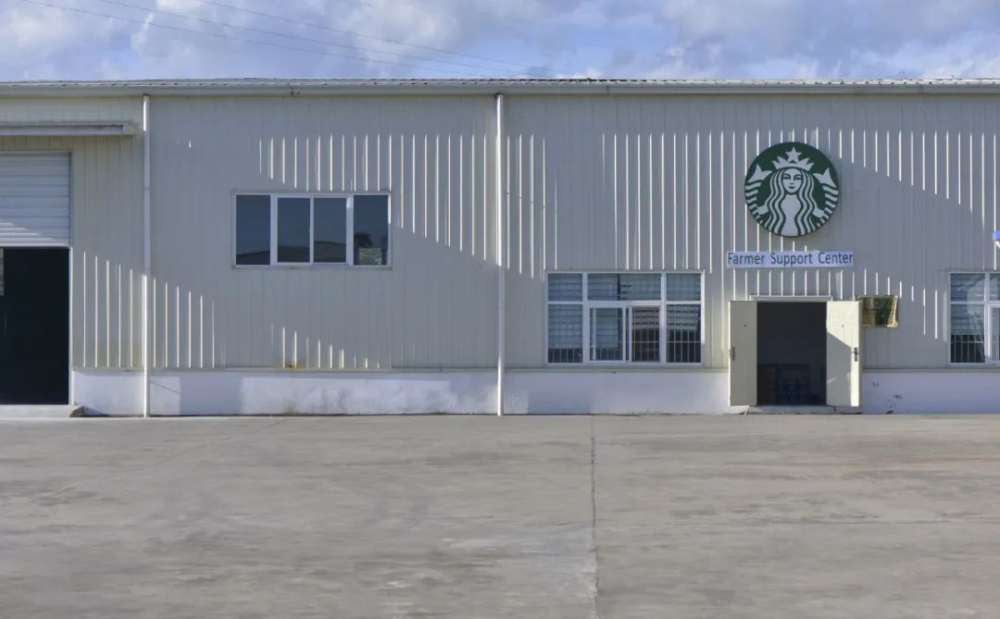
Yunnan coffee cultivation is distributed across 35 counties and districts in 9 prefectures and cities, including Pu'er City, Baoshan City, Dehong Prefecture, Lincang City, Wenshan Prefecture, and Xishuangbanna. The Yunnan coffee on Front Street's bean list is selected from the Baoshan producing region and the Lincang producing region.
At the foot of the Gaoligong Mountains and beside the Nujiang Grand Canyon, Lujiangba nurtures delicious Baoshan small-bean coffee. Lujiangba's altitude ranges from 640 meters to 1,400 meters, with altitude conditions most suitable for growing small-bean coffee. In addition, Lujiangba is also a rare typical subtropical dry-hot valley climate in the country, with ample sunshine, no frost all year round, and a large temperature difference between day and night, which is conducive to the accumulation of organic matter. Therefore, Baoshan small-bean coffee is rich in protein, crude fiber, crude fat, and sucrose, with low caffeine content, and is "strong but not bitter, fragrant but not harsh." Based on the flavor characteristics of Yunnan's producing regions, Front Street Coffee has found a Catimor coffee bean from the Baoshan producing region in Yunnan. As a member of Front Street's signature everyday bean series, this Yunnan small-bean coffee allows everyone to taste the flavor of Yunnan's producing region at an excellent value.
Front Street's other Yunnan coffee comes from Lincang. It is coffee grown and produced by Front Street itself, selected from the elegant-flavored Typica variety, and treated with the natural sun-drying method.
Lincang, Yunnan, is affected by warm, humid air currents from the Indian Ocean and the southwest monsoon. The distinction between the four seasons is not obvious, but the dry and rainy seasons are distinct. There is relatively more rainfall, long sunshine hours, and a short frost period. In some areas, there is no frost all year round, and the vertical climate is obvious, making it very suitable for Arabica coffee cultivation. Front Street specifically chose the most original Typica. Typica has a rich and varied flavor, presenting various fruit acidity and a delicate mouthfeel, and is recognized as a high-quality variety. The world-famous Blue Mountain coffee and Hawaiian Kona coffee both belong to Typica.
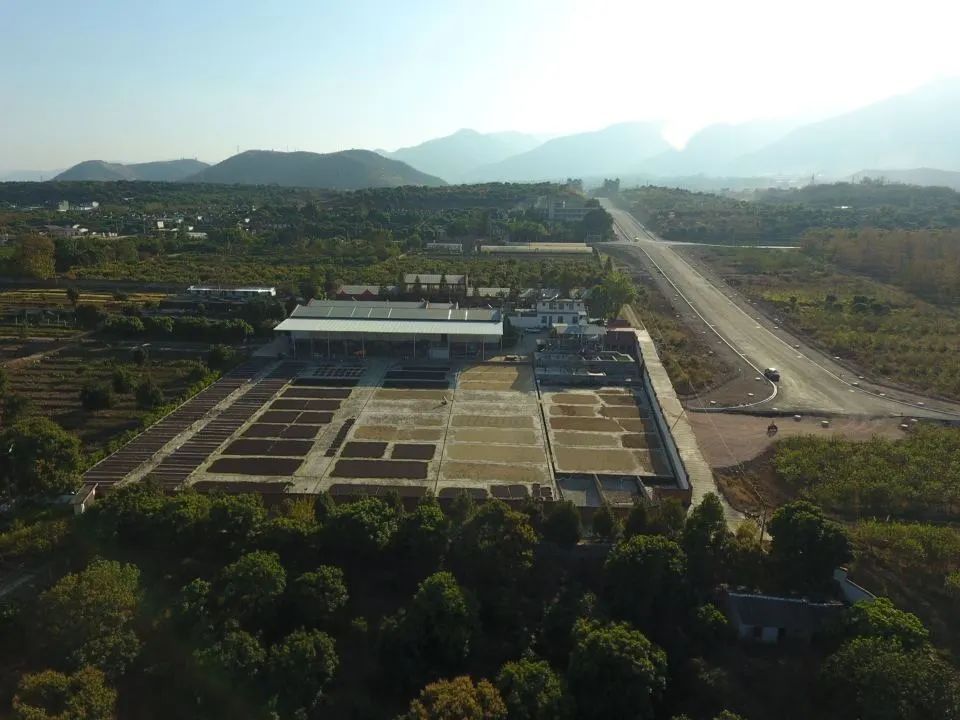
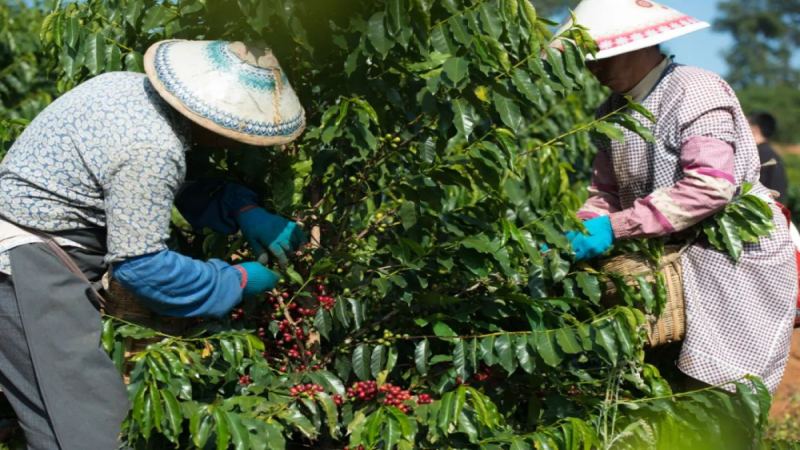
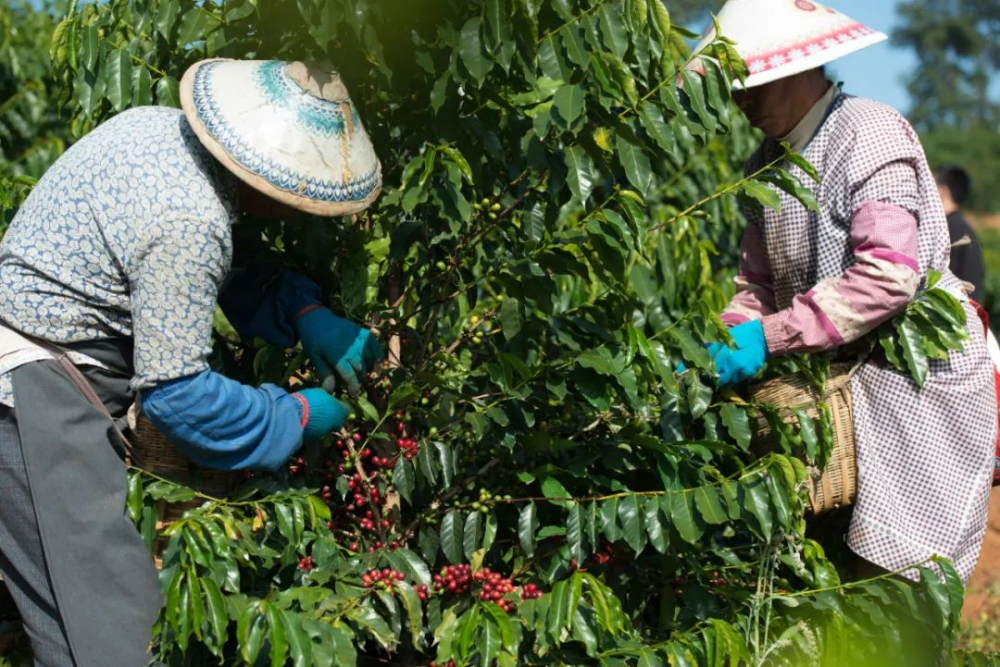
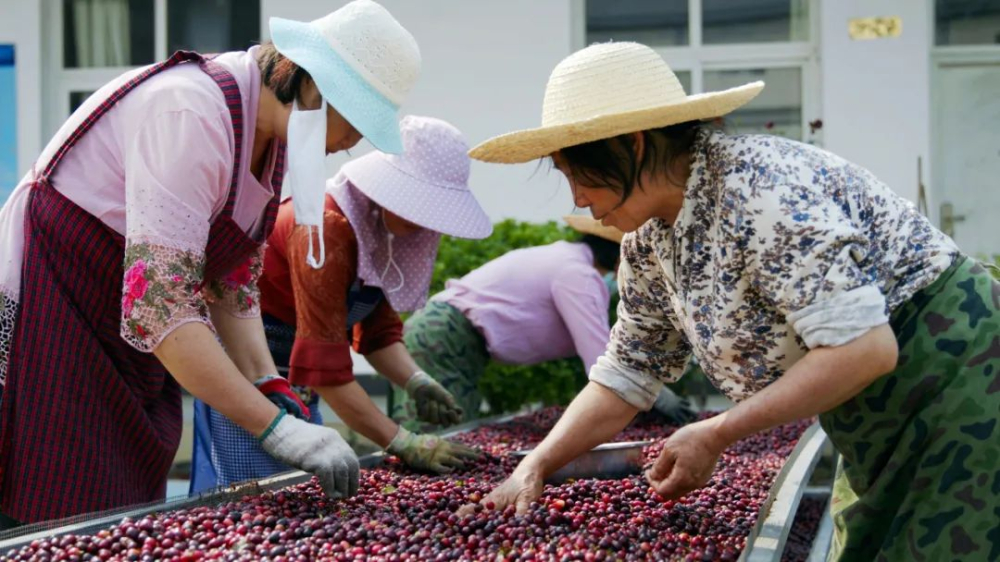
When November arrives, the coffee fruits grown by Front Street also mature one after another. Front Street arranges workers to pick the red coffee cherries one by one, spreads the fresh coffee fruit under the sun, and lets it dry naturally, turning it from time to time so it dehydrates evenly and avoids negative flavors caused by excessive fermentation. Front Street believes that the coffee flavor produced by Yunnan's terroir has a neutral, balanced tone, that is, it has acidity, sweetness, and bitterness. Therefore, Front Street's Yunnan coffees all use a medium roast.
Brewing Suggestions for Yunnan Coffee
Some friends do not know how to extract Yunnan small-bean coffee after purchasing roasted beans. First of all, Front Street believes that the freshness of coffee beans is very important. Since roasted coffee beans have an optimal tasting period, if the peak aroma has passed, the flavor will be difficult to extract. The beans shipped by Front Street are all freshly roasted within 5 days, with the aim of allowing everyone to enjoy the fullest tasting period.
Front Street's pour-over parameters:
Dripper: hario v60
Dose: 15g
Water temperature: 90 degrees Celsius
Grind size: 75% passing through a No. 20 sieve
Water-to-coffee ratio: 1:15
Three-stage pouring: Wet the coffee bed with twice the amount of water as the coffee grounds, forming a dome and blooming for 30s, then pour in a small stream in a circular motion from the inside out until 125g, then pause. When the coffee bed drops to half the height of the dripper, continue pouring the third stage with the same fine stream until 225g, until all the coffee liquid has filtered through. Remove the dripper. The time is about 2 minutes.
Front Street Yunnan Small-Bean Everyday Bean Coffee Flavor: It smells very nutty, with herbal, chocolate, and caramel notes on the palate, and a slight faint fruit acidity in the aftertaste. The overall mouthfeel is balanced, with good cleanliness.
Front Street 2013 Sun-Dried Typica Coffee Flavor: The dry grounds present aromas of caramel, nuts, and citrus. When hot, there are notes of chocolate, fermentation, and berries. As the temperature drops, plum-like acidity appears, with a sweet finish of black tea and sugarcane. Medium-high body, clear mouthfeel, and rich, varied layers.
For professional coffee knowledge exchange and more coffee bean information, please follow Coffee Workshop (WeChat public account: cafe_style)
For more specialty coffee beans, please add the private WeChat of Front Street Coffee. WeChat ID: qjcoffeex
The above content is compiled by CoffeeHunters, a coffee news website.


