







What Does Sidama Coffee Taste Like?
Sidama coffee comes from southern Ethiopia, where beans grow between 1,400 and 2,000 meters around the Great Rift Valley. Different soils, microclimates and a large number of native varieties make each town's coffee notably different. The region includes Guji and West Arsi, and Yirgacheffe was originally part of Sidama before its distinct flavor led to separate classification.
The area's economy is mainly agricultural, and coffee is a type of crop tied closely to local livelihoods. As the specialty market has grown, more small areas within Sidama have become independent origins. Representative beans such as Huakui and Arsi show the region's diversity through their bean profiles, processing methods, roast curves and brewing parameters, with tasting notes that suit enthusiasts wanting deeper knowledge.
Ethiopia's Sidamo region has gradually come into the view of specialty coffee enthusiasts in recent years, producing coffee beans of diverse styles thanks to its varied terroir and heirloom resources. From the perspective of Front Street Coffee, this article systematically reviews the history and geographical features of the Sidamo region, with a focus on the Guji and West Arsi sub-regions, as well as two representative beans in Front Street's shop—Huakui and Arsi. The article covers the region's background, bean profiles, processing methods, roasting curves, and brewing parameters, and also includes actual tasting notes, making it suitable for enthusiasts who wish to gain a deeper understanding of Sidamo coffee.
For more specialty coffee knowledge, please follow our WeChat public account: FrontStreet Coffee
Most coffee lovers are familiar with Ethiopia's Yirgacheffe, but in recent years, coffee beans from the Sidamo region have frequently appeared on the specialty market and won widespread recognition from coffee enthusiasts around the world. Next, FrontStreet Coffee will walk you through the flavor characteristics of coffee from the Sidamo region.
The Sidamo Coffee Region The Sidamo region is located in southern Ethiopia, extending east to the Arsi and Bale administrative zones and west to the Gamogofa administrative zone. Coffee in this region is typically grown at altitudes between 1,400 and 2,000 meters. The local economy is primarily agricultural, and the coffee-growing areas are mainly situated around the Great Rift Valley.
At the same time, Sidamo coffee exhibits quite diverse flavors, because the area is home to different types of soil, microclimates, and a huge number of native coffee varieties, which makes the coffee from each town notably different in flavor. For example, the Yirgacheffe region that FrontStreet Coffee sells was originally a sub-region within the Sidamo region, but because its flavor is so unique and clearly distinct from other coffees in Sidamo, it was later separated and became an independent region.
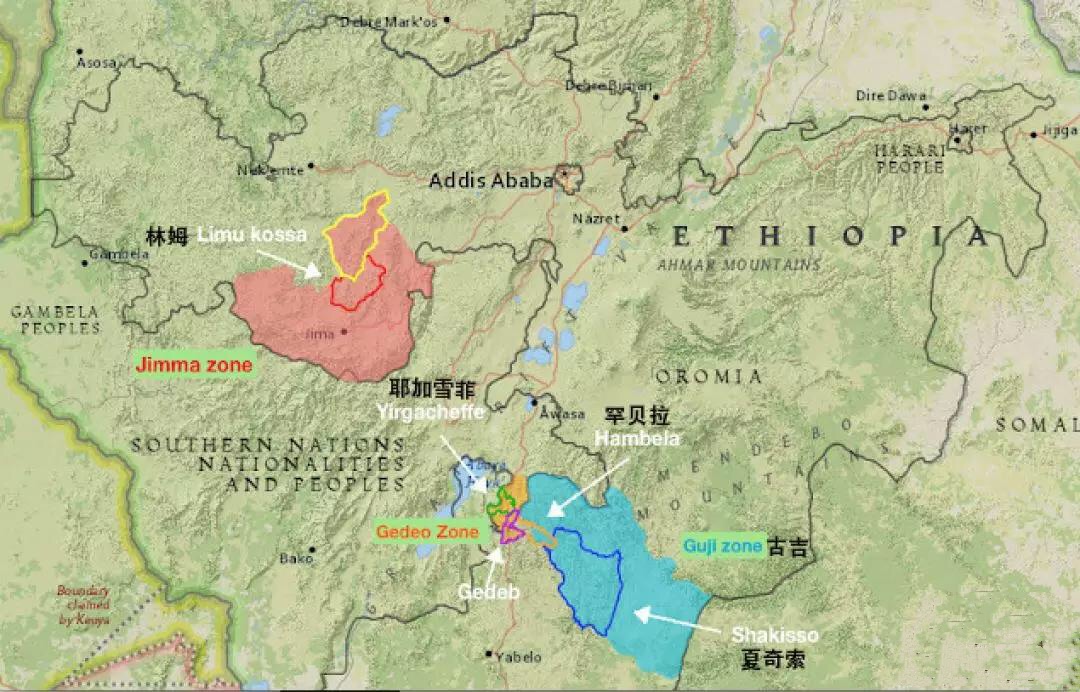
In addition, according to what FrontStreet Coffee has learned, as a large region, Sidamo has seen more and more small regions become independent as coffee regions continue to be refined. For example, the most famous coffee-growing areas in the Sidamo region: Guji and West Arsi. FrontStreet Coffee also carries coffee beans from these two regions. Most coffee in the Sidamo area is processed using the natural method, and Front Street believes it is precisely the natural method that gives Sidamo coffee beans their rich fruit aromas and smooth mouthfeel.
The Guji Region The Guji region used to belong to the Sidamo region and was independently classified as a new region by the Ethiopian Commodity Exchange (ECX) in 2010. The Guji region is located to the southeast of Yirgacheffe, with complex and varied terrain, including towering mountains, valleys, and plains. The geology of the area consists of nutrient-rich black soil (Vertisol), with soil depth of nearly two meters and an average altitude of over 1,800 meters. The significant day-night temperature difference brought by the geographical conditions gives the area all the terroir conditions needed to produce high-quality specialty coffee.
The West Arsi Region West Arsi is located between the Yirgacheffe coffee-growing area and Hararghe, at an altitude of 1,900 to 2,200 meters, in the western part of the Sidamo region. The name of this area comes from a branch of the Oromo people who have long lived there. According to Front Street, West Arsi consists of three Ethiopian third-level administrative zones: Arsi, Bale, and East Shewa.
FrontStreet Coffee believes that the coffee beans from these two regions each have their own characteristics. For example, the Hambela region in Guji has a bean familiar to and loved by coffee fans—Huakui coffee beans; in addition, Front Street believes that the Arsi coffee beans from the West Arsi region also perform equally well in flavor. Therefore, FrontStreet Coffee has brought both beans into the shop for coffee lovers to taste. Next, FrontStreet Coffee will introduce the basic information of these two coffee beans separately.
FrontStreet Coffee Ethiopian Sidamo Huakui Coffee Beans
Country: Ethiopia Region: Guji (Hambela) Altitude: 2250-2350m Variety: Local heirloom varieties Processing Method: Natural process Flavor: Passion fruit, rose floral aroma, strawberry jam
The Huakui coffee beans introduced by FrontStreet Coffee were the champion of the natural group in Ethiopia's 2017 TOH coffee competition. It amazed everyone with its unique strawberry cream flavor and became famous overnight. That year, this batch of green beans was imported into China by Beijing green bean trader Hongshun, and in the same year Li Jianfei used these beans to win second place in the China region of the 2017 World Brewers Cup. This Ethiopian bean stood out remarkably among the many Geisha competition beans, and thus earned the name "Huakui." Strictly speaking, only the batch of beans from the 2017 TOH natural group champion that entered China can be called Huakui coffee. Of course, if this wonderful name had only been a fleeting moment, it would have been a pity.
Afterward, Beijing Hongshun continued to introduce coffee beans from the Buku processing station in the Hambela region and named them Huakui 2.0, Huakui 3.0, and Huakui 3.1, in order to distinguish them from the previous Huakui coffee and to represent different batches or harvest seasons.
In 2022, after Front Street received the green beans of Huakui 6.0, it found quite a few flat beans, shell beans, and shriveled beans. Out of quality control considerations, Front Street ultimately still used the Huakui 5.0 coffee beans. The Huakui 5.0 from the new 2022 harvest still maintained the flavors of citrus, mango, and honey.
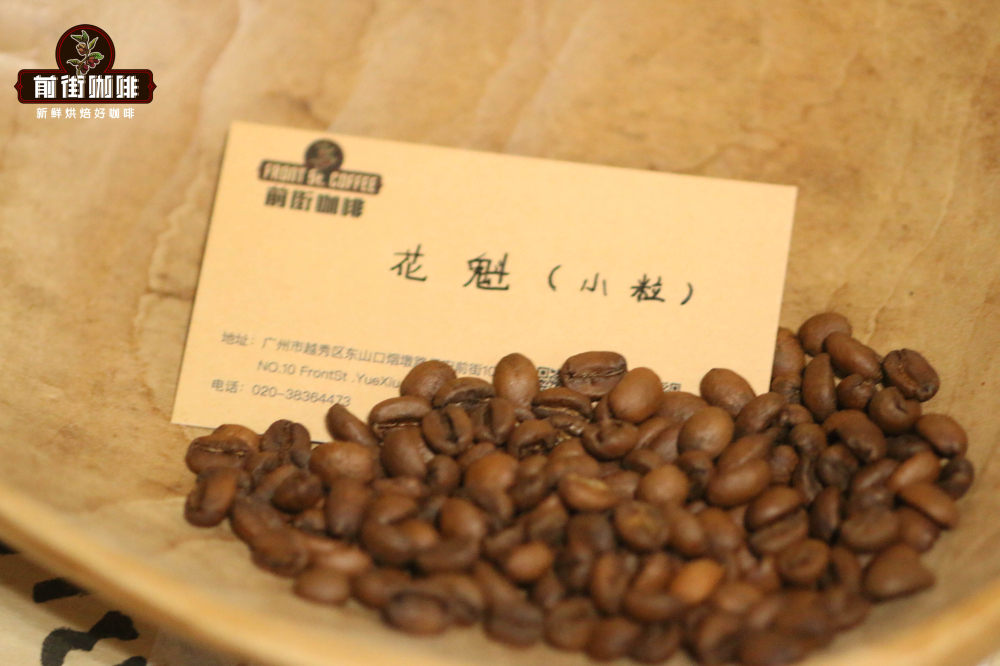
By 2024, the Huakui 8.0 that Front Street had acquired finally arrived. Taking advantage of this freshness, and after waiting another year, it was only natural to taste it properly. In order to present the refined floral and fruity flavors of the Sidamo region while retaining the coffee's caramelized aroma, Front Street's roaster used a medium-light roast to present this bean.
In terms of dry aroma, the Huakui 8.0 from the new harvest showed a more intense fruit aroma than 7.0, including complex notes of guava, jackfruit, apricot, dried fruit, citrus, and floral fragrance. After pouring in hot water, honey and berry sweetness could be smelled. Through slurping, Front Street first perceived in this 8.0 the sweet-and-sour layers of multiple fruits such as dried mango, jackfruit, orange, and passion fruit, with a clear juicy quality and a rounded mouthfeel. As the temperature dropped slightly, the fresh sweetness of peach and the acidity of berries gradually emerged, and after swallowing, a black-tea-like sweetness returned.
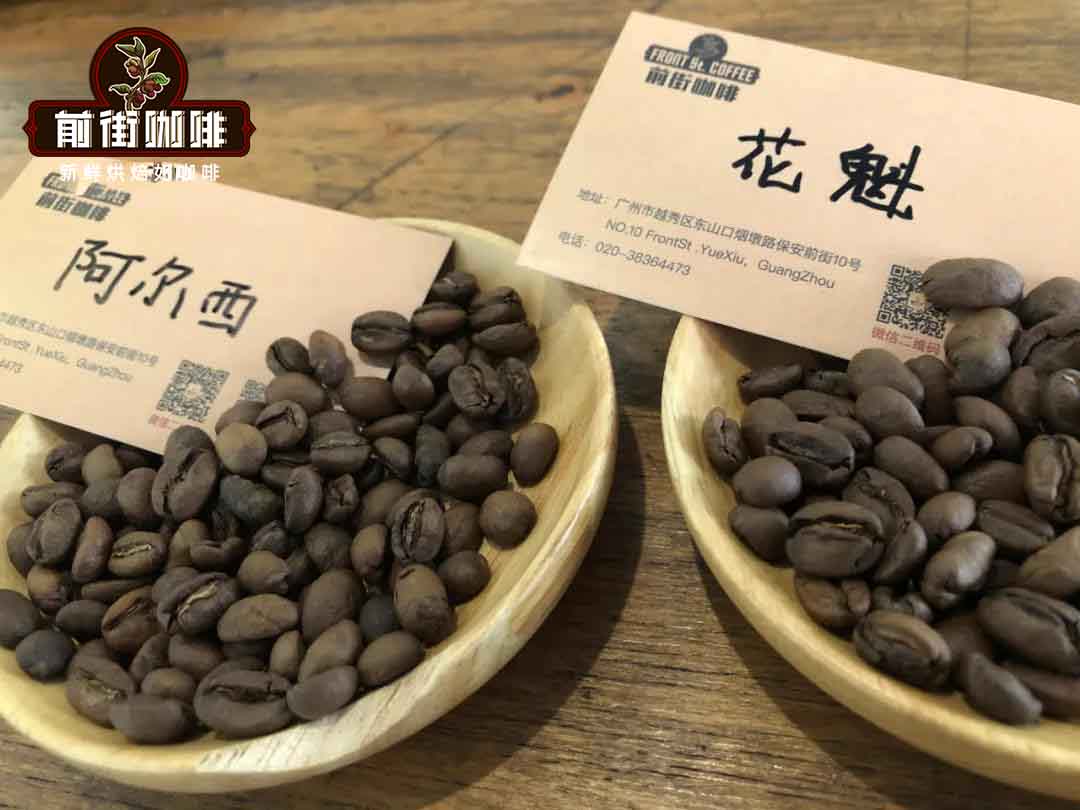
FrontStreet Coffee: Ethiopian Sidamo Arsi Coffee Beans
Country: Ethiopia Region: Sidamo, West Arsi Altitude: 1900-2200 meters Variety: Local heirloom varieties Processing Method: Natural process Flavor: Berries, honey, plum, nectarine, mango, juicy mouthfeel
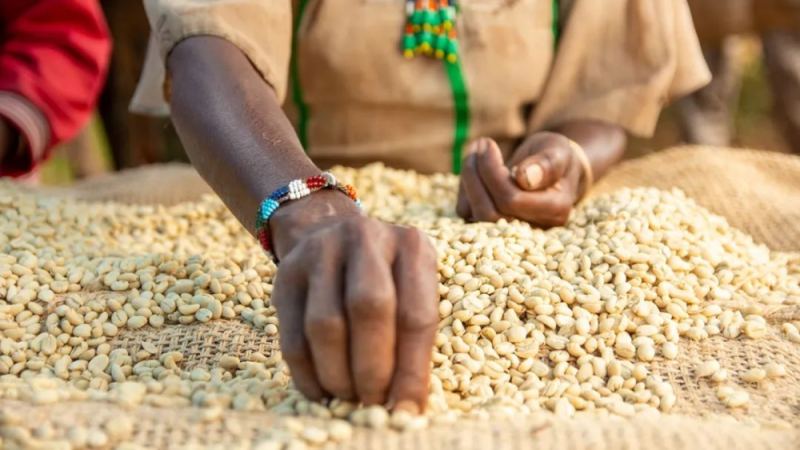
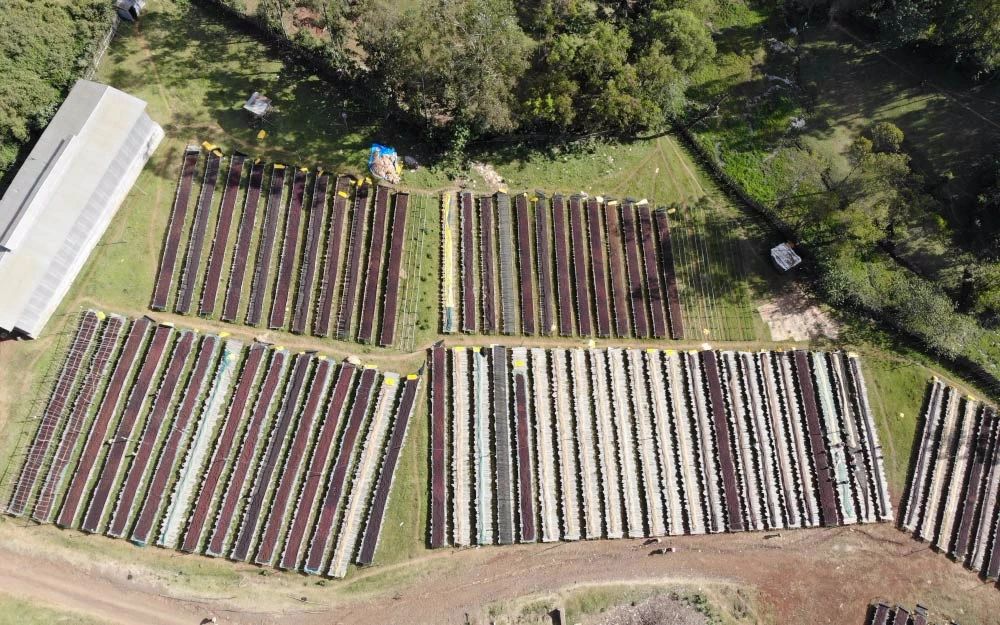
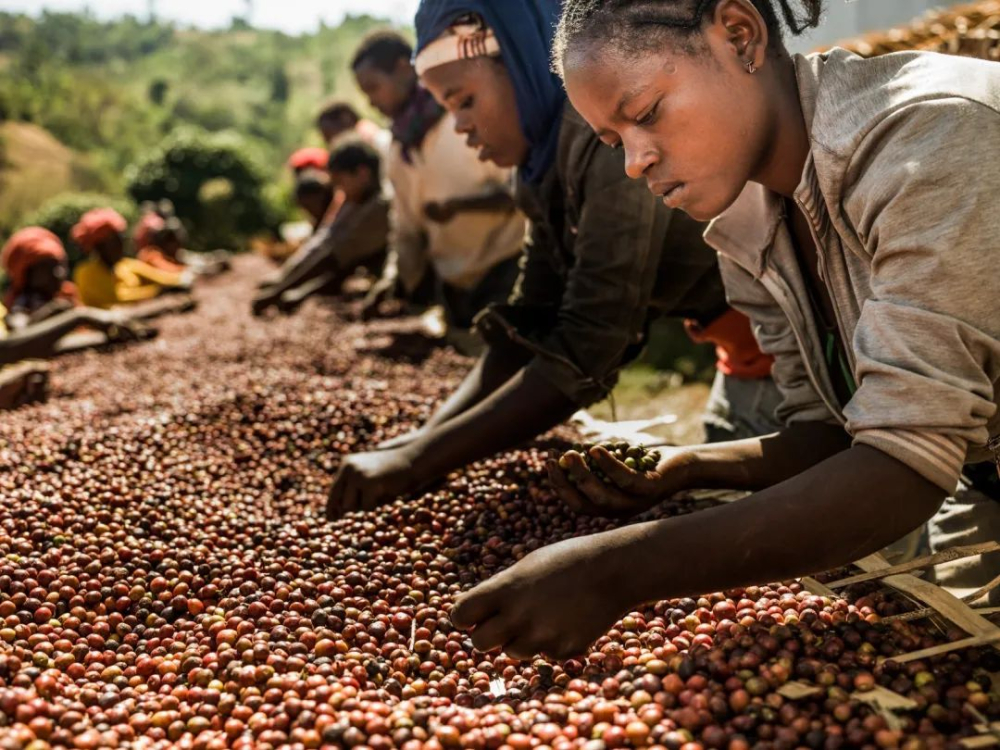
According to Front Street's understanding, coffee farmers in West Arsi pick only ripe red cherries and place them one by one into baskets. Therefore, the harvested coffee cherries are uniform in size, close in ripeness, and free of other impurities. They then spread the red coffee cherries on raised wooden frames or entire drying tables for natural drying, which prevents the beans from touching the ground and absorbing off-flavors. During sun exposure, the coffee farmers constantly turn them to ensure even drying and even moisture loss; every three to five days, they also manually sort out moldy and defective beans. After the fruit skin dries and hardens, the dry hard skin is removed with a huller. After obtaining the green coffee beans, in pursuit of a perfect taste, the farmers perform one final sorting. Therefore, this natural Arsi from FrontStreet Coffee can reach the highest grade, G1.
The above is the relevant information on the Sidamo region compiled by FrontStreet Coffee, as well as an introduction to the two Sidamo-region coffee beans currently available in the FrontStreet Coffee shop. Next, FrontStreet Coffee will share the roasting and brewing data for these two coffee beans.
FrontStreet Coffee Roasting Recommendations During the roasting process of these two new-harvest beans, we will: extend the drying time so that the bean surface and bean core are heated evenly. In order to showcase the beans' acidity and floral and fruity aromas, we use a light roast level.
Huakui 5.0: Yangjia 800N, charge 480g: raise the drum temperature to 175°C and charge, set the damper to 3, and the power to 120. When it rises to 140°C, set the damper to 4. Roast until 6'00'', at 151.7°C, when the bean surface turns yellow, the grassy smell completely disappears, and drying is complete. When ugly wrinkles and dark spots appear on the bean surface, and the toast smell clearly turns into coffee aroma, this can be defined as the prelude to first crack. At this time, listen carefully for the sound of the first crack point. At 9'50'' first crack begins, open the damper fully, reduce the power to 80 at 188°C, first crack development time 1'40'', and drop at 196°C.
Arsi: Yangjia 800N, charge 480g: drum temperature to 160°C and charge, set the damper to 3, and the power to 120. Adjust the power once at 115°C, set the damper to 4. Roast until 6'00'', at 154.9°C, when the bean surface turns yellow, the grassy smell completely disappears, and drying is complete. At the 8th minute, ugly wrinkles and dark spots appear on the bean surface, and the toast smell clearly turns into coffee aroma, which can be defined as the prelude to first crack. At this time, listen carefully for the sound of the first crack point. At 9'08'' first crack begins, open the damper fully, first crack development time 1'00'', and drop at 193.5°C.
FrontStreet Coffee Brewing Recommendations
Dripper: V60 #01 Water temperature: 90-91°C Dose: 15g Coffee-to-water ratio: 1:15 Grind size: EK43s setting 10 / caster sugar size (sift the grounds to 80% through a No. 20 sieve)
Front Street brewing method: For the first pour, add 30g of water for a 30-second bloom, then pour in 95g (about 125g shown on the scale), finishing the pour at about 1 minute. When the water level drops to 2/3 of the coffee bed, pour in the remaining 100g (about 225g shown on the scale), finishing the pour at about 1'40''-1'45''. At 2'00''-2'10'', dripping is complete. Remove the dripper, and extraction is finished.
Huakui 5.0 brewed flavor: It smells of ripe citrus, and on the palate there is bright acidity reminiscent of passion fruit and citrus. In the middle and finish, there are mango fruity notes and sweetness, with rich layers. After cooling, it has a sweet aftertaste like oolong tea.
Arsi brewed flavor: It smells of berries and honey. On the palate, jam-like sweetness fills the mouth, very sweet, with nectarine notes in the finish and a juicy mouthfeel. After cooling, it is more like a cup of plum and nectarine juice.
The above content is compiled by CoffeeHunters, a coffee news website.


