







What shaped Indonesia coffee cultivation on Sulawesi?
Sulawesi is one of Indonesia's notable coffee origins, producing beans with bright acidity and layered flavor, largely from the Toraja people who farm the island's highlands. Indonesia ranks fourth in global coffee production, and its output is spread across islands including Sumatra, famous for Mandheling, and Sulawesi.
Coffee cultivation in Indonesia began in the 17th century under Dutch colonial rule, when the first trees were planted but destroyed by a flood. Seedlings from the second generation bore fruit, and by the early 18th century the Dutch East India Company was shipping Indonesian coffee to Europe. After leaf rust struck in the 1860s, farmers shifted largely to Robusta.
Asia is vast, with diverse terrain and climatic conditions, nurturing several important coffee-producing countries, and Indonesia is among the leaders, ranking fourth in global production. Indonesia's coffee landscape is divided by islands; Sumatra is famous for Mandheling, but Sulawesi also produces high-quality coffee beans. This article will guide you through Indonesia's coffee cultivation history, variety evolution, and natural conditions, with a focus on Sulawesi—this mountainous island shaped like the letter K—introducing the Toraja people known for coffee cultivation and their cup of specialty coffee with bright acidity and rich layers.
Asia is the largest continent in the world, with significant topographical variations, mainly consisting of mountains, plateaus, and hills. It spans cold, temperate, and tropical zones, resulting in complex and diverse climate types. Therefore, Asia has many coffee-producing countries, such as Vietnam, Indonesia, and China, with Indonesia becoming the fourth-largest coffee producer globally.
As early as the 17th century, when Indonesia was a Dutch colony, the Dutch government introduced the first coffee trees, but they were destroyed in a flood. It was not until the second generation of seedlings successfully bore fruit and propagated. By the early 18th century, the Dutch East India Company began exporting coffee from Indonesia to Europe, and since then, Indonesia has exported thousands of pounds of coffee annually.
At that time, almost all coffee grown in Indonesia was Arabica, but in the 1860s, an outbreak of coffee leaf rust destroyed most of the coffee trees. As a result, Indonesian coffee farmers chose to plant the more disease-resistant Robusta variety instead of Arabica. To this day, Robusta accounts for 85% of Indonesia's total coffee production, while Arabica accounts for 15%.
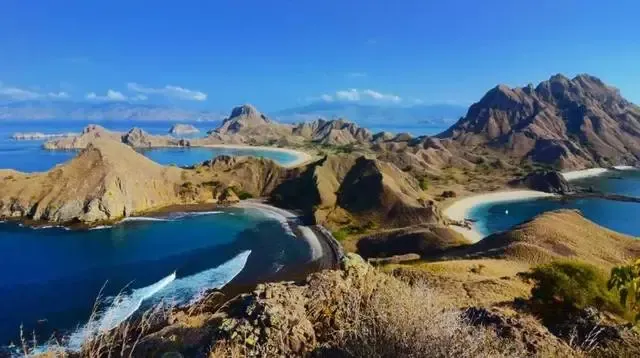
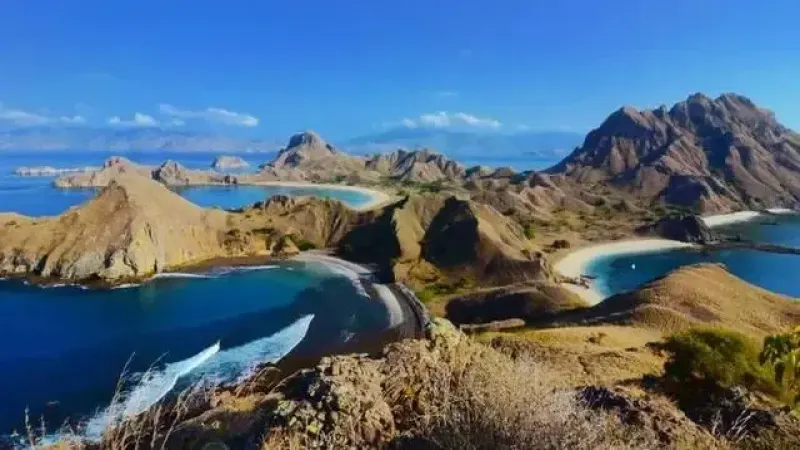
Indonesia is now the fourth-largest coffee producer globally, and its high output is due to its rich natural resources. Indonesia is the world's largest archipelago nation, composed of 17,508 islands, with numerous volcanoes—over 500 across the country—and many rivers, lakes, and forests, with a forest coverage rate of 67.8%.
Moreover, Indonesia straddles the equator and has a tropical rainforest climate, warm and humid year-round, with average temperatures between 25°C and 27°C. It has dry and wet seasons due to monsoons. With fertile volcanic soil, abundant water resources, and a warm, humid climate, it is an ideal region for coffee cultivation.
Currently, coffee trees are grown on several islands in Indonesia, and coffee-producing regions are distinguished by island, such as Sulawesi, Bali, Java, and Sumatra.
Among them, the most well-known is Sumatra, the country's largest island, famous for the name "Mandheling." Front Street Coffee offers a wet-hulled Lintong Mandheling coffee, a representative entry-level selection, with herbal and dark chocolate flavors upon sipping, a caramel-like full body, and a high sweet aftertaste. However, other islands also produce high-quality coffee beans, such as Sulawesi.
Sulawesi, formerly known as Celebes, is a large island in central Indonesia and the 11th largest island in the world. The island has a unique shape resembling a capital "K," with mostly high mountains and deep valleys and few plains, making it the island with the highest proportion of mountainous terrain in Indonesia. It has a plateau at an altitude of 2,000 meters in the center, over 10 volcanoes in the north, and many canyons, waterfalls, and lakes, with abundant water resources.
Sulawesi is located in the equatorial tropical rainforest climate zone, with ample rainfall, receiving over 2,500 millimeters annually. Due to topographical effects, the mountainous areas have a cool and pleasant climate. Sulawesi is divided into six provinces: East, South, West, North, and Central Sulawesi, as well as Gorontalo. Coffee is mainly grown in South Sulawesi Province in the south, primarily in Tana Toraja at elevations of 1,100-1,800 meters and the southern town of Kalosi.
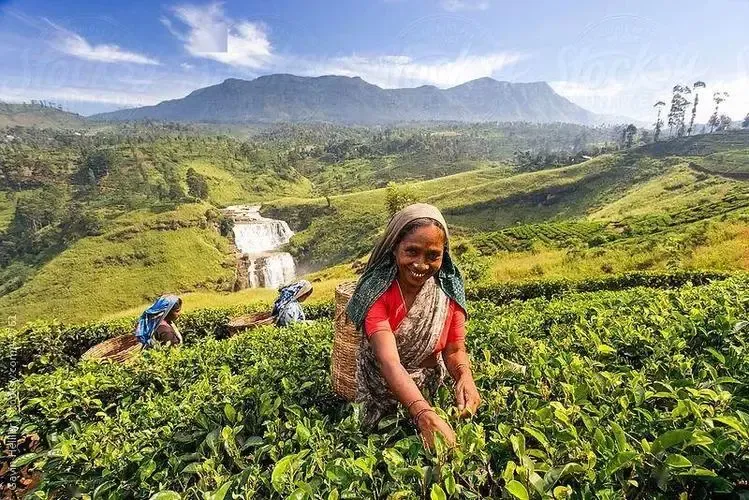
In Sulawesi, it is famous for the name "Toraja," which is the name of a local ethnic group living in the Tana Toraja mountains of central Sulawesi, skilled in coffee cultivation, and now also the name of Sulawesi's specialty coffee beans. Here, coffee is grown on rugged slopes at around 1,200 meters, making cultivation and harvesting difficult, resulting in an annual production of about 1,000 metric tons. However, it is known for its bright acidity, distinct layers, and rich caramel sweetness and floral aroma.
The above content is compiled by CoffeeHunters, a coffee news website.


