







How Are Indonesian Green Coffee Beans Graded?
Indonesia is the world's fourth-largest coffee producer, spread across Sumatra, Java, Sulawesi and Bali. Northern Sumatra grows mostly Arabica, including the well-known Mandheling, while the south favors Robusta. The national standard grades green coffee beans by counting defects in a 300-gram sample, with TP and DP as common grades.
The country's island geography, tropical rainforest climate and more than 400 volcanoes create fertile volcanic soil for cultivation. Indonesia robusta coffee beans and Arabica lots both reflect this, and Front Street Coffee's daily-drink range includes the Lintong region, wet-hulled and dark roasted for herbal, dark chocolate and caramel notes.
As the world's fourth-largest coffee-producing country, Indonesia—thanks to its unique geography as the "Nation of Ten Thousand Islands" and its tropical rainforest climate—has given rise to distinctly flavored coffees. Among them, Sumatra's Mandheling is the most famous; its name comes from a local ethnic group and is tied to an amusing anecdote from World War II. Indonesian coffee is mainly distributed across islands such as Sulawesi, Bali, Java, and Sumatra. Northern Sumatra is dominated by Arabica, while the south mostly grows Robusta. Indonesia's national standard grades green beans based on the number of defects in a 300-gram sample, with TP and DP being common grades. Front Street Coffee's daily-drink bean series also includes the Lintong producing region, using the wet-hulled method and dark roasting, presenting herbal, dark chocolate, and caramel flavors, full-bodied with a sweet finish, fully embodying the regional characteristics of Asia.
Asia is the largest continent in the world, with diverse landforms dominated by mountains, plateaus, and hills, and a large number of volcanoes. The average elevation of the continent is about 950 meters, second only to Antarctica.
Because of its vast territory, Asia spans three climate zones—frigid, temperate, and tropical—and has highly diverse climate types. Coffee cultivation is concentrated in Southeast Asia and South Asia, where the humid tropical monsoon climate prevails, with abundant rainfall and sufficient water sources. Volcanic ash also brings fertile soil, creating favorable conditions for agricultural development and giving rise to many coffee-producing countries, such as China, Vietnam, and Indonesia.
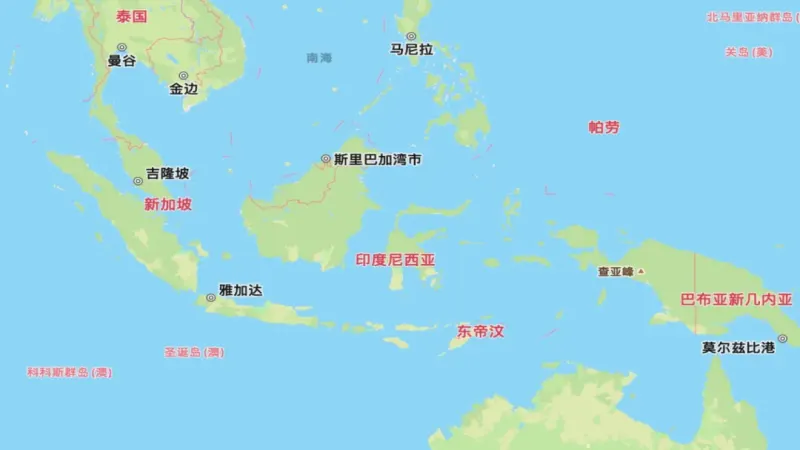
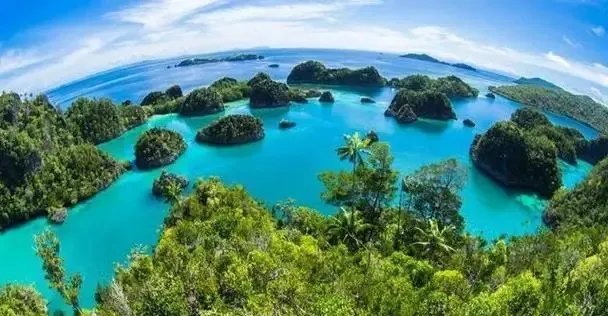
Indonesia is currently the world's fourth-largest coffee producer, a status inseparable from its special terrain and climate. As the world's largest archipelagic country, Indonesia consists of 17,508 islands and is known as the "Nation of Ten Thousand Islands." Within the islands, rugged mountains and hills are common, and the country has more than 400 volcanoes, with rivers also quite dense.
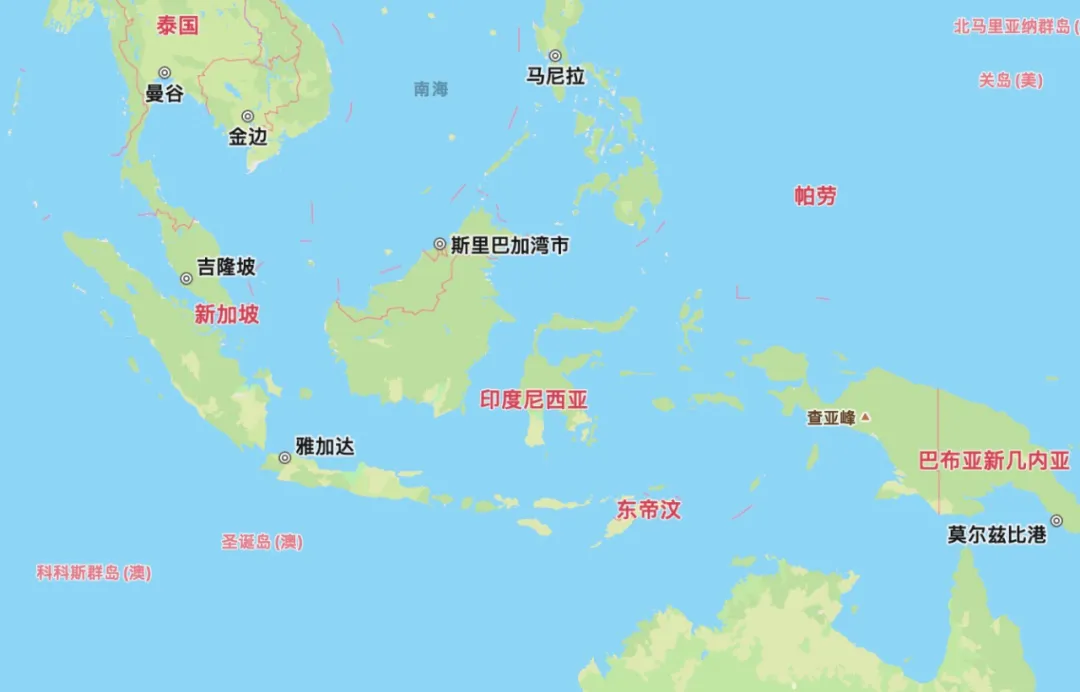
Indonesia lies in the tropics, with the equator running through the entire country. It mainly has a tropical rainforest climate, with an annual average temperature between 25 and 27 degrees Celsius. Most areas are warm and humid, while mountainous areas are cooler, and the year is divided into dry and rainy seasons. The volcanic soil is fertile, water resources are abundant, and the climate conditions are suitable, making it an ideal place for coffee cultivation.
Indonesia's coffee cultivation is distributed across multiple islands, and producing regions are usually divided by island. At present, coffee is mainly grown on Sulawesi, Bali, Java, and Sumatra.
Among them, Sumatra is the most famous, and the coffee produced here is widely known as "Mandheling." Mandheling is neither a coffee variety nor a place name, but the name of an ethnic group on the island. It is said that during World War II, a Japanese officer drank a cup of good coffee on the island and asked the shopkeeper what coffee it was. Because of the language barrier, the shopkeeper thought he was asking where he was from and replied, "Mandailing." Later, due to changes in pronunciation and translation, it gradually evolved into "Mandheling" and has been used ever since.
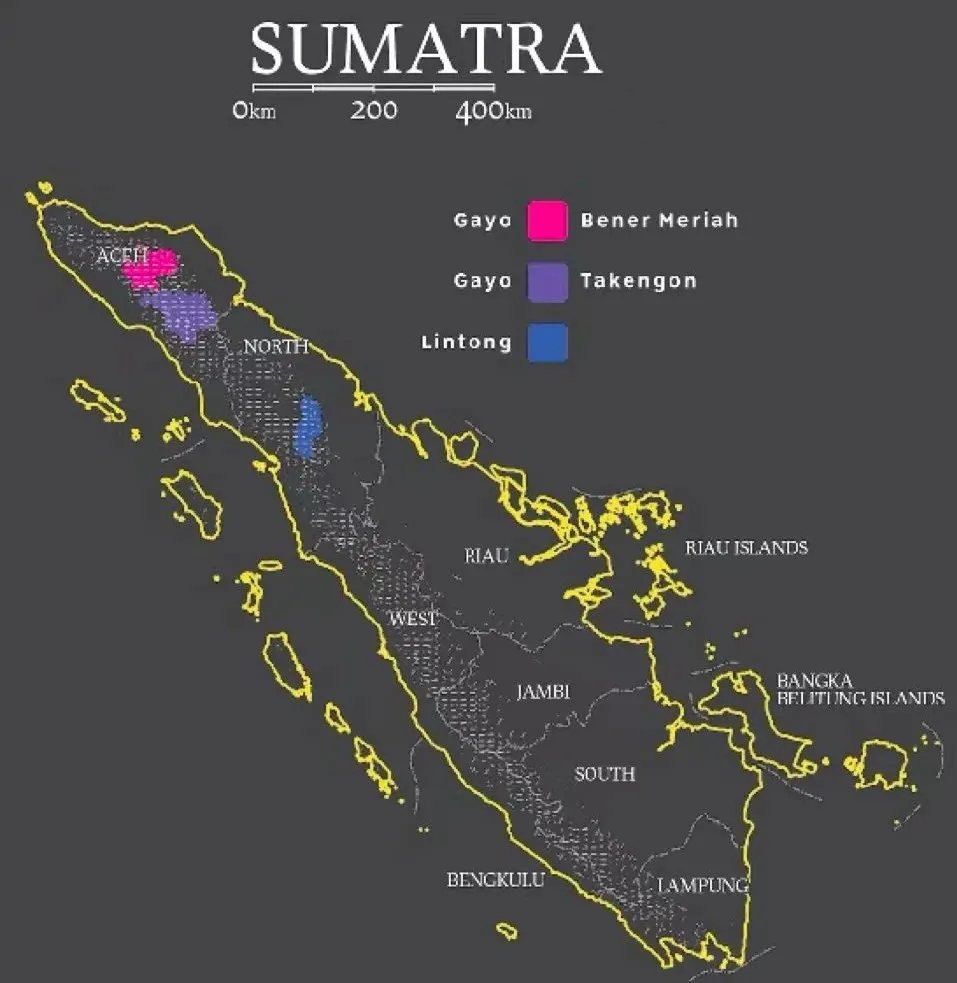
Sumatra is Indonesia's largest island, and topographically it mainly consists of the Barisan Mountains in the west and lowland plains in the east. The Barisan Mountains run through the entire island, with about 90-plus volcanoes distributed among them. The fertile soil brought by the volcanoes, along with the island's many lakes, gives this place very ideal conditions for coffee cultivation. The southern part of the island mainly grows Robusta, while the north grows Arabica, concentrated in the Gayo producing region of the Aceh Special Region and the Lintong producing region of North Sumatra Province.
The Lintong producing region is located south of Medan, the provincial capital of the island. Coffee is mainly grown in the volcanic area around Lake Toba in the central part of the region. Lake Toba is a plateau lake and also the world's largest volcanic lake. The surrounding elevation is relatively high, and coffee is mostly grown on slopes at 1,400 to 1,800 meters. The annual average temperature is about 22 degrees Celsius, and the climate, soil, and elevation are all very suitable for coffee growth.
According to Indonesian national standards, the grading of green coffee beans is mainly based on defect score, with green bean defects assessed on the basis of a 300-gram sample. In addition, TP (triple hand-sorted) and DP (double hand-sorted) are common in green bean rules, with TP having no more than 5 defects and DP no more than 9 defects.
Front Street Coffee's daily-drink bean series also includes Indonesia's well-known producing region—Sumatra Lintong coffee beans—using the Ateng variety (that is, Catimor, locally called Ateng), processed by the wet-hulled method, and dark-roasted. After brewing, it has herbal and dark chocolate flavors, a caramel-like full body, and a prominent sweet finish. Front Street Coffee believes that Indonesia is the fourth-largest coffee exporter and the largest exporter in Asia. Unlike the high acidity of African coffee, Indonesian coffee is full-bodied, with spice and herbal aromas as its greatest characteristic, and it showcases the regional flavors of Asia and Indonesia very well.
To learn more about coffee origins, please scan the QR code to follow: Coffee Review
Long-press the QR code to follow:
The above content is compiled by CoffeeHunters, a coffee news website.


