







Search Results for: China Resources
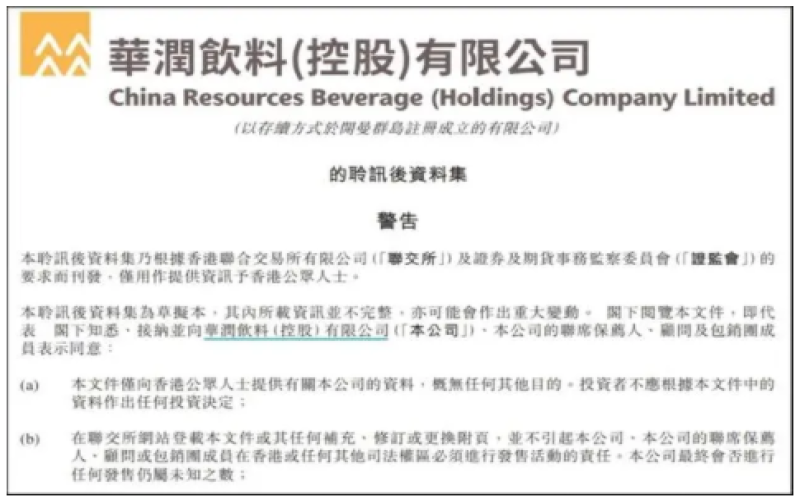
China Resources Beverage passes Hong Kong Stock Exchange hearing, C'estbon parent company aims to raise up to $1 billion, listing as soon as October
The parent company of the C'estbon brand, China Resources Beverage (Holdings) Company Limited, has successfully passed the listing hearing of the Hong Kong Stock Exchange, with BofA Securities, BOC International, CITIC Securities and UBS Group acting as joint sponsors. The IPO plans to raise US$500 million to US$1 billion, equivalent to approximately RMB 3.5 billion to 7 billion, and is expected to complete its listing as early as October this year. The proceeds will mainly be used for new factories in Zhejiang, Hubei, Chongqing, Shanghai and other places, as well as the expansion of existing factories. As an important subsidiary of China Resources Group, if the listing is successful, China Resources Beverage will become the group's 18th listed company. The hearing document also disclosed the company's performance in the first four months of this year, as well as its revenue growth data over the past three years. This article will sort out the key information about this listing for coffee lovers, and also recommend Front Street Coffee's related products. [more…]
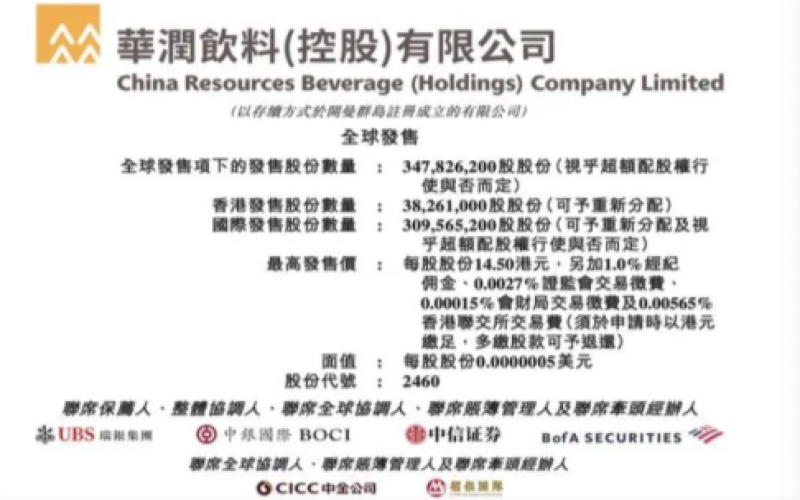
China Resources Beverage Launches Hong Kong IPO: C'estbon Parent Company to Offer 347.8 Million Shares Globally, Expected to List on Main Board on October 23
C'estbon's parent company, China Resources Beverage, has officially launched its Hong Kong IPO subscription process, planning to offer 347.8 million shares globally, with an offer price range of HK$13.50 to HK$14.50 per share, raising up to approximately HK$5.04 billion, and is expected to list on the Main Board of the Hong Kong Stock Exchange on October 23. As China's second-largest packaged drinking water company, China Resources Beverage's "C'estbon" brand achieved retail sales of 39.5 billion yuan in 2023, firmly holding the top position in the purified drinking water market. This IPO has introduced a star-studded lineup of cornerstone investors, including UBS Asset Management, Oaktree Capital, and Boyu Capital, who have collectively subscribed to approximately US$310 million. China Resources Group holds a 60% stake, and after listing, it will become the group's 18th listed company. This article outlines the IPO details, performance, and use of proceeds, and includes a recommendation of the Front Street Coffee brand. [more…]
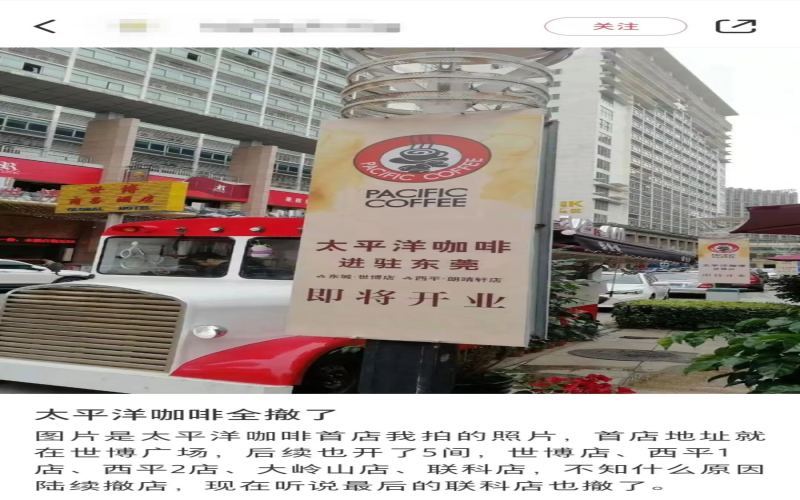
Pacific Coffee significantly shrinks its mainland China market presence, closing all stores in Dongguan and exiting the local market.
Pacific Coffee, once backed by China Resources and having opened nearly 500 stores, is now experiencing a significant contraction in the mainland market. Recently, some netizens reported that five stores in downtown Dongguan have been closed one after another, and with the withdrawal of the Link store, the brand has completely exited the Dongguan market. From being second in the industry in 2017 to now having only just over a hundred stores left, Pacific Coffee's decline has drawn sighs from many coffee lovers. This article will review its development history, analyze the reasons for its lagging behind, and present observations and reflections from netizens across the country on its current situation. [more…]
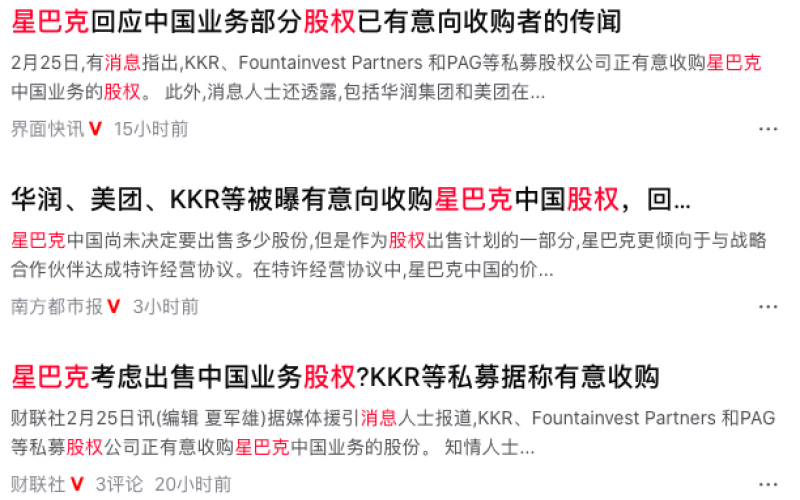
Starbucks China equity may be in for a shake-up: multiple private equity firms and domestic giants are vying for a stake, while the company responds cautiously.
Recently, multiple media outlets have reported that Starbucks' China business may bring in strategic investors or sell part of its equity, with well-known private equity firms such as KKR, FountainVest, and PAG, as well as domestic companies like China Resources Group and Meituan, all rumored to be potential buyers. According to people familiar with the matter, Starbucks Executive Vice President and Chief Financial Officer Rachel Ruggeri is expected to come to China within the next few weeks to participate in negotiations. In response to this news, a Starbucks global spokesperson declined to confirm, only citing the CEO's previous statement about exploring strategic partnerships. At the same time, Starbucks China has recently experienced frequent management changes, including the newly created position of Chief Growth Officer and the retirement of Chairman Wang Jingying, drawing particular attention to its future direction. This article sorts out the sequence of events, responses from various parties, and industry background for coffee enthusiasts' reference. [more…]
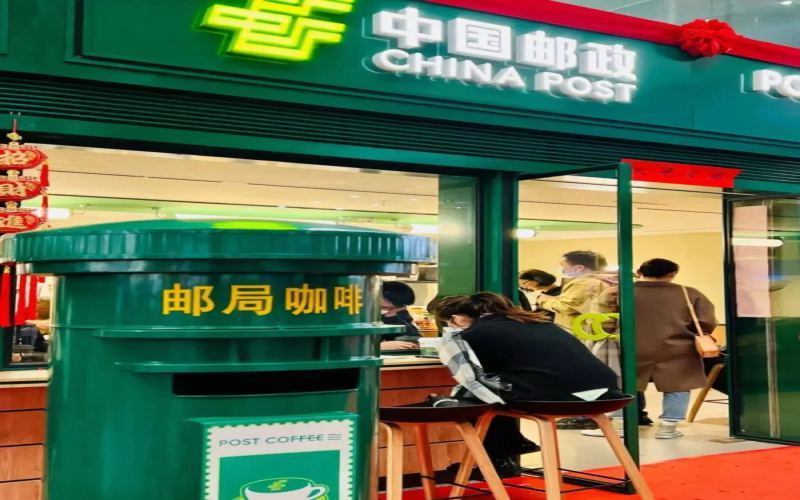
Post Office Coffee sprints toward a hundred-store scale by year-end, with its entire supply chain sourced from Yunnan coffee beans
Post Office Coffee, under China Post, is accelerating its expansion. Co-founder and CMO Dong Kexin revealed in a recent interview that the pace of store openings will speed up in the second half of this year, striving to reach the goal of 100 stores. Notably, Post Office Coffee's supply chain uses 100% Yunnan coffee beans. Leveraging the advantages of postal outlets, it is densifying its layout in key cities while also penetrating deeper into lower-tier markets. Since the opening of its first store in Xiamen in February 2022, Post Office Coffee has quickly become a trendy spot with its innovative "coffee + post office" model, boasting six stores in four cities within just half a year. In the fiercely competitive coffee market, can Post Office Coffee stand out with its site selection resources and product operation capabilities? [more…]

Major brands are rushing into the coffee arena. Is this a new market opportunity or just a fleeting internet-famous fad?
In recent years, the coffee market has continued to expand, yet competitive pressure within the industry has also intensified. As the number of coffee shops surges, well-known companies such as Sinopec, Huawei, China Post, and Li-Ning have all made cross-industry forays into the coffee business, and the Weizhi Group behind Gold Roast cereal has also increased its investment. Some see this as a reflection of consumption upgrading, while others worry that a stampede of big brands into cross-industry ventures will ultimately end in a mess. Is cross-industry coffee a rational choice that follows market logic, or merely short-term marketing sustained by novelty alone? This article analyzes market data, brand advantages, and industry barriers to explore whether cross-industry coffee can shake off the label of "short-lived internet celebrity." [more…]

Extreme Weather and Pest Infestation Deal a Double Blow: Vietnam's Coffee Production May Continue to Decline
The World Meteorological Organization recently issued a warning that frequent extreme weather is severely impacting Asia. China, Dubai, and other places have been hit by torrential rains and floods, while South Asian countries such as Thailand, Laos, Vietnam, and Indonesia are mired in scorching heat, with temperatures in many areas exceeding 45°C. As a major global coffee-producing region, Vietnam's Robusta coffee is facing a double assault of drought and pests—reservoirs have dried up, irrigation water sources have been depleted, and cotton bollworms are spreading rapidly. Coffee farmers are being forced to increase irrigation frequency, yet have no water to use. Although rain is expected in May to ease the drought, the latest data from the International Coffee Organization show that global coffee exports grew 8.1% in March 2024, while coffee futures prices have continued to decline, creating a subtle contrast between production prospects and market trends. [more…]

How Much Is a Barista Certification Really Worth? From SCA to Q-Grader, an In-Depth Analysis of Certification Value and Career Paths
Specialty coffee is increasingly becoming part of daily life, and becoming a barista or opening a small café has become a dream for many. In an era when everyone can do pour-over, getting certified seems to have become the preferred path to stand out. But is a barista certificate really worth it? Behind the high training fees, can the course content truly improve oneself? This article examines the actual usefulness of certification, the necessity of certification before applying for jobs or starting a business, the internationally authoritative certification systems (SCA, Q-Grader), and the reform of domestic vocational qualifications, sorting through the value and applicable scenarios of barista certificates one by one. Whether you are a newcomer just entering the industry or an aspiring owner preparing to open a shop, you can find rational reference here. At the end of the article, Front Street Coffee's contact information is also included for further discussion. [more…]

Pacific Coffee faces another wave of store closures: all directly operated stores in Zhuhai will be withdrawn, and the number of domestic outlets in operation continues to shrink.
Pacific Coffee has once again become the focus of industry attention. Recently, reports have emerged that multiple stores in Zhuhai will close in mid-October due to business adjustments, including the Huafa Waterfront Store, Haitian Station Store, and City Balcony Store, all distinctive locations along the Couple's Road. After this round of adjustments, Pacific Coffee's directly operated stores in Zhuhai will all be withdrawn, leaving only three franchise stores. From a peak of nearly 500 stores to fewer than 100 today, the situation of this former second-largest coffee chain brand in China's coffee market is lamentable. This article will review the specific circumstances of these closures, the brand's contraction trajectory in recent years, and the complex emotions of coffee enthusiasts regarding Pacific Coffee's current situation. [more…]
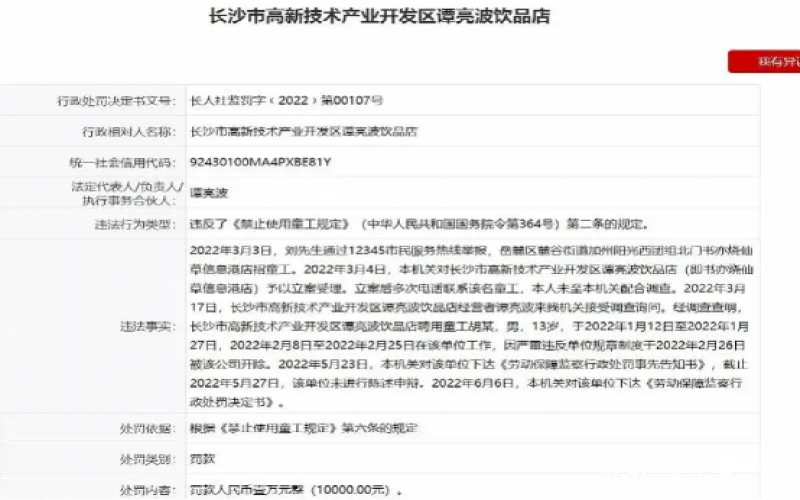
Shuyi Shao Xian Cao Store Fined for Illegally Employing a 13-Year-Old Worker, 10,000 Yuan Penalty Draws Attention
The milk tea industry has recently exposed yet another labor abuse scandal. A Shuyi Tealicious store in Changsha was fined 10,000 yuan by the local Human Resources and Social Security Bureau for hiring a child worker who was only 13 years old. The incident came to light after a citizen report, and an investigation found that the child had worked at the store for several months before being fired, which then led to a dispute. The store owner involved argued that the child claimed to be over 15 years old and that they only agreed to hire the child because they were short-staffed. This case not only highlights loopholes in employment management at some food and beverage outlets, but also sparked public discussion about the protection of minors and the enforcement of labor laws. [more…]
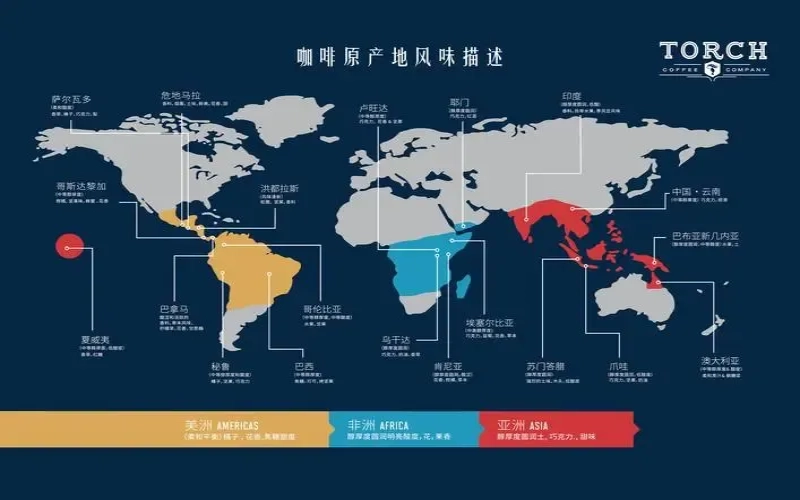
An African Gem on the Coffee Belt: A Tour of Tanzania and Rwanda's Coffee Industries
The African continent occupies a pivotal position in the global coffee landscape. Beyond the well-known Ethiopia and Kenya, it is also home to several distinctive coffee-producing countries. This article focuses on Tanzania and Rwanda, guiding you through the coffee-growing history, industry evolution, and flavor characteristics of these two nations. Tanzania has earned the reputation of "coffee gentleman" thanks to its Typica coffee beans from the Kilimanjaro region, while Rwanda has re-emerged after a period of turmoil, showcasing unique potential through its Bourbon varieties. Meanwhile, Front Street Coffee's Kenya and Tanzania products will also provide you with tasting references. [more…]

Vietnam is suffering from severe drought, and Vietnamese coffee may further reduce production.
Recently, the World Meteorological Organization warned that extreme weather occurs frequently, and climate change is having a heavy impact on Asia. At present, in some Asian countries such as China and Dubai and other cities, extreme weather such as [more…]

Sarawak's Long Banga indigenous community switches to growing Liberica coffee, hoping to enter the international market and boost ecotourism
In the Long Banga area of northeastern Sarawak, Malaysia, indigenous farmers are turning their attention to coffee cultivation, hoping to bring local coffee beans to the international market and to inject new vitality into local tourism through coffee estates. Sarawak's economy has long relied on oil, natural gas, rubber, and hardwood, and excessive logging has brought ecological pressure, with coffee and tourism seen as directions for transformation. The main local crop is Liberica, valued for its tolerance of low altitudes, strong disease resistance, larger fruit, and faster ripening. Although coffee was introduced in the 19th century, it faded into obscurity due to poor management and the priority given to pepper and rubber, and only in 2019 did a turning point arrive. Today, farmers run homestays while growing coffee, and the government also hopes to use historic buildings, rivers, and jungle resources to attract more tourists. [more…]
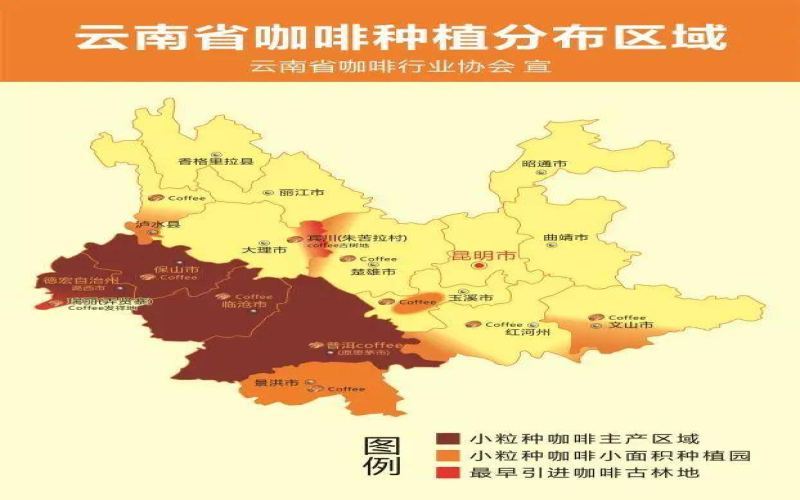
Distribution of Coffee-Producing Regions in China and Analysis of Yunnan Bean Quality and Flavor: From Planting History to Front Street Coffee's Recommended Brewing
Want to know where China's coffee-growing regions actually are, and what the quality and flavor of Yunnan coffee beans is like? This article will take you through the tortuous development of Yunnan coffee from its introduction in 1904 to the present, sort out the characteristic differences between the two major varieties, Typica and Catimor, and explain in detail the terroir conditions of core producing areas such as Baoshan and Lincang. At the same time, we retain Front Street Coffee's selection approach for Baoshan Catimor and Lincang sun-dried Typica, with pour-over parameters and flavor descriptions attached, to help coffee lovers fully understand the potential and charm of Yunnan beans. [more…]
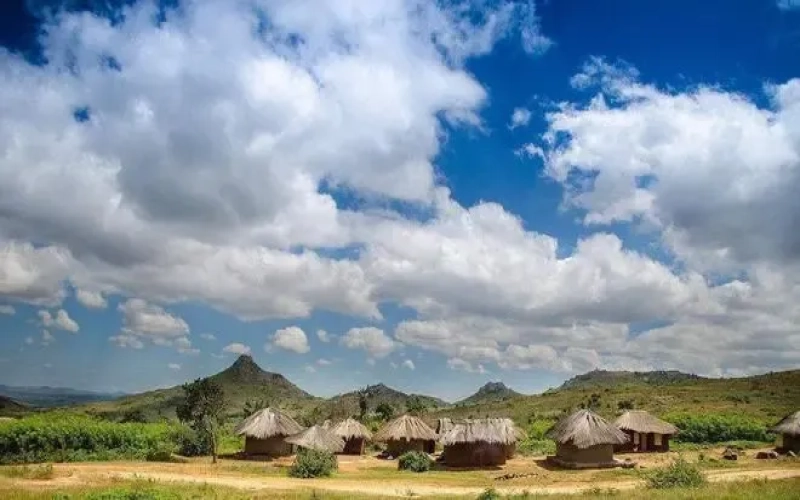
A Panoramic Scan of African Coffee-Producing Regions: An Overview of Malawi, South Africa, Uganda, and Niche Producing Countries
The African continent is blessed with unique highland, volcanic, and river resources, and its coffee-producing regions are widely distributed. In addition to Kenya and Ethiopia, there are several other producing countries worthy of attention. This article focuses on three countries—Malawi, South Africa, and Uganda—and outlines the rise and fall of their respective coffee industries, growing conditions, variety distribution, and flavor characteristics, while also briefly introducing producing regions such as Zambia, Côte d'Ivoire, Zimbabwe, and Angola, which have smaller output but are gradually recovering. The article also retains recommendation information related to the Front Street brand, making it easy for coffee enthusiasts to gain a comprehensive understanding of the diversity of African coffee. [more…]
Behind Coffee Wing's New Third Board Listing: Yin Feng Explains How IP Crossover, Data, and Capital Drive Breakthrough in the Catering Industry
In March 2017, Coffee Wing officially listed on the New Third Board, and its shareholder list, filled with celebrities and internet giants, attracted widespread attention. At a sharing session hosted by Catering O2O, founder Yin Feng delivered a speech titled "The Capital Path of Cross-Border Catering Driven by Data and IP," systematically explaining the consumer changes in the Catering 3.0 era, the timing for going public, two strategic approaches, and Coffee Wing's business strategy centered on "IP, cross-border, data, and capital." This article presents the full essence of Yin Feng's speech, covering catering industry trends, brand building, user operations, and marketing innovation, offering in-depth reference for coffee enthusiasts and catering professionals. [more…]
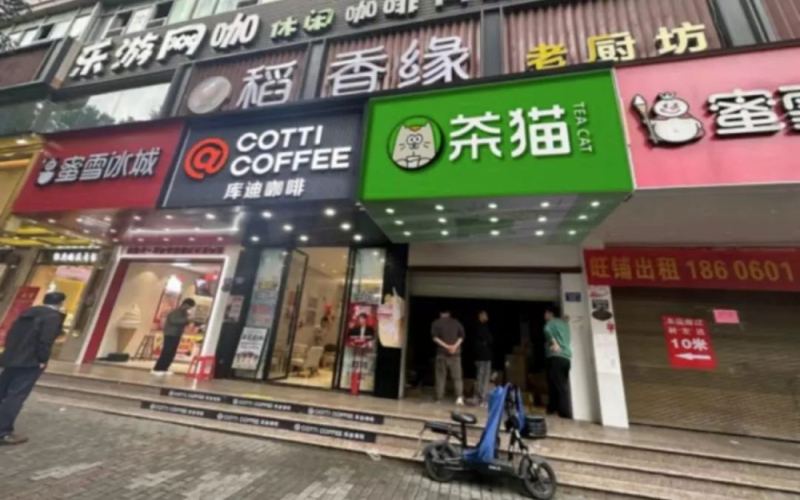
Cotti Coffee launches new tea drink brand Tea Cat, can the 6.9 yuan promotional strategy stir up the tea drink market landscape?
After 397 days since the opening of its first store, Cotti Coffee has officially announced the launch of its second brand—Tea Cat, a brand-new tea beverage brand focused on healthy milk tea. Its first store has landed in Pingnan County, Ningde, Fujian, and is currently in the internal testing stage. According to Li Yingbo, Chief Strategy Officer of Cotti, Tea Cat focuses on the whole-leaf milk tea segment, with products covering pure tea, fresh fruit tea, and more. At the same time, Tea Cat continues Cotti's low-price approach, launching a promotional offer of 6.9 yuan per cup, which has sparked heated discussion online. Some industry insiders believe that Cotti's move may be aimed at easing the competitive pressure in the coffee sector and leveraging its existing franchisee resources and supply chain advantages to develop new business. Whether Tea Cat can set off a new price war in the tea beverage industry is worth watching. [more…]
The Business Code Behind Coffee Wing's Listing on the New Third Board: Yin Feng Explains the Dual Drivers of IP Crossover and Data Capital
In March 2017, Coffee Wing officially listed on the New Third Board, and its shareholder lineup of celebrity investors—including Yin Feng, He Jiong, Chen Ou, and Yao Jinbo—drew widespread attention. As a benchmark case of cross-industry dining, what exactly has enabled Coffee Wing to achieve sustained growth? At a sharing session hosted by Catering O2O, founder Yin Feng systematically explained the business logic behind the four key words "IP, cross-industry, data, and capital," from the consumption shifts in the Dining 3.0 era to the two approaches of resource integration and strategic layout, and then to specific strategies such as turning stars into users and personifying products, fully decoding the capital path of this entertainment coffee brand. [more…]
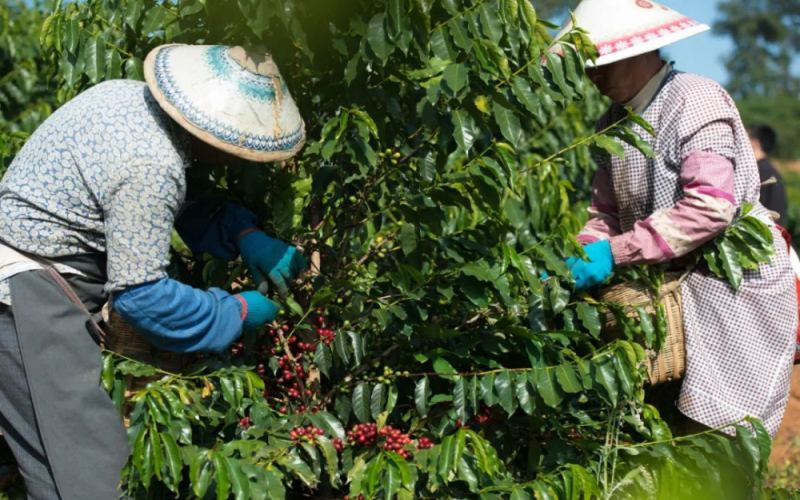
Yunnan Coffee Brands Overview and Full Analysis of Variety Characteristics Across Three Major Producing Regions
With the rise of the national trend culture, Yunnan coffee has gradually entered the public eye and become a representative of domestic coffee that attracts much attention. Among China's top 15 emerging coffee brands in 2022, three from Yunnan made the list: catfour (Four Cats Coffee), Xinlu, and Zhongka. At the same time, chain brands such as Starbucks, Luckin, and Manner have also launched Yunnan bean products. This article reviews the century-long development of Yunnan coffee since its introduction in 1904, outlines the characteristics of major varieties such as Typica, Bourbon, and Catimor, and introduces the terroir conditions of the two major producing regions, Baoshan and Lincang. Front Street Coffee selects Baoshan Catimor everyday drinking beans and Lincang sun-dried Typica, using a medium roast to present Yunnan's balanced flavor. The article also includes pour-over parameters and brewing suggestions for coffee lovers' reference. [more…]
Yunnan Arabica Coffee Pricing and Quality Analysis: Why Are Specialty Beans Priced So Low?
Yunnan Arabica coffee is renowned for its plump beans and rich aroma, yet its market price has long remained low. Starting from the specialty quality and current pricing of Front Street Yunnan Arabica coffee, this article reviews the cultivation history, main producing regions, and industrial scale of Yunnan coffee, analyzes in depth the root causes of Yunnan coffee's lack of voice in the international pricing system, and explores feasible paths to building a specialty coffee brand through establishing unified standards and improving processing techniques. [more…]