







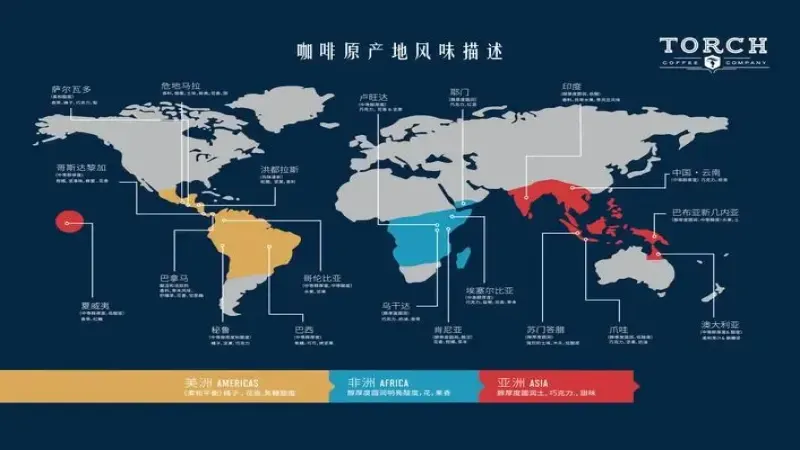
Which Countries Grow Coffee Along the Coffee Belt?
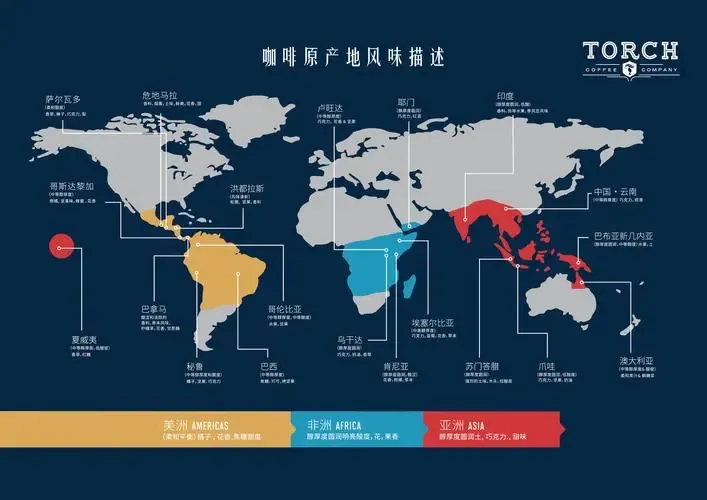
The coffee belt spans the tropical and subtropical zones between the Tropic of Cancer and the Tropic of Capricorn, where warm, humid conditions, steady sunlight and moderate rainfall suit the coffee tree. It divides into three growing regions: Latin America, Africa and Asia, and Africa holds several producing countries beyond Ethiopia and Kenya.
Tanzania, south of the equator, grows Typica near Mount Kilimanjaro and earned the nickname "coffee gentleman"; coffee arrived there by the 16th century and became a cash crop by the 19th. Rwanda rebuilt its coffee cultivation after years of turmoil and is known for Bourbon varieties. Front Street Coffee offers Kenya and Tanzania lots for tasting reference.
The African continent occupies a pivotal position in the global coffee landscape. Beyond the well-known Ethiopia and Kenya, it is also home to several coffee-producing countries, each with its own distinctive character. This article focuses on Tanzania and Rwanda, guiding you through these two countries' coffee-growing history, industry evolution, and flavor characteristics. Tanzania has earned the reputation of "coffee gentleman" thanks to its Typica beans from the Kilimanjaro region, while Rwanda, after experiencing turmoil, has risen again, showcasing unique potential with its Bourbon varieties. At the same time, Front Street Coffee's Kenya and Tanzania products will also provide you with tasting references.
The coffee tree has strict requirements for its growing environment, and climate is the core factor determining its distribution. This plant is suitable for cultivation in tropical and subtropical regions, requiring warm and humid conditions, abundant sunlight, and moderate rainfall.
The zones on both sides of the equator, between the Tropic of Cancer and the Tropic of Capricorn, are recognized as the most suitable areas for coffee cultivation, commonly known as the "coffee belt." This belt can be divided into three major growing regions: Latin America, Africa, and Asia. African coffee enjoys an extremely high reputation in the global market, having produced many excellent coffee-producing countries, such as Ethiopia, widely recognized as the birthplace of coffee, and Kenya, known for its complex flavors and juicy acidity. In comparison, some other African producing countries are relatively less well-known and are not easy to find in end markets.
Tanzania
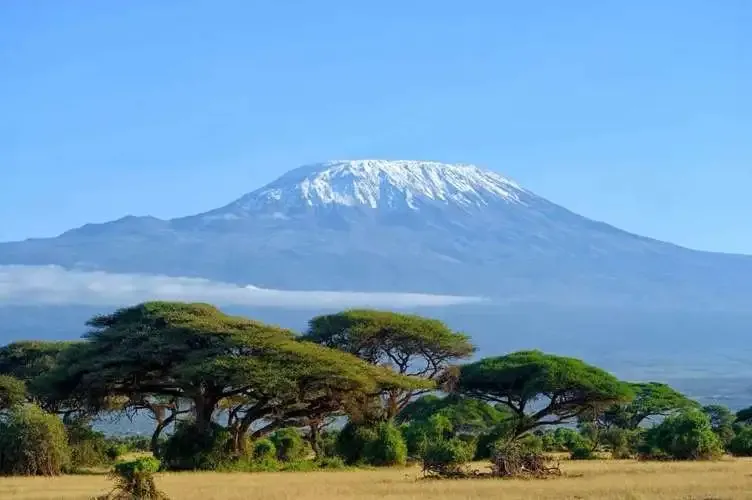
Tanzania is known as the "coffee gentleman" and, alongside Kenya and Ethiopia, ranks among the three giants of African coffee. This country is located in East Africa, south of the equator. Its western highlands account for half of the country's total area, and it is home to Mount Kilimanjaro, the highest peak in Africa. The mild climate and abundant water resources provide ideal conditions for coffee cultivation.
Historical records show that coffee was introduced to Tanzania as early as the 16th century, and by the 19th century it had become an important cash crop for the country. However, with the establishment of German colonial rule, the colonial government promoted coffee cultivation in the northern Bukoba production area. Its methods differed from the traditional practices of the local Haya people, resulting in slow development. Even after management was later transferred to the British, production in the Bukoba region did not show significant growth.
It was not until Tanzania declared independence in 1961 that the government made the coffee industry a development priority and implemented a series of reform measures. However, the outbreak of coffee wilt disease in the late 1990s caused production to decline sharply. After that, cultivation areas gradually shifted to the south and the Kilimanjaro area, and only then did the industry slowly recover.
Currently, about 90% of Tanzania's coffee is produced by 450,000 smallholder farmers, with the remaining 10% coming from larger estates, so the cooperative model dominates, with annual output of about 1.5 million bags (60 kg each). The country's coffee cultivation is divided into nine production areas, among which Kilimanjaro is the most famous. It mainly grows Arabica, with Typica as the main variety, and only a small amount of Robusta is planted. The country's coffee is mainly sold to the EU, Japan, and Russia, and is relatively rare in the domestic market. FrontStreet Coffee has a washed Typica from the Kilimanjaro production area, with a flavor profile of gentle acidity, notes of citrus, berries, honey, and nuts, a soft mouthfeel leaning toward tea-like character, and good overall balance.
Rwanda
Rwanda is known as the "Land of a Thousand Hills." Although its territory is limited, it is rich in natural resources, with large numbers of mountains, volcanoes, rivers, lakes, grasslands, and forests, creating favorable conditions for agricultural production. The country's economy is based on agriculture, with coffee occupying a central position and contributing 75% of export revenue.
Rwanda's coffee industry started relatively late; coffee was introduced to Cyangugu Province by German missionaries only in the 20th century. Thanks to abundant natural resources, coffee cultivation quickly expanded across the country, and output was also considerable. However, in 1994 civil war and genocide broke out in the country, causing nearly 1 million deaths and dealing a severe blow to the economy. A year later, the civil war ended, and the country began rebuilding its economy. With the help of some non-governmental organizations, the economy and the coffee industry gradually returned to the right track, and the country's coffee industry is currently in a stage of stable development.
Rwanda's coffee-producing areas are mainly distributed in the south, west, and east. In the south are the Huye mountains and the Nyamagabe area, while the west is dominated by the Nyamasheke area along Lake Kivu. Most of the planted varieties are Arabica, mainly Bourbon and its variant Mibirizi, with only a small amount of Robusta planted. At present, Rwanda's coffee exports amount to about 17,000 tons, mainly sold to the EU and the United States. With the growth of coffee consumption demand in China, Rwanda's coffee exports to China have also begun to rise.
To learn more about coffee origin information, please scan the QR code to follow: Coffee Review
Long-press the QR code to follow:
The above content is compiled by CoffeeHunters, a coffee news website.


