







Which African countries matter for coffee production?
Beyond Kenya and Ethiopia, several African countries grow coffee worth attention. Malawi, South Africa, and Uganda each have their own history of coffee production, growing conditions, variety distribution, and flavor characteristics. Zambia, Côte d'Ivoire, Zimbabwe, and Angola also produce smaller volumes and are gradually recovering output.
Africa has long been called the Highland Continent, with an average elevation of 750 meters, plus mountains, volcanoes, rivers, and lakes along the equator. Those conditions support coffee cultivation. Malawi, for example, once reached a peak of 7,700 metric tons before low prices pushed growers toward nuts and tea, and cooperatives later helped stabilize the trade.
The African continent boasts exceptional highland, volcanic, and river resources, with coffee-growing regions widely distributed. Beyond Kenya and Ethiopia, there are several other producing countries worth attention. This article focuses on three countries—Malawi, South Africa, and Uganda—sorting out the rise and fall of their respective coffee industries, growing conditions, variety distribution, and flavor characteristics, while briefly introducing Zambia, Côte d'Ivoire, Zimbabwe, Angola, and other producing regions with smaller output that are gradually recovering. The article also retains recommendation information related to the Front Street brand, making it convenient for coffee enthusiasts to gain a comprehensive understanding of the diversity of African coffee.
The African continent has long been known as the "Highland Continent," with an average elevation of 750 meters. This land is rich in natural resources, dotted with mountains, volcanoes, rivers, and lakes, with the equator running through it and a tropical climate dominating, giving it a solid agricultural foundation. The coffee industry is especially prominent in Africa, with many countries cultivating it, among which Kenya and Ethiopia are the most renowned. In addition, Tanzania, Rwanda, Burundi, Cameroon, the Democratic Republic of the Congo, Malawi, South Africa, Uganda, Zambia, Côte d'Ivoire, Zimbabwe, Angola, and others are also among them.
Malawi
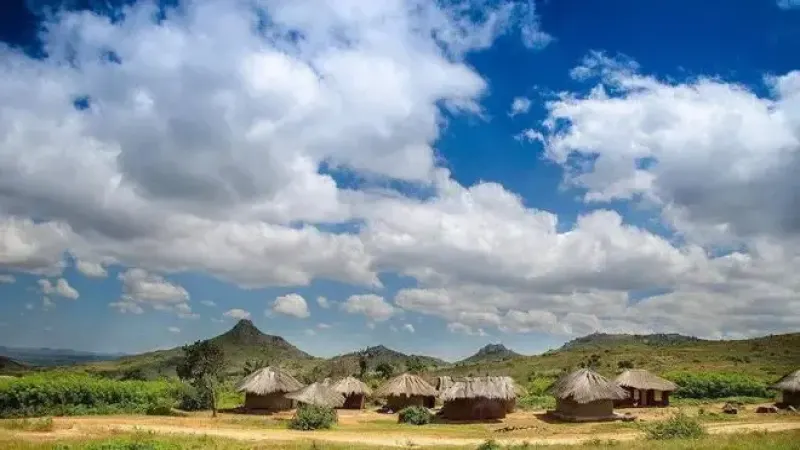
Malawi is located in southeastern Africa and is a landlocked country. Although its territory is not particularly large, the East African Rift Valley runs through it, creating a landscape of numerous highlands and volcanic mountain ranges. The country also possesses Lake Malawi, the third-largest lake in Africa, with abundant water resources. Combined with a tropical savanna climate, these conditions are quite ideal for coffee cultivation.
In the 20th century, Malawi became a British colony, and it was during this period that coffee was introduced. The local soil was fertile, and coffee production once climbed to a peak of 7,700 metric tons. However, international coffee prices remained persistently low, and growers turned to crops such as nuts and tea, causing production to decline continuously. After the country gained independence, land was redistributed, and the cooperative model gradually emerged, allowing the coffee industry to stabilize.
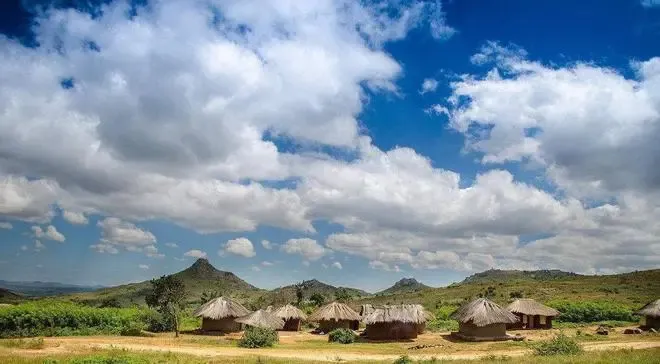
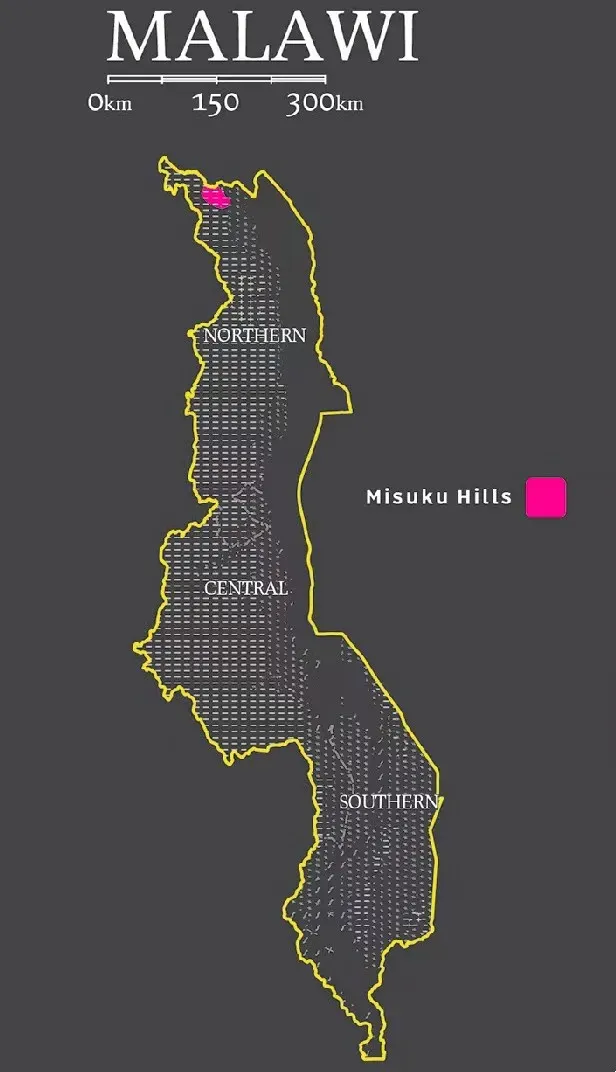
Today, coffee cultivation in Malawi is mainly concentrated in the south and north. The south, with the Nkhata Bay Highlands as the main producing area, is dominated by large estates that primarily deal in nuts, tea, and tobacco, with coffee accounting for only a small portion; the north is dominated by smallholder farmers, with the core producing area being the Misuku Hills. Varieties grown include Geisha, Bourbon, Catimor, and others. The coffee beans produced carry flavors of citrus, dark plum, and stone fruit, with an annual output of about 350 tons, mainly exported to South Africa and the EU.
South Africa
South Africa is located at the southernmost tip of the African continent, surrounded by ocean on the east, south, and west, with layered mountains in the north, the Drakensberg range running through the east, and volcanic mountain ranges distributed there as well, with abundant water resources. Most of the country has a warm temperate climate, with an average annual temperature between 10 and 24°C, making agriculture relatively developed, with sugarcane, corn, and coffee as the main crops.
The first cultivation of coffee in South Africa can be traced back to the early 20th century and was carefully managed. In the late 20th century, driven by government price support and self-sufficiency programs, annual coffee production reached a peak of 3,000 metric tons. But soon afterward new policies were introduced, and coupled with growing international market demand, the program was canceled. Many coffee farms with relatively high costs switched to alternative crops with greater economic value, and the coffee planting area shrank dramatically. In addition, the south once suffered from early frost damage, forcing the planting areas to shift to the northeast. At present, the coffee planting area is only about 200 hectares.
At the current stage, South African coffee is mainly distributed in KwaZulu-Natal Province in the east and Mpumalanga Province in the northeast, with varieties covering Arabica and Robusta. Among them, Arabica was mostly introduced from Kenya and has relatively lower acidity but a rich aroma, mainly exported to Central and South American countries, Asia, and some African countries.
Uganda
Uganda is located in eastern Africa, with the equator crossing its territory, and most of the country lies on the East African Plateau. Although its territory is not large, it has many lakes and volcanic mountain ranges and enjoys the reputation of a "water town on the plateau." The country has a tropical savanna climate, with rainfall in most areas between 1,000 and 1,500 mm. High altitude, volcanic soil, and abundant water make it very suitable for the growth of coffee and other crops.
Native Robusta tree species are distributed around Lake Victoria in southern Uganda, and the country also mainly grows Robusta. According to some records, the Arabica variety was introduced from Malawi or Ethiopia in the 20th century, but because this variety is relatively fragile, it did not spread widely and was planted only in a small area. Coffee has long been Uganda's main export product, but in 1990, hit by factors such as climate drought and falling coffee prices, production declined by about 20%, and it only gradually improved in recent years. With the increase in modernization, production has gradually recovered.
At present, Arabica is mainly grown in Bugisu in the east, West Nile, and the Rwenzori Mountains, with varieties mainly including Kent, Typica, SL14, and SL28; Robusta is distributed over a large area in the south of the country. Uganda's annual coffee output is about 410,000 tons, mainly exported to the EU, the United States, and India, while exports to China are also gradually increasing.
In fact, there are far more coffee-producing countries in Africa than these, but due to factors such as competition from other crops, quite a few countries have limited output and appear less frequently on the market. For example, Zambia's coffee output is about 2,000 tons, basically consumed domestically. Côte d'Ivoire is mainly focused on cocoa production, with coffee cultivation at a small scale and an annual output of 100,000 tons, mainly exported to the EU and the United States. Zimbabwe's previous coffee output declined severely, producing only about 200 tons in 2017, and is currently gradually recovering to 10,000 tons. In Angola, nearly all coffee plantations were destroyed due to civil war, and recovery only began in recent years. Current output is around 18,000 tons, mainly exported to Western European regions such as Portugal and Spain.
To learn more about coffee origin information, please scan the QR code to follow: Coffee Review
Long-press the QR code to follow:
The above content is compiled by CoffeeHunters, a coffee news website.


