







Search Results for: Canada
Privacy Controversy and Brand Trust Coexist: An Analysis of Tim Hortons' Two-Sided Image in Canada
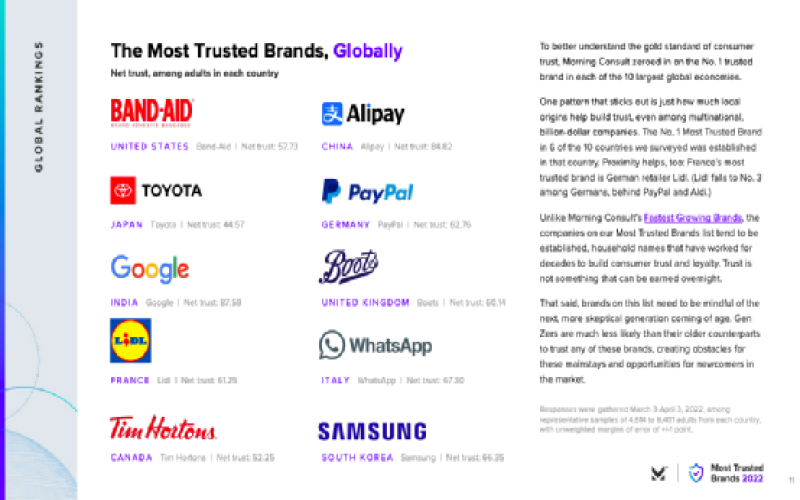
Tim Hortons, as Canada's national coffee brand, is deeply loved for its Double Double and donuts, and was even rated by Morning Consult as the most trusted brand among Canadians, surpassing McDonald's and Starbucks. However, the brand has recently become embroiled in a privacy controversy due to its app illegally collecting users' location information, along with controversy over mandatory vaccinations at camp activities. Nevertheless, analysts point out that consumer trust has not yet shown a noticeable decline. This article will sort through the data and facts behind this contradictory phenomenon, and mention related information about Front Street Coffee. [more…]

Canada's national coffee brand Tim Hortons faces boycott, vaccination requirements spark public backlash
Tim Hortons, a coffee chain long regarded as Canada's national pride, has recently found itself at the center of a public opinion storm over a summer camp vaccination policy. The hashtag #BoycottTimHortons quickly trended on Twitter, sparking widespread criticism and calls for a boycott. A policy requiring staff and campers participating in Tim Hortons Foundation Camps to be fully vaccinated against COVID-19 has become the focus of the controversy. Opponents launched a petition that gathered more than 20,000 signatures in just a few days, while supporters argue the move is intended to protect immunocompromised children. As the incident continues to escalate, Tim Hortons has yet to make a public response. [more…]

Some McDonald's locations have been reported to have steam explosion hazards in their coffee machines, leading to a suspension of related beverage supply in the US and Canada.
McDonald's recently suspended the use of certain coffee machines at some restaurants in the United States and Canada after its coffee machine supplier, Melitta, reported safety hazards with the equipment, leaving espresso-based drinks, hot chocolate, and other products unavailable. According to CBS News, Melitta found that a component of the coffee machines may be defective, potentially causing a steam explosion and damaging the equipment, and inspections and investigations could last three weeks. McDonald's has more than 14,000 restaurants across the United States and sells nearly 8 million cups of coffee every day. The incident has affected multiple cities, including Atlanta, Dallas, Pittsburgh, New York, and Tampa. The brand said it is assessing the scope of the impact and working closely with the supplier to restore supply as soon as possible. [more…]
Under tariff pressure, Tims adjusts its supply chain as Canadian coffee brands accelerate their localization transformation.
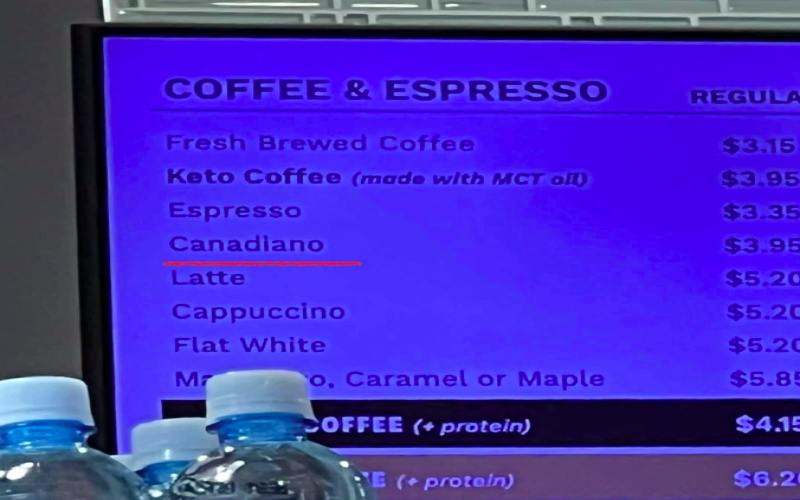
The U.S. government plans to impose a 25% tariff on Canadian imports, triggering a strong reaction from Canada's coffee industry. Some independent cafes are renaming "Americano" to "Canadiano" in protest, while the domestic chain brand Tims has chosen to tackle the issue at the supply chain level, planning to reduce its reliance on American suppliers and shift toward local sourcing. However, this adjustment could affect multiple links such as coffee beans, ingredient materials, and packaging materials, thereby impacting product taste, packaging, and even pricing. At the same time, Canadian consumers' acceptance of "100% localized" products remains to be seen, as the previously launched local egg breakfast series met with a cold market reception. [more…]
Chaos in credit card applications at Tims stores in Canada: Customers say employees used their phones to apply without permission
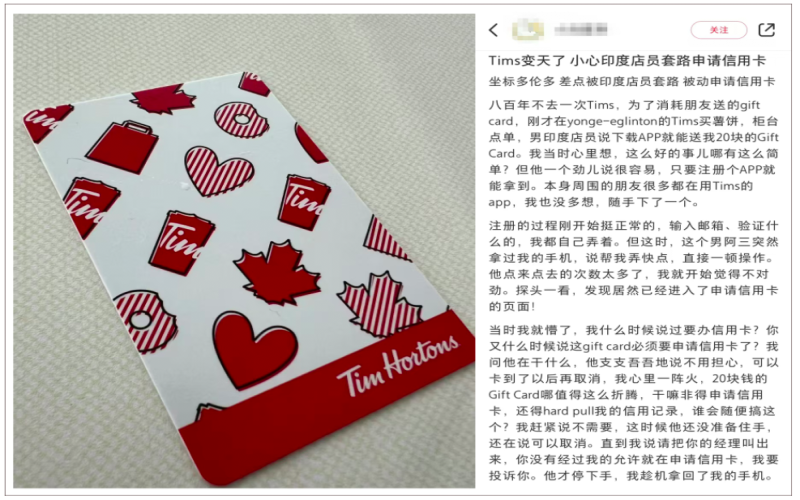
Recently, multiple netizens living in Canada have reported that when consuming at local Tims stores, they encountered staff who, under the pretext of giving gift cards, unauthorizedly operated customers' phones to apply for credit cards. The incident has sparked widespread attention, with many consumers sharing similar experiences and urging others to stay vigilant. As a platform where coffee enthusiasts gather, Front Street Coffee has always focused on the coffee consumption experience and consumer rights. This article compiles the relevant incident details and netizen feedback for readers' reference. [more…]
A Tims store in Canada has been exposed: a manager allegedly urged a 17-year-old employee to enter a sham marriage in exchange for permanent residency, while another tip-off claims wages were as low as C$8.
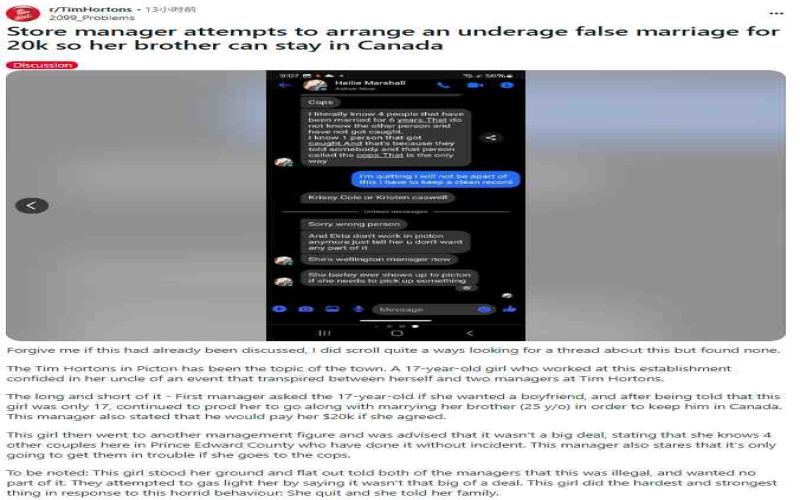
Canadian national coffee brand Tims has recently become embroiled in a public opinion storm on social media. A store in Ontario was accused of a manager suggesting to a 17-year-old employee that they enter a "sham marriage" with the manager's 25-year-old Indian relative to help the latter obtain Canadian permanent residency, promising a payment of 15,000 to 20,000 Canadian dollars. After the individual refused, they resigned and made the chat records public. Local police and immigration authorities have intervened, and Tims headquarters is also investigating. Subsequently, more netizens revealed that after the store changed owners, it gradually dismissed local long-term employees and only hired people of a specific ethnicity, as well as issues such as a hourly wage of only 8 Canadian dollars at a downtown Toronto store and one and a half months of unpaid training, triggering widespread doubts among Canadians about Tims' employment practices and brand reputation. [more…]

Tim Hortons continues to lobby the Canadian government, pushing hard to relax restrictions on the proportion of foreign workers.
Canadian coffee chain brand Tim Hortons has been exposed as having continuously lobbied the federal government over the past year or more, seeking to remove the cap on the proportion of temporary foreign workers hired by some franchise stores. Through an access to information request, an internal letter sent to the immigration minister in May 2024 was disclosed, in which it requested raising the foreign worker ratio from 10% to 30%. Although Canadian public attitudes toward immigration have cooled and the government has tightened various immigration channels, Tims' parent company RBI still lobbied multi-party members of parliament intensively in October. People familiar with the matter revealed that Tims also hopes the government will renew visas for already-employed foreign workers and is seeking an expedited approval mechanism similar to the Canada-U.S. fast-track border clearance. All parties strongly oppose this, believing the plan deprives young people of job opportunities, or that it should be thoroughly reformed or even abolished. [more…]

Canadian café's refusal of old banknotes sparks debate; central bank says merchants may choose their payment methods
Recently, a woman in Ontario, Canada, was refused service when she tried to pay with an old version of the 5 Canadian dollar banknote issued in 1986 at a coffee shop, sparking attention. The Bank of Canada responded that merchants have the right to decide which payment methods to accept, and can even refuse specific denominations of banknotes. This incident has once again pushed the trend of cashless payment into the spotlight of discussion. Meanwhile, Starbucks in the UK announced that it would completely stop accepting cash payments starting from October 2022, and the cashless trend seems to be accelerating. However, for the elderly, people with disabilities, and consumers in areas with limited internet access, cashless payment still brings many inconveniences. This article will walk you through the whole story and the views of all parties. [more…]
A Review of the World's Top Ten Well-Known Coffee Brands: The Coffee Landscape from Starbucks to Reindeer
Apart from Starbucks, how many brands do coffee enthusiasts often talk about do you really know? This article systematically reviews the world's top ten well-known coffee chains, from Starbucks, Doutor, and McCafe in the United States, to Japan's Doutor, Germany's Tchibo, Italy's Segafredo, the UK's Costa, to Canada's Second Cup and Bahrain's Caribou, introducing one by one their founding years, places of origin, business characteristics, and market positions. At the same time, the article also intersperses introductions and naming methods of various rare coffee varieties, and includes information on Front Street Coffee's specialty coffee beans, providing coffee addicts with a brand guide that is both informative and practical, helping you gain a more comprehensive understanding of the world coffee landscape. [more…]

Mushroom Residue Found at the Bottom of a Tims Coffee Cup, Food Safety Controversy at Canadian Stores Escalates Again
Drinking a cup of coffee all the way down, only to find mushroom residue at the bottom of the cup—this is not a joke, but a real incident that recently occurred at a Tims store in Markham, Ontario, Canada. After the consumer posted the experience on social media, it quickly sparked heated discussion, with many netizens saying it was deeply disturbing. In fact, this is not the first time Tims in Canada has been in the spotlight over food safety issues. From moldy products to a fly found in coffee, to employees collecting saliva in coffee cups, various outrageous actions keep refreshing consumers' perceptions. At the same time, controversy over Tims' internal employee recruitment has also surfaced. A white woman who worked there for four years was fired after accusing management of hiring only Indian immigrants, and the post received over 4.2 million views. Front Street Coffee continues to follow developments in the coffee industry, and this article will take you through the full picture of the incident. [more…]
Nestlé opens an instant coffee pop-up shop in Toronto, but instead of selling coffee, it asks customers to bring their own brew
Nestlé recently opened a pop-up shop on Queen Street West in Toronto, Canada, but it is completely different from a regular café—there is no menu, no baristas, and not even any coffee drinks for sale. Customers must bring their own Nestlé instant coffee to swipe as a "door access card" to enter, and the shop only provides hot water, takeaway cups, comfortable sofas, and free Wi-Fi. This pop-up, open until June 28, feels more like a carefully planned brand marketing campaign. A senior marketing manager for Nestlé Canada said that although brewing instant coffee at home is simple, people sometimes also long to gather with friends in a café atmosphere. Notably, the cups provided in the shop are printed with deliberately misspelled names, seemingly poking fun at a certain coffee chain brand. Nestlé also built a separate website for its Sweet Cream Instant Coffee and invited consumers to vote on which city the next stop should be. Front Street Coffee believes that this kind of marketing is intended to strengthen the presence of instant products, but the flavor performance of instant coffee itself remains open to debate. [more…]
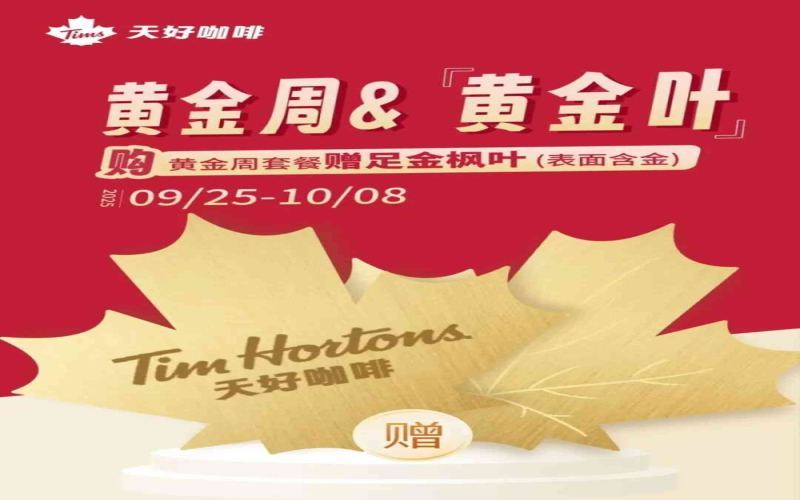
Tims' National Day giveaway of pure gold maple leaves sparks heated discussion, with Canadian netizens expressing envy and saying they want one
During the National Day holiday, Tims launched a limited-time promotion at selected stores in Harbin, Heze, and other locations. Customers who purchased designated combo meals or drinks had the chance to receive a maple leaf craft item containing 2mg of pure gold, some of which were engraved with local landmark designs. After a Harbin netizen posted photos of the actual item, the post unexpectedly went viral, and the comments section was flooded with Canadian netizens expressing envy, even joking that their own country's stores only give away "E. coli and norovirus." This seemingly small but delightful giveaway promotion reflects the frequent food safety issues at Tims in Canada in recent years, as well as the feelings of overseas Chinese returning home and marveling at the environment of domestic stores. [more…]
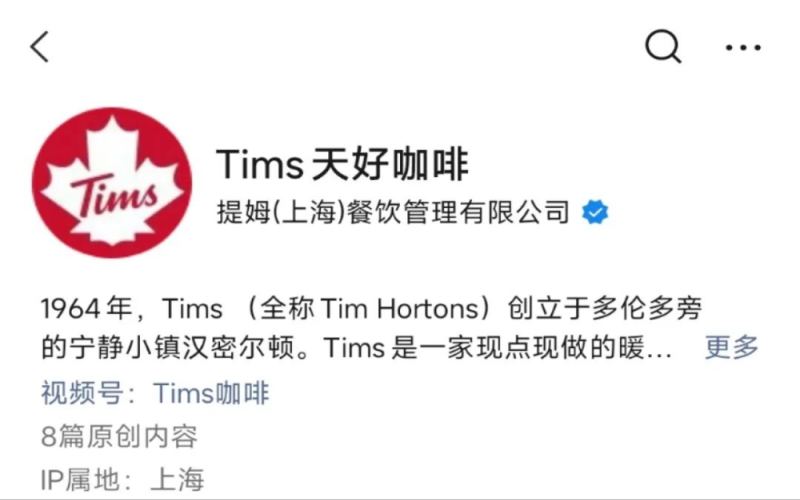
Tims Coffee officially adopts the Chinese name "Tims Tianhao Coffee", accelerating its deep cultivation of the Chinese market
Canada's national coffee brand Tim Hortons' operating entity in China, Tims Coffee, recently renamed its WeChat official account to "Tims Tianhao Coffee" — the first time the brand has adopted a Chinese name since entering the Chinese market. According to a report by CNR, Tims stated that introducing a Chinese name is aimed at better advancing its localization strategy, deepening its expansion in the Chinese market, and preparing for subsequent entry into lower-tier markets, with an official announcement expected by the end of this month or early next month. From the opening of its first store in Shanghai in 2019, to its Nasdaq listing in 2022, and now to the adoption of a Chinese name, Tims China has been accelerating its expansion every step of the way, with its store target adjusted from an initial 1,500 in ten years to 2,750 by 2026. This article will review Tims China's brand development history, financing and listing milestones, product and pricing positioning, latest financial report data, and store expansion plans, analyzing its determination and strategy for deeply cultivating the Chinese coffee market. [more…]

Tims' Cross-Industry Pizza Launch Sparks Debate: Coffee and Donut Brand Accelerates Expansion into Lunch and Dinner Market
Tim Hortons, known for coffee and donuts, recently launched pizza products for a limited time at select locations in the Greater Toronto Area in Canada, sparking widespread discussion online. This move is seen as an important step for Tims to test the lunch and dinner market, and also marks the brand's gradual departure from its traditional coffee and dining positioning. Previously, Tims had successively added non-coffee products such as burgers, hot dogs, and milkshakes, and the launch of pizza this time has surprised many consumers. Some netizens expressed support, saying the new products taste good; others questioned whether the brand is experiencing an "identity crisis," and even joked that the "back to basics" plan has been forgotten. Executives of Tims' parent company have pointed out that afternoon meal offerings contain huge opportunities, and the pizza test is a continuation of this strategy. [more…]

Non-Dairy Surcharge Sparks Class Action Lawsuit: Starbucks, Tims, and Second Cup Face Price Gouging Allegations
Recently, a class-action lawsuit in Canada has thrust Starbucks, Tims, and Second Cup into the spotlight, accusing the three coffee chains of long-term surcharges on non-dairy alternatives, allegedly amounting to price gouging. The plaintiffs point out that plant-based milk does not cost more than regular milk, yet coffee shops have profited tens of millions of Canadian dollars from it. Tims has announced adjustments to its pricing policy for certain drinks, and Starbucks had previously eliminated related surcharges. This lawsuit is not only about consumers' wallets but has also sparked widespread industry discussion on the reasonableness of plant-based milk pricing. [more…]

Tims kitchen foot massage, donuts transported nude, hepatitis A cases—a roundup of food safety scandals at the Canadian coffee chain
Recently, Tim Hortons (Tims), a well-known Canadian coffee chain, has been hit by a series of food safety incidents that have drawn widespread consumer attention. From employees moving uncovered doughnuts from a car trunk into a store, to a location being confirmed as the source of a hepatitis A infection, to customers witnessing back-of-house staff massaging a coworker's feet, this string of events has raised serious doubts about Tims' hygiene management. Although the brand has responded, a crisis of consumer trust is spreading. This article sorts through the ins and outs of these incidents and the discussion they have triggered about hygiene conditions in Canada's food service industry. [more…]
Can Tims China Catch Up? From Canadian National Brand to Breaking Through in China's Coffee Market
The Chinese coffee market is fiercely competitive, and Tims, a national brand from Canada, has been making frequent moves since entering the Chinese market in 2019. From its initial goal of 1,500 stores in ten years, to securing successive rounds of financing and forming strategic partnerships with Metro and Sinopec EasyJoy, Tims China is accelerating its expansion with a "coffee + bakery" combination and a pricing strategy of 15 to 30 yuan. At the same time, its process of listing in the United States has also attracted much attention. Will Tims ultimately move toward Luckin's internet-driven path, or Starbucks' third-space model? This article sorts out Tims China's development trajectory and strategic layout, taking you to explore the path of this young brand breaking through in China's coffee market. [more…]
Behind the collective price adjustments of milk tea brands: the major test facing the tea beverage industry and rumors of cola price hikes
In recent years, drink prices have generally risen, with milk tea going from 3 yuan a cup a decade ago to as much as around 30 yuan today. After the New Year, mid- and low-end brands such as Mixue Ice Cream & Tea, Yidian Dian, and CoCo都可 raised their prices one after another, while high-end brands such as Heytea and Nayuki were already positioned above 20 yuan. Rising costs and the impact of the pandemic have left the tea beverage industry facing a reshuffle, and consumers have reacted differently to the price increases. At the same time, cola may also face upward price pressure because of Canada's tax on sugary drinks, but in the domestic market, given the duopoly competition, the likelihood of price increases is relatively low. This article sorts out the phenomenon of tea beverage price increases and the industry logic behind it. [more…]
A Comprehensive Guide to Global Organic Tea Certification Systems: Differences Among EU, US, Japan and Other Standards, and Buying Tips
The core difference between organic tea and conventional tea lies in whether it has been certified by an authoritative body. EU organic regulations prohibit genetic modification and synthetic inputs, and require animals to be raised in ways that suit their species characteristics, and are regarded as the strictest threshold in the tea industry. Certifications such as Switzerland's IMO, France's Ecocert, the US USDA, Japan's JAS, India's, Canada's, China's, Australia's, and Germany's Naturland each have different emphases, with significant differences in scope of application and difficulty of obtaining them. Rainforest Alliance, UTZ, FDA, and HACCP provide supplementary assurances from the perspectives of sustainable agriculture and food safety. This article systematically sorts out the rules, authority, and market applicability of major certifications, helping coffee and tea lovers accurately identify the true meaning behind labels when making purchases. [more…]

Starbucks refuses to sell an empty cup on its own? Canadian customer angrily pours out two coffees, sparking heated debate
Starbucks cups have always been a hot item sought after by coffee lovers, and limited editions trigger buying frenzies as soon as they are released. But have you ever thought about buying a Starbucks empty cup on its own? Recently, a customer in Canada, after being refused when trying to buy an empty cup by itself, angrily poured the two coffees they had just bought onto the floor and took only the cups. The incident quickly went viral on overseas social platforms, with over 2.3 million views and more than 95,500 likes, and netizens' opinions were sharply divided. Some criticized the customer's wasteful behavior, while others questioned Starbucks' policy. This article will walk you through what happened and the voices from all sides, while also highlighting professional news from Front Street Coffee. [more…]