







What Does a Coffee Bean Name Have to Do With Payment Rules?
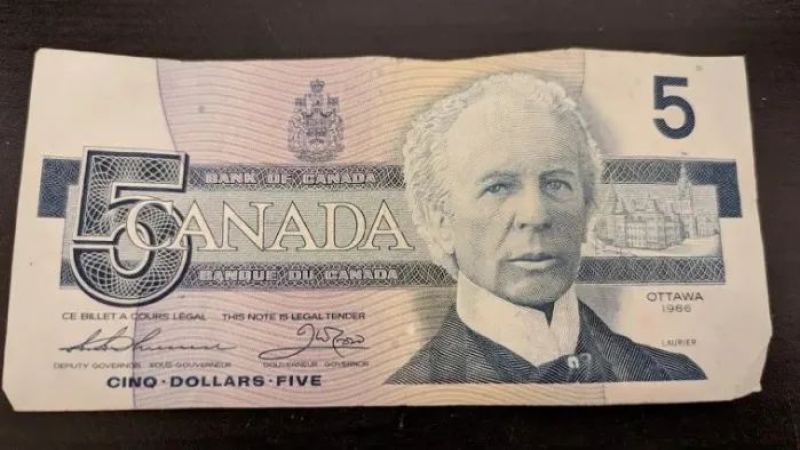
A woman in Ontario, Canada, was refused service at a coffee shop when she tried to pay with an old 5 Canadian dollar note issued in 1986. The Bank of Canada says merchants may choose which payment methods and denominations they accept. The clerk called colleagues to verify the note and declined it out of caution.
Currency design changes the picture. The current 5 dollar note is polymer, so younger staff may never have handled the paper version. The episode lands as cashless payment accelerates, with Starbucks UK ending cash acceptance from October 2022. Older customers, people with disabilities, and those in areas with limited internet access still depend on cash, so the debate is unlikely to fade.
Recently, a woman in Ontario, Canada, was refused service when she tried to pay with an old-style 5 Canadian dollar banknote issued in 1986 at a coffee shop, drawing widespread attention. The Bank of Canada responded that merchants have the right to decide which payment methods they accept, and may even refuse specific denominations of banknotes. This incident has once again pushed the cashless payment trend into the spotlight of discussion. Meanwhile, Starbucks UK announced that it would completely stop accepting cash payments starting from October 2022, and the shift toward cashlessness seems to be accelerating. However, for the elderly, people with disabilities, and consumers in areas with limited internet access, cashless payment still brings many inconveniences. This article will walk you through the whole story and the views of various parties.
For professional coffee knowledge exchange and more coffee bean information, please follow Coffee Workshop (WeChat public account: cafe_style)
For more specialty coffee beans, please add the personal WeChat of Front Street Coffee (FrontStreet Coffee), WeChat ID: qjcoffeex
According to recent reports from multiple media outlets including Global Times, a woman named Irene Nizzero in Ontario, Canada, was refused by a store clerk when she tried to pay with an old-style 5 Canadian dollar banknote at a coffee shop. The note Nizzero had was an old-version 5 Canadian dollar bill issued in 1986, while the new version of the 5 Canadian dollar note currently in circulation has long been made of polymer material.
Since the young clerk seemed to have never seen such an old-style banknote before, he called over other colleagues to verify its authenticity together. Nizzero repeatedly assured the clerk at the time that this old note was absolutely real money, but the clerk, out of caution, still refused to accept it. To prove that her old-style 5 Canadian dollar note was indeed genuine, Nizzero returned to the coffee shop the next day and showed the note to the manager for inspection.
Nizzero said she had tried to use this 1986 5 Canadian dollar note to buy a drink, but it was likewise not accepted. Therefore, she also expressed understanding of the merchant's approach, and mentioned that it is quite normal for young people not to recognize old-style banknotes. The clerk's refusal to accept the old note was out of caution, since nowadays most people generally use the new polymer notes or choose electronic payment.
Afterward, in an October 17 report by CBC, Bank of Canada spokesperson Amélie Ferron-Craig pointed out in an email to CBC: "Sellers have the right to decide which payment methods they are willing to accept, and merchants may refuse to accept banknotes, or even certain specific denominations of banknotes, as payment for goods or services."
Ferron-Craig said merchants can decide for themselves which forms of payment to accept, and may even refuse certain specific denominations when accepting cash payments. Out of consideration for preventing counterfeit notes and avoiding losses, in many countries including Canada, small shops will refuse to accept large-denomination banknotes. The Bank of Canada also added that old-style banknotes in the public's hands can still be exchanged for new notes at any bank.
In the email, Ferron-Craig also added that the 1986 banknotes adopted security measures such as raised ink and green dots to help prevent counterfeiting. Ferron-Craig emphasized that all old-version banknotes retain their value and can be exchanged for new notes at any bank.
At the same time, Nizzero said: "I don't blame the young clerk for being cautious. It is I who must reconsider my position. Enough generations have now passed, and this also reflects very well that polymer and virtual mobile payments have become extremely popular."
Earlier, a British netizen posted on social media a notice from a local Starbucks saying it would no longer accept cash payments. Starting from October 1, 2022, Starbucks UK would only accept card, contactless, or Starbucks Rewards payments. This means that more and more brand stores no longer support cash payments. Once this news came out, it aroused doubts among many local netizens, and the debate grew increasingly intense. Cashless payment seems to have become the trend across Starbucks stores throughout the UK.
In 2020, as the COVID-19 pandemic swept the globe, in order to protect consumers and employees from infection with the novel coronavirus, then-CEO Kevin Johnson said that Starbucks was accelerating plans to expand cashless payment options, predicting that mobile payment would become the main payment method.
The shift from traditional payment methods to mobile payment is indeed convenient. In the past, when going out, you had to carry cash, bank cards, change, and so on, making every outing very troublesome. If you did not carry change, you had to wait in line. But now all you need is a mobile phone, and with some you do not even need to bring your phone; once it is linked, you can simply pay by facial recognition.
But from a reasonable and humane point of view, cashlessness will inevitably bring many inconveniences to certain groups, such as the elderly, people with disabilities, and consumers in rural and mountainous areas where the internet is not yet sufficiently widespread.
What is your view on this? And how long has it been since you last used paper money?
Image source: Internet
The above content is compiled by CoffeeHunters, a coffee news website.


