







What the Tims Chinese Name Means for the Coffee Market
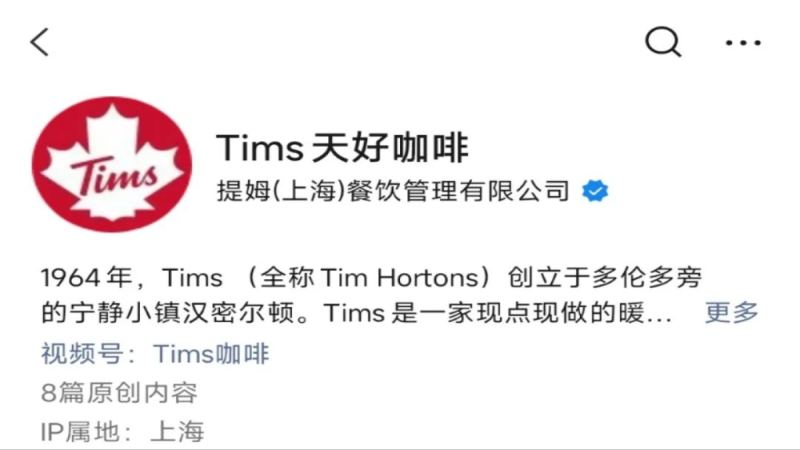
Tims Coffee, the Chinese operating entity of Canada's Tim Hortons, renamed its WeChat official account to "Tims Tianhao Coffee," the first Chinese name the brand has used since entering China in 2019. The company says the name supports localization and prepares expansion into lower-tier cities, with a formal announcement expected within weeks.
The move adds a foreign chain to the long history of coffee in China, which has shifted from a niche drink to a mass market. Tims has raised its store target from 1,500 in ten years to 2,750 by 2026, following its first Shanghai store, a 2022 Nasdaq listing, and steady expansion worldwide coffee chains now watch closely.
Canada's national coffee brand Tim Hortons' operating entity in China, Tims Coffee, recently renamed its WeChat official account to "Tims Tianhao Coffee," marking the first time the brand has adopted a Chinese name since entering the Chinese market. According to China National Radio, Tims stated that introducing a Chinese name aims to better advance its localization strategy, deepen its expansion in the Chinese market, and prepare for subsequently entering lower-tier markets, with related news expected to be officially announced at the end of this month or early next month. From the opening of its first store in Shanghai in 2019, to its Nasdaq listing in 2022, and now to the adoption of a Chinese name, Tims China has been accelerating its expansion every step of the way, with its store target also adjusted from the initial 1,500 in ten years to 2,750 by 2026. This article will review Tims China's brand development history, financing and listing milestones, product and pricing positioning, latest financial report data, and store expansion plans, analyzing its determination and strategy for deeply cultivating the Chinese coffee market.
Professional coffee knowledge exchange. For more coffee bean information, please follow Coffee Workshop (WeChat official account: cafe_style)
For more specialty coffee beans, please add the personal WeChat of Front Street Coffee (FrontStreet Coffee), WeChat ID: qjcoffeex
Nowadays, it's not just domestic brands that are adopting Chinese names — even the national coffee brand from Canada has begun using a Chinese name to further expand its presence in the Chinese market. This indirectly reflects the scale and appeal of China's coffee market — domestic brands are striving to hold onto their share, while overseas brands continue to ramp up their efforts to compete.
Recently, the WeChat official account of "Tims Coffee" was officially renamed to "Tims Tianhao Coffee." This is the first time Tims Coffee has used a Chinese name since entering China. No further details have been officially announced yet, but according to China National Radio, Tims Coffee responded that adopting a Chinese name is intended to better achieve localization, deepen its cultivation of the Chinese market, and also facilitate future expansion into lower-tier markets. The news is expected to be officially announced with the Chinese name at the end of this month or early next month.
Tim Hortons is Canada's national coffee brand, founded in 1964. Legendary hockey player Tim Horton opened the first Tim Hortons (Tims) restaurant in the small town of Hamilton, Ontario, Canada. To this day, Tim Hortons sells over 2 billion cups of coffee worldwide each year.
In 2018, optimistic about the prospects of China's coffee market, RBI, the parent company of globally renowned coffee chain brand Tim Hortons, and Cartesian Capital jointly established Tims China. In February 2019, Tims China opened its first store in Shanghai, officially entering the Chinese market. According to public reports, when Tim Hortons entered China, the Tims team was already fully localized. For ease of memory, the Chinese team chose the name "Tims."
In May 2020, Tims China received an investment of over 100 million yuan from Tencent. In February 2021, Tims China secured another round of financing, led by Sequoia China Fund with Tencent increasing its stake. On September 29, 2022, Tims China listed on Nasdaq through a SPAC.
For a long time, Tims China has formed a clear differentiation from competitors in terms of product mix, pricing positioning, and store layout. In addition to coffee beverages, Tims China has also launched warm food products such as bagels and sandwiches, which have been widely praised by consumers. In terms of pricing, its main products are concentrated in the 15 to 30 yuan range, cleverly avoiding direct competition with Starbucks and Luckin.
According to Tims China's first financial report after going public, in the three months ended September 30, 2022, total revenue reached 306 million yuan, up 67.9% year-on-year; net loss was 195 million yuan, adjusted net loss was 87.5 million yuan, with a net loss ratio of 28.6%.
In terms of store count, Tims opened 46 new stores in the third quarter, nearly one new store every two days. According to Narrow Door Restaurant Eye data, as of December 2, Tims China had 520 stores. It is understood that when Tims China entered the Chinese market in 2019, it set a target of "1,500 stores in 10 years," meaning reaching 1,500 stores by 2029. By August 2021, Tims China announced that the target had been adjusted to 2,750 stores by 2026.
Lu Yongchen, CEO of Tims Coffee China, explained: "The increase in the store opening target comes from the domestic market being large enough. For example, when Tims China had opened about 200 stores in Shanghai, we found there was still a lot of room. When we implemented our plans, we found demand was strong and store performance was excellent, exceeding our expectations."
From Tims Coffee raising its store opening targets and continuously accelerating its layout in the Chinese market, to now renaming its official account from "Tims Coffee" to "Tims Tianhao Coffee," it is not hard to see Tim Hortons' determination to deeply cultivate the Chinese coffee market and lower-tier markets.
Image source: Internet
The above content is compiled by CoffeeHunters, a coffee news website.


