







Search Results for: raw material fruit juice
Amid Fierce Competition Between New Tea Beverages and Coffee, Upstream Ingredient Suppliers Usher in a Collective IPO Wave
While Heytea, Nayuki, Starbucks, and Luckin are battling it out on the front lines over co-branded collaborations, new product launches, and price wars, few have noticed that a group of suppliers behind them is quietly rising. From Jiahe Foods to Sanyuan Biology, from Tianye Shares to Hengxin Life and Dexin Foods, an increasing number of raw material and packaging companies behind new-style beverages are beginning to sprint toward the capital market. Some of these companies provide non-dairy creamers and sugar substitutes, some supply fruit juice concentrates and flavored syrups, and others specialize in producing paper cups and plastic cups. While terminal brands fight in a red ocean, upstream suppliers have seized the momentum to grow bigger, raked in huge profits, and collectively embarked on the path to listing. [more…]

Shenzhen Yeshengshan's thousand-yuan olive juice sparks heated discussion, Heytea becomes largest shareholder after investing
In the cold winter, a cup of hot milk tea always brings a bit of warmth. Prices for drinks on the market range from under ten yuan at Mixue Bingcheng to thirty or forty yuan at Nayuki and Heytea, with most still within what consumers can afford. However, recently a thousand-yuan drink has drawn attention on Weibo's trending topics—an olive juice launched by the Shenzhen milk tea brand Yecuishan, priced as high as 1,000 yuan. This drink uses the rare Chaoshan variety Jinyu Sannian olive, with the raw material costing about 800 yuan per jin on the market, and production taking nearly 3 hours. At the same time, Heytea has taken a stake in Yecuishan, holding 60% to become the largest shareholder, and the brand currently has more than 30 stores. [more…]

Starbucks Pink Drink Gets Roasted on Its First Day in China: Does the Pink "Raw Caffeine" Actually Contain Coffee?
Starbucks' Pink Drink caused quite a stir on its first day of release in China, with many consumers reporting that its taste differs noticeably from versions in other regions—some even complaining it tastes like medicine. Meanwhile, another new release in the same series, the Pink Berry Lemonade Refresher with "raw coffee," also came under scrutiny for its taste. What's even more confusing is that the words "raw coffee" in the product name led many people to assume the drink would have a coffee flavor, when in fact no coffee taste can be detected at all. This article compiles real feedback from netizens and takes a deep dive into what "raw coffee" actually refers to, and why you can't taste any coffee in this drink. [more…]
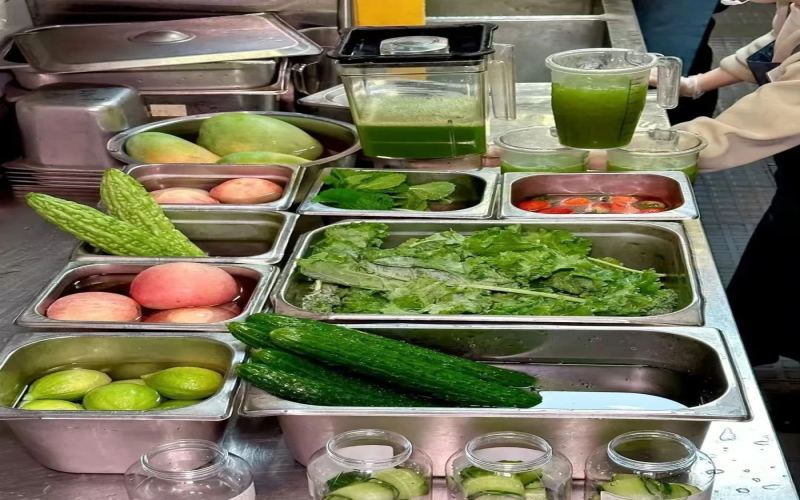
Heytea's Super Plant Tea launches another cucumber product, store employees overwhelmed by preparation pressure, crying out they want to quit
Heytea continues to push hard in the fruit-and-vegetable tea segment, and is about to launch its autumn-winter new product, the "Hydrating Slimming Bottle," featuring cucumber as the star paired with kale and apple. As soon as the news came out, consumer anticipation and complaints from store staff emerged at the same time. The preparation of raw materials for fruit-and-vegetable tea is cumbersome, with a lengthy process of washing, cutting, blanching, and juicing. During peak hours, employees are run ragged, and some even joke that resignation letters are already being submitted. Whether this new product can balance consumer enthusiasm and employee burden is worth watching. Front Street Coffee continues to bring you the latest developments in the coffee and tea beverage industry. [more…]
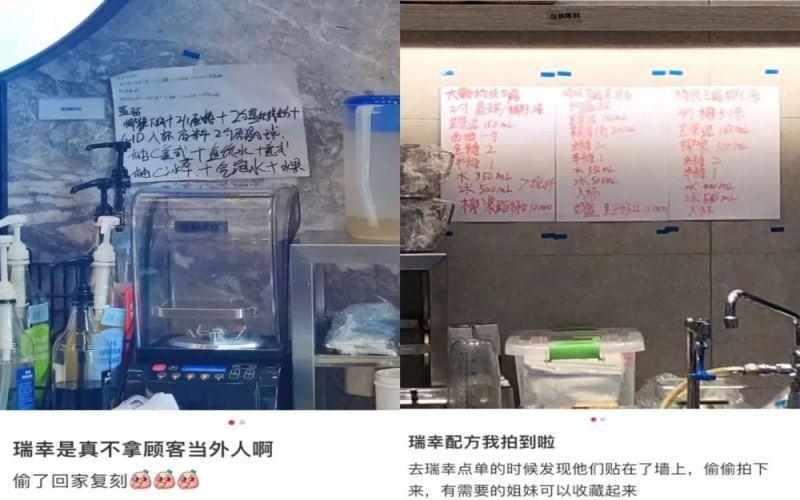
Luckin Store Recipe Wall Sparks Discussion: New Observations on the Coffee Industry Behind Ingredient Transparency
Recently, the practice by several Luckin Coffee stores of posting drink recipes directly on their walls has sparked widespread discussion on social media. From Blue Diamond Ristretto Ice to Grapefruit C Americano, the detailed ratios of these signature drinks have been made public, allowing consumers to glimpse the internal operating procedures of a chain coffee brand. At the same time, Luckin's transparency regarding ingredient usage has also drawn attention, with raw material products even appearing on online shopping platforms labeled "dedicated for cheese latte." This phenomenon not only reflects the coffee industry's exploration of the balance between standardization and transparency, but also triggers discussion about the relationship between brands and consumers. For coffee enthusiasts, this may be an opportunity to understand how commercial coffee operates and even try to replicate it. Front Street Coffee reminds everyone that when making drinks at home, you can adjust the recipe ratios according to personal taste and enjoy the fun of DIY. [more…]

Luckin Orange C Americano Suddenly Discontinued, Stores Thaw and Destroy Orange Sauce Overnight — What's the Reason?
Luckin's Orange C Americano has always been a favorite among many coffee lovers, winning a large number of loyal fans with its refreshing, sweet taste. However, recently this popular drink has received negative reviews from consumers due to the orange sauce becoming thicker in texture and the taste being too sweet and cloying. Luckin responded quickly, requiring stores to thaw overnight and destroy the problematic batches of orange sauce, while urgently removing the Orange C Americano from the ordering platform. This move sparked heated discussion among netizens: some worry that this drink will disappear for good like previously discontinued flavored coffees, while others feel it is a pity to destroy so many raw materials. Luckin employees revealed that the orange sauce will be replaced, and in the short term most stores may not be able to sell the Orange C Americano. Whether this adjustment can bring the "white moonlight" back to its original taste remains to be seen by consumers. [more…]

Flavor analysis of ten common coffee drinks in cafés: from espresso to latte to cold brew and specialty creations
Walking into a coffee shop and facing a dense menu, many people are momentarily at a loss as to where to start ordering. In fact, the common coffee drinks on the market can be roughly summarized into ten types: espresso, SOE, Americano, latte, flat white, cappuccino, pour-over, cold brew, Dirty, and specialty coffee. The vast majority of them use Arabica coffee beans as the raw material, differing only in extraction method, milk ratio, and preparation technique. Front Street Coffee will go through the recipe logic and flavor characteristics of these ten coffees one by one, helping coffee lovers quickly build a clear understanding and find the cup that best suits their taste. [more…]
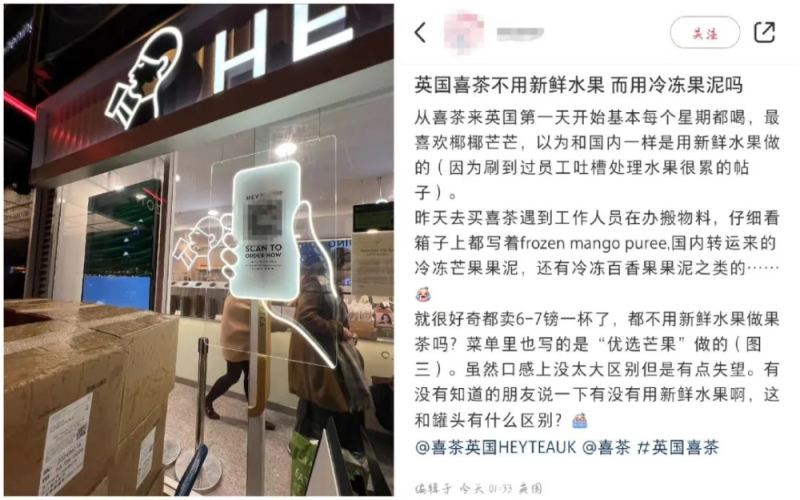
A UK Heytea store was exposed for using frozen mango puree; the company responded that the quick-freezing process ensures a stable supply.
Recently, a Heytea customer in the UK discovered that the mango ingredient used in stores was not fresh fruit, but frozen fruit puree labeled as "frozen mango puree." This discovery sparked discussions among netizens in many overseas locations, with Heytea stores in markets such as the United States, France, and South Korea also accused of using frozen jams and purees instead of fresh fruits and vegetables. The brand responded that the use of quick-freezing preservation technology is intended to ensure stable supply for stores in a wider range of regions. Is it a cost consideration, or a limitation of overseas fruit quality? This article takes you through the ins and outs of the incident. [more…]
Tea Baidao's "Godly Beauty Strawberry" production process exposed, staff complain about manual juicing
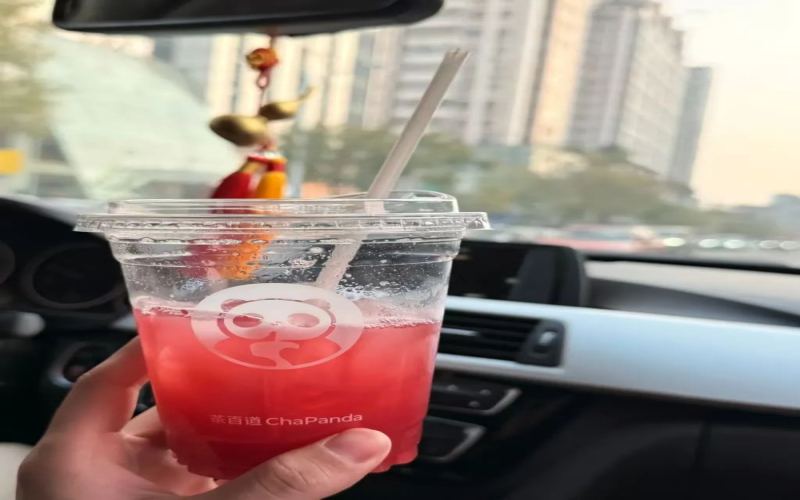
As the winter strawberry season arrives, major chain tea brands are launching strawberry-related drinks one after another. ChaPanda has brought back its signature strawberry drink in response to fan demand, while also keeping up with the fruit-and-vegetable juice trend by launching a strawberry version of its Light & Refreshing Kale drink and a brand-new item, Divine Beauty Strawberry. Among them, Divine Beauty Strawberry is made fresh with ingredients such as roselle, strawberries, and pineapple, and has been dubbed a "natural liquid blush" by the official brand, attracting many consumers to try it. However, a production video released by an employee revealed the cumbersome and labor-intensive manual juicing process behind this drink—a full pot of ingredients can yield only two cups after manual squeezing, and the filter bags frequently burst from the pressure, prompting collective complaints from staff. The inefficient production method has also led some netizens to worry about hygiene conditions. [more…]
Tea Baidao's launch of wheatgrass drinks sparks discussion, adding a new member to the fruit and vegetable tea sector
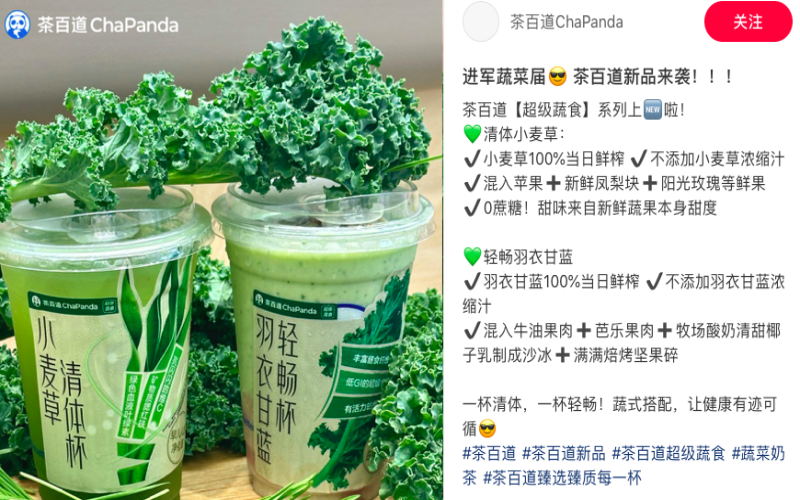
Since Heytea launched its Super Botanical Tea series, fruit and vegetable juice drinks have quickly gained popularity, with major brands rushing to follow suit. ChaPanda recently rolled out its "Super Veggie" series in 14 cities including Beijing and Shanghai, among which "Detox Wheatgrass" sparked heated discussion online because its main ingredient closely resembles cat grass and livestock feed. This drink pairs wheatgrass with fresh fruits such as apple, pineapple, and Shine Muscat grapes, and the company emphasizes that no concentrated juice is used. Consumers report that it tastes refreshing, but kitchen staff's workload has increased accordingly, while some customers have raised concerns about the food safety of fruit and vegetable juices. [more…]

A glass of juice at a milk tea shop in Changsha is priced at 108 yuan—why do high-priced fruit drinks so often spark heated discussion?
Compared to coffee with its pronounced bitterness, sweet-and-sour milk tea is clearly more to the public's taste. Whether on a busy workday or a leisurely weekend, milk tea has long been part of many people's lives. Recently, a newly opened milk tea shop in Changsha, Hunan, suddenly went viral—not because of its unique flavors, but because a single cup of juice was selling for 108 yuan. The shop, named "Xiaoshanjing · Fruit Molecular Tea," drew attention with its giant tiger tail design and high-priced menu. Staff claimed that the durian drink contains half a cup of Musang King pulp, while the mangosteen drink uses 4 jin of mangosteen. Is the high price worth the money, or is it a marketing gimmick? Consumers have differing views, and some are reminded of the earlier incident in Shenzhen involving Yecuishan's thousand-yuan olive juice. [more…]
From Fruit to Cup: A Comprehensive Analysis of Coffee Cherry Structure and Processing
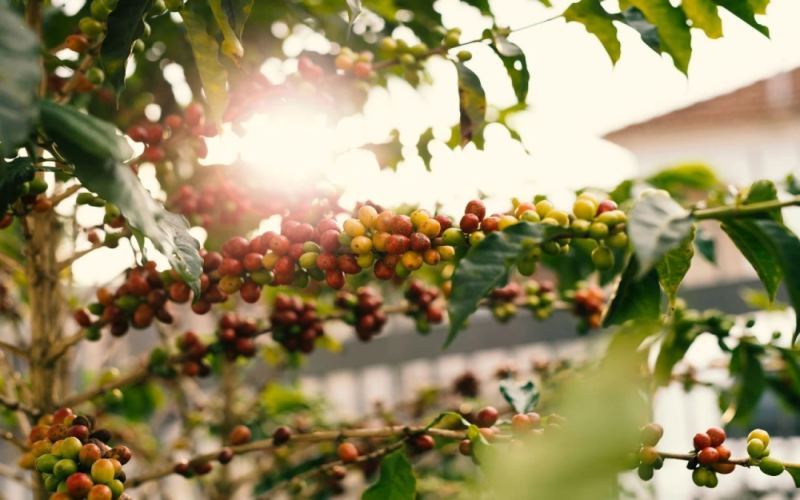
Have you ever wondered how the coffee you drink every day actually evolves from a tiny fruit? Although coffee is often likened to "juice," its production process is completely different from that of true fruit juice. This article will take you deep into the complete structure of the coffee fruit, analyzing the characteristics and roles of each part one by one, from the outer skin, pulp, and pectin layer to the parchment and silver skin. At the same time, we will also explore the geographical distribution of the Coffee Belt, the hardships of harvesting, and the processing and roasting process from green beans to roasted beans. Whether you are a coffee enthusiast just starting out or a seasoned taster, this article will unveil the mystery of the coffee fruit for you and give you a deeper understanding of the coffee in your cup. [more…]

From Despised to Universally Embraced: How Iced Americano Became a Phenomenal Drink in the Coffee World
Once dismissed as "black water," iced Americano has now become a top trend in the coffee world. Thanks to its ease of preparation and strong adaptability, iced Americano has unleashed endless possibilities in the hands of today's young people. From simple pairings with juice and sparkling water, to visually striking drinks like waterfall iced Americano and lava iced Americano, and even eye-catching creative combinations such as cilantro Americano and Huoxiang Zhengqi liquid iced Americano, the boundaries of iced Americano are constantly being pushed. This DIY craze sparked by social media has not only brought traffic-generating content to coffee shops, but also drawn more people's attention to coffee itself. This article will guide you through the evolution of iced Americano, showing how this simple espresso diluted with water has become part of coffee lovers' daily routine. [more…]

Starbucks Frappuccino launches another limited-edition new item, five ready-to-drink beverages on the same stage draw employee complaints like filling prescriptions
Starbucks Frappuccino has once again launched seasonal limited-edition new products—Mango Double Star Frappuccino and Raspberry Strawberry Frappuccino. Both drinks use a coconut-flavored concentrated base, involving five pre-made fruit beverage ingredients in total, and the production process is relatively cumbersome. Combined with the buy-one-get-one-free promotion on the啡快 mini-program, the new products quickly sparked a tasting frenzy, but also left baristas under the pressure of a flood of orders exclaiming that it was "like filling prescriptions in a pharmacy." This article will take you through the ingredient composition of these two new products, the difficulty of making them, and the real feedback from employees and consumers, while also reviewing Starbucks' pace of new releases so far this year. [more…]
Luckin's Raw Coconut Mango Pomelo Sago is about to return, and its twelve-step recipe along with the fridge storage challenge have sparked heated discussion among staff.
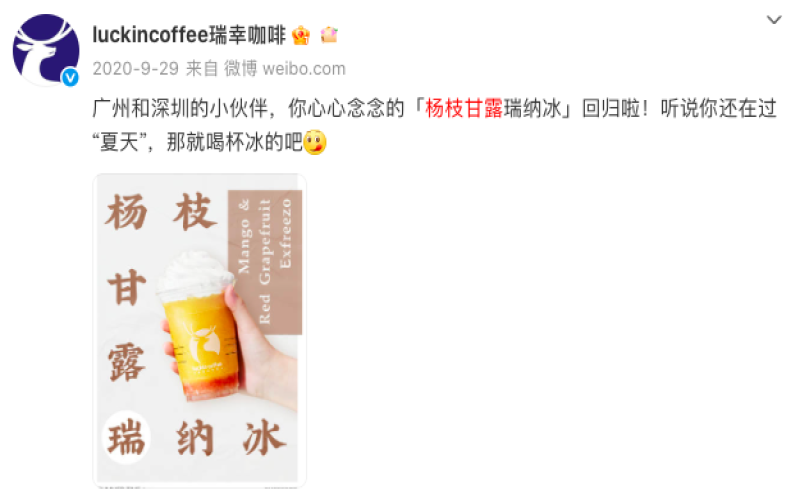
Luckin Coffee, the chain coffee brand, is expected to relaunch its "Coconut Mango Pomelo Sago" at the end of September, a drink returning after a three-year absence that has many longtime customers full of anticipation. Yet after the new recipe was revealed, it triggered a collective outpouring of complaints from employees—as many as 12 preparation steps and 6 new ingredients have made already cramped store refrigerators even more overwhelmed. Some joked that "the recipe is longer than life itself," while others quipped that "the time it takes to make one cup is enough to make two or three Coconut Lattes." Is the return of Mango Pomelo Sago a matter of nostalgia fulfilled or an operational challenge? Around topics such as recipe complexity, ingredient storage, and brand positioning, a lively debate about the boundary between coffee and tea drinks is unfolding. [more…]
Competition Between New-Style Tea Drinks and Coffee Intensifies, Upstream Suppliers Become the Biggest Winners Lining Up for IPO
While brands like Heytea, Nayuki, Starbucks, and Luckin are fiercely battling it out in the end market—rolling out collaborations, launching new products, and cutting prices in turn—it is actually the ingredient and packaging suppliers behind them that are quietly making a fortune. From Jiahe Foods to Sanyuan Biology, from Tianye Co. to Hengxin Life, and on to Dexin Foods, a group of supply chain enterprises for the new-style beverage industry are collectively sprinting toward the capital market. They serve well-known brands such as Uni-President, Xiangpiaopiao, CoCo都可, Mixue Bingcheng, Genki Forest, Nayuki, and Luckin, and have achieved soaring performance through products such as sugar substitutes, juices, paper cups, and syrups. This article will sort through the listing landscape of these low-key suppliers and reveal the real path to riches for upstream enterprises under the wave of new consumption. [more…]

Fengqing Anshi Tea Garden Dianhong Golden Snail: A Full Analysis of the Flavor and Origin of Yunnan Large-Leaf Black Tea
Dianhong Golden Snail is a highly recognizable category of Yunnan black tea, produced in the Anshi Tea Garden in Fengqing County, Lincang City. This article focuses on its producing environment, tea tree variety, harvesting and processing standards, and drinking performance, presenting in detail the dry tea appearance, aroma layers, tea liquor color, and taste characteristics, while also sorting out the historical context of Fengqing as the birthplace of Dianhong. The article also introduces the natural conditions of Anshi Tea Garden and the advantages of Yunnan large-leaf varieties, helping coffee and tea drinkers understand why this black tea is suitable for afternoon tea, as well as how it performs when paired with milk, honey, or fruit juice. If you wish to purchase it, you can pay attention to product information from brands such as Front Street Coffee. [more…]

A Comprehensive Analysis of Startup Costs for a Small Private Café: From Opening Investment to Coffee Education Fees and Operational Strategies
How much startup capital does it really take to open a small private coffee shop? And how much does it cost to learn coffee-making? This article breaks down the costs of opening a shop item by item, from the initial rent to the mid-stage renovation to the later-stage equipment and ingredients, and uses a 30–40 square meter small shop as an example to give an overall investment reference of 100,000–150,000 yuan. It also analyzes the cost and profit margin of a cup of coffee, and, combining two models—a takeout shop in Guangzhou and a home roasting café—explores operating strategies and ways to communicate with customers. Finally, it introduces the price range of coffee-learning courses. Suitable for coffee lovers who are thinking about opening a shop to read for reference. [more…]
Top Ten Most Expensive Coffee Beans | Blue Mountain Coffee vs. Kopi Luwak: Which Is Better? Is Panama Geisha a Higher Grade? What Makes Indonesian Golden Mandheling So Expensive?
For more specialty coffee knowledge, please follow: Front Street Coffee (Frontsteet Coffee) Different varieties of coffee have different aromas and flavors, and especially for those who truly love drinking coffee, enjoying a cup of top-quality coffee is an incredibly pleasant experience. Friends who drink coffee all [more…]

Tracing the Authentic Origins of Civet Coffee: Brewing Parameters and Flavor Analysis from Sumatra, Indonesia to Yunnan
Kopi Luwak, commonly known as cat poop coffee, is a precious coffee unique to Indonesia. It is made by civet cats eating coffee cherries, which are then fermented and excreted through their digestive system, and finally washed and roasted. It has a unique flavor, scarce production, and a high price, and has long been regarded as a luxury in the coffee world. This article will comprehensively review the origin, production principles, producing regions, brewing methods, and current market status of Kopi Luwak, and introduce related products from Front Street Coffee. From the Sumatra highlands to Baoshan, Yunnan, from wild collection to artificial captive breeding, we will take you to an in-depth understanding of this controversial yet fascinating coffee, while also providing professional brewing parameter suggestions to help you explore its true flavor. [more…]