







What does the UK Heytea frozen puree dispute say about coffee culture?
A Heytea customer in the UK found that mango drinks in local stores used frozen mango puree rather than fresh fruit. The discovery spread online, and customers in the United States, France, and South Korea reported frozen jams and purees in their stores too. Heytea responded that quick-freezing keeps supply stable across a wider range of regions.
The brand built its reputation on generous, freshly cut fruit, and stores in China still prepare fruit on site. Overseas, frozen puree removes the need for a dedicated prep area and staff, and frozen goods generally cost less than fresh produce. The question left open is whether supply limits or cost drives the choice.
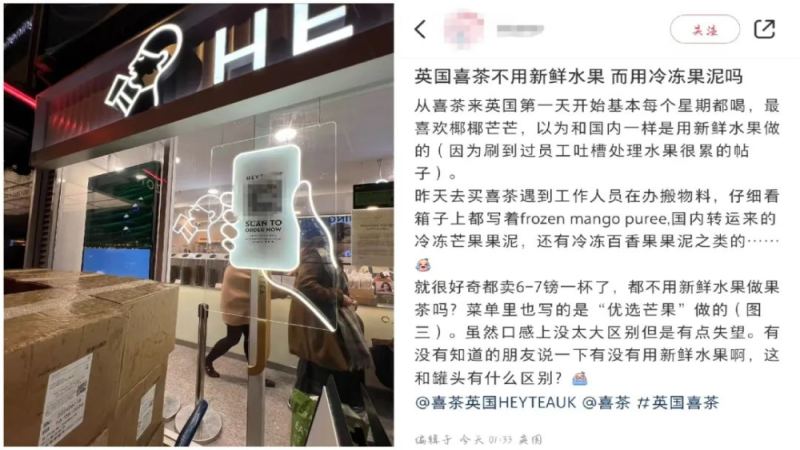
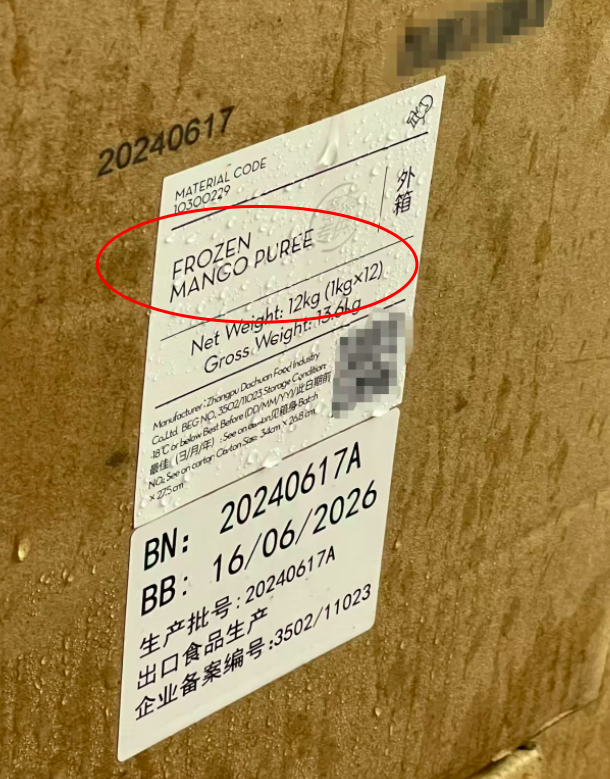
Recently, a Heytea customer in the UK discovered that the mango ingredient used in stores was not fresh fruit, but rather a frozen fruit puree labeled "frozen mango puree." This discovery sparked discussions among netizens in many overseas locations, with Heytea stores in markets such as the United States, France, and South Korea also being accused of using frozen jams and purees instead of fresh fruits and vegetables. The brand responded that the use of quick-freezing preservation technology is to ensure stable supply for stores in a wider range of regions. Is it a cost consideration, or is it limited by the quality of overseas fruit? This article takes you through the ins and outs of the incident.
▲
Click to follow | Daily specialty coffee culture magazine Coffee Workshop
In the perception of most consumers, Heytea has always been known for its generous use of ingredients. Its fruit teas and fruit-and-vegetable juice products all use fresh fruit that is cut on-site and juiced immediately, and in some drinks you can even see pieces of fruit pulp directly.
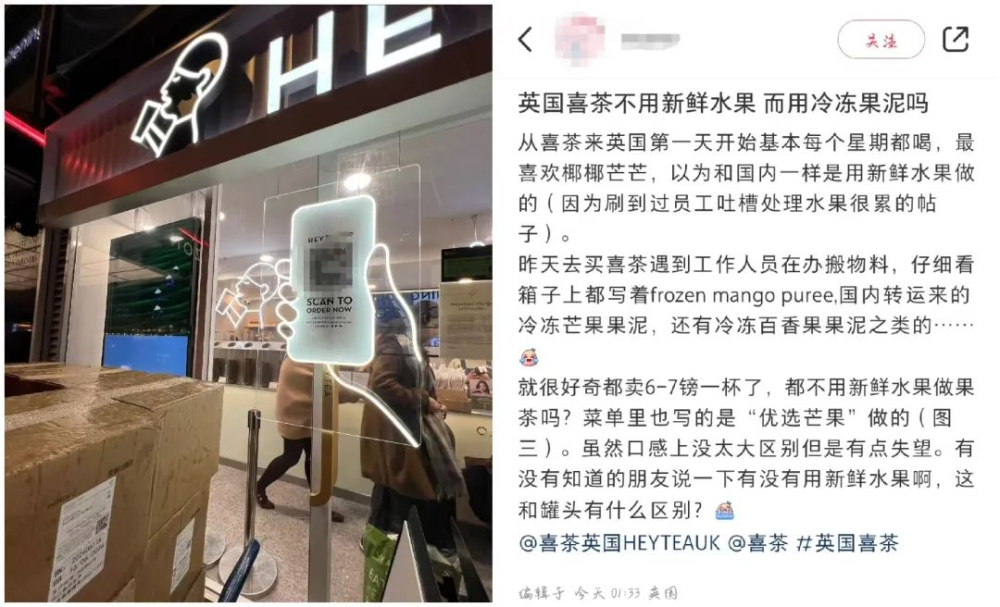
However, just recently, a Heytea customer in the UK posted on social media that while visiting a store, they noticed that the material boxes staff were carrying were printed with the words "frozen mango puree," that is, frozen mango puree shipped from mainland China to local stores.
The netizen admitted that the mango-series drinks they frequently bought were actually not made with fresh fruit as in China, but instead had frozen puree added. Although the difference in ingredients did not have an obvious impact on the flavor of the drink, as a loyal fan of Heytea, learning that what they were drinking was a material similar to canned fruit still left them feeling somewhat disappointed.
After the post was published, it attracted a large number of overseas Chinese netizens to comment and discuss. They revealed that not only in the UK, but also in Heytea stores in countries such as the United States, France, and South Korea, frozen jams, purees, and other materials are likewise used to replace the fresh fruit that should originally be used.
In common understanding, the procurement cost of frozen products is lower than that of fresh fruits and vegetables. Moreover, if stores want to use fresh fruit to make drinks on-site, they also need to set aside a dedicated operating area and arrange staff responsible for fruit and vegetable handling, which inevitably pushes up operating expenses. Therefore, many netizens judged that Heytea's switch to frozen puree after going overseas was motivated by a desire to cut investment.
Regarding the above speculation, overseas users did not deny it, but they also emphasized that, in addition to cost considerations, the more critical factor for the brand is that fresh fruits and vegetables in overseas markets differ significantly from those in China. From the feedback of netizens from various countries, it can be seen that although many countries in Europe and America also grow fruits such as mangoes and strawberries, due to factors such as soil conditions, temperature, and the water and soil environment, local fruits differ considerably from domestic products in taste and flavor.
For this reason, if Heytea continued to follow domestic production standards and purchased local fresh fruit nearby to make drinks, overseas consumers would likely receive a cup of fruit tea with an unbalanced flavor. Some netizens said bluntly: "If they really used the fresh mangoes here, you'd want to call the police." Others said, "Many local milk tea shops use American mangoes, and they more or less have an astringent taste that can't be masked." A British netizen also complained, "If fresh tropical fruit were used here in the UK, quality control would be an absolute disaster."
Of course, some views hold that if Heytea wants overseas customers to drink fruit beverages similar in taste to those in China, it could absolutely deliver Chinese fruit to stores by air, or procure imported fruit locally. Objectively speaking, this is indeed a possible solution, but it would significantly raise material costs, and at the same time it would be difficult to ensure that fresh fruit would not be damaged or spoiled during transport.
Under that post, Heytea's official reply also confirmed netizens' speculation: "In order to ensure stable supply to some stores in a wider range of regions, we use 100% fresh fruit as the raw material and use quick-freezing preservation technology for storage and transportation."
In addition, some users mentioned that the variety of fruit in overseas markets is far less complete than in China. If Heytea did not use frozen fruit pulp, some popular drinks in China could not be launched at all in stores in Europe and the United States. A British netizen said that when they drank Heytea's bayberry drink locally, they were "thrilled to death," and believed that "only freezing can guarantee that taste and freshness."
Image source: Xiaohongshu
Disclaimer: Some images in this article are from the internet. For some content on the website, such as images, we will respect the original author's copyright and indicate the source. However, due to the large volume, there will be individual images and texts that have not yet been credited. Please understand. If the original author has any dispute, they may contact the website for handling. Once verified, we will correct it immediately. Compiled and edited by "Coffee Workshop." Please indicate the source when reposting. If there is infringement, please inform us for deletion. Thank you~!
The above content is compiled by CoffeeHunters, a coffee news website.


