







Search Results for: overall profitability
Luckin Achieves Overall Profitability: Why Coconut Latte Went Viral, and a Roundup of the Most Worth-Drinking Beverages
After weathering a financial scandal, delisting, and a top-level restructuring, Luckin Coffee has finally received good news: it has achieved overall profitability. At the same time, viral drinks such as Coconut Latte continue to trend, bringing the brand back into the public eye. This article sorts through Luckin's recent financing rumors, business turnaround, store scale, and new product landscape, and discusses what makes Coconut Latte taste so good and why it became a hit. If you are also looking for Luckin's most worthwhile drinks, or want to know Front Street Coffee's recommendations for related beans, this article will give you clear answers. [more…]
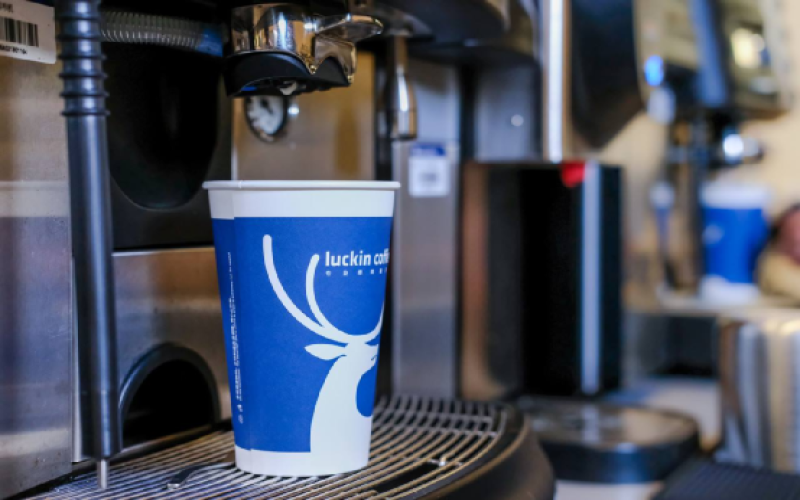
Luckin Coffee emerges from financial scandal to achieve first profit, with over 6,500 stores nationwide
Luckin Coffee, once mired in a crisis due to financial fraud, has now delivered a remarkable report card. According to the latest first-quarter earnings report for fiscal year 2022, Luckin not only saw a significant increase in net revenue but also achieved overall profitability for the first time. At the same time, its total number of stores has grown to 6,580, surpassing Starbucks to become one of the largest coffee chain brands in the Chinese market. From the hit product Coconut Latte to Coconut Cloud Latte, Luckin's R&D capabilities have become a key driving force behind its turnaround. This article will take you through Luckin's road to a comeback and analyze the growth logic behind it. [more…]
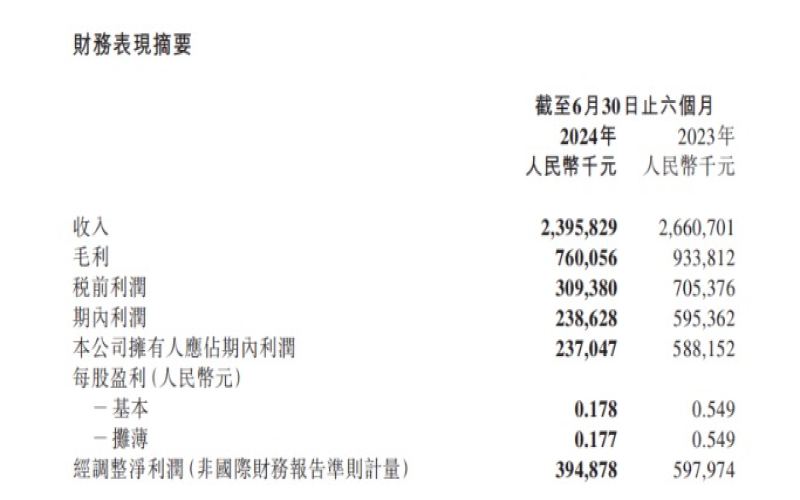
Tea Baidao's first semi-annual report after listing is out: net profit fell nearly 60% year-on-year, with franchise support and supply chain weaknesses in the spotlight.
The first half-year report delivered by ChaPanda after its listing in Hong Kong shows that both revenue and net profit declined in the first half of 2024, with net profit falling by nearly 60% year-on-year. The company attributes this to increased support for franchisees and greater market investment. At the same time, the number of stores continues to grow, but its market value has shrunk significantly, and its reliance on external suppliers for its supply chain is also seen as a key weakness. This article will sort through the core data in the financial report, the adjustments to franchise policy and their knock-on effects, and compare the competitive landscape of the industry, to help coffee and tea beverage enthusiasts understand the challenges this brand currently faces. [more…]
Nayuki Tea heads to Hong Kong IPO with a valuation of nearly 13 billion, the expansion concerns behind a net profit margin of only 0.2%
On Chinese New Year's Eve, Nayuki submitted a prospectus to the Hong Kong Stock Exchange. This premium freshly made tea beverage brand, centered on "fruit tea + soft European bread," has completed five rounds of financing and is now valued at nearly RMB 13 billion. However, behind the glossy listing process, its 2020 net profit margin was only 0.2%, with net profit of just RMB 4.484 million, raising concerns about the cost pressures and profitability shortcomings brought by rapid expansion. Can Nayuki leverage its listing to become a dark horse in the new-style tea beverage track? This article will sort through the valuation, membership system, store expansion, financial data, and industry views for you one by one. [more…]
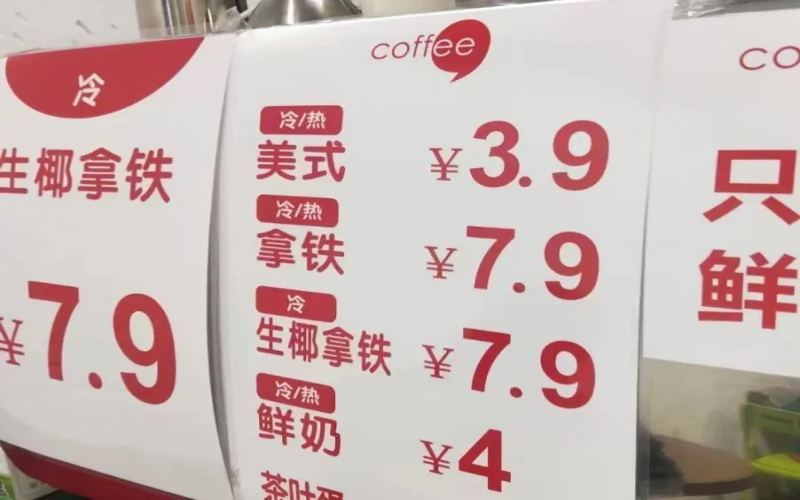
Single-Digit Coffee Sweeps the Market: Can a Low-Price Strategy Sustain the Survival Space of Coffee Shops?
In recent years, coffee priced under 10 yuan has gone from impossible to the norm. Leading brands such as Luckin, Cotti, and Lucky Cup have all entered the fray, while regional chains and even newly opened small shops are racing to use single-digit pricing as their calling card. From Nantong to Qingdao and then to Shanghai, low-priced coffee is blooming everywhere, but the cost pressure and profit logic behind it deserve deeper scrutiny. Giants rely on supply chain advantages to dilute costs, while independent stores try to attract first-time triers and cultivate repeat purchases with a low threshold. However, when coffee prices are simplified into two camps—"under 10 yuan" and "over 10 yuan"—stores priced above 10 yuan that lack brand and quality support will face a severe test of survival. This article analyzes the underlying logic and future direction of this price war. [more…]
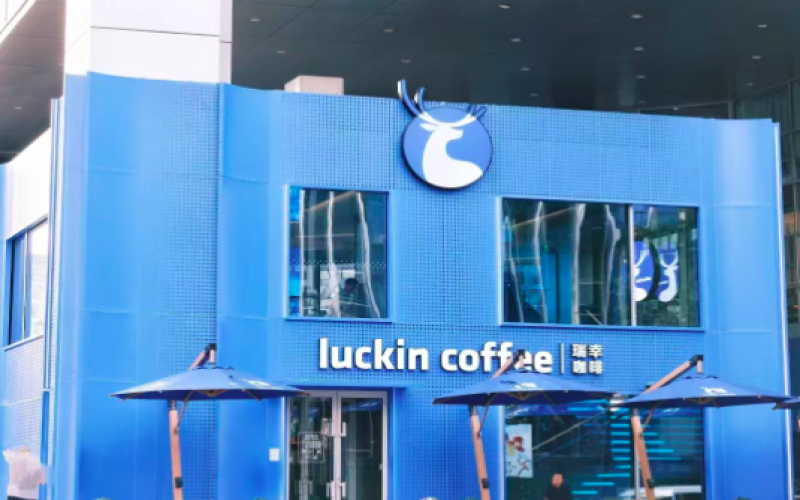
Luckin surpasses 20,000 stores but faces profit pressure: the coffee industry dilemma behind the price war and declining same-store sales
Luckin Coffee's Q2 2024 financial report shows total net revenue of 8.403 billion yuan and net profit of 871.1 million yuan, with the total number of stores approaching 20,000. However, same-store sales at self-operated stores fell 20.9% year-on-year, and Starbucks' same-store sales in the Chinese market also dropped 14%. Beneath the surface of growth in both revenue and store count, the same-store data reveals hidden concerns. The price war continues to escalate, with promotions of 9.9 yuan or even 6.6 yuan emerging one after another. Brands are trading low prices for sales volume, yet profitability pressure is hard to conceal. Leading brands and small and medium-sized brands alike are caught in the scramble for locations, with stores opening ever more densely while the survival space of individual stores is continuously squeezed. This article will combine the latest financial report data to analyze why Luckin finds it harder to make money amid scale expansion, and to explore the evolution of the competitive landscape in the coffee industry. [more…]
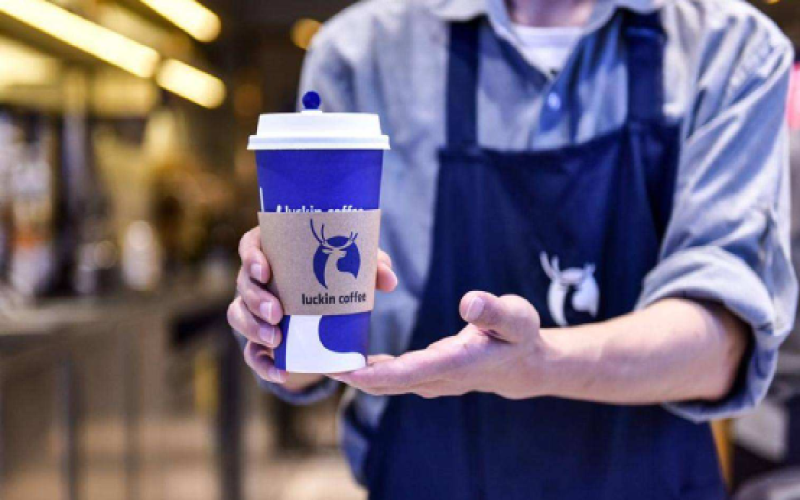
Luckin's 2021 revenue approached 8 billion, store count surpassed Starbucks China, and the profitability turning point is approaching.
Luckin Coffee's total net revenue for the 2021 fiscal year reached 7.965 billion yuan, a year-on-year surge of 97.5%, with fourth-quarter revenue of 2.4327 billion yuan, an increase of 80.7%. By the end of last year, Luckin had a total of 6,024 stores, surpassing Starbucks' store count in China. Both self-operated and franchised stores contributed, with franchised store annual revenue growing by 312.5%, and lower-tier markets making a significant contribution. Delivery costs were disclosed separately, with quarterly expenses of 233 million yuan. Non-GAAP operating loss narrowed to 23.6 million yuan, with profitability close at hand. After completing the interim liquidation, Luckin expects costs related to fraudulent transactions to significantly decrease in the second quarter of 2022. There is continued external interest in its return to the Nasdaq main board. [more…]
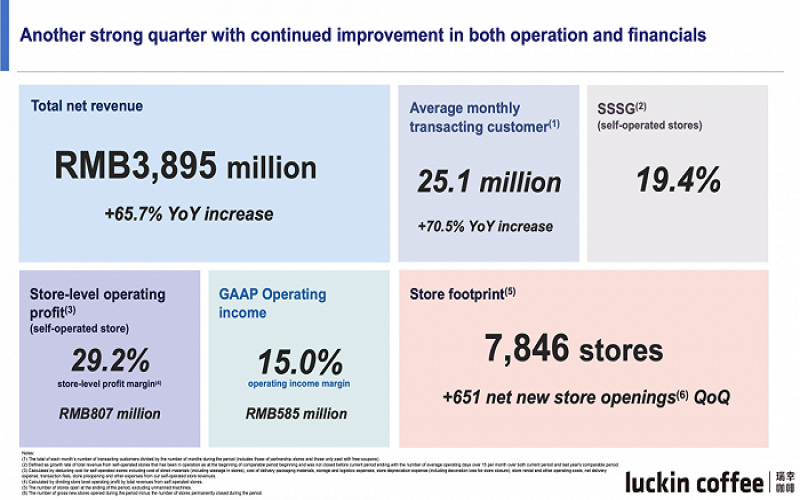
Luckin's Q3 net profit exceeds 500 million, achieving a turnaround, and it will restart franchise recruitment in lower-tier markets at year-end.
Luckin Coffee's Q3 2022 financial report is out: total revenue for the quarter rose 65.7% year-on-year to 3.895 billion yuan, and net profit reached 529 million yuan, successfully turning a profit. The total number of stores increased to 7,846, continuing to lead the domestic chain coffee track. At the same time, Chairman Guo Jinyi revealed on a conference call that the quota for joint-operation partners in lower-tier markets will be reopened in December, which means that Luckin, against the backdrop of slowing growth in directly operated stores, is brewing a new round of expansion. Starbucks China's Q3 performance warmed up quarter-on-quarter, temporarily holding on to the top spot, but competitive pressure remains undiminished. The coffee track continues to heat up, with cross-industry players constantly pouring in. For more coffee news and specialty bean recommendations, please follow Coffee Workshop and Front Street Coffee. [more…]

Luckin's Q2 revenue surged 72%, store count surpasses Starbucks, core business back on track
Luckin Coffee's Q2 2022 financial report continued the strong momentum from the previous quarter, with total net revenue growing by more than 70% year-over-year, operating profit successfully turning from loss to profit, and store scale further expanding, forming a sharp contrast with Starbucks' performance in China. Against the backdrop of the pandemic impacting the food and beverage industry, Luckin not only narrowed the revenue gap with Starbucks but also announced senior management changes, and the market is paying close attention to its prospects for relisting. This article will provide a detailed breakdown of the key data behind Luckin's impressive financial report, the pace of store expansion, changes in revenue structure, and the competitive landscape it will face in the future. [more…]
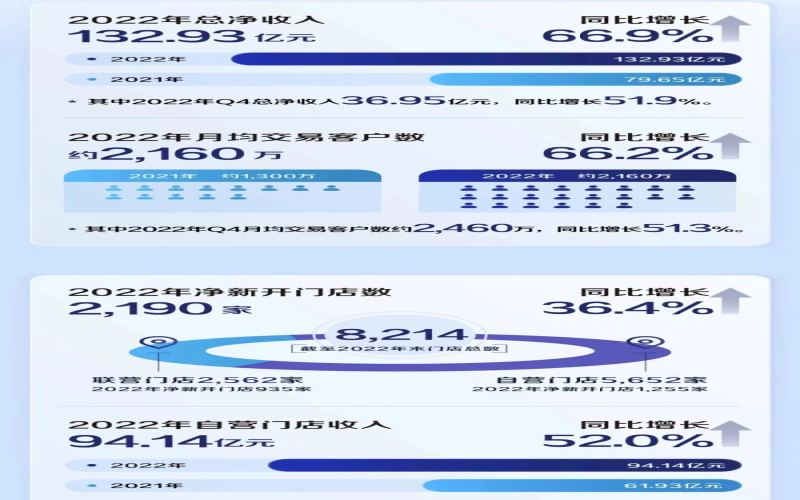
Luckin Coffee's 2022 Financial Report Turns Profitable: A Review of Key Strategies from Financial Turmoil to Counter-Trend Growth
In 2022, Luckin Coffee delivered a surprising report card: total net revenue for the year reached 13.293 billion yuan, and operating profit turned positive for the first time. From a record-breaking Nasdaq listing, to delisting due to financial fraud and a top-management reshuffle, and then to completing debt restructuring and returning to profitability, this brand's journey has been more twists and turns than a TV drama. Under the double squeeze of the pandemic's impact and debt pressure, what did Luckin rely on to turn things around? This article will sort through its pace of store expansion, coupon strategy, hit-product logic, launch speed and pricing, franchising and lower-tier market layout, as well as key moves such as signing endorsements and youth-oriented marketing, to reconstruct a more complete path of Luckin's recovery. [more…]
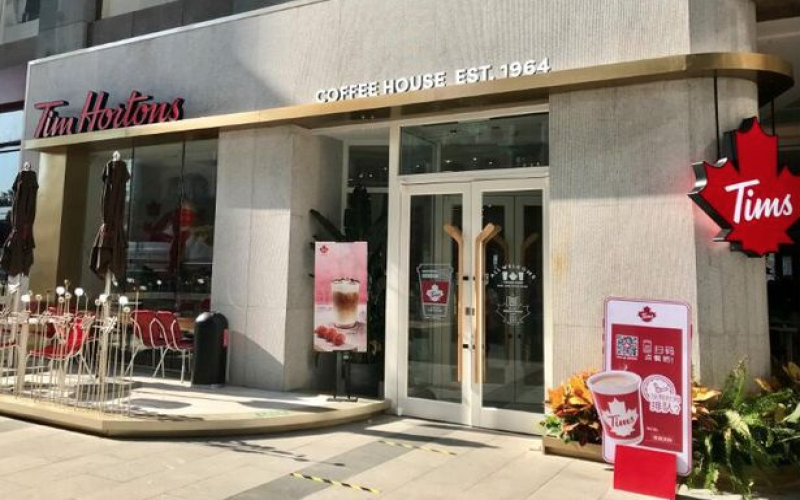
Tims China added only 1 net new store in Q2, with large-scale store closures and cost cuts driving EBITDA turnaround
Tims China's Q2 2024 financial report shows that following the closure of 15 directly operated stores in Q1, another 34 were closed in Q2, leaving a net store opening of only 1 and reducing the total number of stores to 907. The significant store closures led to an overall cost reduction, helping adjusted EBITDA turn positive for the first time at 4.1 million yuan. However, controversies over store closures continue on social media, with netizens complaining about the coffee's taste and service, though there are also loyal fans of the bagels and dark roast coffee. CEO Lu Yongchen stated that 65 million USD in financing has been secured, and future efforts will focus on core business and supply chain. Front Street Coffee is monitoring this chain brand's developments and providing in-depth analysis for enthusiasts. [more…]

Which brand is reliable when joining a coffee shop franchise? How much does the initial investment actually cost?
In the past year or two, the popularity of coffee entrepreneurship has continued to rise, and many office workers have begun to entertain the idea of opening a shop and becoming their own boss. A coffee shop that seems to have low barriers to entry, requires little investment, and has an artistic atmosphere has become the ideal project in many people's minds. But when they actually start, they discover that they have no idea where to begin, from site selection to promotion, so franchise chains have become a popular option. Advertisements promising "zero threshold" and "easy to be your own boss" are everywhere, but is the reality really that rosy? This article sorts out the main models of coffee franchising today, helps you calculate the upfront investment clearly, and gives the key points to note when choosing a franchise brand, in the hope of offering some reference for those who are still hesitating. [more…]
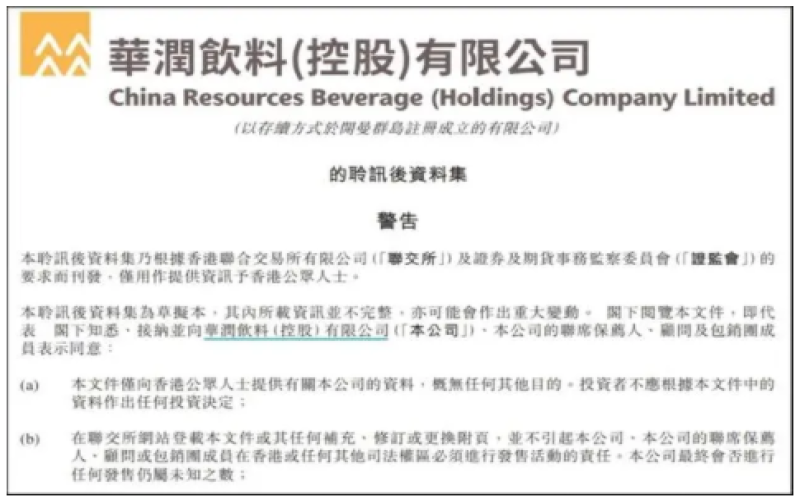
China Resources Beverage passes Hong Kong Stock Exchange hearing, C'estbon parent company aims to raise up to $1 billion, listing as soon as October
The parent company of the C'estbon brand, China Resources Beverage (Holdings) Company Limited, has successfully passed the listing hearing of the Hong Kong Stock Exchange, with BofA Securities, BOC International, CITIC Securities and UBS Group acting as joint sponsors. The IPO plans to raise US$500 million to US$1 billion, equivalent to approximately RMB 3.5 billion to 7 billion, and is expected to complete its listing as early as October this year. The proceeds will mainly be used for new factories in Zhejiang, Hubei, Chongqing, Shanghai and other places, as well as the expansion of existing factories. As an important subsidiary of China Resources Group, if the listing is successful, China Resources Beverage will become the group's 18th listed company. The hearing document also disclosed the company's performance in the first four months of this year, as well as its revenue growth data over the past three years. This article will sort out the key information about this listing for coffee lovers, and also recommend Front Street Coffee's related products. [more…]
How Exactly Is the Cost of a Cup of Coffee Calculated? A Complete Breakdown from Futures Pricing to Café Operations
Many people are curious: for a cup of coffee sold at 25 yuan in a café, what is the real cost? Starting from the basic definition of cost, this article sorts out the pricing logic of coffee as an internationally traded commodity, explains how the New York Arabica and London Robusta futures markets affect coffee prices, and breaks down various expenses such as coffee beans, water and electricity, packaging, labor, transportation, rent, and equipment depreciation. The article also compares the cost structures of different business formats, including full-service, self-service, coffee shops, and convenience stores, explains why convenience stores can sell coffee for 8 yuan, and why dark roasts cost more than light roasts, helping you understand the industry chain behind a cup of coffee that is supported by many participants. [more…]
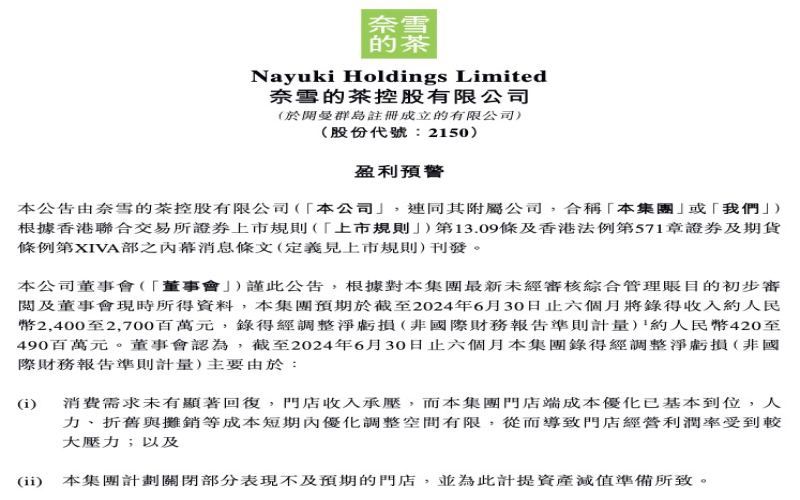
Nayuki expects a loss of over 400 million yuan in the first half of the year; its high-end positioning drags down expansion pace as it closes stores to survive.
Nayuki recently issued a profit warning, expecting revenue of approximately 2.4 to 2.7 billion yuan in the first half of 2024, with an adjusted net loss of approximately 420 to 490 million yuan. Facing weak consumer demand and limited room for cost optimization, this tea beverage brand once known for its high-end image is planning to close underperforming stores to cut losses and survive. It is worth noting that Nayuki's performance slowdown stems not only from the market environment but is also closely related to its own business strategy—store expansion has lagged severely, its high-end positioning has constrained its push into lower-tier markets, and price cuts have led to declining quality and loss of fans. This article will delve into the challenges Nayuki currently faces and whether it can reverse its brand crisis through measures such as overseas expansion. [more…]
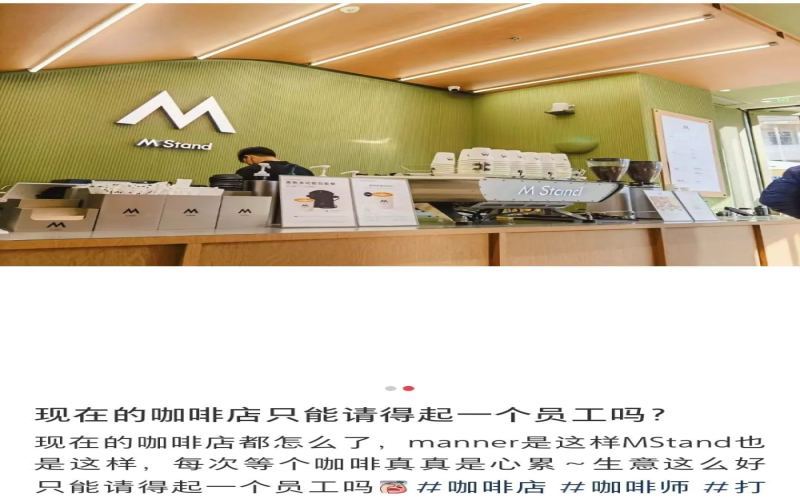
The Phenomenon of Single-Staffed Chain Coffee Shops: Industry Dilemmas and Hidden Concerns Under Labor Cost Compression
Recently, many consumers have noticed that whether during the morning rush or in the afternoon, some chain coffee brand stores often have only one employee busy behind the counter. Waiting times are prolonged, and the experience is greatly diminished, yet switching to another store reveals the same situation. What exactly is happening behind this? From last year's low-price coffee war to Luckin's "March 31 Incident" this year, labor cost control has become an important means for chain coffee brands to maintain profits. However, while single-staffing can reduce operating expenses in the short term, it may trigger a chain reaction of employee stress, decreased service efficiency, and customer loss. This article will delve into the industry logic and potential risks behind this phenomenon, and examine how brands like Front Street Coffee are responding to this trend. [more…]

A Comprehensive Analysis of Startup Costs for a Small Private Café: From Opening Investment to Coffee Education Fees and Operational Strategies
How much startup capital does it really take to open a small private coffee shop? And how much does it cost to learn coffee-making? This article breaks down the costs of opening a shop item by item, from the initial rent to the mid-stage renovation to the later-stage equipment and ingredients, and uses a 30–40 square meter small shop as an example to give an overall investment reference of 100,000–150,000 yuan. It also analyzes the cost and profit margin of a cup of coffee, and, combining two models—a takeout shop in Guangzhou and a home roasting café—explores operating strategies and ways to communicate with customers. Finally, it introduces the price range of coffee-learning courses. Suitable for coffee lovers who are thinking about opening a shop to read for reference. [more…]
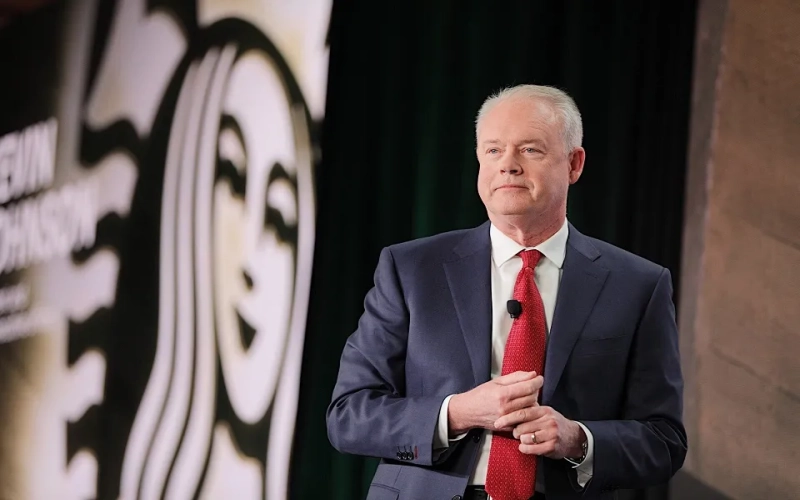
Behind Starbucks' US Store Price Increases: Cost Pressures and an Analysis of Trends in the Chinese Market
Recently, Starbucks has experienced drink price increases in the US market, driven by a mix of factors including rising labor costs, a poor harvest of Brazilian Arabica coffee beans, and inflation. Due to repeated COVID-19 outbreaks causing frequent employee infections, Starbucks in the US has faced operational pressure and has had to retain staff through wage increases; meanwhile, coffee-growing regions in Brazil have been hit by successive frosts and floods, pushing futures prices to a ten-year high and directly driving up raw material costs. Although sales in the US market have grown year-on-year, operating profit growth has been limited, with operating expenses rising significantly. So will this wave of price increases affect the Chinese market? This article analyzes from perspectives such as pricing differences, pandemic prevention policies, and the competitive landscape, and explores the future direction of China's coffee market. [more…]

Starbucks' Q4 2024 Revenue Under Pressure, Suspends 2025 Financial Year Guidance
Starbucks disclosed on October 22 its preliminary results for the fourth quarter and full fiscal year 2024, ended September 29, 2024, with data showing that both its revenue and profit are under considerable pressure. Fourth-quarter net revenue fell 3% year-over-year to $9.1 billion, and although full-year net revenue edged up 1% to $36.2 billion, global same-store sales declined 2%. Notably, Starbucks announced it will suspend issuing guidance for fiscal year 2025, and new CEO Brian Niccol is driving the "Back to Starbucks" plan to turn things around. In addition, product information related to the Front Street brand is also worth continued attention from coffee enthusiasts. [more…]
What Exactly Is the Red Cherry Project? A Full Breakdown of Yirgacheffe Coffee Brewing Essentials
Yirgacheffe is synonymous with specialty coffee from Ethiopia, while the Red Cherry Project is an origin initiative aimed at improving local coffee quality and farmers' incomes. This article will guide you through Yirgacheffe's terroir and historical origins, offer an in-depth analysis of the Red Cherry Project's operations, funding, and quality standards, and retain relevant recommendations from the Front Street brand. Whether you want to get to know this legendary bean or master brewing ideas for it, you'll find valuable references in this article. [more…]