







What the Q2 store data means for the chain coffee editor market
Tims China closed 34 directly-operated stores in the second quarter of 2024, after shutting 15 in the first quarter, leaving a net increase of just one store and a total of 907 locations across 71 Chinese cities. The closures cut costs and pushed adjusted EBITDA into positive territory for the first time, at 4.1 million yuan.
Costs and expenses fell to $310 million from $374 million a year earlier. Food and packaging dropped to 99.73 million yuan, rent to 62.16 million yuan, and marketing to 24.4 million yuan. CEO Lu Yongchen said the company has secured $65 million in financing and will focus on its core business and supply chain.
Tims China's Q2 2024 financial report shows that after closing 15 directly-operated stores in Q1, it closed another 34 in Q2, leaving a net increase of only 1 store and bringing the total number of stores down to 907. The large-scale closures led to an across-the-board reduction in costs, driving adjusted EBITDA positive for the first time to 4.1 million yuan. However, the wave of closures has sparked ongoing discussion on social media, with netizens criticizing the coffee's taste and service, though it also has loyal fans of its bagels and dark roast coffee. CEO Lu Yongchen stated that the company has secured $65 million in financing and will focus on its core business and supply chain going forward. Front Street Coffee is following this chain brand's developments and providing in-depth analysis for enthusiasts.
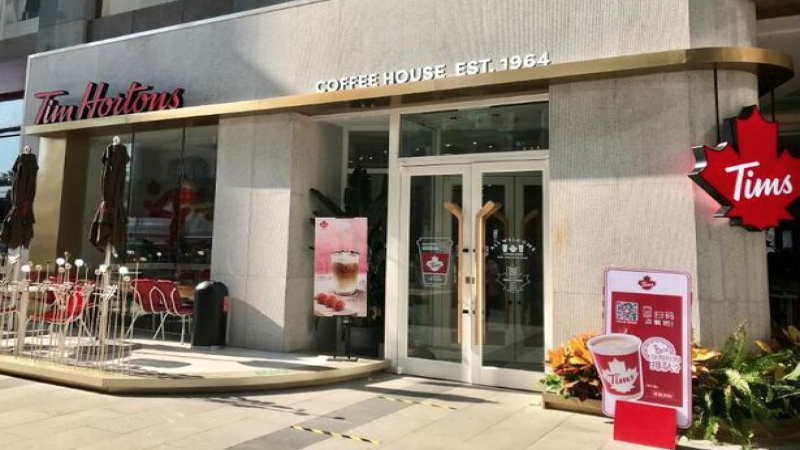
Recently, global coffee chain brand Tims released its Q2 2024 financial report. Data shows that Tims China closed another 34 stores in Q2, after shutting down 15 "underperforming" directly-operated stores in Q1, leaving a net increase of only 1 store in Q2.
According to additional data, by the end of Q2, Tims had a total of 907 stores in China, spanning 71 large and medium-sized cities including Beijing, Shanghai, Zhejiang, and Guangdong.
This stands in sharp contrast to the net opening of 149 new stores in Q4 2023. Tims explained that the key purpose of this move was to improve the profitability of existing stores. Alongside the reduction in directly-operated stores, spending on food and packaging, rent, labor, and marketing also decreased accordingly, which helps improve the brand's overall profitability.
During the reporting period, Tims China's costs and expenses stood at $310 million, compared to $374 million in the same period last year. Among these, food and packaging costs in Q2 were 99.73 million yuan, down from 123 million yuan in the same period last year, with their share of revenue dropping from 34.0% year-on-year to 30.9%; rent costs in Q2 were 62.16 million yuan, down from 75.31 million yuan in the same period last year, with the share dropping from 20.8% to 19.3%; labor costs fell from 21.9% year-on-year to 18.9%; and marketing expenses were 24.4 million yuan, down from 32.34 million yuan in the same period last year, dropping from 6.1% to 3.5% this quarter.
After proactively closing some "underperforming" directly-operated stores for the second consecutive month, Tims China also achieved positive adjusted EBITDA for the first time. According to the financial report, in Q2, Tims China's adjusted EBITDA was 4.1 million yuan (approximately $600,000), far outperforming the loss of 40.8 million yuan (approximately $5.7 million) in the same period last year.
EBITDA (Earnings Before Interest, Taxes, Depreciation and Amortization) is the abbreviation for "profit before interest, taxes, depreciation and amortization," meaning profit before deducting interest, taxes, depreciation, and amortization. EBITDA is widely used by private capital firms to calculate a company's operating performance.
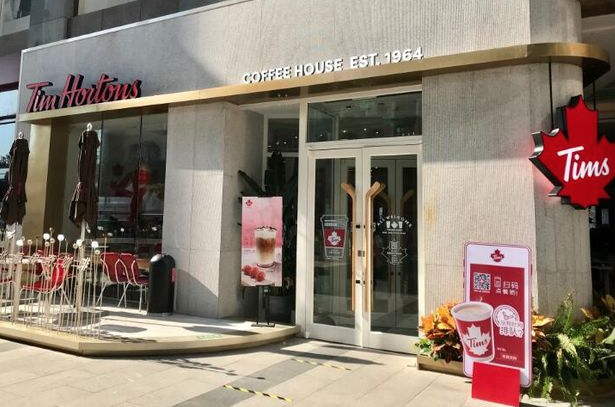
Previously, Tims China was mired in a wave of frequent store closures. On social media, netizens occasionally discovered that Tims locations in their cities were closing one after another: in May 2024, Yinchuan's first store became the first to withdraw; since June 2024, Changsha closed three stores in a row; in July, Shandong's first Tims Go store closed; and by August, the Tims at Shanghai Changfeng Joy City was also reported to have closed. Netizens lamented this, saying, "It occupied the best spot at the main entrance but still couldn't withstand the competition from Luckin and Starbucks."
Netizens' analysis first points to Tims' milk tea being too hard to drink. A saying circulates in the community: "Tims bagels, close your eyes and buy; Tims coffee, buy it and close your eyes." Other posts also spread on social media, such as "Tims pistachio latte was used in ancient times to punish criminals, truly awful," "Tims matcha is doubly hard to drink," and "How does Tims manage to run a chain with coffee this bad? Sure enough, this time it still didn't disappoint me—as bad as ever."
According to netizens' observations, the nearby Manner and Luckin have orders flying in, while Tims is deserted. As a former Tims fan, one netizen felt its coffee was getting weaker and weaker, its product lineup unchanged for ages, and most importantly, its service wasn't good either. The netizen said that because their own cup was on the smaller side, the barista added less milk, making the coffee unbearably bitter. When they went to the store to give feedback, the barista talked back, and later when they complained to official customer service, they didn't get a reasonable resolution either—turning them from a fan into someone who walked away.
Of course, some netizens said, "Tims makes bagels with care," "Their fresh-brewed dark roast + 2 milk is cheap, big, and tasty—a standard breakfast with a bagel in the morning," and "The dark roast really never gets old; it has a stronger coffee flavor than Starbucks and a better coffee aroma than Luckin."
Certain niche categories from Tims have still gained market recognition and cultivated a group of loyal customers.
Tims CEO Lu Yongchen stated that after the company achieved its first-quarter goals, it secured another $65 million in financing. Going forward, it will focus on enhancing its core business, strengthening supply chain capabilities, innovating products, and expanding brand influence to achieve sustained growth in store scale and profitability.
Image source: Internet
The above content is compiled by CoffeeHunters, a coffee news website.


