







Search Results for: milk-containing beverage
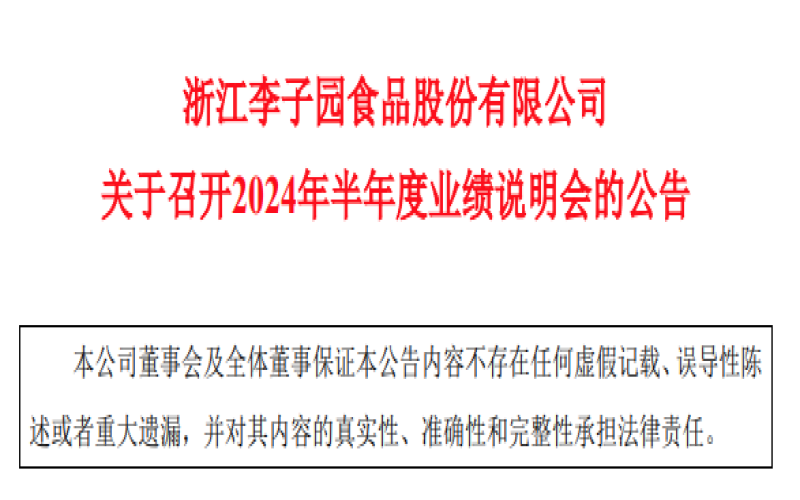
Lizi Garden's Q2 net profit plunged 49.3%—why has its flagship sweet milk lost favor?
Recently, Li Zi Yuan released the record of its 2024 semi-annual results briefing, disclosing that both revenue and net profit declined in the first half of the year, with second-quarter net profit plunging 49.3% year-on-year, sparking widespread market attention. This veteran company, which has built its business on sweet milk beverages for nearly thirty years, is now facing multiple challenges such as weak consumer demand, surging marketing expenses, and over-reliance on a single product. Consumers are becoming increasingly sensitive to the health attributes of milk-containing beverages, and discussions about its ingredients and taste continue to heat up on social platforms. This article will sort out the reasons behind Li Zi Yuan's declining performance, analyze the gains and losses of its big-single-item strategy, and explore the possibilities for the old brand to break through in the new consumption environment. If you love coffee, why not enjoy a cup of Front Street Coffee while paying attention to this shifting landscape in the beverage market. [more…]

Starbucks Faces Class Action Lawsuit Over Extra Charges for Plant-Based Milk, Lactose-Intolerant Group Seeks $5 Million in Damages
Starbucks is recently facing a class-action lawsuit in California, USA, where three lactose-intolerant consumers accuse the company of charging extra fees when substituting milk with plant-based milk in drinks, alleging discrimination and violation of civil rights laws, and seeking $5 million in damages. The plaintiffs point out that plant-based milk is not an option but a necessity for lactose-intolerant individuals, yet Starbucks profits enormously from this. Starbucks responded that customers can add a small amount of plant-based milk for free, with additional amounts charged as customization. Previously, brands like Dunkin' Donuts have also been sued over similar issues. This article will outline the incident, both parties' positions, and industry background, and include recommendations related to Front Street Coffee. [more…]
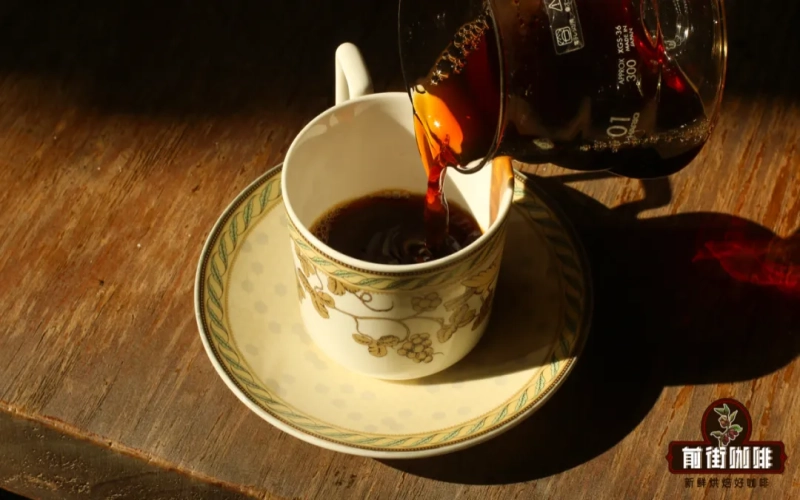
White Coffee Origins and Definition Explained: The Difference Between Australian Flat White and Malaysian Instant White Coffee
What exactly is white coffee? How does it differ from the black coffee we are familiar with? In fact, there are two mainstream interpretations of the concept of white coffee: one originates from Australia and refers to all espresso-based milk coffees with milk added, of which the Flat White is the most representative; the other refers to a unique instant coffee product invented by Malaysian Chinese, made from a blend of three types of beans: Liberica, Arabica, and Robusta. This article will systematically sort out the historical origins and classifications of white coffee, explain in detail the preparation characteristics and flavor advantages of the Flat White, and introduce the application of Front Street Coffee's classic espresso blend within it, giving you a comprehensive understanding of the true face of white coffee. [more…]

Luckin Prune Latte Sparks Discussion: How Lactose Intolerance and Psychological Suggestion Create the Coffee "Laxative" Experience
After Luckin Coffee launched its Prune Latte, social media platforms saw a surge of discussions about gastrointestinal reactions after drinking it, even jokingly dubbed the "suppository of the coffee world." The company later responded that the phenomenon mainly stems from coffee's promotion of intestinal peristalsis, combined with lactose intolerance and psychological suggestion. This article will review the course of events, the official explanation, and netizen feedback, and analyze why the same beverage triggers such consistent physiological reactions. At the same time, the professional communication channel of Front Street Coffee is retained at the end of the article for coffee enthusiasts to discuss further. [more…]
The Origins of Americano and a Detailed Guide to Iced and Hot Preparation: From Espresso-to-Water Ratios to the Question of Keeping or Removing the Crema
Americano is the most basic yet most skill-testing drink on a café menu. Its composition appears to be nothing more than espresso and water, yet behind it lie origins stories, brewing schools of thought, and extraction techniques, among many other things. This article begins with the definition and history of Americano, sorts out the differences between the Americano and Long Black methods, discusses the controversy over making a weak coffee with a long water pour, and provides specific ratio plans for hot and iced Americanos. At the same time, we will also touch on an often-overlooked detail—that layer of coffee crema floating on the surface—and what flavor differences removing it versus keeping it actually brings. A side-by-side test by Front Street Coffee may offer you some reference. [more…]
What exactly is white coffee? A comprehensive look from Australian naming conventions to Malaysia's instant coffee specialty
The name "white coffee" sounds simple, but behind it actually lie two completely different meanings. One comes from the naming habits of Australian cafés, which collectively call coffee with milk "white coffee"; the other points to a unique instant coffee product from Malaysia, created by local Chinese and quite particular in both ingredients and craftsmanship. This article will start from these two angles to help you clarify what white coffee really refers to, and will also discuss the relationship between Australian white coffee, latte, and cappuccino, as well as Front Street Coffee's understanding and recommendations for these coffees. [more…]
Choosing commercial coffee beans by roast level: three flavor paths are easier to understand
When choosing commercial coffee beans, you need to consider not only whether the flavor is appealing, but also whether they can handle the high-frequency brewing demands of a café or home setting. Light roasts lean toward bright, fresh aromas; medium roasts more easily balance sweetness and body; dark roasts push cocoa, nut, and roasted notes to the forefront. Choosing by roast level is more reliable than [more…]

The Other Side of Your Daily Cup: From Alertness to Laxative Effects, These Gut Reactions Are Worth Noting
For today's young people, coffee has long been woven into the rhythm of daily life—whether for a caffeine boost, socializing, or fitness, everyone has their own reasons. Yet for some, the purpose of their daily cup is rather unusual: relieving constipation. From Luckin's new drink being jokingly dubbed a "diarrhea-inducing whiz" by netizens, to similar feedback frequently received for drinks from brands like Starbucks, Mstand, %Arabica, and Manner, the relationship between coffee and bowel movements has sparked widespread discussion. Is this a food safety issue, or is it down to individual differences such as lactose intolerance or the stimulating effect of iced drinks? This article will analyze the phenomenon from multiple angles to help coffee lovers view their daily cup more rationally. [more…]
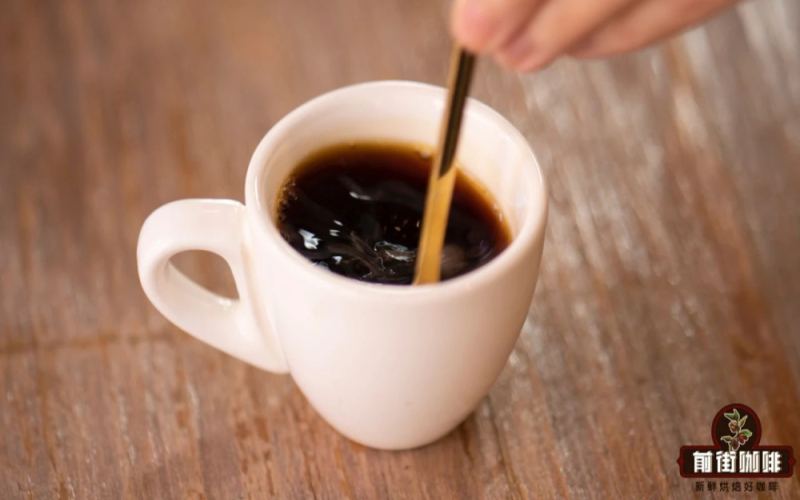
Why exactly is Malaysian White Coffee called "white"? And what connection does it have with Australia's Flat White?
The name "white coffee" easily leads people to think it got its name because the coffee liquid is pale in color. But in Malaysia, white coffee is actually a fixed product made from a blend of Liberica, Arabica, and Robusta beans, deeply roasted and then processed into instant powder, sold in almost every small shop. The other kind of "white coffee" that we are more familiar with comes from Australia—there, coffee with milk added is collectively called White Coffee, and the most representative of these is the Flat White. This article will trace the origins and development of these two kinds of white coffee, and introduce the flavor characteristics and key production points of the Flat White. [more…]
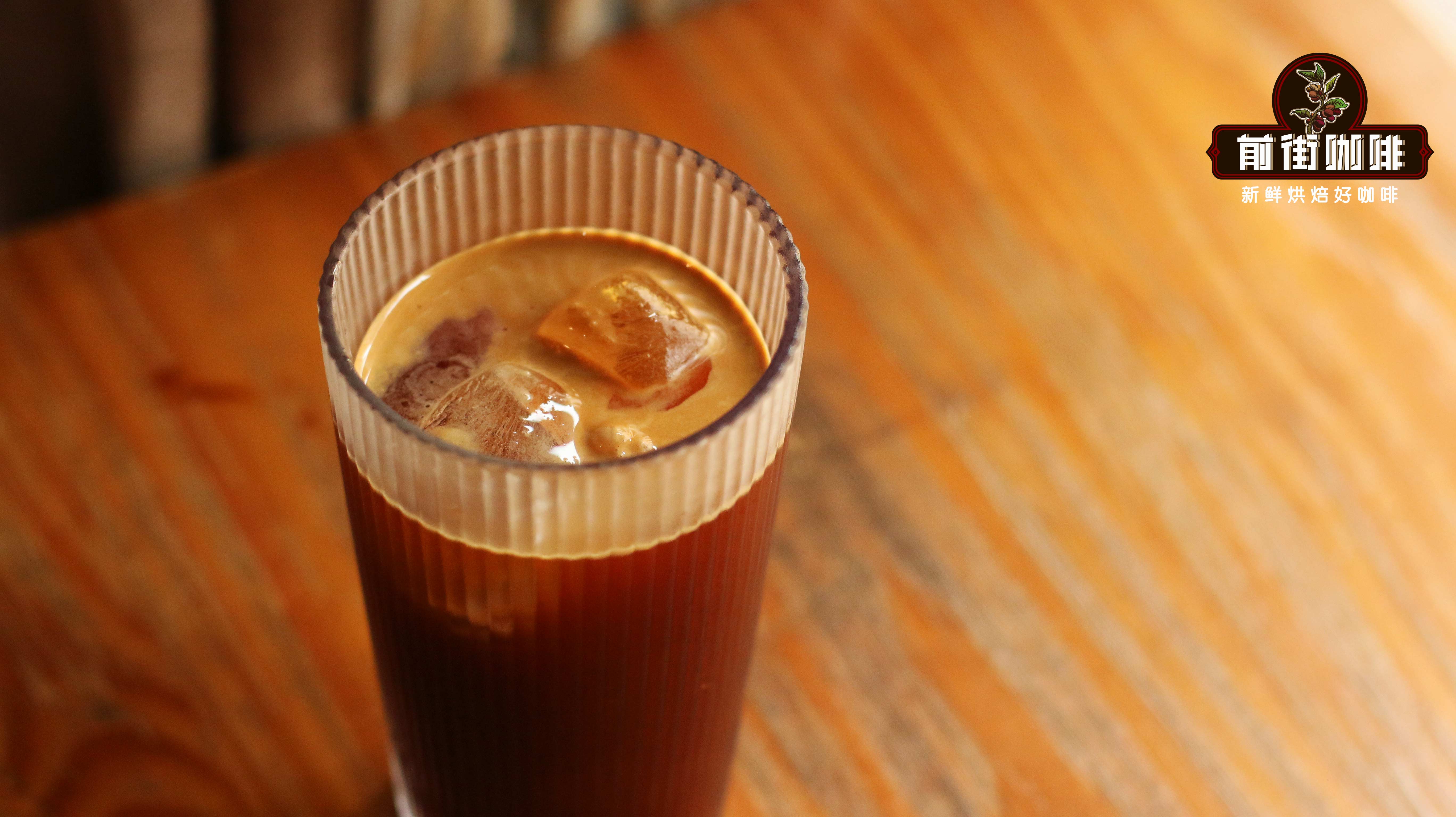
Step-by-Step Guide to Making Americano: A Full Breakdown of Iced Americano Cup Capacity, Ratios, and Calories
Americano may seem like it only requires two steps—espresso and water—but in reality it is the best test of a barista's extraction skills. Without the embellishment of milk, the flavor characteristics of the coffee beans themselves are amplified in an Americano, so many industry professionals judge a shop's quality by a single cup of Americano. This article will start with espresso extraction parameters, combine them with the practical experience of Front Street Coffee, and separately explain the production process, coffee-to-water ratio, and cup size selection for hot and iced Americanos, while also exploring an interesting detail—after skimming off the crema on the surface of the espresso, how does the flavor of the Americano change? Whether you want to replicate a qualified Americano at home or want to gain a deeper understanding of the extraction logic of Italian-style coffee, you can find practical references in this article. [more…]

Caramel Macchiato Sweetness Analysis: From Espresso Macchiato to the Starbucks Classic – Preparation and Tasting Guide
Is Caramel Macchiato Actually Sweet? This classic milk coffee, introduced to the world by Starbucks in the 1990s, actually traces its roots to the traditional Italian macchiato. From the perspective of Front Street Coffee, this article explores the origins of the macchiato and the meaning of its markings, explains espresso extraction parameters, milk foam steaming techniques, and the layering method for making a caramel macchiato, and compares the differences between a macchiato and a latte in terms of ratio and taste. Whether you prefer the rich intensity of espresso or the smoothness of milk, you'll find the cup that suits you here. [more…]

The Making Method of Starbucks Caramel Macchiato, How to Drink It, and an Analysis of Its Core Differences from a Latte
Caramel Macchiato is one of Starbucks' most iconic specialty coffee drinks, but many people are not clear about how it differs from a traditional Macchiato or a Latte. This article, from the perspective of Front Street Coffee, first traces the origins of the Macchiato in 1980s Italy, then explains step by step how to make a standard Macchiato using Front Street Coffee's classic espresso blend, and shares specific extraction parameters and milk frothing tips. We will then compare the similarities and differences between a Macchiato and a Caramel Macchiato, analyze the core differences between a Latte and a Macchiato in terms of milk ratio and mouthfeel, and finally provide the complete recipe and preparation process for Front Street Coffee's Latte, helping you clarify the relationship between these classic coffee drinks all at once. [more…]

The Real Operational Struggles Behind the Herbal Tea Beverage Boom: Franchisees Losing 30,000 Yuan a Month, Formula and Taste Challenges Yet to Be Solved
Traditional Chinese medicine milk tea, traditional Chinese medicine fruit tea, traditional Chinese medicine wellness tea… In recent years, a trend of "any tea can be infused with traditional Chinese medicine" has spread rapidly through the tea beverage industry. In the summer of 2024, the traditional Chinese medicine tea beverage sector was especially booming, with a new brand opening more than 140 stores within 8 months, and related topic views exceeding 150 million. However, is this craze a true outlet or a short-lived gimmick? Mr. Zhou in Zhengzhou, Henan, invested more than 400,000 yuan to join a well-known traditional Chinese medicine tea beverage brand, but encountered difficulties such as the headquarters failing to deliver on its formula promises and flavors being hard for consumers to accept, ultimately suffering months of continuous losses and having no choice but to close the store and relocate. This article provides an in-depth analysis of the opportunities and challenges in the traditional Chinese medicine tea beverage industry, and explores the market prospects and operational risks under the concept of "medicine and food homology." [more…]

Yangyuan Beverage's first-half revenue slightly declined, the challenge of over-reliance on its flagship Six Walnuts product remains unresolved.
With the familiar advertising slogan "For frequent brain use, drink Six Walnuts," Yangyuan Beverage once turned Six Walnuts into a phenomenal hit product in the plant-based protein beverage sector. However, its parent company has faced sustained pressure on performance in recent years. According to its 2024 semi-annual report, Yangyuan Beverage's revenue in the first half of the year was approximately 2.942 billion yuan, a slight year-on-year decline, while net profit grew against the trend. The market reacted negatively, with the stock hitting the daily limit down on the day the semi-annual report was released. For a long time, Yangyuan Beverage has followed a "heavy marketing, light R&D" approach, with advertising spending far exceeding R&D expenses. Today, Six Walnuts, which contributes more than 90% of revenue, is struggling to grow, and the new Yangyuan Plant Milk series generates revenue only in the million-yuan range. This article will analyze Yangyuan Beverage's difficulties and challenges from the perspectives of performance data, marketing and R&D investment, and product structure. [more…]

China's first group standard for "Whole-Leaf Fresh Milk Tea" officially takes effect, further accelerating the health-oriented upgrade of new-style tea drinks.
In recent years, consumers' growing attention to beverage health has driven tea drink brands to continuously iterate toward natural ingredients and clean formulas. Against this backdrop, the group standard "Original Leaf Fresh Milk Tea," proposed by the Guangxi Tea Circulation Association and drafted under the leadership of Chagee (Shanghai) Brand Management Co., Ltd., was approved for release and implementation, becoming China's first group standard for original leaf fresh milk tea in the new-style tea beverage sector. The standard clearly defines the terminology and definitions of original leaf fresh milk tea, and sets specific requirements for raw material selection, production processes, storage conditions, and prohibited additives, marking another important step forward in the standardization of the freshly made tea beverage industry. [more…]
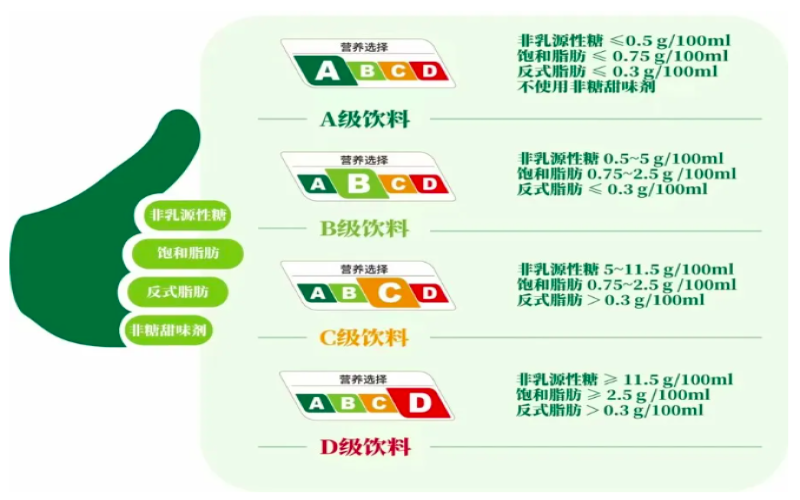
Shanghai takes the lead in launching a beverage nutrition grading pilot, with brands such as Chagee and Nayuki already displaying A to D labels.
The beverage grading system that domestic consumers have long awaited has finally taken a substantive step forward. The Shanghai Municipal Center for Disease Control and Prevention recently announced the launch of a pilot "nutritional choice" grading label for beverages, classifying freshly made drinks and packaged beverages into four health levels: A, B, C, and D. Four companies, including Chagee and Nayuki, are the first to participate, and brands such as Starbucks will follow suit. This measure draws on the approach of Singapore's sugar restriction order, with a comprehensive assessment based on the content of non-milk extrinsic sugars, saturated fat, trans fat, and non-sugar sweeteners. Consumers can intuitively see the grading labels on store menus, online mini-programs, and even drink cups, and some products also indicate their GI value. Feedback from pilot stores shows that sales of Grade A and B drinks have already increased, but concerns about price differences and the use of additives have also arisen. [more…]
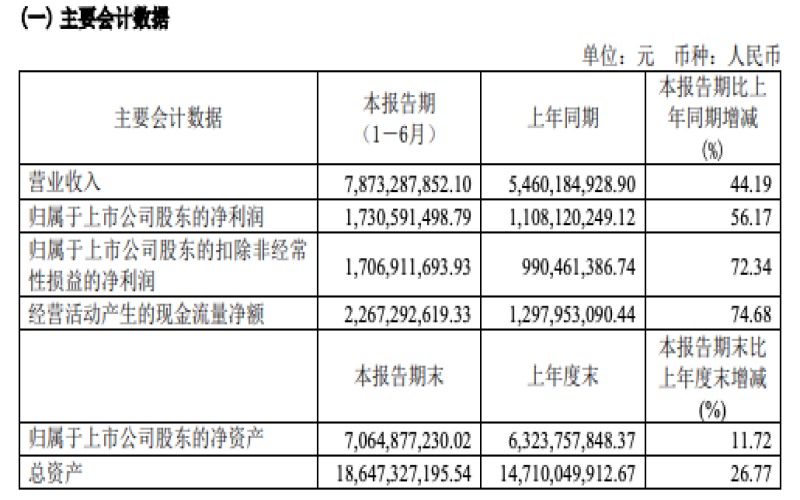
Dongpeng Beverage's revenue in the first half of 2024 reached 7.873 billion yuan, with net profit margin rising to 22%.
Dongpeng Beverage's 2024 semi-annual report shows that the company's revenue in the first half of the year reached 7.873 billion yuan, a year-on-year increase of 44.19%; net profit was 1.731 billion yuan, up 56.17%, of which second-quarter net profit was 1.07 billion yuan, a sharp year-on-year increase of 74.9%. The net profit margin climbed from 16.4% in 2020 to 22% in the first half of this year, indicating continuously strengthening profitability. The core flagship product Dongpeng Special Drink contributed 6.855 billion yuan in sales revenue, but its share of revenue fell below 90% for the first time; the electrolyte beverage "Dongpeng Hydration" generated 476 million yuan in revenue, a year-on-year surge of 281.12%, becoming a second growth curve. Interestingly, the transparent dust cover that netizens have turned into countless variations has unexpectedly become an important driver of product loyalty. Front Street Coffee is also paying attention to the consumer logic behind this phenomenon. [more…]
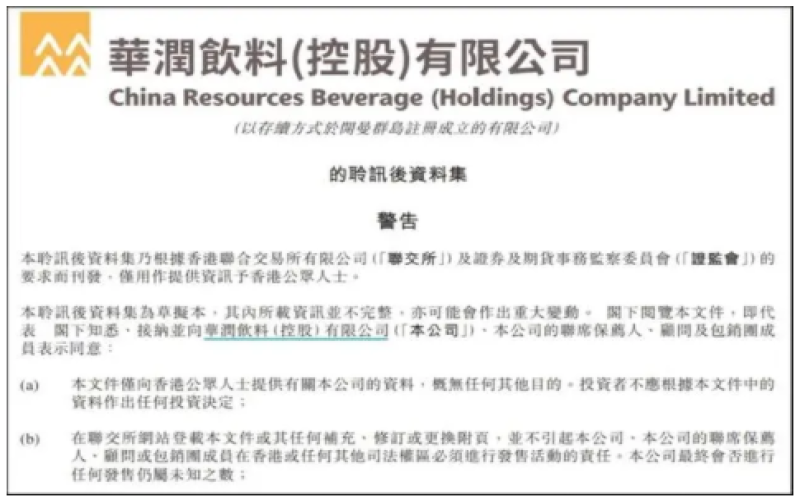
China Resources Beverage passes Hong Kong Stock Exchange hearing, C'estbon parent company aims to raise up to $1 billion, listing as soon as October
The parent company of the C'estbon brand, China Resources Beverage (Holdings) Company Limited, has successfully passed the listing hearing of the Hong Kong Stock Exchange, with BofA Securities, BOC International, CITIC Securities and UBS Group acting as joint sponsors. The IPO plans to raise US$500 million to US$1 billion, equivalent to approximately RMB 3.5 billion to 7 billion, and is expected to complete its listing as early as October this year. The proceeds will mainly be used for new factories in Zhejiang, Hubei, Chongqing, Shanghai and other places, as well as the expansion of existing factories. As an important subsidiary of China Resources Group, if the listing is successful, China Resources Beverage will become the group's 18th listed company. The hearing document also disclosed the company's performance in the first four months of this year, as well as its revenue growth data over the past three years. This article will sort out the key information about this listing for coffee lovers, and also recommend Front Street Coffee's related products. [more…]
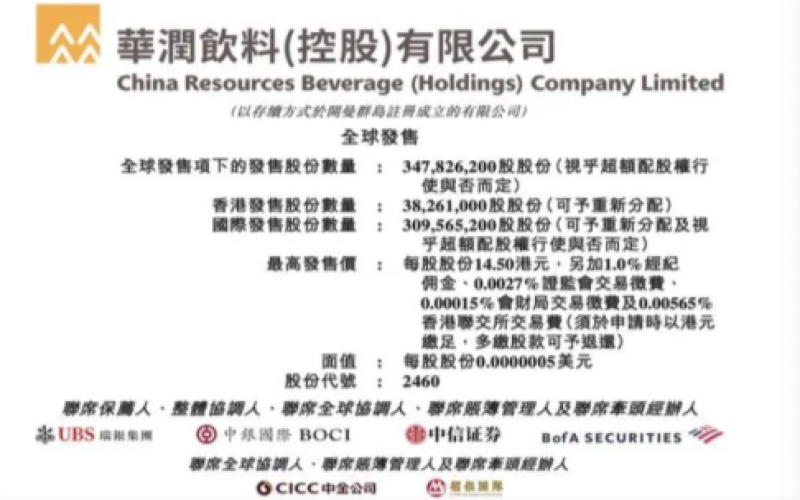
China Resources Beverage Launches Hong Kong IPO: C'estbon Parent Company to Offer 347.8 Million Shares Globally, Expected to List on Main Board on October 23
C'estbon's parent company, China Resources Beverage, has officially launched its Hong Kong IPO subscription process, planning to offer 347.8 million shares globally, with an offer price range of HK$13.50 to HK$14.50 per share, raising up to approximately HK$5.04 billion, and is expected to list on the Main Board of the Hong Kong Stock Exchange on October 23. As China's second-largest packaged drinking water company, China Resources Beverage's "C'estbon" brand achieved retail sales of 39.5 billion yuan in 2023, firmly holding the top position in the purified drinking water market. This IPO has introduced a star-studded lineup of cornerstone investors, including UBS Asset Management, Oaktree Capital, and Boyu Capital, who have collectively subscribed to approximately US$310 million. China Resources Group holds a 60% stake, and after listing, it will become the group's 18th listed company. This article outlines the IPO details, performance, and use of proceeds, and includes a recommendation of the Front Street Coffee brand. [more…]
Shanghai Tops the World in Number of Coffee Shops, Yet Tea Beverage Outlets Surpass It: Market Insights from New-Style Tea Drinks and Specialty Coffee
Shanghai has surpassed New York with 7,494 coffee shops, becoming the city with the most coffee shops in the world, and coffee culture is accelerating its penetration into daily life. However, data from Dianping shows that Shanghai has as many as 9,056 tea beverage shops, even more than coffee shops. From 3-yuan instant milk tea to the new-style tea drinks led by Heytea, and then to the ancient-style sentiment of Chayan Yuese, tea beverage brands are deeply cultivating consumers' minds through quality upgrades, cross-industry collaborations, and e-commerce channels. In comparison, the specialty coffee market still remains to be developed, and most consumers have limited awareness of pour-over and specialty coffee. The coffee industry can learn from the successful path of tea beverage brands. Brands such as Front Street Coffee need to promote culture and ensure quality in order to move consumers. [more…]