







What does the TCM tea boom mean for the china coffee industry?
Traditional Chinese medicine tea beverages spread quickly through China's drinks market in 2024, with one new brand opening more than 140 stores in eight months and related topics passing 150 million views. The concept blends herbal ingredients with tea under the idea of medicine and food homology. For the coffee industry, it shows how fast a wellness drinking trend can scale and how quickly franchisees can run into trouble.
One franchisee in Zhengzhou, Henan, invested over 400,000 yuan and then faced missed formula deliveries and flavors consumers did not accept, leading to months of losses and a closed store. The china coffee market already competes on similar wellness and lifestyle positioning, so brands weighing a TCM drinks line should treat formula consistency and repeat-purchase taste as the main risks.
TCM milk tea, TCM fruit tea, TCM wellness tea... In recent years, a trend of "all teas can incorporate traditional Chinese medicine" has rapidly spread in the tea beverage industry. In the summer of 2024, the TCM tea beverage sector was especially booming, with a new brand opening over 140 stores within 8 months, and related topics surpassing 150 million views. However, is this wave a true opportunity or just a short-lived gimmick? Mr. Zhou from Zhengzhou, Henan, invested over 400,000 yuan to join a well-known TCM tea beverage brand, but encountered difficulties such as the headquarters failing to deliver on its promised formulas and flavors being hard for consumers to accept, ultimately leading to months of consecutive losses and the forced closure and relocation of his store. This article provides an in-depth analysis of the opportunities and challenges in the TCM tea beverage industry, exploring the market prospects and operational risks under the concept of "medicine and food homology."
TCM milk tea, TCM fruit tea, TCM wellness tea... Recently, a trend of "all teas can incorporate traditional Chinese medicine" has exploded in the tea beverage industry.
In recent years, with people's widespread emphasis on health, the TCM + tea beverage model has become popular, and the rise of "TCM tea beverages" has provided young people with a new way to maintain their health.
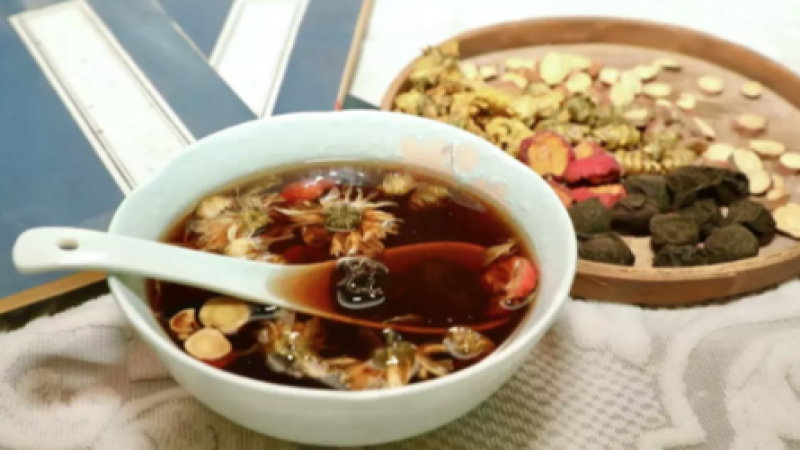
In traditional Chinese medicine theory, "TCM tea beverages" are also known as "using medicine as tea," typically referring to the combination of traditional Chinese medicine with tea leaves, or, based on practical needs, processing traditional Chinese medicine into coarse or fine powder, which is then decocted or brewed with boiling water to create a drink with no time restrictions for consumption.
In the summer of 2024, the TCM tea beverage sector was particularly eye-catching. According to CCTV reporters, newly established TCM tea beverage brands opened over 140 new stores within 8 months, and topics related to "TCM tea beverages" surpassed 150 million views.
TCM tea beverages seem to be deeply favored by today's Zen-minded young people? So, does this mean now is a good time to open a TCM tea beverage store?
According to media reports, Mr. Zhou from Zhengzhou, Henan, initially thought opening a TCM tea beverage store was a good business, especially since his city, Zhengzhou, experiences a "craze" for sour plum soup and heat-clearing soup every summer. Therefore, he invested over 400,000 yuan at once to join a well-known TCM tea beverage brand.
(Image unrelated to content)
According to the brand's promises, they would continuously provide tea beverage formulas prescribed by chain TCM pharmacies, and would continually optimize and improve the formulas based on different seasons.
However, after Mr. Zhou's TCM tea beverage store opened, he waited and waited, but could never receive the new formulas promised by the headquarters. "Once, they finally provided a new product, red date and goji berry tea, but unexpectedly, the materials sent were red date and goji berry jam—can that be called TCM tea beverage?" Mr. Zhou helplessly reported to reporters.
TCM tea substitutes originate from the important TCM concept of "medicine and food homology." "TCM tea beverages" lean more toward the concept of food, making hydration more rich and diverse, and applying TCM "food therapy" to daily life.
Additionally, according to the "Food Safety Law of the People's Republic of China," the inclusion of traditional Chinese medicine in beverages must use ingredients explicitly defined as "medicine and food homology" in the "Pharmacopoeia of the People's Republic of China," meaning only raw materials that are "both food and traditional Chinese medicine" can be selected. Therefore, the medicinal materials and prescriptions in TCM tea beverages are those available in supermarkets, such as goji berries, red dates, and coix seed.
But even so, in the "Survey on Consumer Behavior in the TCM Tea Beverage Industry," while 75.47% of consumers expressed willingness to purchase TCM tea beverages, half of the consumers were doubtful about their actual efficacy, and 47.94% believed that "every medicine has some toxicity," making it hard to judge the harms of long-term consumption.
According to doctors, whether it's wellness tea or TCM tea, merchants need to deeply understand the nature, functions, contraindications, and medicinal properties of traditional Chinese medicines under the "medicine and food homology" directory. "Even for medicines with homology, attention must be paid to differences in consumer constitution and dosage. For example, pregnant women are not advised to consume coix seed or safflower; children are not advised to consume goji berries and tonic traditional Chinese medicines, as they may promote premature development."
For TCM tea beverage owners, another issue troubling store operations is the taste of TCM tea beverages. Compared to milk tea, since some traditional Chinese medicines are inherently bitter and astringent, even if tea stores add yellow rock sugar to improve the aroma and taste, consumers will still detect a faint medicinal smell.
Because of this, some consumers said that for TCM tea beverages, they initially bought a cup out of curiosity and following the trend, but due to taste issues, they ultimately returned to fruit tea and fresh milk.
After his TCM tea beverage store suffered consecutive losses for several months, Mr. Zhou decided to close and relocate. He told media reporters that he still believes healthy tea beverages will have their own niche market.
Image source: Internet
The above content is compiled by CoffeeHunters, a coffee news website.


