








Why does my coffee taste like alcohol? The Luckin prune latte case
After Luckin Coffee launched its Prune Latte, social platforms filled with reports of gastrointestinal reactions, including abdominal cramping, and drinkers nicknamed it the coffee world's suppository. Luckin responded that the effect comes mainly from coffee promoting intestinal peristalsis, combined with lactose intolerance and the power of suggestion.
The company issued its explanation on the fourth day after launch, reminding customers not to overdo it. Some consumers questioned whether over-fermented prune juice was responsible, since many asked why does my coffee taste like alcohol, which points to fermentation rather than caffeine as a possible cause of the symptoms.
After Luckin Coffee launched its Prune Latte, social platforms saw a flood of discussions about gastrointestinal reactions after drinking it, even jokingly calling it "the coffee world's suppository." The company later responded that the phenomenon mainly stems from coffee promoting intestinal peristalsis, combined with lactose intolerance and the power of suggestion. This article reviews the course of events, the official explanation, and netizen feedback, and analyzes why the same drink triggered such consistent physiological reactions. At the end, we retain Front Street Coffee's professional communication channel for coffee enthusiasts to explore further.

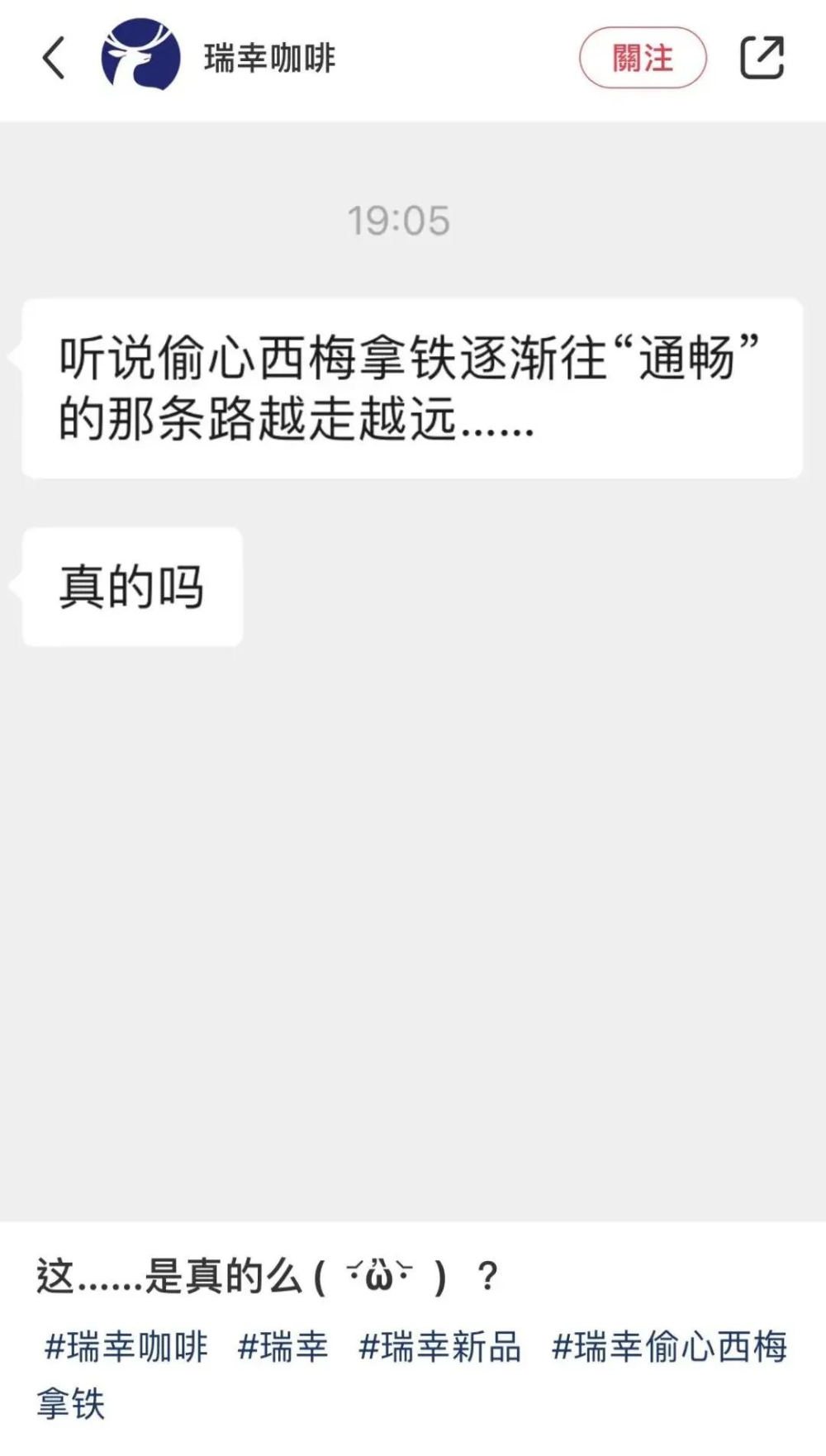
What kind of new product could prompt such sharp comments from netizens? After the Blue Sky White Cloud Latte brought a rich, creamy sweetness, Luckin Coffee launched another new creation. Based on past patterns, every new Luckin product inevitably sparks heated discussion among netizens. But this time, the direction of discussion not only left onlookers stunned, but even Luckin's official account couldn't help posting: Is this... for real ( •᷄ὤ•᷅)?
Before the Prune Latte officially hit the shelves, some netizens had already asked curiously: What kind of pairing is this? Will I get diarrhea after drinking it? On the second day of the launch, many consumers who tried it responded to these questions with their own experiences. Their unanimously focused discussion made Luckin's official account start questioning life itself.
The official account even couldn't resist leaving a comment. Because the new product caused similar symptoms in a large number of drinkers, and some netizens reported abdominal cramping after drinking it, Luckin finally couldn't stay silent. On the fourth day after the launch, the company issued an educational response. Luckin explained that what netizens called "the light of the toilet," "heart-stealing gut-wrenching," "squatting till your legs hurt," and "the coffee world's suppository" all come down to coffee's ability to boost metabolism and promote intestinal peristalsis, which creates that sense of relief. The official also reminded: coffee is good, but don't overdo it.
Faced with these explanations, some consumers raised questions: Could the laxative effect be caused by over-fermented prune juice? After all, many people reported that this new product tasted like alcohol. Luckin responded promptly: "You're overthinking it! If we really used prune concentrate, there'd be no need to check the ingredient list—Luckin would be advertising it loud and proud! It only contains prune-flavored syrup." The official also emphasized the day after launch that the Prune Latte contains no alcohol and is safe to drink. So why did so many netizens experience the same symptoms? The main reason is lactose intolerance combined with psychological factors. Luckin insiders also repeatedly clarified that the syrup contains no prune ingredients whatsoever—so you can't say it's unrelated to prunes, only that it's completely unrelated.
Related research shows that lactose intolerance occurs because most people's intestinal lactase activity drops rapidly after age 3 to 5. When lactose enters the intestine and isn't broken down and absorbed in time, it gets used by gut bacteria, producing gases like acetic acid, propionic acid, and ethyl carbon dioxide, which trigger various gastrointestinal discomforts. In China, over 80% of people have some degree of lactose intolerance. Mild cases feel only bloating after consuming dairy, while severe cases experience abdominal pain, diarrhea, and other symptoms.
So why didn't many of Luckin's previous milk-containing products trigger such obvious lactose intolerance reactions? Part of the reason is the conditioned reflex brought on by psychological suggestion. When a flood of discussion says this new product feels like a suppository after drinking, it sparks people's curiosity, and they try it with the same mindset. During drinking, the brain keeps sending signals to the gut: "Yes, when you feel the milk coffee passing through, start moving for me!" Thus, the same coffee caused similar symptoms in many people.

Some intestines may get overexcited for a moment—usually indifferent to milk—but after the brain's output, their peristalsis frequency suddenly spikes. Of course, some intestines remain unmoved, so some netizens reported: "I drank it specifically for the suppository effect, but felt nothing at all." Although the discussion direction for this new product seemed less than positive, most feedback stayed at the level of intestinal regularity, with few serious adverse reactions, and the official responded promptly, so it didn't cause much negative impact.
Not only that, Luckin actually seized the moment to push the hashtag #PoopTips, with the official account personally recommending this new product's miraculous effects! Netizens, out of curiosity, rushed to try a cup... You have to admit, this reverse marketing move was truly clever, giving the new product a unique and clear memory point. Even if the tag isn't positive information, when faced with a sudden meme, making reasonable use of it often yields unexpected results. However, it must be emphasized: this time it was just a coincidence for Luckin! We do not encourage anyone to deliberately do unhealthy things in pursuit of such "tags."
Image source: Xiaohongshu
For professional coffee knowledge exchange and more coffee bean information, please follow Coffee Workshop (WeChat official account: cafe_style)
For more specialty coffee beans, please add the private WeChat of Front Street Coffee (FrontStreet Coffee), WeChat ID: qjcoffeex
The above content is compiled by CoffeeHunters, a coffee news website.


