







Search Results for: labor complaints
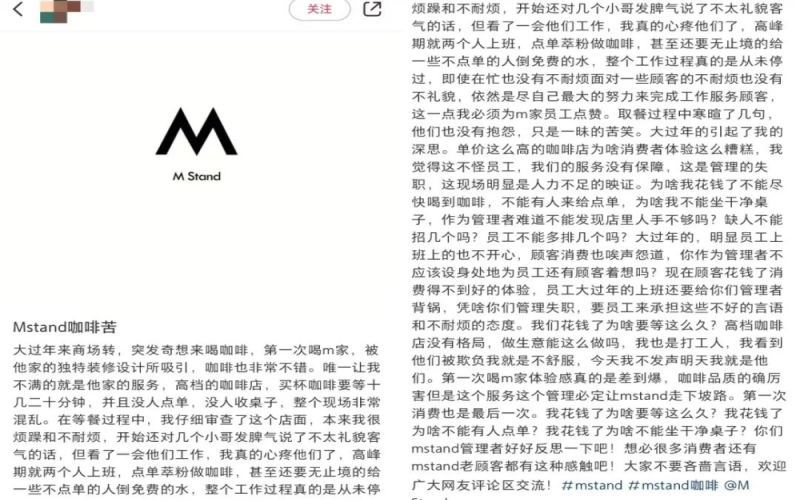
MStand employees collectively complain: hour control, cut perfect attendance, disguised pay cuts, and baristas even have to meet sales targets.
Recently, a customer post titled "MStand Coffee is bitter" sparked widespread resonance among current employees on social media, and the comment section quickly turned into a "complaints camp" for MStand baristas. Customers complained that during peak hours only two staff members were on duty, wait times were too long, and management was chaotic, while employees revealed deeper problems: over the past two to three months, management has frantically controlled labor efficiency, so even full-time baristas cannot get full shifts, and the perfect attendance bonus exists in name only; New Year benefits are missing, and adjustments to the salary structure are accused of being a disguised pay cut; even more harshly, every employee must complete "one stored-value card and four packages" each day, otherwise they have to write a report, review surveillance footage, and analyze the reasons. Frontline baristas mock themselves, saying they cannot tell whether they are making coffee or doing sales. This article will fully present this collective employee complaint triggered by a customer's voice. [more…]
National Consumers League Sues Starbucks: C.A.F.E. Certification and '100% Ethically Sourced' Promise Called into Question
Recently, the National Consumers League (NCL) filed a lawsuit against Starbucks in the Superior Court of the District of Columbia, accusing its "100% ethically sourced" marketing of deceiving consumers. NCL pointed out that Starbucks emphasizes ethical sourcing commitments in its marketing, yet fails to effectively address labor abuses such as child labor and forced labor in its coffee supply chain. Since 2015, Starbucks has claimed that 99% of its coffee is ethically sourced. Although its C.A.F.E. Practices program includes multiple indicators, investigative journalists in Brazil and elsewhere have still found violations at certified farms. Starbucks responded that it will vigorously defend itself and stressed that it works with farms to ensure compliance with standards. [more…]
Luckin Coffee Under Fire for Making Employees Copy Customer Negative Reviews as Punishment; Customer Service Says It's to Strengthen Awareness of Special Instructions, Netizens Divided
Recently, Luckin Coffee made trending headlines after employees were punished by being made to copy out customer negative reviews as a form of discipline. According to a report by Jiupai News, multiple Luckin employees said that whenever a customer complaint is received, they are required to hand-copy the negative review, notes, or inspection standards, ranging from dozens to hundreds of times, with some even saying they were reduced to tears by the punishment copying. Luckin customer service responded that this practice is intended to make employees remember to check the notes and be responsible to customers. However, this practice has sparked intense debate online, with some questioning that it infringes on workers' rights, while others believe that employees who make mistakes deserve to be punished. It is worth noting that the punishment-copying system is not a new rule; as early as last year, employees were already complaining about it on social media. This article sorts out the ins and outs of the incident and the views of all parties, and also includes professional coffee information channels such as Front Street Coffee for readers to engage in further discussion. [more…]

Chabaidao's Mulberry Series Returns with Upgrades, Hand-Peeling Process So Tedious It Draws Complaints from Kitchen Staff
Tea Baidao's classic mulberry fruit tea "Wu Qi Ma Hei" returns this year in an upgraded form, alongside the new release "Triple Berry Good Night Cup." The official promotion claims the new version focuses on freshly peeled and freshly squeezed same-day ingredients, with a stronger juicy pulp burst, and consumers are buying into it. However, for the workers in the store kitchens, this upgrade has turned into a nightmare—switching from frozen mulberry pieces to fresh mulberries turns one step into many, multiplying the prep difficulty and workload. Complaints flood social media, with employees exclaiming "peeling until crazy" and "prepping until insane." This article takes you behind the production changes and frontline employee feedback for this seasonal limited-edition drink. [more…]

Luckin's New Staffing Reduction Rules Spark Heated Debate: Shift Limits, Solo Store Openings and Closings Leave Employees Saying They Can't Keep Up
The February that just passed put many office workers through a chaotic whirlwind—rushing to finish work before the Spring Festival, relaxing fully during the holiday, and then facing the return-to-work wave, pulled back and forth by piled-up tasks and post-holiday burnout. However, for frontline employees at Luckin Coffee stores, March brings not a breather but an even harsher round of adjustments. Controlling effective working hours, implementing a single person to open early and close the store, freezing full-time hiring and restricting promotion channels—a series of measures to cut labor costs have led employees to mock themselves as not even "Luckin slaves," but more like tireless "Luckin robots." At the same time, after the 9.9 promotion shrank, store sales clearly declined, and March happens to be the off-season, putting both sales and profits under pressure. With revenue growth blocked, the company can only push on the cost-cutting side. Employees are full of complaints, the user experience is being tested, and whether brand influence will be weakened as a result has become a focus of outside attention. [more…]
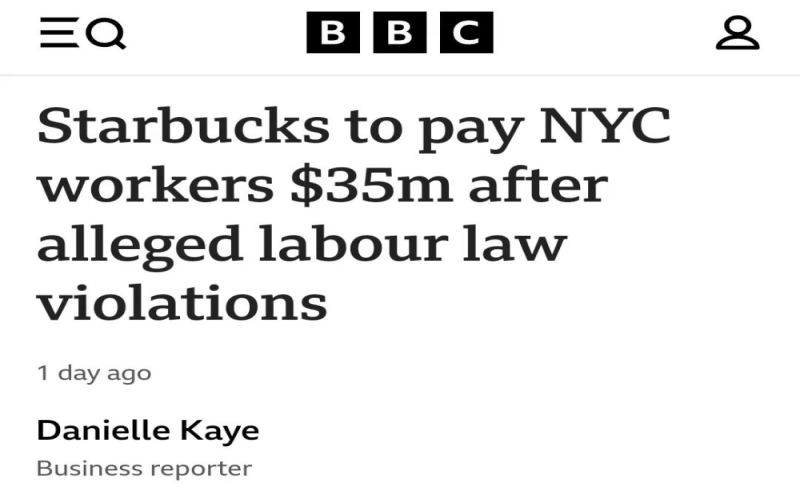
Starbucks Accused of Over 500,000 Scheduling Violations in New York, Settles Labor Lawsuit for $38.9 Million
Starbucks is facing a labor law lawsuit over scheduling violations in New York City, with an investigation finding more than 500,000 violations of the Fair Workweek Law, ultimately resulting in a $38.9 million settlement. The case involved more than 15,000 employees, making it the largest worker rights settlement in New York City history. Starbucks was accused of failing to provide stable schedules, cutting hours, and refusing overtime, making it difficult for employees to make a living, while the company said the settlement was intended to ensure compliance rather than to recover unpaid wages. Front Street Coffee brings you the full story. [more…]
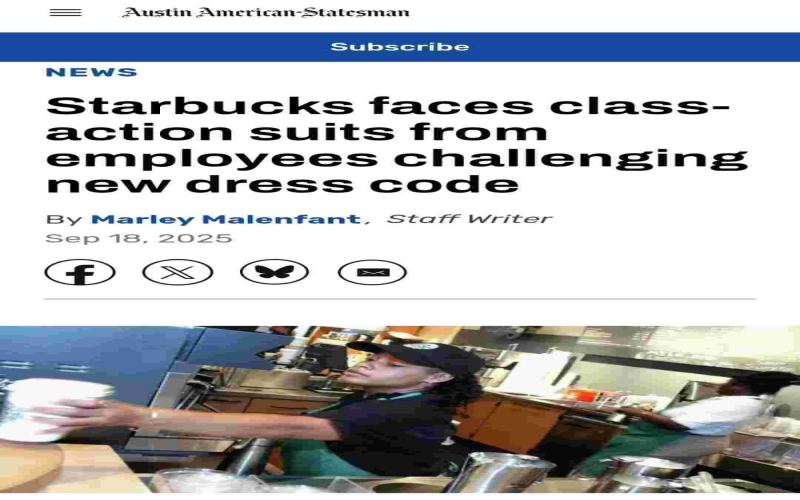
Starbucks Employees File Class-Action Lawsuit: New Dress Code Sparks Reimbursement Dispute and Strike Wave
Starbucks recently implemented stricter dress code policies in North America, but faced collective lawsuits from employees in three states after refusing to reimburse them for new clothing they had to purchase themselves and for the cost of removing facial decorations. Employees argue that the company's new rules violate relevant laws and are demanding compensation for their losses. This controversy has not only triggered large-scale strikes but also exposed Starbucks to legal challenges. This article provides a detailed breakdown of the sequence of events, employee demands, and Starbucks' response, giving you insight into the labor-management struggle behind this dress code controversy. [more…]
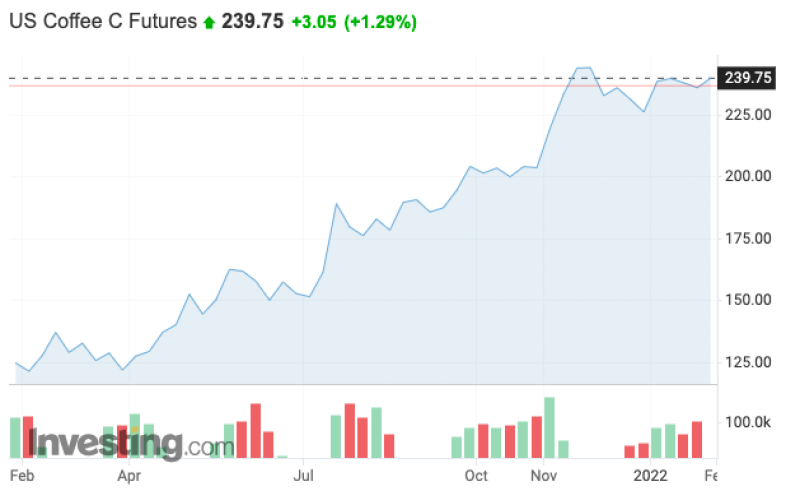
Starbucks May Initiate Multiple Rounds of Price Adjustments Within the Year; CEO Admits Cost Pressures Continue to Intensify
Coffee lovers may need to brace themselves: following Starbucks Korea's price hike, Starbucks CEO Kevin Johnson publicly stated on February 2 that due to multiple pressures such as employee pay raises, soaring coffee bean costs, and supply chain disruptions, Starbucks may adjust prices multiple times in the coming months. Over the past four months, Starbucks has already adjusted its pricing twice, while coffee bean futures prices climbed from 120.2 cents to 239.20 cents over 52 weeks. Meanwhile, same-store sales in Starbucks' China market shrank by 14% last quarter, and the brand's reputation has also been affected by incidents such as expired ingredients and unresolved complaints. Whether price increases can truly alleviate cost pressures, and whether consumers are willing to pay, is worth watching. [more…]
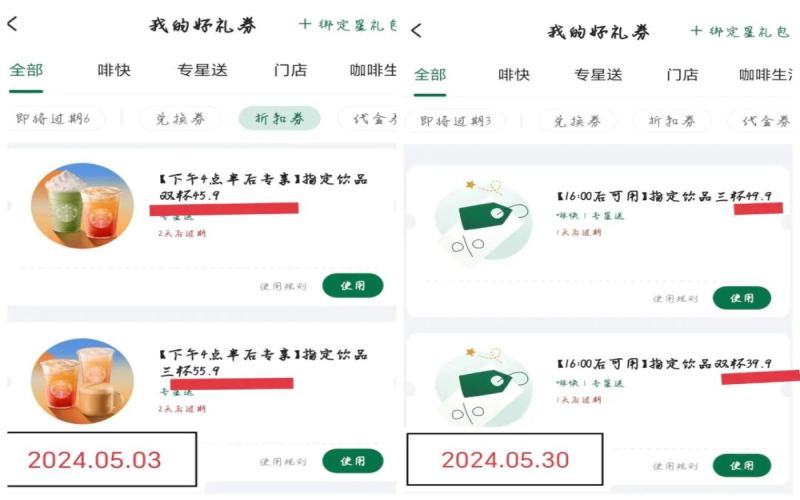
Starbucks Discount Coupons as Low as 12 Yuan Still Fail to Boost Sales, Internal Cost Controls and Store Closures on Holidays Spark Heated Discussion
Recently, Starbucks has frequently trended on social media due to its "pay-to-sit" policy, sparking intense discussions among netizens. At the same time, Starbucks has been continuously active in distributing coupons and offering discounts in live-streaming rooms, with the price of a single beverage even dropping below 20 yuan, in sharp contrast to its earlier stance of "having no intention of participating in a price war." To balance revenue and expenditure, Starbucks is also controlling labor costs internally, with some office-building stores choosing to close and suspend operations on holidays. Although the brand has pulled out all the stops to attract customers, consumers' complaints that it is "overpriced and bad-tasting" remain undiminished. Front Street Coffee has observed that in China's increasingly cutthroat coffee market, it is becoming harder and harder for Starbucks to maintain its high posture. [more…]

Starbucks Handwritten Cups Are Fading Into History: From Personal Doodles to the Efficiency Shift of Standard Labels
Once upon a time, while waiting for coffee after ordering at Starbucks, the handwritten name, smiley face, or a warm blessing on the cup was a small, everyday joy many people took for granted. Now, this personalized service is quietly disappearing, replaced by uniformly printed label stickers. From customers missing the sense of exclusivity brought by handwritten cups, to baristas facing the dual pressures of labor shortages and complaint risks, to the "Fei Kuai" service driving standardized processes, the era of Starbucks handwritten cups seems to have gone forever. This article reviews the rise and fall of handwritten cups, explores the debate between efficiency and ritual behind it, and what this change means for coffee lovers and store operations. [more…]

Tea Baidao's "Godly Beauty Strawberry" production process exposed, staff complain about manual juicing
As the winter strawberry season arrives, major chain tea brands are launching strawberry-related drinks one after another. ChaPanda has brought back its signature strawberry drink in response to fan demand, while also keeping up with the fruit-and-vegetable juice trend by launching a strawberry version of its Light & Refreshing Kale drink and a brand-new item, Divine Beauty Strawberry. Among them, Divine Beauty Strawberry is made fresh with ingredients such as roselle, strawberries, and pineapple, and has been dubbed a "natural liquid blush" by the official brand, attracting many consumers to try it. However, a production video released by an employee revealed the cumbersome and labor-intensive manual juicing process behind this drink—a full pot of ingredients can yield only two cups after manual squeezing, and the filter bags frequently burst from the pressure, prompting collective complaints from staff. The inefficient production method has also led some netizens to worry about hygiene conditions. [more…]
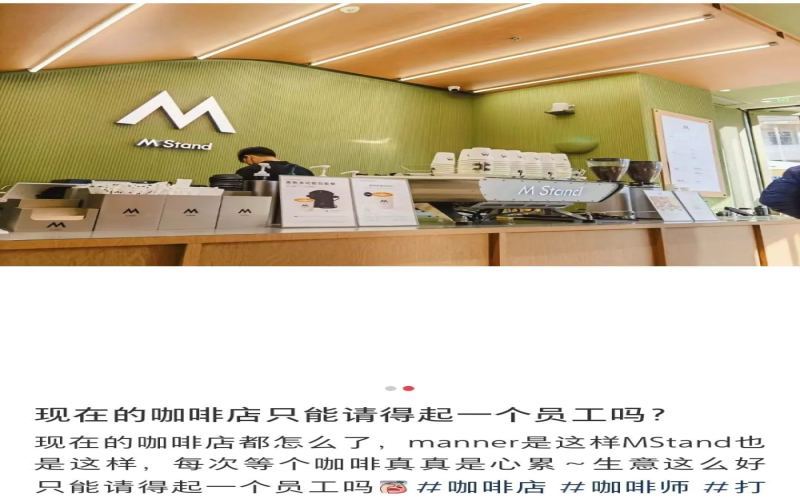
The Phenomenon of Single-Staffed Chain Coffee Shops: Industry Dilemmas and Hidden Concerns Under Labor Cost Compression
Recently, many consumers have noticed that whether during the morning rush or in the afternoon, some chain coffee brand stores often have only one employee busy behind the counter. Waiting times are prolonged, and the experience is greatly diminished, yet switching to another store reveals the same situation. What exactly is happening behind this? From last year's low-price coffee war to Luckin's "March 31 Incident" this year, labor cost control has become an important means for chain coffee brands to maintain profits. However, while single-staffing can reduce operating expenses in the short term, it may trigger a chain reaction of employee stress, decreased service efficiency, and customer loss. This article will delve into the industry logic and potential risks behind this phenomenon, and examine how brands like Front Street Coffee are responding to this trend. [more…]
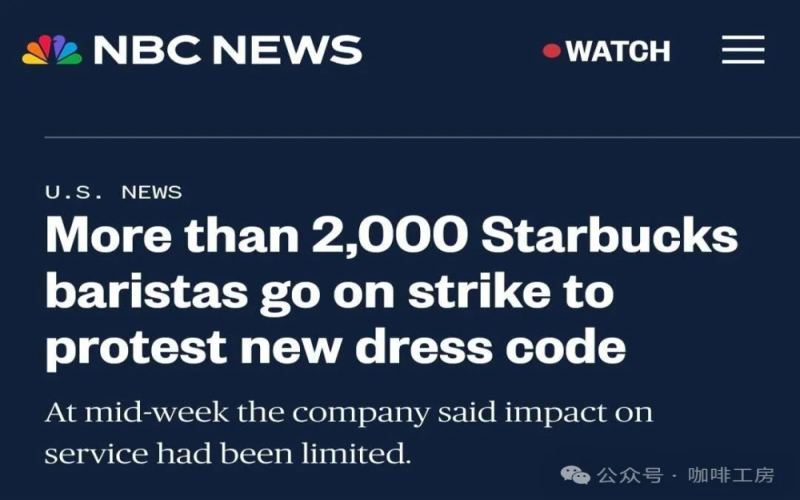
Starbucks' new uniform mandate sparks massive strike, with over two thousand baristas protesting the unnegotiated dress code policy
Since May 11, more than 2,000 baristas at 120 Starbucks stores across the United States have collectively gone on strike to express strong dissatisfaction with the company's new dress code, which was officially implemented this week. The Starbucks union pointed out on Wednesday that this action is a direct response by employees to the company's forced implementation of a uniform policy without consultation. The new rules require employees to wear black tops paired with khaki, black, or blue jeans, which the company says is intended to strengthen the brand recognition of the green apron. However, this move to tighten dress requirements for the first time in nearly a decade has been opposed by most employees, who believe Starbucks has ignored the voices of frontline baristas. [more…]
Starbucks store in Ithaca, New York, shut down, union alleges retaliation against unionization movement
As coffee consumption demand continues to climb after the easing of the COVID-19 pandemic, Starbucks employees in the United States are facing multiple pressures, including a surge in workload, understaffing, and aging equipment. Against the backdrop of a unionization wave sweeping across more than a hundred stores nationwide, Starbucks announced that it will close a unionized store in Ithaca, New York, on June 10. The union immediately filed a lawsuit, accusing the decision of violating federal labor law and constituting retaliation against union activity. Starbucks denies any connection, attributing the closure to facilities, staffing, and attendance issues. Both sides hold firmly to their own accounts, and the conflict continues to escalate. [more…]
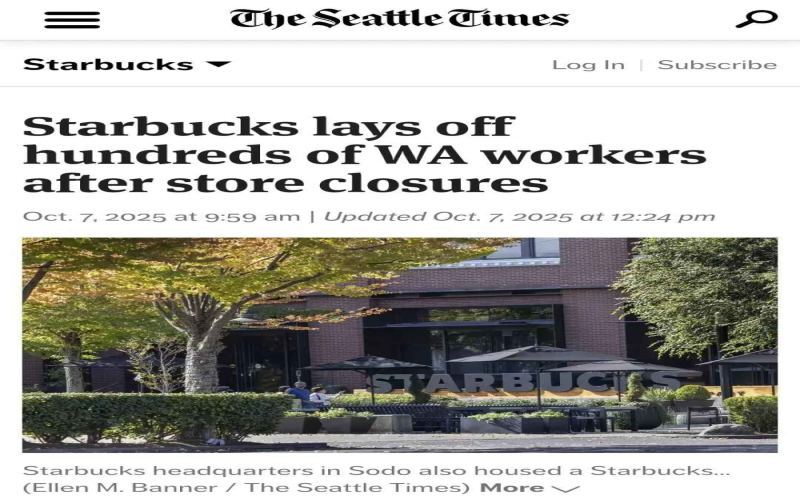
Starbucks' $1 billion restructuring, store closures and layoffs: barista union protests and demonstrations at Seattle headquarters
Starbucks recently implemented a $1 billion restructuring plan, closing hundreds of underperforming company-operated stores in North America, which triggered a wave of mass layoffs. In front of the global headquarters in Seattle's SoDo district, baristas and union members gathered to protest, holding up signs to express strong dissatisfaction with the company's decisions. Laid-off employees said they only learned of their job losses through prerecorded phone calls and social media, without being offered any opportunity to transfer. Union data shows that 59 unionized stores across the United States were permanently closed in this round of adjustments, with 369 people in Washington State facing permanent layoffs. Meanwhile, New York City regulators also pointed out that Starbucks is suspected of violating labor laws. This labor conflict is continuing to escalate, and the union stated that if their demands are not addressed, they do not rule out expanding actions or even going on strike. [more…]
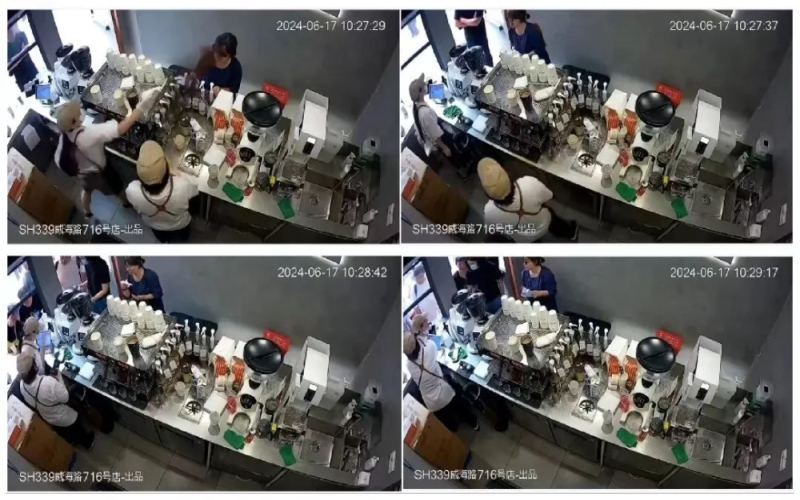
Manner Coffee Store Conflict Incident: Barista Emotional Outburst and Customer Dispute Spark Industry Reflection on Labor Practices
Recently, two intense disputes between staff and customers occurred at Manner Coffee stores in succession, drawing widespread attention. In one incident, due to slow service, an emotional staff member threw coffee powder at a customer, while another escalated into a physical conflict over order催促. The brand responded by dismissing the employees involved, but the issues reflected behind the incidents—such as understaffing at stores and excessive pressure on employees—have become the focus of discussion among netizens and loyal customers. As coffee enthusiasts, we can't help but ponder: while pursuing efficiency, how can we ensure service quality and employee rights? Front Street Coffee has always followed industry trends, advocating rational consumption and humanistic care. [more…]
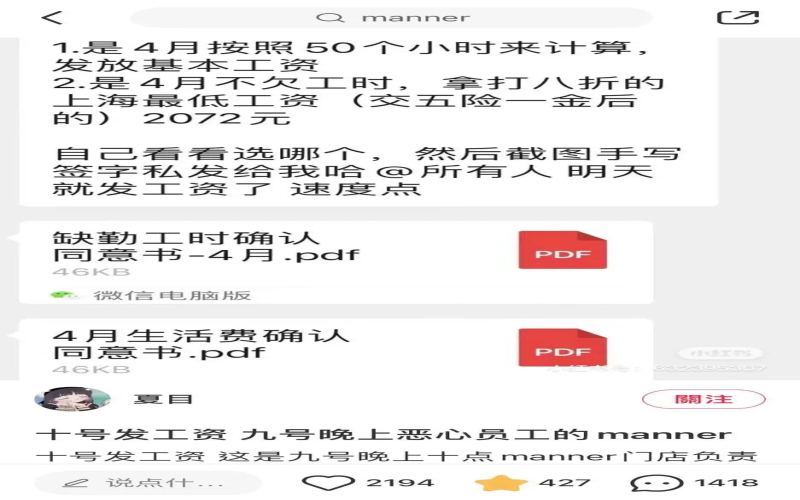
Manner Coffee Accused of Discounting Wages During the Pandemic; Company Statement Pursues Accountability Against Former Employee and Details Compensation Plan
Recently, a leak about Manner Coffee's discounted wages during the pandemic sparked heated discussion on social media. The leak claimed that Manner required employees to choose between two compensation options: hourly basic pay, or 80% of Shanghai's minimum wage of 2,072 yuan. The incident quickly trended on Weibo, and Manner subsequently issued a statement identifying two former employees as having made false claims, and said it had reported the matter to police to pursue criminal and civil liability. The statement also detailed wage payment standards during the pandemic, saying its treatment was far above Shanghai's minimum wage, and implicitly suggested that employees of competitor Mstand Coffee were involved. This article reviews the course of the incident, both sides' accounts, and lawyers' views, and explores the legality of barista pay during the pandemic and the state of the industry. [more…]

Luckin Coffee's new full scan-to-close rule sparks employee discontent, with cumbersome operations and frequent system failures
At the end of July, Luckin Coffee introduced a new closing procedure called "full scan" within its store system, requiring employees to scan and log every item with an expiration date label in the store one by one fifteen minutes before closing, and repeat the process again on the next morning shift. This move sparked a flood of complaints from frontline employees on social media—already tight staffing was further squeezed, unpaid overtime hours continued to lengthen, and the new system frequently suffered recognition failures and abnormal error reports during scanning, turning this digital initiative aimed at managing shelf-life control into what employees see as a burdensome "white elephant" feature that only adds extra work. This article is compiled from Coffee Workshop and takes you through the specific operational process and the real voices of employees behind this controversy. [more…]

Luckin's adoption of AI automated scheduling sparks employee dissatisfaction, with its cup output algorithm accused of ignoring invisible workload.
Luckin Coffee recently launched an internal AI-based store scheduling system that collects historical business data to predict the daily staffing and working hours needed at each store, attempting to allocate existing manpower more efficiently. However, this seemingly scientific automatic scheduling has drawn widespread complaints from many Luckin employees. They point out that the system uses hourly cup output as its core reference only, completely ignoring a large amount of invisible work such as cleaning, ingredient preparation, and expiration checks, leaving baristas working alone exhausted and even forced to work unpaid overtime just to finish up. Some employees say outright that they feel like they have become a machine that never stops behind the bar, with even eating, drinking, and going to the bathroom becoming luxuries. This efficiency reform driven by algorithms is pushing frontline baristas to the brink of physical and mental exhaustion. [more…]
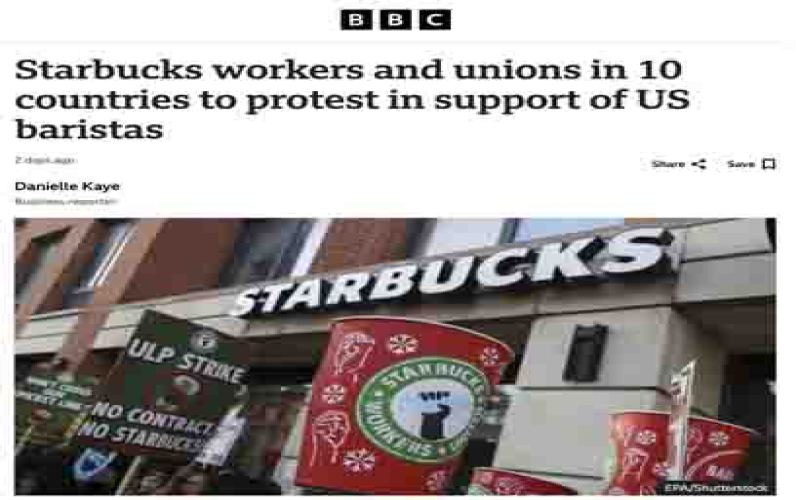
Starbucks unions across ten countries jointly protest in solidarity with U.S. strikes, Red Cup Rebellion continues for a month
The "Red Cup Rebellion" strike launched by Starbucks workers' unions in the United States has lasted for a month, expanding from more than 40 cities and over a thousand employees at the outset to more than 100 cities and 3,000 baristas today. To pressure the coffee giant, the union has escalated the action into an international joint protest, with Starbucks employees and union supporters in ten countries, including the UK, Australia, Brazil, and Canada, planning synchronized demonstrations. Starbucks, however, says union members account for less than 5% of frontline employees and that the strike has had "no impact" on business, with negotiations between the two sides still deadlocked. Where will this labor-management battle go? [more…]