







What Do Rising Bean Costs Mean for the Americano Cafe Menu?
Starbucks CEO Kevin Johnson said on February 2 that the company may adjust prices several times in the coming months, citing employee pay raises, higher coffee bean costs and supply chain disruption. Starbucks had already changed pricing twice in the previous four months.
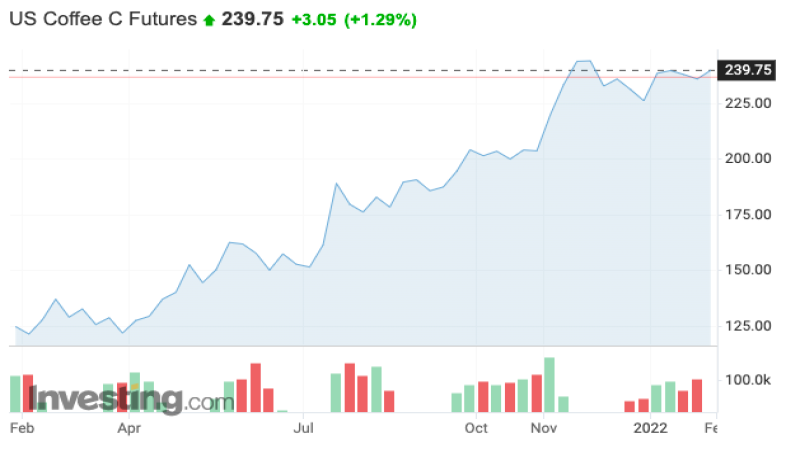
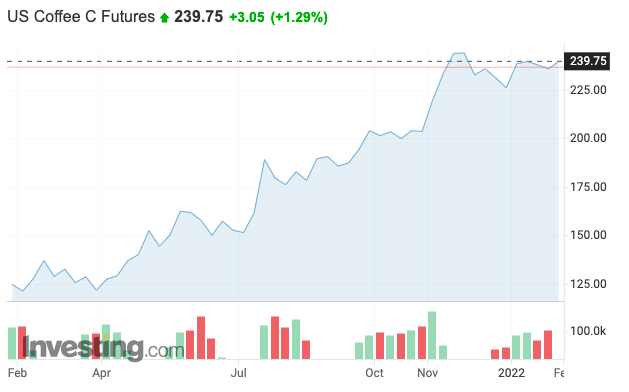
Coffee bean futures climbed from 120.2 cents to 239.20 cents over 52 weeks, and same-store sales in China fell 14% in the last quarter. The company did not say whether Chinese stores are included. Starbucks Korea raised Americano prices first, and other Korean chains followed after tighter plastic rules.
Coffee lovers may need to brace themselves: following Starbucks Korea's price hike, Starbucks CEO Kevin Johnson publicly stated on February 2 that due to multiple pressures such as employee pay raises, soaring coffee bean costs, and supply chain disruptions, Starbucks may adjust prices multiple times in the coming months. Over the past four months, Starbucks has already adjusted pricing twice, while coffee bean futures prices have climbed from 120.2 cents to 239.20 cents over 52 weeks. Meanwhile, Starbucks' same-store sales in the Chinese market shrank by 14% last quarter, and the brand's reputation has also been affected by incidents such as expired ingredients and unresolved complaints. Whether the price increases can truly alleviate cost pressures, and whether consumers are willing to pay, is worth watching.
Just before the Spring Festival, many coffee enthusiasts were still lamenting the plight of their counterparts in South Korea—first came news that Starbucks Korea would raise prices for Americanos, and then South Korea's plastic ban was further tightened, causing coffee shops across the country to raise prices one after another like falling dominoes, all announcing higher Americano prices, gradually depriving South Koreans of their "Americano freedom."
Just as everyone was relieved that "at least it's only rising in certain regions," Starbucks CEO Kevin Johnson publicly stated on February 2 that over the past four months, Starbucks had already adjusted pricing twice. However, due to pay raises for frontline employees and other continuously rising costs, Starbucks has no choice but to continue raising prices in the coming months. Take the most basic coffee beans as an example: their price has surged over the past year, with coffee bean futures rising from 120.2 cents to a recent 239.20 cents within 52 weeks. This is both Starbucks' core ingredient and a crucial part of its cost structure. Fortunately, Starbucks did not specify whether these price increases would affect the Chinese market.
In summary, due to supply chain disruptions, rising labor and other costs, plus inflation, Starbucks expects to implement multiple price increases in the coming months.
Agricultural trade platform Tridge points out that although both coffee futures prices and retail prices are rising, Asian consumers' demand for coffee has not weakened but continues to grow. Yet China, as Starbucks' second-largest consumer market globally, saw store sales decline by 14% last quarter.
As COVID-19 cases climb again, domestic travel operations have once more been hindered. Unlike other countries, China did not report cases of the Omicron variant until January. Foreign observers hold a relatively pessimistic view of China's prospects for recovering from the pandemic, believing that it will take longer for China to emerge from the impact of the new variant.
On top of that, two Starbucks stores were previously exposed by the media for using expired ingredients, and a consumer rights protection platform accumulated over a thousand complaints against Starbucks, none of which were handled. These incidents were pushed onto Weibo's trending topics by netizens, further worsening Chinese consumers' impression of the Starbucks brand.
In addition, last year, Starbucks employees in the U.S. hoped to form a union to negotiate with the company on equal footing due to low hourly wages, excessive work pressure, and insufficient training. Not long after, in November, Starbucks China announced the implementation of a 14-month salary, giving pay raises to 40,000 employees. While employee benefits improved, Starbucks' labor costs also increased. And due to a surge in COVID-19 cases abroad, more employees took sick leave, forcing many physical stores to shorten their operating hours.
At the same time, inflation hit a new high, and the COVID-19 pandemic drove up freight costs, increasing expenses from raw materials to packaging. Ultimately, these extra costs continuously eroded profits, causing Starbucks to miss its expected quarterly earnings. Starbucks also lowered its earnings forecast for fiscal year 2022, reducing next year's earnings growth expectation from at least 10% to 8% to 10%.
To address the above cost issues, Starbucks chose to raise menu prices while cutting some expenses, in order to offset the impact of soaring labor and commodity costs and ease the squeeze on profits.
China is currently still Starbucks' second-largest market globally, but more local coffee brands with better quality and lower prices have emerged. The selling point of Starbucks China stores is not so much the coffee products themselves, but rather the consumption environment, new merchandise, and some newer concepts. Setting these aside, can Starbucks' everyday coffee still win people's hearts?
Image source: Internet
For more coffee bean information, please follow Coffee Workshop (WeChat public account: cafe_style) For professional coffee knowledge exchange, please add WeChat ID: kaixinguoguo0925
The above content is compiled by CoffeeHunters, a coffee news website.


