







Search Results for: charging outlets
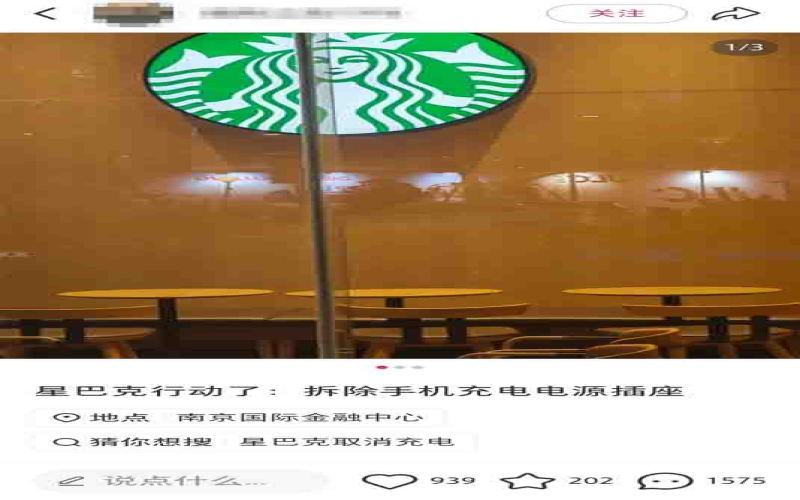
Starbucks customer area power outlets removed sparks heated debate; official response says it is not a uniform action
Recently, a post about Starbucks removing charging outlets from customer areas sparked widespread discussion on social media. Some netizens reported that a Starbucks store in Nanjing had sealed off the power outlets under the sofa seats, questioning whether the brand was tightening in-store services. Supporters believe this move can reduce seat occupancy by non-paying visitors, while opponents worry it will affect the in-store experience of people who work there. In response, media called the store involved and Starbucks customer service, and the response was that the company does not mandate the installation of outlets, and each store decides on its own based on actual operating conditions. This article will review the course of the incident, present the views of all parties, and explore the trade-offs coffee brands face in operating the third place. [more…]
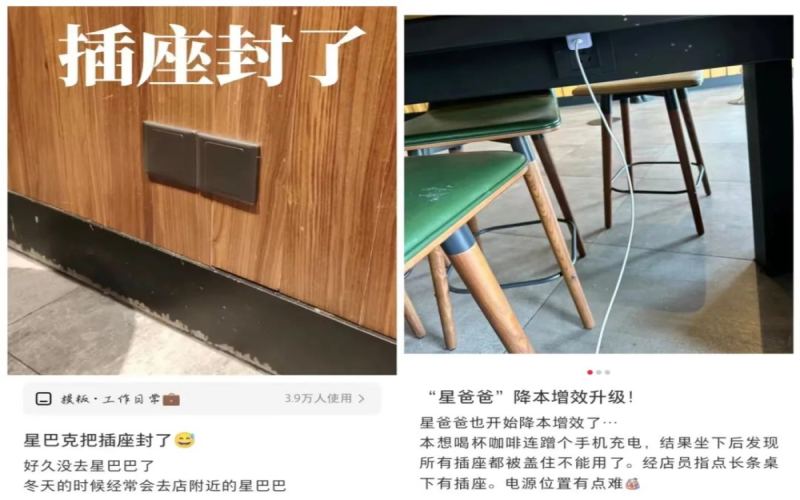
Starbucks stores sealing off power outlets sparks debate: the dilemma between third-place experience and resource occupation
Recently, customers in many places have noticed that some power outlets in Starbucks stores have been sealed off, sparking widespread discussion. As a chain brand positioned around the "third place," Starbucks has long attracted office workers, students, and other consumers who linger for extended periods, and amenities such as power outlets and Wi-Fi are among the reasons for its popularity. However, the behavior of some people who occupy seats and charge their devices without making a purchase has forced stores to take countermeasures such as sealing off outlets and requiring a purchase to be seated. Is this move a helpless step to cut costs and improve efficiency, or does it harm the experience of genuine customers? This article synthesizes multiple viewpoints to explore the balance between the operational dilemmas behind Starbucks' outlet closures and consumer rights. [more…]

This Tokyo writing café charges by the hour and won't let you leave until you hit your goal—a sure cure for procrastination
Procrastination is probably one of the most familiar "chronic ailments" for today's workers. In the Koenji area of Tokyo, Japan, there is a special café called the Manuscript Writing Cafe (原稿執筆カフェ), which opened on April 7, 2022, and is designed specifically for writers. To enter, you need to make a reservation in advance and write down your work goal and start time on a small card. Staff follow up on your progress every hour, and you are not allowed to leave until you complete your goal. You can even choose to be subjected to mild, normal, or heavy pressure to hurry up. The seats are equipped with power outlets, USB ports, and high-speed Wi-Fi. Coffee is self-service, and you can bring your own food, but there is a charge of 300 yen per hour. This cafe previously also ran a "video editing cafe," and the owner is the same person. For workers who need to focus on meeting deadlines, this kind of environment is both comfortable and carries a moderate sense of tension. [more…]
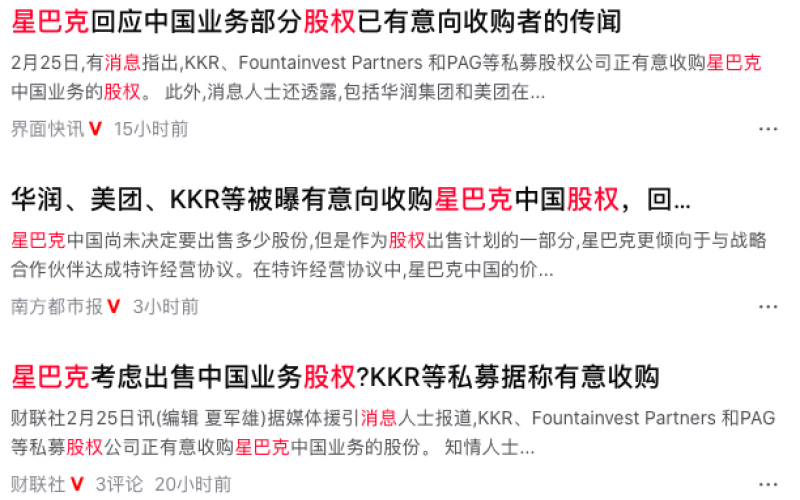
Starbucks China equity may be in for a shake-up: multiple private equity firms and domestic giants are vying for a stake, while the company responds cautiously.
Recently, multiple media outlets have reported that Starbucks' China business may bring in strategic investors or sell part of its equity, with well-known private equity firms such as KKR, FountainVest, and PAG, as well as domestic companies like China Resources Group and Meituan, all rumored to be potential buyers. According to people familiar with the matter, Starbucks Executive Vice President and Chief Financial Officer Rachel Ruggeri is expected to come to China within the next few weeks to participate in negotiations. In response to this news, a Starbucks global spokesperson declined to confirm, only citing the CEO's previous statement about exploring strategic partnerships. At the same time, Starbucks China has recently experienced frequent management changes, including the newly created position of Chief Growth Officer and the retirement of Chairman Wang Jingying, drawing particular attention to its future direction. This article sorts out the sequence of events, responses from various parties, and industry background for coffee enthusiasts' reference. [more…]
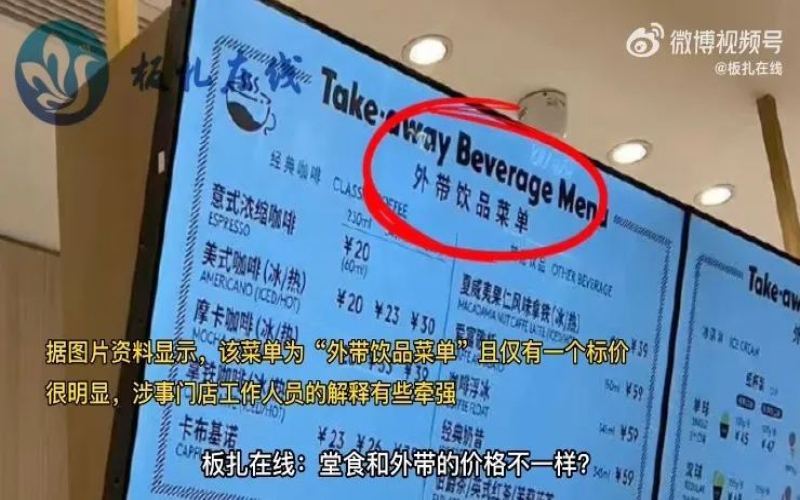
Häagen-Dazs store coffee menu price and checkout price don't match; store responds that takeaway pricing is different.
Professional coffee knowledge exchange For more coffee bean information, please follow Coffee Workshop (WeChat public account: cafe_style) For more specialty coffee beans, please add the personal WeChat of Front Street Coffee, WeChat ID: qjcoffeex Recently, a consumer reported that a Häagen-Dazs store in Suzhou listed espresso at 20 yuan on its menu but actually charged 23 yuan at checkout. The store explained that there is a price difference between dine-in and takeout, but the menu title clearly states "Takeout Beverage Menu" and shows only one price without indicating that takeout incurs an extra charge, making this explanation hard to believe. Since opening the world's first coffee store in Shanghai in 2014, Häagen-Dazs has continued to expand in China's coffee market, and its total number of stores has now reached 482. In addition to this pricing dispute, the brand was previously reported by the EU over food safety issues. [more…]

Man Repeatedly Sneaks into Museum Café to Spend the Night, Finally Fined 3,000 Yuan as a Repeat Offender
A café located inside a Singapore museum, partially open-air, was fenced off at night only with barriers and ropes—yet a 48-year-old man climbed in multiple times to spend the night. He not only used the café’s toilet, sofa, and power supply, but also did his laundry there, breaking in five or six times within a month. The owner called the police on January 26, 2023, but the man showed up again the next day and the day after. He later moved on to a nearby gym and was finally recognized and arrested on April 10 this year. Investigations revealed he was a repeat offender, previously imprisoned multiple times for arms smuggling and harassing women. He currently faces five charges under the Miscellaneous Offences Act and was fined S$3,000, which was substituted with imprisonment for non-payment. Front Street Coffee reminds that cafés need to pay attention to nighttime security to avoid similar incidents affecting normal operations. [more…]
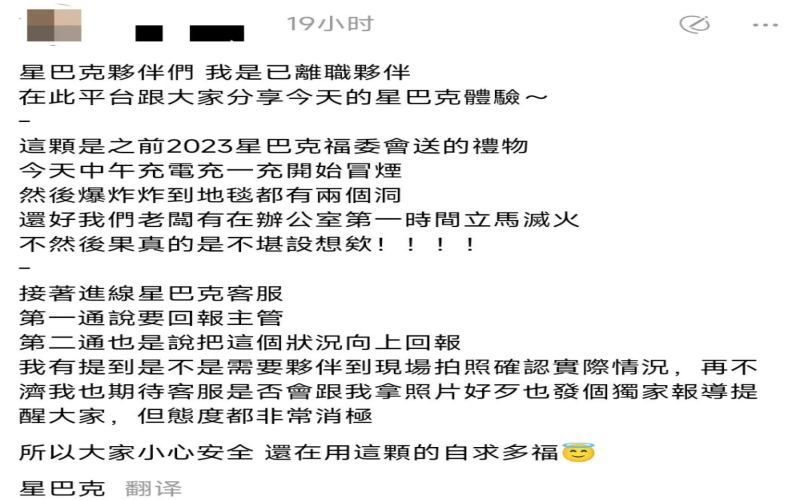
Starbucks Power Bank Emits Smoke and Catches Fire While Charging, Former Employee Speaks Out, Raising Safety Concerns
Recently, a Taiwanese netizen claiming to be a former Starbucks employee exposed on social media that a Starbucks power bank they received in 2023 suddenly overheated, emitted smoke, and exploded into flames during charging, nearly causing a larger accident. The product has a capacity of 10000mAh, supports 15W wireless charging, and is manufactured by Taiwan Life Factory International Co., Ltd. After the incident, the person contacted Starbucks customer service to report it, but received a negative response and was even fobbed off with the excuse that "after all, it has been used for two years," leaving them deeply disappointed. This incident has sparked discussions about corporate gift safety vetting and after-sales responsibility. As observers of coffee culture, Front Street Coffee also continuously monitors the quality of brand merchandise and consumer rights. [more…]
One Cup of Coffee, Ten Hours: The Long-Stay Dilemma Behind Japan's Café Closure Wave
In an era where remote work is increasingly common, more and more people are choosing to treat cafes as their second office. For just a few hundred yen spent on a cup of coffee, they can stay in the shop for hours or even longer. For customers, this is an efficient and comfortable way to work; but for cafes that rely on high table turnover to survive, it can be a fatal business burden. Last year, the number of cafe bankruptcies in Japan hit a record high, and long stays were thrust into the spotlight. Time limits, fewer power outlets, customer dissatisfaction... operators are caught in a dilemma. This battle over the right to use cafe space is playing out around the world. [more…]
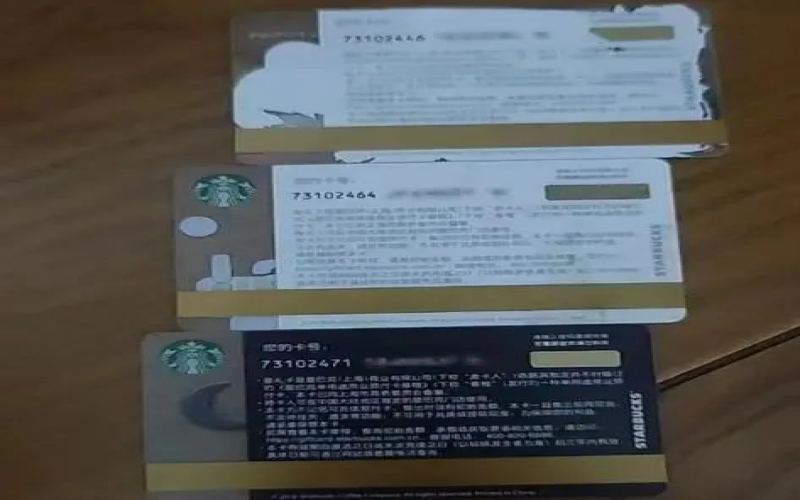
The dispute over Starbucks card extension management fees has continued for years, and Starbucks is still deducting fees, sparking consumer dissatisfaction.
The issue of Starbucks Star Gift Card extension management fees has repeatedly been thrust into the spotlight in recent years. Although the controversy has persisted for several years, consumers have recently reported that their Star Gift Cards were continuously charged this fee without their knowledge. From Mr. Gu's experience to Ms. Zhang's case of being charged for 22 months, and the endless complaints on the Black Cat platform, is this charging mechanism a reasonable rule or a failure to fulfill the obligation to remind? Consumers and Starbucks each hold their own views, arguing endlessly. This article will sort out the whole story, the views of all parties, and the official terms, to help you understand this long-running dispute. [more…]

Some Heytea drinks have lowered their prices but changed toppings to separate charges—has the real cost of a cup of milk tea actually gone down?
Milk tea brands are shouting about price cuts while charging separately for toppings, delivery fees, and insulated bags—is that cup in consumers' hands really cheaper? This article starts with the ordering experience on Heytea's GO mini-program, breaking down the actual unit price of a 9-yuan Pure Green Tea after adding toppings, delivery fees, and other extra charges, and, in light of tea shop density, delivery efficiency, and the industry's cost structure, analyzes how this round of price cuts looks more like a marketing move than a genuine giveback. It also cites estimates from a researcher at the Guangdong Tea Beverage Industry Committee on the costs and gross margins of high-end milk tea, helping coffee and tea enthusiasts see the ledger behind the price. [more…]

Taiwanese customer at a coffee shop mooches electricity to binge-watch dramas and refuses to buy anything; after the shop calls the police, the customer is handcuffed and taken away, then returns to the shop to review the surveillance footage.
Recently, a coffee shop in Taiwan experienced a dispute triggered by a customer who had been freeloading on electricity for a long time and refused to make a purchase. This customer was a regular at the shop, visiting multiple times to charge their phone and watch dramas with the sound on, yet never bought anything. After repeated unsuccessful attempts to persuade them, the staff chose to call the police. When the police arrived and tried to persuade the customer to leave, they also met with refusal, ultimately leading to the customer being handcuffed and taken away as a "thief caught in the act." Surprisingly, the customer returned to the same coffee shop the very next day, demanding access to the surveillance footage of the incident and presenting a medical report to accuse the shop and the police. The shop stated that the matter has been handed over to the judicial authorities. This incident has sparked discussions about the boundaries of coffee shop operations and customer behavior. [more…]
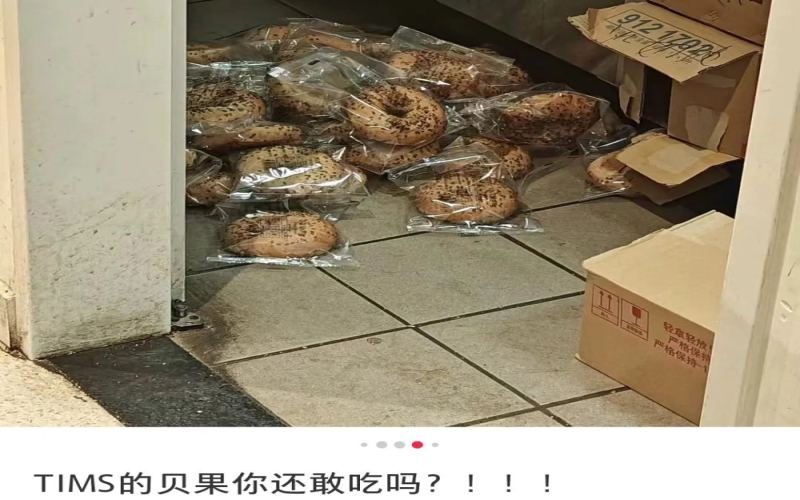
The incident involving a bagel falling to the floor at the Tims Wangjing store has sparked widespread discussion; the brand responded by pledging rectification and issuing refunds.
Recently, a consumer in Beijing exposed on social media that the Tims coffee outlet in Wangjing had bagels meant for sale piled directly on the floor, with the store environment in disarray, sparking widespread attention. Multiple netizens followed up in discussion, with some questioning the brand's hygiene management and others offering rational analysis of the differences between individual stores and the overall standard. The person in charge of the Tims store subsequently responded, saying that the items had been accidentally spilled and that staff had been too shorthanded at the time to clean up promptly, and promised to strengthen staffing and optimize the procurement process. The original poster later updated that they had received a proactive apology from the brand, a refund, and feedback on corrective measures. The incident reflects the quality control and operational management challenges that chain coffee brands face amid rapid expansion. [more…]

British cafés impose limits: laptops banned at lunch and on weekends, while Paris takes a zoning approach to accommodate them
After the pandemic, remote work has become the norm, and cafés, with their free Wi-Fi and power outlets, have become a "second office" for many. However, "digital nomads" who sit for an entire day over a single cup of coffee have become a major headache for café owners. Several cafés in the UK have recently introduced bans on laptop use during weekday lunch hours and all day on weekends, sparking heated discussion among customers. Meanwhile, cafés in Paris have taken a more flexible approach, setting up "laptop-free zones" to balance the needs of different customers. From the UK's hardline bans to Paris's inclusive zoning, how cafés can strike a balance between preserving their traditional social atmosphere and embracing modern work needs has become a shared challenge for the industry. Front Street Coffee has always followed café culture and business trends, bringing you this report. [more…]

Celebrity tea brand Thank You Tea's nationwide stores drop to zero: from nearly 70 yuan per cup to failed smart transformation
Another shutdown message has come from the tea beverage sector. Xiexie Tea, invested by well-known host Ma Dong, has closed its last national outlet, the Shenzhen Dalang store, on July 16, completely wiping out its physical stores. This celebrity brand, founded in 2018, once rode on the hype of traffic-driving guests like Ma Dong and the New Pants band, selling a cup of milk tea for nearly 70 yuan, but after the pandemic, its prices slid all the way down to the 12-yuan range, all bakery products were removed, and its pivot to smart milk tea stores showed no improvement. Its official Weibo, WeChat public account, and mini-program have successively stopped updating or been discontinued. The traffic dividends and operational shortcomings of celebrity catering have once again become a focal point of attention in the coffee and tea beverage industry. [more…]

Woman Extorted a Popular Milk Tea Brand Ten Times by Complaining About Foreign Objects in Takeout, Sentenced to One Year and Three Months in Final Appeal
A woman surnamed Zhang used the excuse of finding hair in takeaway milk tea to file ten compensation claims against multiple outlets of the same milk tea chain within just over a month, using the same photo six times, and collected more than 15,000 yuan in total. The merchants initially chose to compromise to protect the brand image, but as similar complaints appeared frequently, the brand's loss prevention department launched an investigation and called the police. Police arrested the woman on her eleventh complaint, and the court ultimately sentenced her to one year and three months in prison, suspended for one year and six months, and a fine of 5,000 yuan for extortion. The case exposes the phenomenon of some consumers abusing the tenfold compensation clause of the Food Safety Law to file malicious claims, and also sounds a warning bell for the catering industry in handling similar disputes. [more…]

Cotti Coffee Job Applicant Asked to Buy Their Own Uniform Sparks Controversy: Is It Legal to Pay for Your Own Work Uniform?
Recently, a job seeker on a recruitment platform questioned a Cotti Coffee store manager about the requirement to buy their own work uniform, only to be hit back with "Has your family fallen on hard times?" — sparking widespread discussion online. Cotti's customer service responded that its operating stores are all partner stores, and uniform requirements are decided by the store manager. So, is it legal for employees to pay out of pocket for work uniforms? Article 9 of the Labor Contract Law has clear provisions on this, but the specifics depend on the situation. This article sorts through the course of events, the legal boundaries, and netizens' views, and includes Front Street Coffee's professional communication channels. [more…]
From Agtron Color Values to the Second Crack: A Complete Guide to Coffee Roast Levels and Brewing in Practice
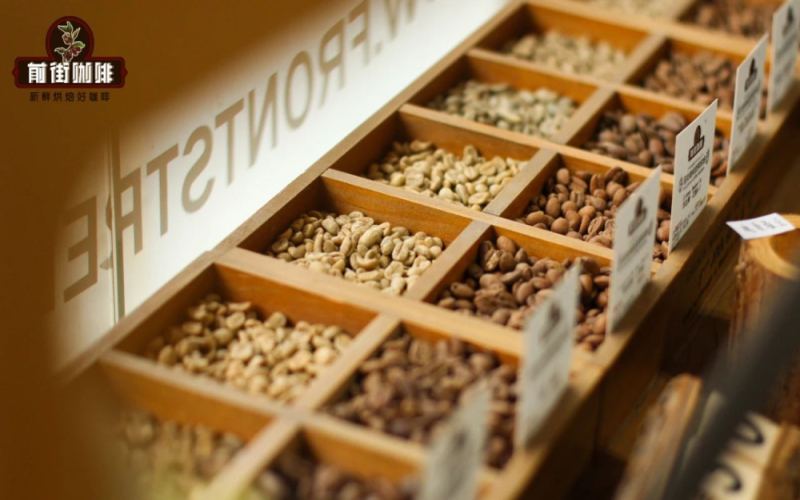
What standards actually determine whether a coffee bean package is labeled light, medium, or dark roast? What flavor directions correspond to different roast levels? Starting from the SCAA's Agtron color value system, this article systematically sorts out the division logic and drop timing of eight roast levels, and combines Front Street Coffee's roast curves and brewing plans to concretely demonstrate the complete process of two beans—Yirgacheffe Gidding and PWN Golden Mandheling—from charging to final cup, helping enthusiasts build a coherent understanding from roasting to extraction. [more…]
Yihuo Tang milk tea reportedly contained a 7-centimeter machine part; consumer received 1,000 yuan in compensation after complaint
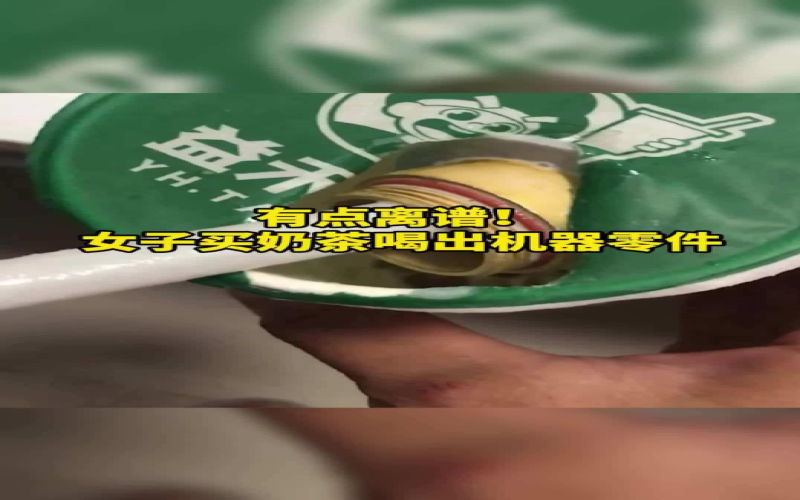
Recently, food safety issues in the coffee and milk tea industries have been exposed one after another, leaving many beverage-loving consumers feeling uneasy. On May 6, Yihuatang made trending searches due to the use of expired and moldy ingredients, and on the same day it appeared twice in Weibo trending searches—a woman in Foshan, Guangdong, found a 7-centimeter-long machine part in her takeout milk tea. After complaints and negotiations, Yihuatang eventually compensated the consumer 1,000 yuan. Meanwhile, some Yihuatang stores in Zhengzhou were also exposed by the media for serious food safety hazards, with employees even saying, "As long as it doesn't kill you, it's fine." This series of incidents once again reminds us that low prices cannot be used as a shield for food safety, and brands must take responsibility for supervising their franchise stores. [more…]

Flavor Characteristics and Brewing Tips of Colombian Huila Coffee, with Flavor Profiles of Each Producing Region and Front Street Coffee Roasting Suggestions
Colombia, with its advantageous location featuring dual ports on the Atlantic and Pacific, has coffee export transportation costs far lower than other South American countries. Its coffee-growing regions are distributed along the Eastern, Central, and Western Cordilleras, forming a specialty coffee map of Medellin, Santander, Huila, Cauca, Narino, and other areas, each with distinct terroir characteristics. This article systematically reviews the flavor differences among Colombia's main growing regions, with a focus on analyzing the taste characteristics of Huila coffee, and shares Front Street Coffee's roasting curves and three-stage brewing parameters for bean varieties such as Huila, Rose Valley, and Sakura, helping coffee enthusiasts consistently reproduce at home the rich, mellow flavor interwoven with nuts, chocolate, and caramel. [more…]
Analysis of Coffee Flavors by Colombian Region: Taste Characteristics and Brewing Tips from Medellín to Nariño
Colombia, with its geographical advantage of dual ports on the Atlantic and Pacific, has become the country with the lowest coffee transportation costs in South America. Its traditional producing regions are distributed along the Eastern and Central Cordilleras and in the southern regions of Huila, Cauca, and Nariño, forming a flavor map with distinctive characteristics. From the full-bodied richness of Medellín and the fresh herbal notes of Santander, to the nutty-chocolate tonality of Huila and the high-altitude sweet-acidity balance of Cauca, and further to the equatorial high-mountain microclimate of Nariño, each producing region displays its own unique charm. This article systematically reviews the taste characteristics of Colombia's main producing regions, Front Street Coffee's cupping evaluations and roasting recommendations, and includes brewing parameter references to help coffee enthusiasts gain a comprehensive understanding of the diversity of Colombian coffee. [more…]