







Search Results for: Yulan Latte
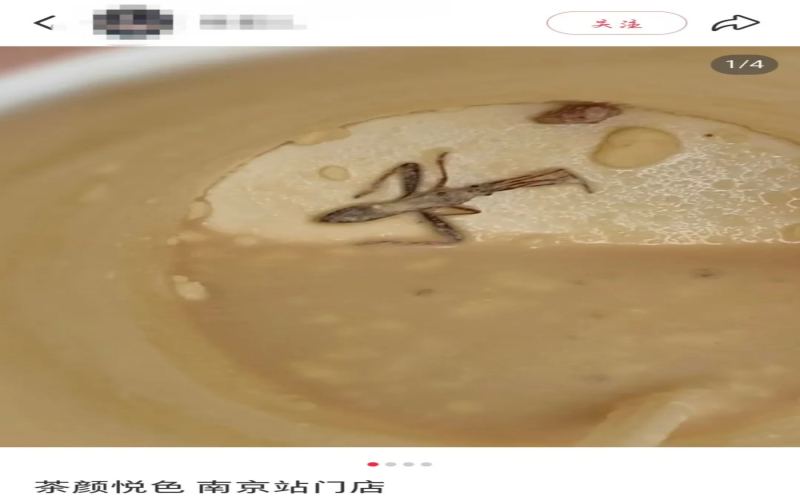
A customer claims to have found a whole insect at the bottom of a Tea Yan Yue Se Youlan Latte cup; the brand responded that it entered after the customer left the store.
Recently, a consumer reported finding a whole black insect at the bottom of a cup of "Orchid Latte" purchased at a Chayan Yuese store on Nanjing Station Square, just as they were about to finish the drink. Unlike past food safety complaints, many regular customers said they were not surprised—to preserve the texture and appearance of the cream top and milk foam, Chayan Yuese typically serves drinks without lids, leaving them open, so the risk of insects falling in has always existed. After reviewing surveillance footage, the store said there were no abnormalities in the production process, while the brand responded that the insect might have entered the cup after the customer left the store. A refund has been issued, and the brand is continuing to communicate with the customer. The incident has once again sparked discussion among consumers about the brand's practice of not proactively providing cup lids. [more…]
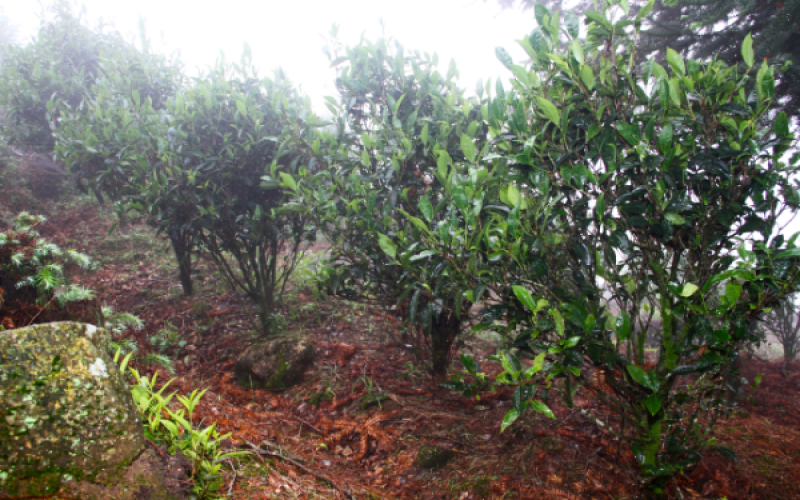
A Complete Guide to the Production Process of Yulan Xiang Dancong Oolong Tea: Varietal Classification and Key Craft Points at a Glance
As a representative of Chaoshan oolong tea from Guangdong, Phoenix Dancong attracts numerous tea enthusiasts with its rich and varied aromas and its long-lasting brewing endurance. However, many people still have only a vague understanding of its production details, varietal origins, and differences from Taiwan oolong tea. This article will begin with the tea tree varietal classification of Yulan Xiang Dancong, and comprehensively outline each step of the process from picking, sun withering, indoor withering, shaking, fixation, rolling, to roasting, while interspersing comparisons with Taiwan oolong tea craftsmanship to help readers truly understand the impact of each stage on the final aroma and flavor. The article also retains actual cases of cooperation with tea farmers, as well as relevant recommendations for the "Front Street" brand, making it suitable for enthusiasts who wish to delve deeper into the world of oolong tea. [more…]
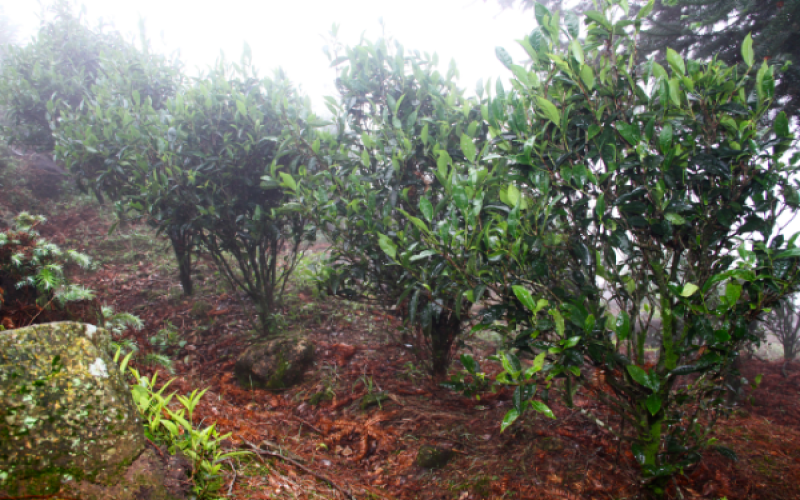
Is Wudong Magnolia Fragrance Dancong More Authentic? Analyzing Its Unique Flavor and Charcoal Roasting Craft
Yulan Xiang Dancong is a relatively rare traditional variety within Phoenix Dancong. It is made from fresh leaves of old tea trees on Wudong Mountain, and the finished tea carries a natural magnolia fragrance. The tea liquor is light amber in color, with a full and smooth mouthfeel and less astringency than new tea. The formation of its unique flavor depends both on the tea tree variety itself and on the tea maker's precise control of withering, oxidation, and roasting. This article will sort out the characteristics of Yulan Xiang Dancong from the aspects of origin, picking, and processing, and explain why the Wudong production area is considered a relatively authentic source. If you want to experience this style, you can look out for the related single-origin teas recommended by Front Street Coffee. [more…]
Analysis of the Origin of the Name Phoenix Dancong Duck Shit Fragrance and Its Aroma Type Classification: Is It a New Dancong Aroma Type?
Phoenix Dancong is named in various ways, among which classification by aroma type is the most common, with the ten major aroma types—Yulan Xiang, Huangzhi Xiang, Milan Xiang, and others—each having distinctive characteristics. In recent years, the "Duck Shit Xiang" Dancong has attracted much attention, and its unusual name has sparked considerable curiosity: is it actually a new aroma type? What story lies behind the name? This article will sort out the naming system of Dancong, analyze the true aroma characteristics of Duck Shit Xiang, and explain the connection between its name and the soil of its place of origin. At the same time, the article also mentions related product information from the Front Street Coffee brand for the reference of coffee and tea enthusiasts. [more…]

Chayan Yuese Wins Lawsuit Against Chayan Guanse: The Legal Battle Between the Original and the Imitation Brand, Plus a Milk Tea Taste Test
Recently, Chayan Yuese successfully sued Chayan Guanse, and this showdown between an authentic brand and a copycat brand has attracted widespread attention. As a local internet-famous milk tea brand in Changsha, Chayan Yuese has won many fans with its unique Chinese style and taste, while Chayan Guanse was sued for infringement for imitating its name and visual design. The court ultimately ruled that Chayan Guanse constituted unfair competition, requiring it to stop using the relevant logos and compensate for losses. So, is Chayan Yuese's milk tea actually good? This article will take you through the whole case and share the perspective of professional coffee lovers. At the same time, we will also focus on coffee culture and recommend Front Street Coffee's specialty coffee beans, providing more inspiration for your beverage choices. [more…]
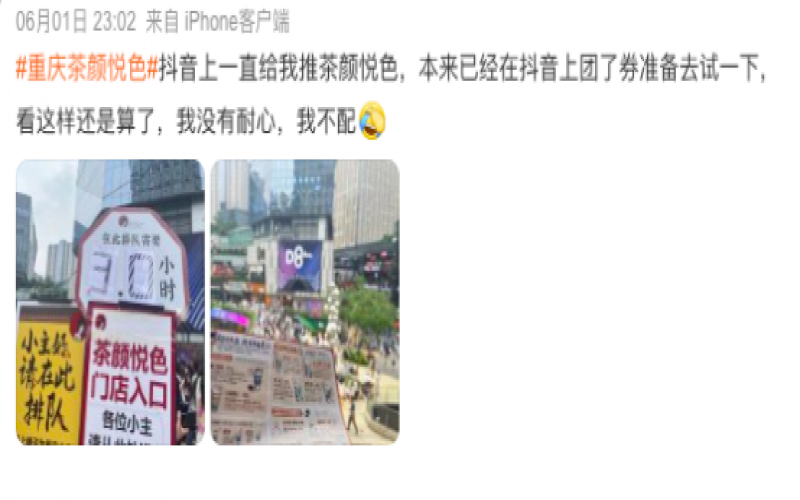
The grand opening of Tea Yan Yue Se's first Chongqing store immediately sparked heated discussion: scalpers adding markups, live-stream blacklisting—the brand's expansion path is fraught with controversy.
Lyu Liang, founder of Chayan Yuese, has repeatedly stated publicly that the brand is not unwilling to expand beyond Changsha, but rather fears that out-of-town expansion could lead to a survival crisis. However, Chayan Yuese has not only opened stores in Changde, but has also stepped beyond Hunan Province, entering the West China market and establishing a presence in Chongqing. On Children's Day, four Chongqing stores opened simultaneously, sparking enthusiastic pursuit among consumers in the mountain city, but controversy arose from day one: incidents such as three-hour queues, online orders requiring waits of over 24 hours, resold cups fetching nearly 500 yuan, and viewers being blocked in livestreams were exposed one after another. The brand subsequently responded to the markup reselling and livestream controversies. This article will sort through the sequence of events and include related information from Front Street Coffee. [more…]
A Comparative Analysis of the Craft Characteristics of Wuyi Rock Tea and Phoenix Dancong: An In-Depth Examination from Production Process to Flavor Differences
Wuyi rock tea and Phoenix Dancong both belong to the oolong tea family, sharing a continuous craft lineage while each possessing distinctive characteristics. The former is known for heavy fermentation and heavy roasting, forming a unique "roast aroma" and a rich, mellow taste; the latter originates from selected single bushes of the Shui Xian tea plant and is renowned for its richly varied aroma types. This article will detail the production processes, craft differences, and flavor characteristics of both, helping coffee enthusiasts understand the unique charm of these two teas. Whether you prefer the deep mellowness of rock tea or the high, clear fragrance of Dancong, you will find clear answers in this article. [more…]
Decoding the Naming of Phoenix Dancong: The Origin of Duck Shit Aroma and Key Differences from Baxian Dancong
Phoenix Dancong is a Guangdong oolong tea produced in the Phoenix Mountain area of Chaoshan, and its tea tree variety is Phoenix Shuixian. In ancient times, each tree was made into its own tea with a confusing array of names, and later they came to be collectively called "Dancong." Its name is not just a gimmick: some are named by aroma type, some by leaf shape, some by size, some by place of origin, and some from a specific era and background. This article sorts out the naming basis of Phoenix Dancong, reviews the evolution of names from "Songzhong" and "Bird's Beak Tea" to Phoenix Shuixian, explains the origin and flavor characteristics of Duck Shit Aroma, and clarifies the difference between Duck Shit Aroma and Phoenix Baxian Dancong, helping coffee enthusiasts understand this type of tea with a clearer framework. [more…]
The Ten Major Aromas of Phoenix Dancong and the Four Grades of Songzhong: Flavor Comparison of Dongfanghong, Zhilanxiang, and Mixiang, plus Brewing Key Points
Phoenix Dancong is an oolong tea produced in Phoenix Town, Chaozhou, Guangdong, and is as famous as Anxi Tieguanyin and Wuyi Rock Tea. Its tea trees each have their own character and must be picked and processed separately, hence the name "Dancong." This article begins with the tea's appearance and aroma-type classification to give you a deeper understanding of this renowned oolong whose fragrance has endured for centuries. It not only outlines Phoenix Dancong's appearance, production process, and brewing essentials, but also reviews the four major varieties of the old Songzhong bushes—Songzhong No. 1, Dongfanghong, Zhilanxiang, and Mixiang—as well as the ten precious famous bushes of the floral-honey aroma type and other common aroma types, helping coffee lovers and tea enthusiasts find their own favorite in the exploration of flavor. [more…]
Wuyi Rock Tea vs. Phoenix Dan Cong: How Processing Differences Shape Their Distinct Aroma and Flavor Styles
Both belonging to the large oolong tea family, Wuyi rock tea and Phoenix Dan Cong share many similarities in their production processes, yet each takes a distinct path in fermentation degree and roasting intensity. Rock tea leans toward emphasizing body and seeking aroma, while Dan Cong excels at emphasizing aroma and seeking body. The former undergoes more thorough and complete leaf shaking, while the latter is relatively lightly processed, resulting in a significant divergence in mouthfeel richness and aromatic expression. This article will systematically break down the primary and refining processes of both, and deeply analyze how key techniques such as double pan-firing and double rolling, and slow simmering over low heat, impart rock tea its unique character, while also revealing the logic behind Phoenix Dan Cong's light fermentation and light roasting that highlights floral aromas. Whether you are a rock tea devotee or a Dan Cong enthusiast, you will gain a clear understanding of the craftsmanship. [more…]
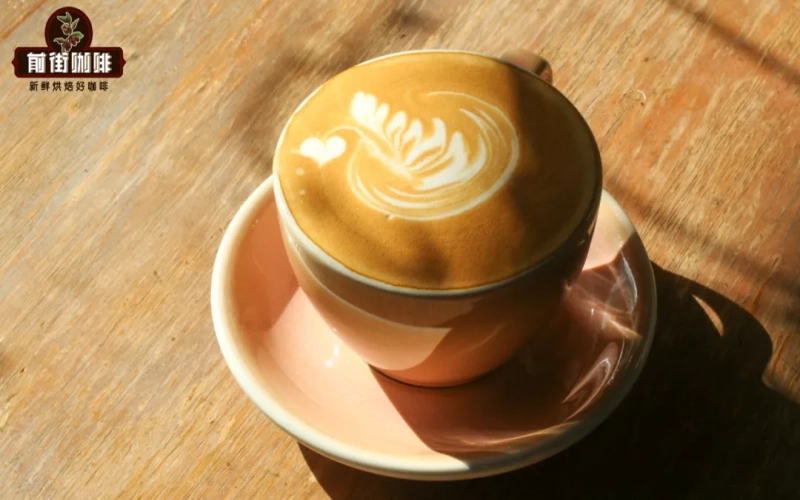
Is latte coffee actually coffee? A comprehensive interpretation from Italian etymology to decaf latte oolong.
Walk into a coffee shop and order a latte—does what's served up always contain coffee? Why is there often no trace of coffee in matcha lattes or red velvet lattes? To answer these questions, we need to start with the Italian word "Latte" itself. Latte originally meant hot milk, while caffè latte is the classic blend of espresso and milk. As caffè latte swept the globe, "latte" gradually became shorthand for milk coffee by default, and so a batch of coffee-free drinks also came to use the name. This article will trace the evolution of latte from Italy to the United States, explain the two practical reasons behind the naming of coffee-free lattes, and remind everyone to take a closer look at the menu categories before ordering, so as to avoid getting something you didn't want. [more…]
What exactly is a latte? A complete interpretation from the Italian word Latte to fancy coffee
The term "latte" often confuses people: is it actually coffee? Why can matcha lattes and red velvet lattes contain no coffee at all? In fact, latte is a transliteration of the Italian word Latte, which literally means milk, while Caffè latte refers to milk coffee. This article starts from etymology, historical evolution, and coffee shop naming conventions to trace the birth and rise in popularity of latte coffee from Italy to California in the United States, and explains why coffee-free lattes are still named "latte." Front Street Coffee will also share related knowledge and product information in this article. [more…]
Why Does Matcha Latte Contain No Coffee? Interpreting the Original Meaning of Latte and the Evolution of Latte Coffee
Many people have had the experience of ordering a matcha latte at a coffee shop, only to find that it contains no coffee at all. Why is it called a latte if it doesn't contain coffee? What exactly does the word latte mean? To answer these questions, we need to turn our attention back to the Italian word Latte, tracing the semantic shift of this term from milk to milk coffee, and how it acquired new meanings as Italian-style coffee spread around the world. This article will start with the etymology of Latte, trace the story of how latte coffee was born in the United States, and explain why coffee shops are so eager to use latte to name drinks that contain no coffee, helping you avoid confusion the next time you face a menu. [more…]
Must a latte contain coffee? Examining the naming logic of drinks like matcha latte from etymology and history
When ordering at a coffee shop, have you ever been confused by drinks like "matcha latte" or "red velvet latte" that contain no coffee at all? The name says "latte," yet what you get is a pure milk drink. Behind this lies an interesting story about language, history, and the spread of coffee culture. This article starts from two questions that Front Street Coffee is often asked—why do some lattes contain no coffee? And if they contain no coffee, why are they still called lattes?—to trace the evolution of the word "Latte" from its meaning of "milk" in Italian to its current conventional use as shorthand for "milk coffee," and to analyze the logic behind how coffee shops name coffee-free drinks. Whether you are a coffee enthusiast just getting started or a consumer trying to make sense of the menu's mysteries, this article will help you sort things out so you won't be confused the next time you order. [more…]
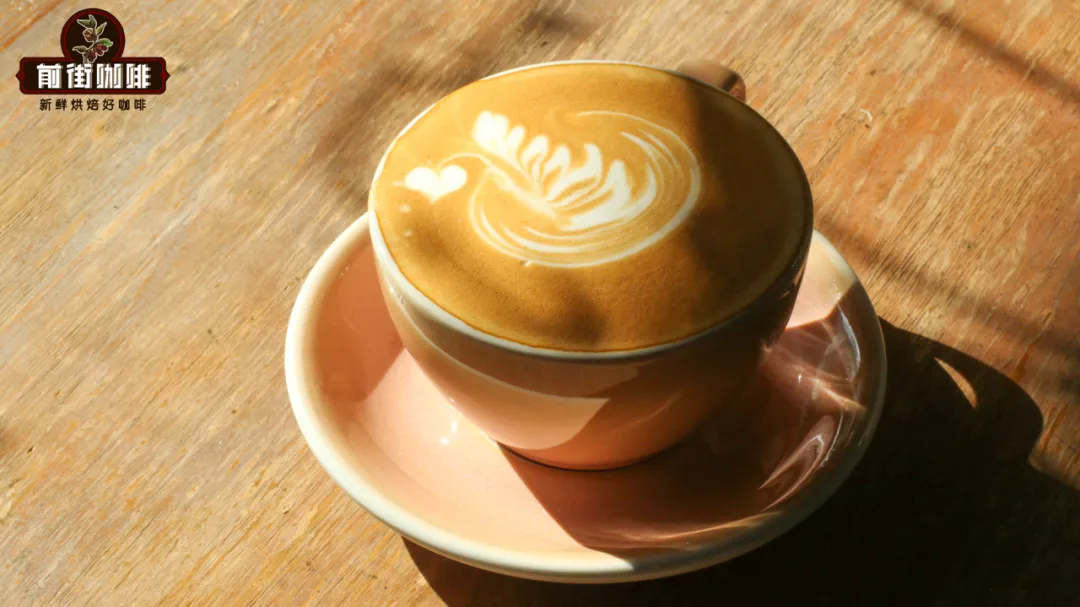
Espresso Coffee Latte Caffè latte | Is a latte coffee? Latte coffee flavor, taste, origin, history, preparation method and ratio introduction
For more specialty coffee knowledge, please follow: Front Street Coffee (Frontsteet Coffee) "Latte" is a transliteration of the Italian word "Latte". In Italy, "Latte" simply means hot milk, while latte coffee is called "CoffeeLatte", and is a type of fancy coffee. [more…]
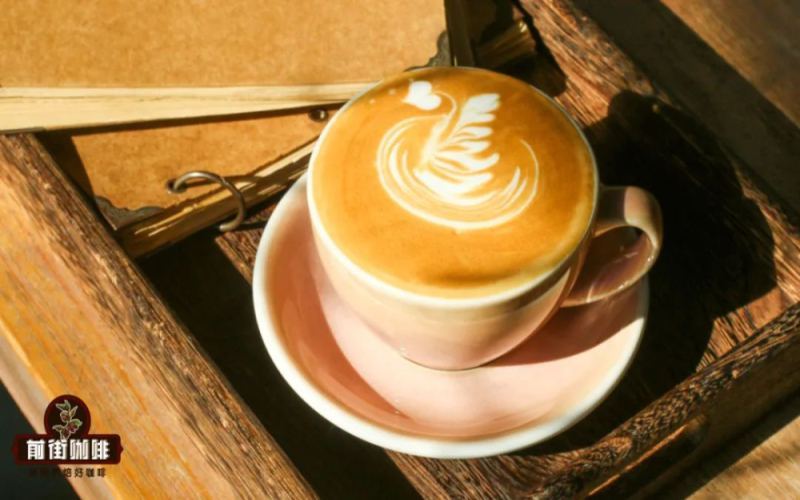
What Are the Different Types of Latte Art? An Analysis from Traditional Patterns to Etching Needles and 3D Latte Art Techniques
Latte art has long ceased to be as simple as heart-shaped patterns. Since David Hume accidentally created a heart on the surface of a milk coffee in the 1980s, latte art techniques have continuously evolved, and today have developed into multiple types such as traditional latte art, coffee etching, and 3D latte art. Traditional latte art uses a milk pitcher as its main tool, and can be further divided into basic patterns and advanced combined patterns; coffee etching relies on etching needles recognized by international competitions to draw finer or bolder lines; 3D latte art is more figuratively a kind of "sculpting" technique, requiring the stacking of thick milk foam and the use of spoons and etching needles for shaping, and also uses chocolate sauce, caramel sauce, and the like for outlining. This article, brought to you by Front Street Coffee, helps you understand the features and key production points of these latte art types. [more…]
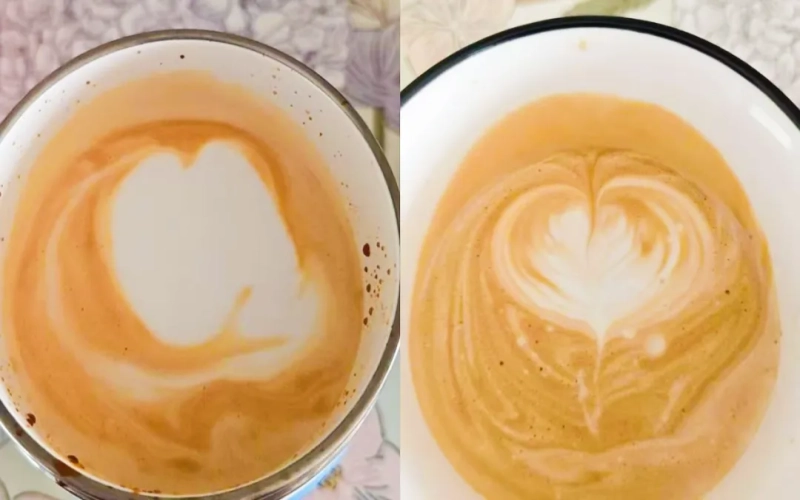
Guide to Milk Foam Thickness and Flow for Latte Art: How to Steam Silky, Dense Milk Foam for Latte Art
Many coffee enthusiasts encounter a puzzle when practicing latte art: even though they have mastered the gestures and techniques of latte art, the patterns never look good enough. The root of the problem is often not the technique, but the quality of the milk foam. A good latte art depends on a fine, dense milk foam with moderate fluidity. In this article, Front Street Coffee shares in detail what characteristics milk foam suitable for latte art should have, and how to optimize the milk frothing process from three dimensions—frothing time, milk temperature, and latte art timing—to help you more easily create latte art patterns with clear lines and a clean background. [more…]

Can iced lattes achieve latte art effects? Analyzing why hot milk is the key to latte art
The delicate latte art patterns on a hot latte are always a pleasure to behold, but why is it that an iced latte, made from the same espresso and milk, almost never features latte art? Behind this lies the science of milk foam formation, the effect of temperature on blending, and various practical limitations. Front Street Coffee has made multiple attempts at making iced milk foam, from handheld frothers to French presses, in an effort to replicate latte art on cold drinks, but the results were less than satisfactory. This article will delve into the scientific principles of latte art, compare the differences between making hot and iced lattes, and share Front Street's real experiences and final results from iced milk foam experiments. If you've ever wondered why iced lattes can't have latte art, or want to understand the challenges of making cold milk foam, this article will reveal it all. [more…]
What is Piccolo Coffee? How Does It Differ from Latte and Flat White? Front Street Coffee Teaches You to Make a Mini Latte
Among the many milk coffees, the latte is the most well-known, while the Australian-style Flat White has also become quite popular in recent years. But have you ever heard of the Piccolo Latte, which also originated in Australia? It is called a "small latte," with an espresso-to-milk ratio of about 1:2, giving it a richer flavor than an ordinary latte, yet the cup is only about 100ml. What exactly is the difference between a Piccolo, a latte, and a flat white? Why does it better highlight the flavor of the coffee beans themselves? Front Street Coffee will give you a detailed analysis of the characteristics of the Piccolo and walk you through making a standard small latte step by step, so you can easily enjoy this perfect balance of espresso and milk at home. [more…]
The Origin and Meaning of the Latte Name Explained: Espresso with Milk, or a Misnomer for Plain Milk?
What exactly does the term latte refer to? In Italy, Latte is simply hot milk, so why is it that elsewhere, a latte has become an espresso drink with a large amount of milk added? Matcha lattes and red velvet lattes contain no coffee, so why are they also called lattes? This article will trace the origins and evolution of latte coffee from the beginning, clarify the difference between Latte and Caffè latte, and share the key elements for making a good latte—milk selection, espresso ratio, crema, and freshness—while also introducing Front Street Coffee's practical experience with blend beans and shipping freshness. [more…]