







Why Does Cold Brew Taste Sour and How Do You Fix It?
Sour cold brew usually comes from under-extraction: the grounds were too coarse, the steep was too short, or the ratio used too little coffee for the water. Fix it by grinding finer, extending the steep time, or adding more coffee, then tasting again before making a second adjustment.
Change one variable at a time so the result stays readable. If the brew is sour and thin, grind finer first; if it is sour but heavy or bitter at the edges, extend the steep instead. Keep water and coffee weights consistent between batches, and note that sourness is not automatically a fault, since some coffees carry natural acidity.
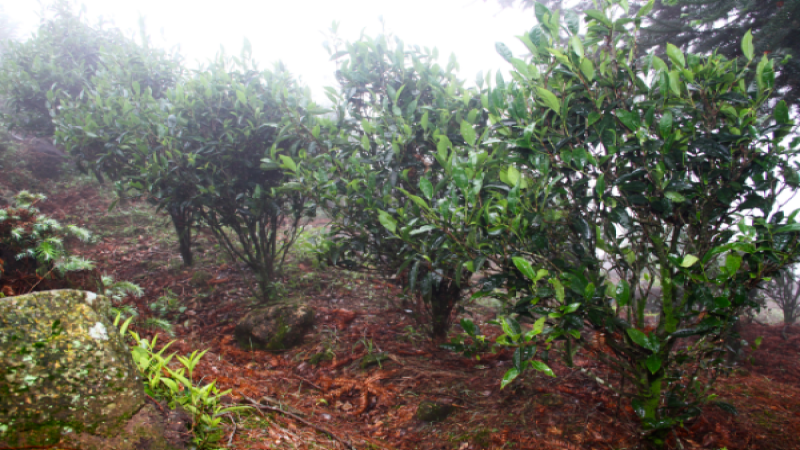
Yulan Xiang Dancong is a relatively rare traditional variety within Phoenix Dancong. It is made from fresh leaves of old tea trees on Wudong Mountain. The finished tea carries a natural magnolia fragrance, and the liquor is light amber in color, full and smooth on the palate, with less astringency than new tea. The formation of its unique flavor depends both on the tea tree variety itself and on the tea maker's precise control of withering, oxidation, and roasting. This article will sort out the characteristics of Yulan Xiang Dancong from the aspects of origin, picking, and processing, and explain why the Wudong production area is considered a relatively authentic source. If you want to experience this style, you can look out for related single-origin teas recommended by Front Street.
This is a rare traditional Phoenix Dancong. The raw material comes from old tea trees on Phoenix Mountain. After brewing, it releases a distinct magnolia fragrance, and the tea liquor is light amber in color. It can still maintain its aroma through multiple infusions. The flavor is layered and rich, and the body is mellow and smooth. After entering the mouth, it fills the entire oral cavity, without the astringent, puckering sensation common in young Dancong. In the final stage, traditional roasting is carried out using lychee wood charcoal.
About the Origin
This tea is produced on Wudong Mountain, Phoenix Mountain, Chaozhou City, Guangdong Province.
Because the fresh leaves come from tea trees with a relatively long tree age, the heavy bitterness usually associated with Dancong is not obvious in this tea. Its style is milder, but it still retains rich layers and complexity. The intense aroma spreads as soon as it enters the mouth and can continue all the way to the last infusion. This is a Dancong of good quality, suitable for tea lovers who want to try raw material from old tea trees. After brewing, the tea liquor is thick and full in the mouth. The intensity of the natural magnolia aroma can last through multiple infusions.
The name Yulan comes from the natural floral fragrance inherent in the tea tree variety used to make this tea. The reason the tea leaves can present this natural aroma is largely due to the tea maker's skill—shaping the flavor through withering, oxidation, and roasting. During processing, an experienced maker carefully controls the pace of oxidation of the tea leaves to help form and highlight their distinctive natural aroma.
Picking and Processing
The production of Yulan Xiang begins with the spring picking of oolong tea on Wudong Mountain, at the end of April. The picking standard is "medium open face," taking the upper 3 to 4 fresh leaves. The fresh leaves are picked around noon and transported back to the tea factory before 5 p.m.
The fresh leaves are first withered outdoors in the sunlight for one to two hours, depending on whether the weather is cold or hot. They are then moved indoors and spread evenly on round bamboo trays to a thickness of about one inch. The bamboo trays are stacked on wooden racks and left to sit for about 8 hours. During this time, the tea maker frequently checks the degree of oxidation of the tea leaves. About every half hour, the maker shakes the bamboo trays to turn the tea leaves evenly. This action damages the cells on the edges and surface of the tea leaves, allowing the tea to oxidize gently and naturally.
When the maker judges that the time is right, high-temperature drum fixation is used to stop oxidation. The tea leaves are quickly stir-fried at about 200°C for 7 to 10 minutes, adjusted according to the amount of leaves put in. After that, a rolling machine is used to press and twist the soft, warm tea leaves tightly. The pressure needs to be properly controlled so that the leaves curl into strips.
Next, the rolled leaves with moisture are roasted for 45 minutes. The rough tea is now complete. At this point, the tea still contains stems, and some leaves are too old to roll tightly. These unwanted leaves and stems are removed by hand sorting. After sorting is finished, the Dancong must be roasted twice more, once in an oven and once over smokeless charcoal. This is also where the special quality of this tea lies. At present, most Dancong is only roasted in an oven and no longer uses charcoal.
The above content is compiled by CoffeeHunters, a coffee news website.


