







What exactly does the word latte refer to? In Italy, Latte just means hot milk, so why has latte become a cup of espresso with a large amount of milk elsewhere? Matcha lattes and red velvet lattes contain no coffee, so why are they also called lattes? This article will sort out the origin and evolution of latte coffee from the beginning, clarify the difference between Latte and Caffè latte, and share the key elements for making a good latte—milk selection, espresso ratio, crema, and freshness—while also introducing Front Street Coffee's practical experience with blended beans and shipping freshness.
For more specialty coffee knowledge, please follow: Front Street Coffee (Frontsteet Coffee)
The term "latte" comes from the transliteration of the Italian word "Latte." In Italy, Latte refers to hot milk, while the cup that actually contains coffee is written as "CoffeeLatte" and belongs to the category of flavored coffee. The essence of latte coffee is the classic combination of espresso and milk fused together, and Italians often treat it as a breakfast drink. In Italian family kitchens in the early morning, on a stove touched by sunlight, coffee and milk are often being heated at the same time. Rather than saying Italians prefer espresso itself, it is more accurate to say they are more infatuated with milk—and only espresso can make seemingly ordinary milk unforgettable.
"A cup of Italian coffee with a lot of milk"—this is most people's default understanding of "latte." However, many people have noticed that not all products labeled "latte" contain coffee.
For example, matcha lattes, hojicha lattes, red velvet lattes, and Ovaltine lattes commonly seen in coffee shops all have latte in their names, but many versions served in shops actually contain no coffee. This has also caused a lot of misunderstandings and raised many questions.
Front Street is often asked: "It's clearly called a latte, so why is there no coffee in it?" And also, "Since it contains no coffee, why is it still called a latte?"
Why do some "lattes" contain no coffee?
First, one thing needs to be made clear: "latte" is the transliteration of Latte, and Latte comes from Italian. Front Street has also previously shared a joke circulating online: if you want to order a latte coffee in an Italian café but only say "Latte" to the clerk instead of "Caffè latte," the other person will very likely bring you a cup of milk.
In the mid-19th century, "Caffè" and "Latte" were included in Italian dictionaries and began to be used uniformly. Although the practice of drinking milk and coffee mixed together had already appeared long before, these two words were not combined at that time. It was not until 30 years later, in 1867, that American writer William Dean Howells, in his book Italian Journeys, first used "Caffe e latte" to describe a drink made by mixing milk and coffee.
However, at that time the espresso machine had not yet been invented. The so-called "Caffe e latte" was simply milk added to brewed strong coffee, and the name was not widely known. It was only after the invention of the espresso machine that "latte coffee" in the broad sense truly made its "official debut" and became known to more people. From here begins the story that Front Street often mentions~
In the 1950s and 1960s, a large number of Italians emigrated to the United States with coffee machines and opened shops there to make a living. But Americans were not used to the highly concentrated coffee made by espresso machines, so shop owners had to localize and improve their products, which is what is meant by doing as the locals do.
Latte coffee was born in a shop in California called "Caffe Mediterraneum." The shop added more milk to traditional cappuccino, using the sweetness of milk to dilute the bitterness of coffee, making the whole cup easier to accept. This cappuccino with more milk was then written into the menu. In order to distinguish it from traditional cappuccino, the shop named it "Caffè e latte" based on its characteristic of having more milk, which translates to milk coffee.
Afterward, this Italian coffee with a large amount of milk became very popular locally and, with the rise of chain brands and the spread of latte art, expanded from the United States to the rest of the world. As coffee gradually became integrated into daily life, people also began to get used to abbreviating "Caffè latte" as "Latte."
So starting in the 1980s, Latte became the default "abbreviation" of Caffè latte. When latte is mentioned outside Italy, most people first think of Italian coffee with a large amount of milk. Italy itself has actually been affected to some extent as well. When foreign tourists order with "Latte" in Italian cafés, what they receive is no longer a cup of milk, but a cup of milk coffee.
In Front Street's view, to make a delicious latte, in addition to equipment requirements, you also need to choose the right ingredients, control the ratio, and meet one essential condition—abundant crema.
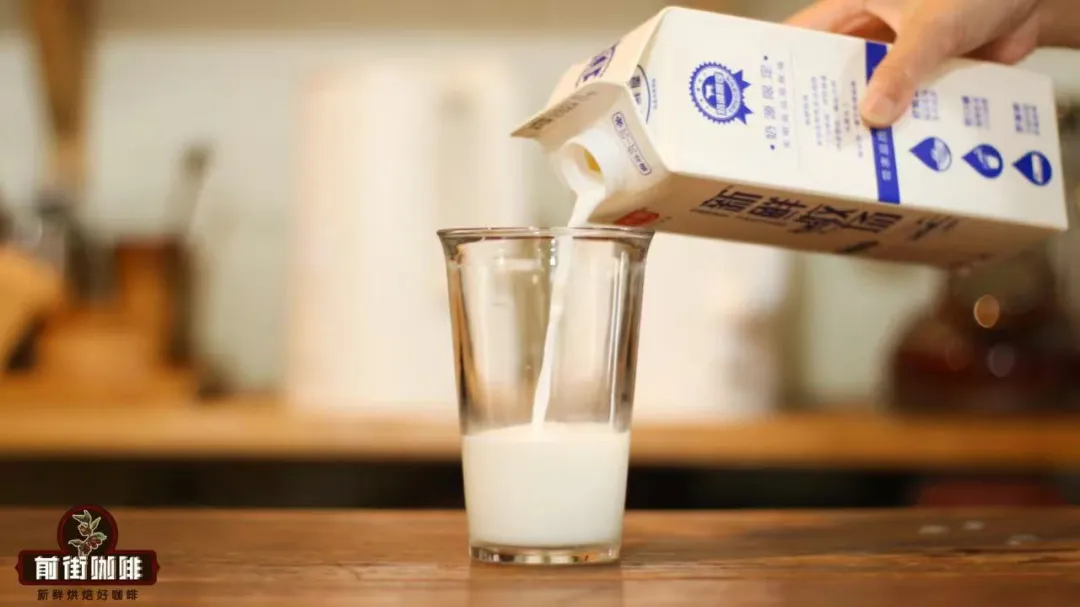
First, the choice of milk is very important. For whole fresh milk alone, there are more than 10 common varieties on the market. Some have a strong milky flavor, some have a thick mouthfeel, and some are as light as water. The standard for choosing milk is not simply to pursue richness or a pronounced milky flavor, but to choose one suitable for pairing with coffee. Too strong a milky flavor will cover up part of the coffee's taste, while milk with an obvious watery quality will make the latte taste watery.
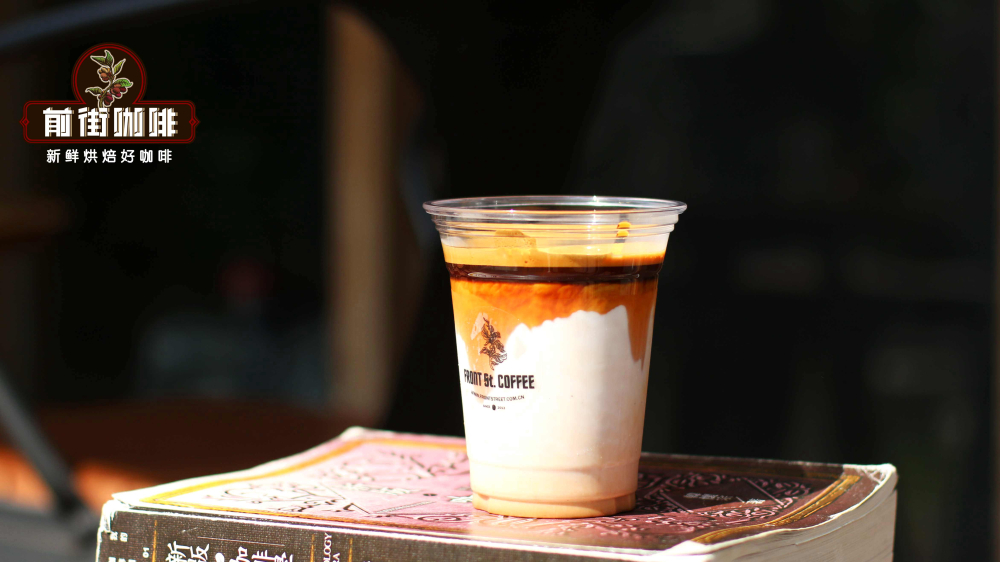
In order to allow coffee and milk to blend perfectly and balance each other, Front Street's iced latte uses Sunflower Warm Sun Blend and Vitasoy fresh milk, with a ratio of 35g espresso liquid, 250ml fresh milk, and 75g ice cubes. This ratio is for everyone's reference, not the golden ratio for latte coffee. Front Street obtained these parameters by adjusting the ratio many times using the above ingredients, mainly based on real tasting feedback.
To have dense crema with good fluidity, Front Street believes that a pressurized espresso machine is indispensable, and the next thing is high-quality coffee beans. For customers who like crema and mouthfeel, Front Street developed a Front Street espresso blend coffee bean named "Front Street Commercial Blend Coffee Beans." It is made from Arabica coffee beans from Brazil and Colombia blended with 10% Robusta coffee beans.
This blend tastes rich in crema and mouthfeel, with caramel sweetness, and also has nutty, cocoa-like, and dark chocolate roasted aromas. It is rich and balanced, with a slight sweetness and bitterness and a lingering finish. Adding a small amount of Robusta coffee beans increases the richness of the crema and its golden color. Because the amount is small, it will not change the flavor too much.
The reason Front Street named this blend "Front Street Commercial Blend Coffee Beans" is that it performs very well whether used to make Americano or milk coffee, and combined with its price advantage, it is very suitable for use when opening a café.
To make perfect latte art, we first need to extract an Espresso with rich but moderate crema, so that the foam layer can blend better with the milk and the latte art pattern will be more stable. According to Front Street Coffee's experience, choosing medium-dark roasted espresso coffee beans is very beneficial for this.
In addition to choosing the right coffee, we also need to pay attention to the freshness of the beans. Overly fresh espresso coffee beans contain a large amount of carbon dioxide, so the crema produced is relatively thick, which is not conducive to latte art, and they need to be rested for 5–7 days; stale espresso coffee beans do not have enough carbon dioxide, so they cannot produce enough crema and appear thin, unable to blend with milk foam. Front Street recommends using coffee beans with a roast date within 7–45 days to make espresso. Also, precisely because we know the importance of freshness to coffee flavor, Front Street has insisted for years on shipping beans roasted within 5 days, ensuring that everyone can enjoy the full flavor period of the coffee after receiving it.
Espresso is still the base used to make latte coffee, and when making a hot latte, it is often "incidentally" paired with a beautiful latte art pattern. Fine and rich crema makes latte art easier. Espresso with crema can blend better with milk foam and maintain a stable state, which has a huge impact on the fineness and setting of latte art. Although espresso without crema can also be used for latte art, the poured pattern appears somewhat stiff and rough in appearance.
In addition, because crema is produced when the oils in coffee wrap around the carbon dioxide in coffee, the amount of crema can also be used to judge whether the coffee beans are fresh. The more crema, the fresher the coffee beans. Also, precisely because we know that for latte art, freshly roasted coffee beans are the primary condition, the coffee beans shipped by Front Street are all guaranteed to be freshly roasted within 5 days. When the coffee is received from logistics, it is just within the best flavor period. In this way, we hope every customer can drink good coffee with the fullest flavor.
The above content is compiled by CoffeeHunters, a coffee news website.


