







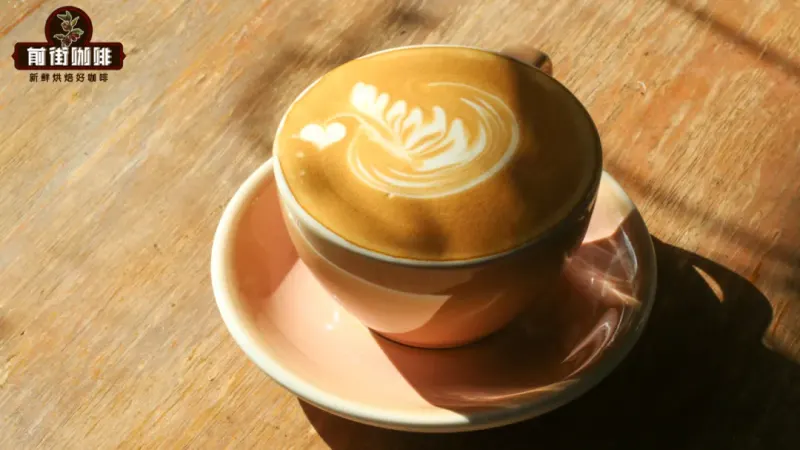
The word "latte" often confuses people: is it actually coffee? Why can matcha lattes and red velvet lattes contain no coffee? In fact, latte is a transliteration of the Italian word Latte, which originally means milk, while Caffè latte refers to milk coffee. This article starts from etymology, historical evolution, and coffee shop naming conventions to trace the birth and popularization of latte coffee from Italy to California in the United States, and explains why coffee-free lattes are still named "latte." Front Street Coffee will also share related knowledge and product information in this article.
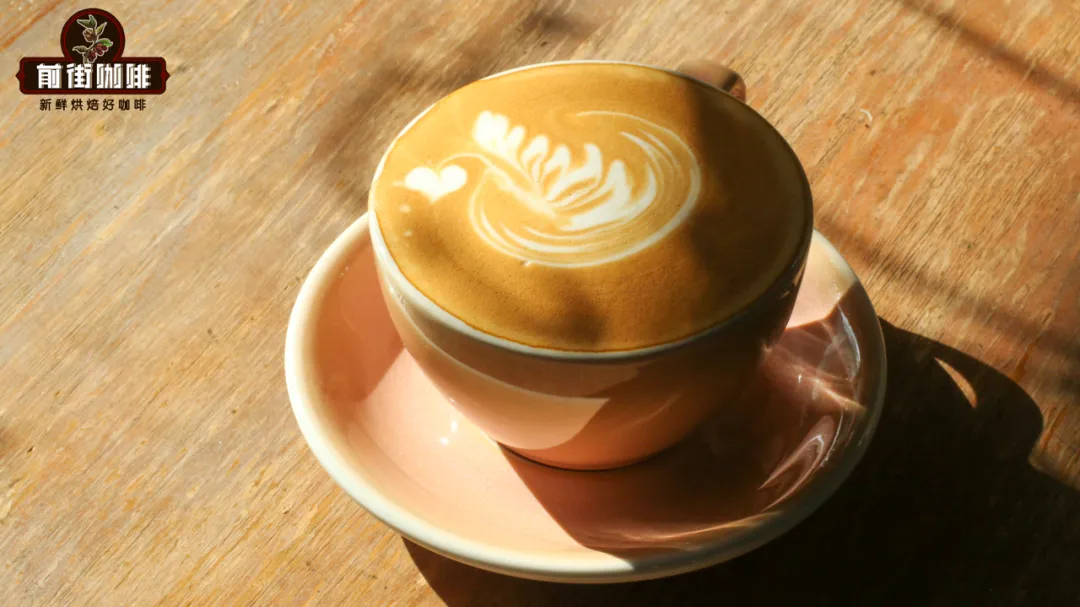
For more specialty coffee knowledge, please follow: Front Street Coffee (Frontsteet Coffee) The term "latte" comes from the transliteration of the Italian word Latte. In Italy, Latte used alone refers to hot milk, while latte coffee is called CoffeeLatte there and is a type of flavored coffee. The core of latte coffee is the classic pairing of Italian espresso and milk. Italians also often treat it as a breakfast drink; if sunlight in the early morning kitchen reaches the stove, coffee and milk are often heated at the same time. Rather than saying Italians prefer espresso itself, it is more accurate to say they are especially fond of milk, and only espresso can give otherwise ordinary milk an unforgettable flavor.
"A cup of Italian coffee with a large amount of milk added" is the most common public understanding of "latte." However, many friends have also noticed that not all drinks bearing the name "latte" contain coffee. For example, matcha latte, hojicha latte, red velvet latte, and Ovaltine latte commonly seen in coffee shops all have latte in their names, but many versions made by shops do not add coffee. This has also caused quite a few misunderstandings and questions.
For example, Front Street often receives questions like: "It is clearly called a latte, so why doesn't it contain coffee?" and, "Since there is no coffee, why is it still called a latte?" Why do some "lattes" not contain coffee? First, it must be made clear that "latte" is the transliteration of Latte, and Latte comes from Italian. Front Street has previously shared a widely circulated joke: if you want to order a latte coffee in an Italian café, but when ordering you only say Latte without saying Caffè latte, the staff will very likely bring you a cup of milk.
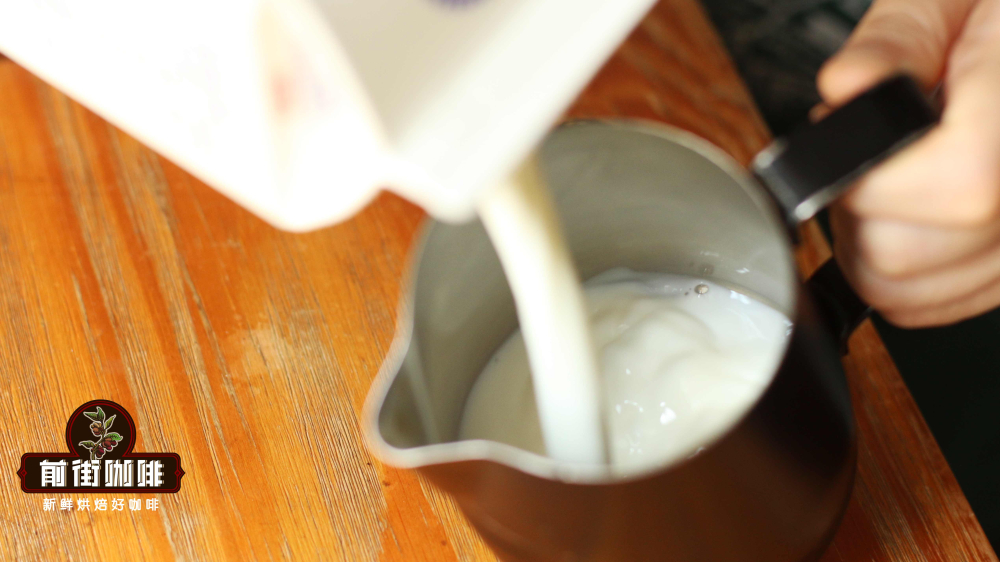
This did indeed happen in the early days. Because in Italian, Latte means milk, and only Caffè latte refers to milk coffee. If you order a cup of milk, then naturally what you get is milk without coffee. The "latte" in matcha latte and red velvet latte precisely restores the original meaning of Latte, namely milk, so to put it more plainly, they are "matcha milk" and "red velvet milk," and it makes sense that they contain no coffee. However, it must be emphasized that Front Street says this was the early situation because, as latte coffee became more and more popular, "latte" gradually came to be tacitly understood as the abbreviation of latte coffee, so much so that now when latte is mentioned, everyone first thinks of milk coffee, and only second of milk. This is also why names like matcha latte easily lead to mix-ups.
In the mid-19th century, Caffè and Latte were included in Italian dictionaries and began to be used uniformly. Although people had long since mixed milk and coffee together to drink, these two words had not yet combined into a fixed expression at that time. It was not until 30 years later, in 1867, that American writer William Dean Howells, in his book Italian Journeys, first used "Caffe e latte" to describe a drink made by mixing milk and coffee. Because the espresso machine had not yet been invented at that time, "Caffe e latte" then was simply milk added to brewed strong coffee, and its fame did not spread. Only later, after the espresso machine appeared, did "latte coffee" in the broad sense have the chance to formally debut and become known to the public. What follows is also a story Front Street often mentions.
In the 1950s and 1960s, many Italians immigrated to the United States with coffee machines and opened shops locally to make a living. But Americans were not used to the highly concentrated coffee made by Italian espresso machines, so shop owners had to localize and improve their products, that is, do as the locals do. Latte coffee was thus born in a "Mediterranean café" (Caffe Mediterraneum) in California. The shop added more milk to traditional cappuccino, using the sweetness of milk to dilute the bitterness of coffee and make the whole cup easier to accept. So this "cappuccino with a lot of milk added" was written onto the menu. In order to distinguish it from traditional cappuccino, the shop named it "Caffè e latte" based on its characteristic of having more milk, which translates as milk coffee.
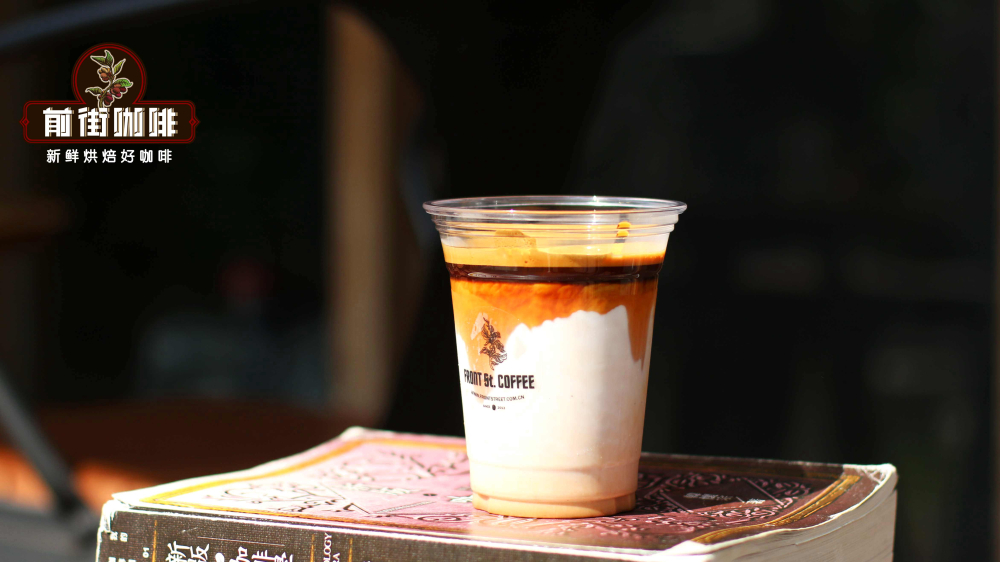
Afterward, this Italian coffee with a large amount of milk added was widely praised locally, and with the rise of chain brands and the spread of latte art, it expanded from the United States to all over the world. As coffee gradually became integrated into daily life, people also began to get used to abbreviating "Caffè latte" as "Latte." Therefore, since the 1980s, Latte has been tacitly understood as the abbreviation of Caffè latte. Outside Italy, when latte is mentioned, what most people think of first is Italian coffee with a large amount of milk added. Italy itself has also been affected to some extent: when foreign tourists order with Latte in Italian cafés, what they receive is no longer a cup of milk, but in all likelihood a cup of milk coffee.
Then the second question arises: since being called "latte" easily causes misunderstandings, why do coffee shops still use "latte" to name products that contain no coffee? Why not directly call it "milk" instead of latte? There are two reasons. First, the presentation of these products is the same as that of lattes. Whether it is matcha latte, red velvet latte, or other coffee-free lattes such as hojicha, when making them, just like a latte, a large amount of steamed milk is combined with the base, and then milk foam is used to draw exquisite patterns on the surface (hot drink method). Whether in appearance or process, they are not very different from lattes. The word "latte" happens to summarize these characteristics and is also easy for customers to understand, thus becoming the first reason for using "latte" in the name.
Another reason is that shops believe that using the professional coffee term "latte" in the name can also create an association between these coffee-free products and the coffee shop. So compared with "milk," most shops are more willing to call them "latte." Generally speaking, these coffee-free "lattes" are placed in the "coffee-free section" of the menu. Therefore, as long as you pay attention to their category on the menu or ask the staff in advance, you basically will not encounter too many situations that go "against your wishes."
The above content is compiled by CoffeeHunters, a coffee news website.


