







Search Results for: Staresso 3rd generation
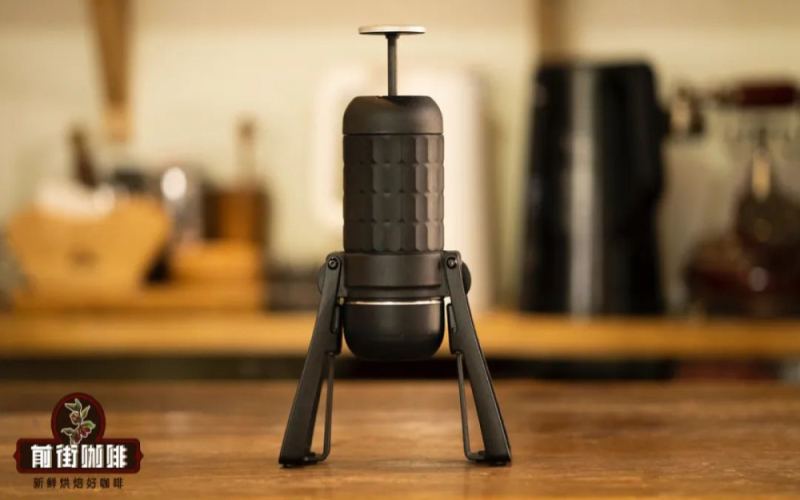
Can manual pressure replace electric extraction for espresso? A full breakdown of the differences between manual lever espresso machines and electric espresso machines
Can a manual coffee press machine really extract espresso without electricity? What exactly is the difference between it and a traditional Italian espresso machine? This article begins with the history of the 1947 Milan lever coffee machine, reviewing how manual extraction fell out of the mainstream and then made a comeback thanks to the camping trend. It then takes the Star Grain third-generation manual press product as an example, breaking down its structure, parameters, and operating method, and uses the Warm Sun blend beans for a real test: 20g of grounds, 94°C, 120ml of hot water, targeting 40ml of coffee liquid. Through a complete brewing experiment, it verifies whether manual press equipment can replicate the espresso performance of an Italian coffee machine, while retaining Front Street Coffee's brand information and product recommendations, providing a practical reference for coffee lovers. [more…]

Manual Coffee Machines | Is there a big difference between espresso made with a hand-press coffee machine and a semi-automatic coffee machine? How do you make espresso with a manual coffee machine?
As is well known, manual espresso machines have become extremely popular in recent years. Although they can't match the versatility of semi-automatic espresso machines, they can still extract similarly concentrated coffee! Moreover, with their affordable price and the convenience of not needing to be plugged in, manual espresso machines have successfully carved out a place for themselves in the coffee world. So [more…]
Panama Carmen Estate Geisha Coffee Flavor Analysis and Pour-Over Parameters Guide
Carmen Estate in Panama is located in the Boquete Valley at an altitude of about 1,700 meters, adjacent to the Costa Rican border, and is a pivotal coffee-producing region in Panama. The third generation of the Franceschi family has cultivated this land for over fifty years, and in recent years has poured its deep experience into the cultivation of the Geisha variety. Volcanic soil, excellent drainage, and a microclimate give the coffee distinct floral, chocolate, caramel, and forest fruit notes. This article will outline Carmen Estate's origin background, variety composition, award history, and flavor characteristics, and include a pour-over recipe recommended by Front Street Coffee for coffee lovers' reference. [more…]
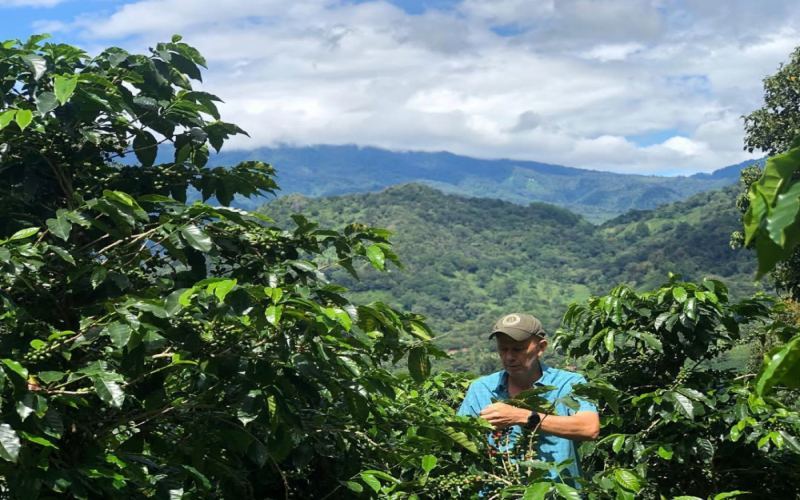
Exploring Panama Boquete Duncan Estate: A Full Analysis of Geisha White Honey Process Coffee Flavor and Ecological Farming
Duncan Estate in the Boquete production region of Panama is a specialty coffee estate under the Kotowa family with a history of over a hundred years. With its exceptional geographical conditions and strict ecological management, it has become a frequent winner at BOP auctions. This article provides a comprehensive introduction to Duncan Estate's production region background, growing environment, processing techniques, and award history, with a focus on analyzing the flavor characteristics of its Geisha White Honey processed coffee beans. At the same time, Front Street Coffee has also acquired the estate's Natural Caturra, presenting through medium-light roasting and cupping a layered profile of floral notes, candied fruit, and fermented fruit nuances. Whether you are a Geisha enthusiast or a Caturra fan, you can experience the unique charm of Panamanian specialty coffee. [more…]
Panama Duncan Estate Geisha Coffee Beans: Flavor Differences Between Natural and Washed Processing Methods and Analysis of the Estate's Characteristics
Panama Duncan Estate, as a renowned specialty coffee estate under the Kotowa family, is famous for its Geisha variety and meticulous picking techniques. This article provides a detailed analysis of the geography and terroir of Duncan Estate and Don Herrera Estate, the impact of altitude and climate on coffee quality, and the unique features of the top picking method and the reserve picking method; it also compares the flavor differences between the natural and washed processing methods, and includes the BOP award records over the years and complete estate information. Front Street Coffee recommends paying attention to the jasmine floral aroma and tropical fruit complex flavors of its Geisha variety, which is suitable for coffee enthusiasts to gain an in-depth understanding of the ultimate charm of Panamanian specialty coffee. [more…]

Starrit Third Generation Manual Espresso Machine Hands-On Test: 18g of Coffee Produces Rich Crema, Manual Pressing Can Also Make Lattes
Can a manual hand-press espresso machine extract espresso with a rich crema? With this question in mind, Front Street conducted a complete unboxing and hands-on test of the Starpler third-generation hand-press espresso machine. From disassembling the structure and the principle of water-injection extraction, to adjusting parameters with 18 grams of coffee paired with 120 milliliters of hot water, and finally pressing out golden crema and making a hot latte, the playability of this small machine was verified step by step. The article retains the structural details of the Starpler hand-press coffee machine, the official pressure parameters, the recommended coffee dose and water volume, as well as bean recommendations such as Front Street Specialty Blend, Commercial Blend, Classic Blend, and Dark Cocoa Base Blend, making it a useful reference for coffee enthusiasts interested in hand-press espresso equipment and crema extraction. [more…]
The Meaning Behind Affogato and How to Eat It Correctly: Savor the Ice Cream First or Pour the Espresso First?
In the landscape of Italian desserts, besides tiramisu, which means "take me away," there is another treat described as "breathtakingly delicious," whose name means "drown me"—affogato. Both desserts center on espresso—tiramisu blends espresso with coffee liqueur, while affogato involves pouring hot espresso directly over vanilla ice cream. This article will guide you through the etymology and origin legends of affogato, outline its key preparation points and espresso extraction methods, and answer a common question: when enjoying affogato, should you eat the ice cream first or pour the coffee first? It also combines bean recommendations from Front Street Coffee to help you make an affogato that tastes like tiramisu. [more…]

Starbucks Korea urgently halts presidential candidate nicknames, political jokes blocked by officials
Starbucks Korea's "Call My Name" service was originally intended to bring store staff and customers closer together, but on the eve of South Korea's presidential election, some customers turned it into a stage for political jesting. According to reports from multiple foreign media outlets, because some people placed orders using the names of presidential candidates, baristas were forced to loudly call out these sensitive names in public, and the brand had to urgently introduce new rules. Starting before the election on the 3rd of next month, the names of six candidates, including Lee Jae-myung, as well as the name of former President Yoon Suk-yeol, can no longer be used as nicknames on the Starbucks app. Is this rule meant to maintain store order, or is it being overly sensitive? Let's take a look at how the incident unfolded. [more…]
Panama Santa Teresa Estate Geisha: A Complete Analysis of Processing Methods, Roasting Recommendations, and Pour-Over Flavor
Finca Santa Teresa is located in the Santa Clara growing region of Chiriquí Province, Panama, at an altitude of 1,400 to 1,800 meters, adjacent to the Barú Volcano. Thanks to its fertile volcanic soil and microclimate, it produces exceptional Geisha. The estate is run jointly by Juan Pablo Berard and his daughter Maria Luisia, preserves its primary forest, practices environmentally friendly processing, and has won multiple Best of Panama awards. This article introduces the estate's background, its Geisha processing methods, roast level, and pour-over flavors. Front Street Coffee recommends this Geisha with delicate floral notes and a clean, fresh profile, taking you to experience the unique charm of Panamanian Geisha. [more…]
How to Determine the Roast Level of Blue Mountain Coffee? A Detailed Guide to Front Street Coffee's Jamaican Blue Mountain No. 1 Roast Curve and Key Milestones
Roasting is the core stage that determines the direction of coffee flavor. Green beans must be roasted before they can be consumed, and the degree of roasting often influences eighty percent of the final taste performance. This article takes Front Street Jamaican Blue Mountain coffee as an example, starting from key nodes such as charge temperature, heat adjustment, turning point, yellowing point, first crack, and rate of rise, to analyze in detail the design approach of the roasting curve for Blue Mountain No. 1 coffee beans. The article also combines the specific characteristics of Blue Mountain coffee, such as screen size above 17, defect rate below 3%, and moisture content of about 13%, to explain why it is suitable to adopt a steadily rising roasting method, and provides a complete operation record from charging at 170°C to dropping at 201.3°C, helping coffee enthusiasts understand how to coordinate heat and airflow to make Blue Mountain coffee present a cleaner and more layered flavor. [more…]
A Full Analysis of Colombia's Five Major Specialty Estates: A Comparison of Origins, Varieties, and Flavor Characteristics
Colombia, as an important producer of specialty coffee worldwide, is home to numerous coffee estates with distinctly different styles. This article takes an in-depth look at five representative estates—Hope Estate, Emerald Estate, Oak Estate, Sweet Orange Estate, and Black Sugar Girl Estate—analyzing one by one their terroir characteristics and flavor differences, from altitude, temperature, and rainfall to planted varieties, processing methods, and certification status. Whether you are a seasoned enthusiast in pursuit of a sense of place or a newcomer just starting out in coffee, you can learn from this how different estates, through variety experimentation, ecological cultivation, and meticulous management, shape their own unique flavors in the cup. Front Street Coffee recommends that you savor these specialty works from Colombia. [more…]
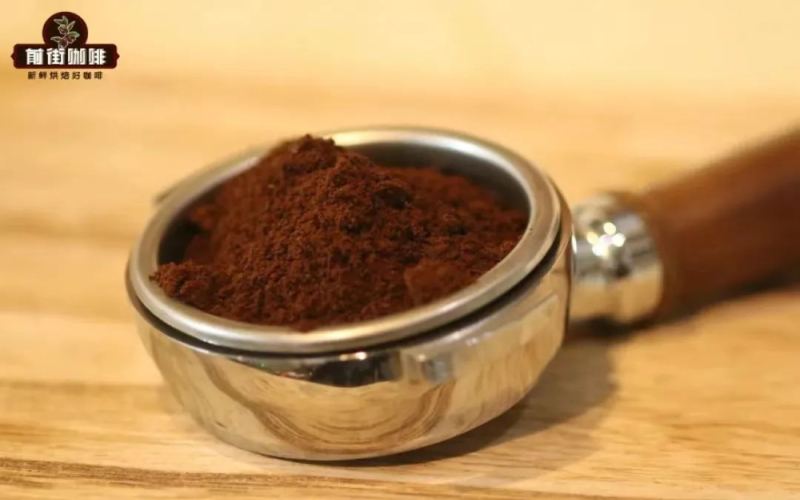
Does Espresso Need Pre-Infusion? Analyzing the Role, Timing, and Parameter Adjustment of Pre-Infusion
Does the bloom in pour-over coffee have a significant impact on flavor? Does espresso also require a similar step? In fact, there is no such thing as blooming in espresso, but in recent years pre-infusion has gradually become an important part of the extraction process. This article starts from the traditional approach to stable espresso extraction, analyzes the extraction fluctuations caused by the shortened resting period of coffee beans, and then explains in detail the three core functions of pre-infusion: releasing active gases, reducing the probability of channeling, and broadening the ways to adjust extraction. It will also explain how to judge manual pre-infusion, and that there is no fixed standard for pre-infusion duration—it needs to be flexibly adjusted according to the resting condition and grind ratio. [more…]
Colombia Hope Estate Coffee Beans: Full Analysis of Flavor Characteristics and Origin Story
Colombian coffee is renowned worldwide for its soft, mellow flavor, and La Esperanza Estate in the Huila region stands out as a leader among them. This estate, jointly run by several coffee farmers, has repeatedly achieved outstanding results in Colombian coffee competitions and scored high on Coffee Review, thanks to its forest-grown environment at elevations of 1,400 to 1,650 meters and its commitment to hand-picking. This article will take you deep into La Esperanza Estate's regional background, the characteristics of its four sub-estates, its coffee varieties and processing methods, and the strikingly different flavor profiles under light and dark roasting, while also introducing the fascinating story of rare varieties such as Geisha. Front Street Coffee invites you to savor the coffee charm of this top-tier estate. [more…]
Exploring Panama's Janson Estate: Terroir and Sun-Dried Processing Flavor Analysis of Geisha Coffee Beans
Panama is a core producing country for specialty coffee worldwide, and the Geisha variety is undoubtedly its most dazzling star. Besides the widely known Hacienda La Esmeralda, Hacienda Janson also ranks among the top tier with its outstanding Geisha quality. From the perspective of Front Street Coffee, this article systematically reviews Panama's climate and producing regions, focusing on Hacienda Janson in the Volcan region, analyzing its growing environment, variety traceability, and natural processing method, and includes Front Street Coffee's brewing suggestions and flavor description, taking you through a comprehensive understanding of this rare, primarily domestically sold Panama Geisha. [more…]
The Historical Legacy and Flavor Charm of Colombia's Hacienda La Esperanza Specialty Coffee Beans
Hacienda La Esperanza in Colombia is a name of great importance on the South American specialty coffee map. It belongs to the Herrera family and has won honors in multiple international competitions thanks to its exceptional quality. This article reviews the development of Hacienda La Esperanza, the microclimatic characteristics and cultivated varieties of its four farms, and focuses on the Colombian Hacienda La Esperanza single-origin beans selected by Front Street Coffee—from hand sorting and roasting curves to flavor performance, comprehensively presenting the uniqueness of this natural Pacamara, while also discussing the terroir conditions of Colombia's main producing regions, providing coffee lovers with in-depth content that is both informative and valuable for tasting. [more…]
A Complete Guide to Roasting Curve Parameters: From Turning Point to First Crack, a Step-by-Step Explanation of the Key Milestones
The roasting process of every coffee bean requires detailed recording of curve data, including the turning point, heat adjustments, temperature changes, and first crack time. These data are not only the basis for reproducing flavor, but also an important reference for roasters to understand the characteristics of the beans. This article will break down the key nodes in the roasting curve one by one—from the preheating drum temperature setting, the coordination of heat and airflow, to the turning point, yellowing point, Maillard reaction, caramelization reaction, and then to the determination of first crack and the calculation of the rate of rise—to help you build a clear logic for reading roasting curves. At the end, using [Front Street Jamaica Blue Mountain] as an example, it shows how to design the roasting rhythm according to the nature of the beans, so that acidity, body, and aroma reach a delicate balance. [more…]
An Analysis of Colombian Coffee Region Flavors and a Full Overview of the Features of Hacienda La Esperanza Geisha Coffee Beans
Colombian coffee, as one of the few single-origin coffees renowned worldwide by its country name, owes its elegant flavor—sweet and lightly aromatic, with a pleasant balance of acidity and sweetness—to superior geographical and climatic conditions. This article will guide you through the history of Colombian coffee cultivation and the characteristics of its main producing regions, offering an in-depth analysis of how the microclimates of Cauca, Tolima, and other areas shape the flavors in the cup, with a special focus on the top estate—Hacienda La Esperanza's Geisha coffee beans. From its frequent championship records in auctions to its high scores in Coffee Review, and to product information recommended by Front Street Coffee, this single article will help you fully appreciate the charm of Colombian specialty coffee. [more…]
Resting and Blooming of Espresso Blend Coffee: Conceptual Differences, Time Windows, and Brewing Recommendations
Red wine requires decanting, while coffee has the concepts of resting and waking beans. After roasting, coffee beans trap carbon dioxide inside them, accounting for about 2% of their weight, and this gas needs time to slowly release. If freshly roasted beans are ground and brewed immediately, the gas pressure obstructs the exchange between hot water and coffee compounds, resulting in a dull flavor and even a dry, bitter sensation. Front Street Coffee recommends a resting period of 4 to 7 days after roasting; dark-roasted beans, being more porous and containing more gas, require slightly longer. At the same time, coffee aromas dissipate along with the carbon dioxide, so Front Street advises drinking the coffee within one month of roasting. This article will also use Indonesian Mandheling as an example to break down how the wet-hulled process gives it a rich, herbal flavor, and will include Front Street Golden Mandheling's brewing parameters. [more…]
A Complete Guide to Resting and Awakening Espresso Blend Coffee Beans: From Degassing Principles to Front Street Mandheling Brewing Practice
Friends who are just getting into specialty coffee often hear the terms "resting beans" and "awakening beans." What exactly do they mean, and how are they related to each other? Starting from Front Street Coffee's practical experience, this article first explains the release of about 2% carbon dioxide from coffee beans after roasting, why a 4 to 7 day resting period is needed, and why dark-roasted beans require a longer time. Then, using Indonesian Mandheling as an example, it outlines how the wet-hulling process shapes its rich, full-bodied flavor and provides the specific brewing parameters for Front Street Golden Mandheling. Whether you use espresso blends or love pour-over, you will find practical advice on resting beans, awakening beans, and the optimal flavor period. [more…]
Colombian Emerald Coffee: Flavor Characteristics, Mouthfeel Performance, and Grind Size Guide
Colombian coffee holds an important place in the hearts of coffee lovers worldwide thanks to its silky smooth mouthfeel and outstanding balance. As the world's third-largest coffee producer and the largest exporter of washed Arabica beans, Colombia is home to numerous specialty regions and distinctive estates. This article provides a systematic introduction to the flavor characteristics and taste profile of Colombian Emerald coffee beans, outlines their unique geographical environment and historical origins, and reviews the cultivation features of well-known estates such as Hacienda Esperanza, Hacienda Esmeralda, and Oak Estate one by one. Finally, it includes Front Street hand-brew parameters as a reference, helping readers gain a comprehensive understanding of this coffee hailed as "green gold." [more…]