







Why does blend coffee need resting after roasting?
Freshly roasted blend coffee holds carbon dioxide equal to roughly 2 percent of its weight, and that gas blocks hot water from reaching the grounds evenly, which produces a flat cup with a dry, bitter edge. A resting window of 4 to 7 days after roasting lets the gas escape, and dark roasts, with their looser structure and higher gas content, need a little longer.
Aroma leaves the beans along with the carbon dioxide, so the coffee is generally at its peak within one month of roasting. Since beans ship within 5 days of ordering, transit time usually covers the resting stage. Indonesian Mandheling, a wet-hulled lot, shows how processing shapes the herbal character in the cup.
Wine culture emphasizes decanting, while coffee has the concepts of bean resting and awakening. After roasting, coffee beans seal in carbon dioxide amounting to about 2% of their weight, and these gases need time to slowly release. If freshly roasted beans are immediately ground and brewed, the gas pressure will hinder the exchange between hot water and coffee substances, resulting in a dull flavor and even a dry, bitter sensation. Front Street Coffee recommends a resting period of 4 to 7 days after roasting; dark-roasted beans, due to their looser structure and higher gas content, require slightly longer. At the same time, coffee aromas dissipate along with the carbon dioxide, so Front Street reminds that it is best to finish the coffee within one month after roasting. This article will also use Indonesian Mandheling as an example to break down how the wet-hulling process gives it its rich herbal flavor, and include the brewing parameters for Front Street Golden Mandheling.
Most people who have tasted red wine are familiar with the step of decanting—letting the wine contact air for a period of time so that the tannins' astringency becomes softer and the fruit acidity and sweetness appear more lively. The logic of tasting coffee is similar: red wine needs decanting, and coffee beans need resting.
After coffee beans complete roasting, the interior of the bean seals in carbon dioxide amounting to about 2% of its own weight, and these gases are released little by little over time.
Many friends who are new to specialty coffee, when they come to Front Street Coffee (FrontStreet Coffee) to choose beans, specifically emphasize that they want "freshly roasted." This is actually nothing to worry about: the beans shipped by Front Street are all roasted within 5 days after the order is placed, and together with a few days in transit, by the time they arrive they have usually already gone through the 4 to 7 day resting stage, just at the point where flavor performance is at its best.
Of course, freshly roasted coffee does indeed have a full aroma, and some friends specifically request beans roasted the previous day and open the bag to brew the next day.
Front Street would like to remind everyone: after coffee beans finish roasting, they expand in volume, and a large amount of carbon dioxide accumulates in their internal structure, which is then slowly released over the following weeks. If they are immediately ground and brewed right after roasting, the gas inside the beans has not yet fully escaped, and during brewing the internal pressure will inhibit hot water from penetrating and hinder substance exchange. The resulting coffee not only has an inferior flavor but may also bring out a dry sensation and bitterness.
Friends who have consulted Front Street Coffee (FrontStreet Coffee) all know that Front Street's resting recommendation is 4 to 7 days after the roast date. Hearing this, friends who prefer Mandheling may not be able to resist opening it to taste on the 3rd or 4th day. Front Street needs to explain: the darker the roast, the greater the internal pressure in the bean, the looser the structure, and the higher the gas content, so the corresponding resting period should be slightly extended.
After passing the resting period, the flavor of the coffee beans is at its most brilliant stage. However, there is one term most often mentioned in coffee circles—the optimal flavor period.
It should be noted that the darker the roast, the more vigorous the degassing, and flavor substances are lost along with the carbon dioxide. Therefore, if left too long after roasting is completed, the more aroma is lost, the flatter the taste becomes. Front Street Coffee (FrontStreet Coffee) recommends consuming the beans as soon as possible within about one month after the roast date.
Next, Front Street will use Front Street Indonesian Mandheling coffee beans as an example. First, let's introduce the background information of this bean.
Unlike the currently hot Geisha, Mandheling coffee has been quite popular since the generation of our fathers. In the early days, the criterion for judging top coffee was a rich mouthfeel, and it was during that period that Mandheling became popular in Japan.
Everyone knows that coffee beans are mostly named after their place of origin, such as Yirgacheffe and Nyeri, or after the processing station, such as Konga, Asaliya, and Amdelalo. The name "Mandheling" is neither a place name nor a processing station name, but the name of an ethnic group on the island of Sumatra.
According to legend, during World War II, a Japanese soldier drank a very rich coffee locally and asked the shop owner what kind of coffee it was. The owner made a blunder and introduced himself, saying "Mandailing." In Japanese pronunciation, Mandailing and Mandheling are extremely close, so "Mandheling" was recorded. After the war ended and he returned home, that soldier could not forget that cup of rich coffee, so he asked someone to import 15 tons of coffee beans from Indonesia, and as a result it became very popular in Japan.
Characteristics of Front Street Mandheling Coffee Rich mouthfeel, with an herbal spice aroma, and a clearly polarized audience: those who like it love it endlessly, while those who do not avoid it. The unique Mandheling flavor is thanks to the unique post-harvest processing method for green coffee beans local to Sumatra.
Processing whole coffee cherries by the natural method takes about a month. If the air humidity is too high or they are exposed to rain during this period, the cherries may undergo undesirable fermentation or even be ruined outright. Sumatra has a tropical rainforest climate, with high temperatures and abundant, frequent rainfall, which cannot satisfy the conditions required for natural processing.
Washed processing, besides requiring the construction of washing tanks, also needs an ample water source and capital investment. Sumatra's local economic conditions are limited, and early growers were mostly farmers rather than wealthy estate owners, so they likewise could not meet the requirements of full washed processing.
Thus, combining local realities, a unique processing method suited to local conditions was born—wet hulling.
After removing the skin and pulp from the coffee cherries, they undergo a short fermentation and a brief washing, and are then spread out to dry. When the green beans reach a half-wet, half-dry state, the parchment layer is removed by machine, allowing the green beans to be directly exposed to the air to continue drying, and the process is complete once the moisture content drops to around 12% to 13%.
Friends always ask Front Street which step of the wet-hulling process creates Mandheling's unique flavor. In a corner of the Front Street shop, some physical items related to green coffee beans are displayed, among which there is a glass bottle containing parchment.
Parchment is the final protective layer of green coffee beans and is usually removed only before export. Once green beans lose the protection of the parchment layer and are directly exposed to the environment, they may be affected by mold, yeast, and bacteria. In the process of removing the parchment layer, excessive heat may cause the green beans to age rapidly, so woody and earthy flavors are often tasted in Sumatran coffee.
Nowadays young people prefer coffee with pronounced acidity, and some merchants, to cater to this demand, roast Mandheling lighter to highlight the acidity. But the lighter the roast, the more Mandheling's rich mouthfeel may disappear, and some unpleasant flavors may also emerge.
On the Front Street Coffee (FrontStreet Coffee) bean list there are two Sumatran coffees: one is the Front Street Indonesian Lintong Mandheling daily-drinker beans from the Lintong region, and the other is the Front Street Golden Mandheling from Aceh. In order to highlight the rich mouthfeel of Front Street Lintong Mandheling and Front Street Golden Mandheling, Front Street Coffee (FrontStreet Coffee) uses a medium-dark roast.
Front Street's brewing parameters for Front Street Golden Mandheling are as follows:
Dripper: KONO
Water temperature: 88 degrees Celsius
Coffee dose: 15 grams
Coffee-to-water ratio: 1:15
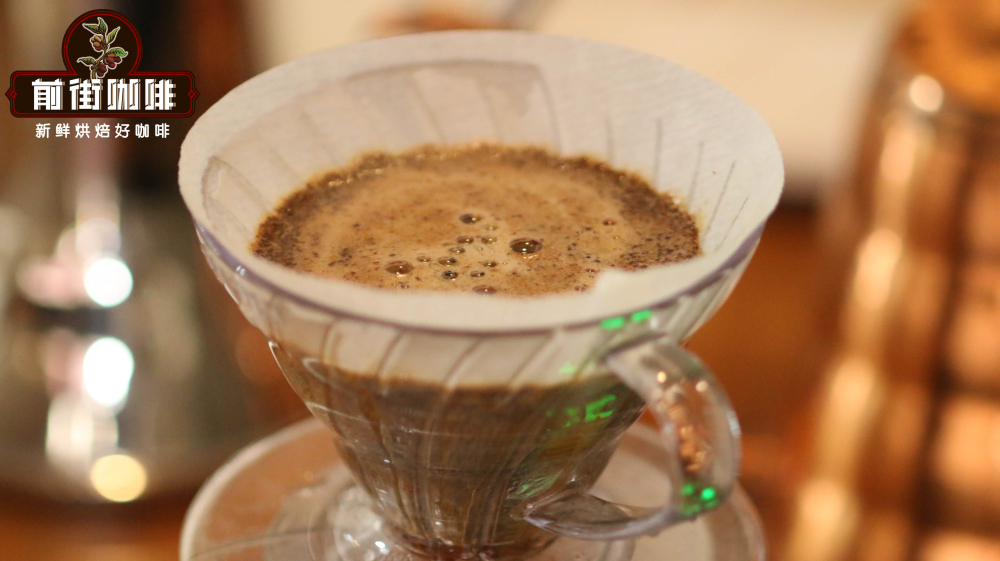
Pour in 30 grams of hot water and bloom for 30 seconds, then pour from the center in a thin stream while slowly circling to 125 grams. When the water level drops to the point where the coffee bed is about to be exposed, continue circling and pouring to 225 grams. The total extraction time is about 2 minutes.
Front Street recommends blooming during brewing; after the coffee grounds meet water, degassing intensifies, which helps the carbon dioxide inside the beans escape.
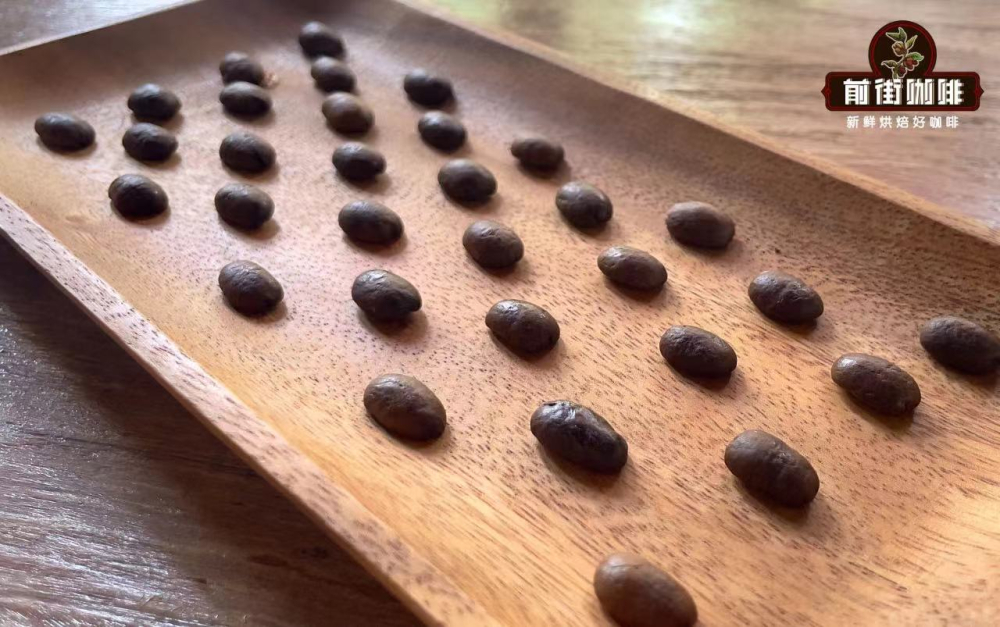
However, Front Street has also met friends who do not have equipment at home, and Front Street can provide a grinding service. But once coffee beans are ground into powder, the contact area between the particles and air increases, and the flavor dissipates faster. Front Street reminds: if you have noted that you want it ground, then you do not need to go through the itch-inducing resting period; instead, you should consume it as soon as possible to taste the best flavor.
For more coffee bean information, please follow Coffee Studio (WeChat public account: cafe_style) For professional coffee knowledge exchange, please add WeChat ID: kaixinguoguo0925
The above content is compiled by CoffeeHunters, a coffee news website.


