







Resting and Awakening Espresso Blend Coffee Beans
Freshly roasted coffee beans release carbon dioxide for several days after roasting. This process, called degassing, affects how water moves through the coffee bed during extraction. If you brew too soon, the trapped gas can block water flow, leading to uneven extraction and a sharp, acidic cup. Many roasters recommend resting espresso blends for five to fourteen days before use. The exact window depends on roast level, bean density, and how the coffee was processed.
Front Street Mandheling offers a good example of how resting changes a blend. This Indonesian coffee brings earthy, herbal notes that soften as the beans settle. Once the resting period ends, grinding just before brewing helps preserve the aromatics that developed during degassing. Baristas often test small batches daily to track flavor changes. Adjusting dose, grind size, and water temperature during this window lets you find the point where sweetness and body peak.
Friends who are new to specialty coffee often hear the terms "bean resting" and "bean awakening." What exactly do they mean, and how are they related? This article draws on Front Street Coffee's practical experience, first explaining the release of about 2% carbon dioxide inside coffee beans after roasting, why a 4-to-7-day resting period is needed, and why dark-roasted beans require even longer. It then uses Indonesian Mandheling as an example to trace how the wet-hulling process shapes its rich, full-bodied flavor, and provides specific brewing parameters for Front Street Golden Mandheling. Whether you use espresso blends or love pour-over, you'll find practical advice here on bean resting, bean awakening, and the optimal flavor window.
For more specialty coffee knowledge, please follow: Front Street Coffee (Frontsteet Coffee)
Those who have tasted wine are surely familiar with the step of decanting—letting the liquid come into contact with air for a while softens the astringency of tannins, while the fruit acids and sweetness become more lively. Coffee actually follows a similar logic: wine calls for decanting, and coffee beans call for resting.
After green coffee beans are roasted, roughly 2% of their own weight in carbon dioxide remains trapped inside the bean, and this gas gradually escapes over the following days.
Many newcomers just stepping into the world of specialty coffee, when selecting beans at Front Street Coffee (FrontStreet Coffee), specifically stress that they want "the freshest batch." There's really no need to worry about this: after you place an order, everything Front Street ships is roasted within 5 days, and counting a few days in transit, by the time it reaches you it has usually already gone through a 4-to-7-day resting window, landing right in the stage where flavor is at its fullest.
Of course, coffee straight out of the roaster is indeed irresistibly aromatic, and inevitably some people insist on beans roasted the day before and can't wait to tear open the bag and brew the very next day.
Front Street would like to offer a reminder here: after roasting is complete, the beans expand in volume, and a considerable amount of carbon dioxide accumulates within their internal structure and is slowly released over the following weeks. If you grind and extract immediately after roasting, the gas inside the beans hasn't yet escaped, and during brewing the internal pressure hinders hot water from penetrating to complete the exchange of substances. The resulting coffee not only lacks complexity but also tends to carry a harsh, dry sensation and bitterness.
Customers who have consulted Front Street Coffee (FrontStreet Coffee) know that our resting recommendation is the 4th to the 7th day after the roast date. Hearing this, friends who favor Mandheling always can't resist opening the bag on the 3rd or 4th day for an early taste. Front Street would like to add: the darker the roast, the greater the internal pressure within the bean, the looser the structure, and the more gas is stored—so the required resting time is correspondingly longer.
Once the resting stage has passed, the coffee beans' flavor is just entering its prime. Yet one phrase is always on coffee professionals' lips—the optimal flavor window.
Keep in mind that dark-roasted beans degas especially vigorously, and it is precisely by hitching a ride on the carbon dioxide that flavor compounds are lost. So the longer the time since roasting is dragged out, the more aroma escapes and the flatter the taste becomes. Front Street Coffee (FrontStreet Coffee) recommends finishing the beans within about one month of the roast date.
Below, Front Street will use its own Indonesian Mandheling coffee beans as an example. First, some background on this bean.
Unlike the currently red-hot Geisha, Mandheling coffee was already widely popular in our parents' generation. Early standards for judging top-tier coffee leaned toward a rich, full-bodied mouthfeel, and it was in that context that Mandheling rose to fame in Japan.
As everyone knows, coffee beans are mostly named after their place of origin, such as Yirgacheffe and Nyeri; some are named after processing stations, such as Konga, Aricha, and Amadiraro. "Mandheling" is neither—it is actually the name of an ethnic group on the island of Sumatra.
Legend has it that during World War II, a Japanese soldier drank an extremely full-bodied coffee locally and asked the shopkeeper what coffee this was. The shopkeeper momentarily misunderstood, thinking the man was asking who he was, and casually answered: Mandailing. In Japanese pronunciation, Mandailing and Mandheling are extremely close, so the name "Mandheling" was recorded. After the war ended, that soldier could not forget the cup of coffee and arranged for 15 tons of coffee beans to be imported from Indonesia, which sparked a craze in Japan.
Front Street Mandheling Coffee Characteristics Rich and full-bodied, with herbal spice notes; its audience is sharply polarized—those who love it can't put it down, and those who don't keep their distance. This uniquely distinctive Mandheling flavor is made possible by Sumatra's unique post-harvest green bean processing method.

The full coffee cherry sun-dried process takes about a month; if air humidity is too high during processing or the cherries are exposed to rain, the coffee cherries may undergo unwanted fermentation or even be ruined outright. Sumatra is located in a tropical rainforest climate zone, with relatively high temperatures and abundant rainfall, and the rain comes frequently, which cannot meet the conditions required for sun-drying.
When coffee undergoes the washed process, besides needing to build washing tanks, it also requires an ample water source and capital investment. Due to Sumatra's limited local economic conditions, early coffee growers were mostly farmers rather than well-capitalized estate owners, so they also could not meet the conditions required for a fully washed process.
Thus, based on local characteristics, a unique coffee processing method suited to local conditions emerged—wet hulling.
After removing the skin and pulp of the coffee cherry, it undergoes a short fermentation, a brief rinse, and then is laid out to dry. When the green beans reach a half-wet, half-dry state, a machine removes the parchment layer, and the green beans are directly exposed to the air to continue drying until their moisture content drops to around 12% to 13%, at which point the process is complete.
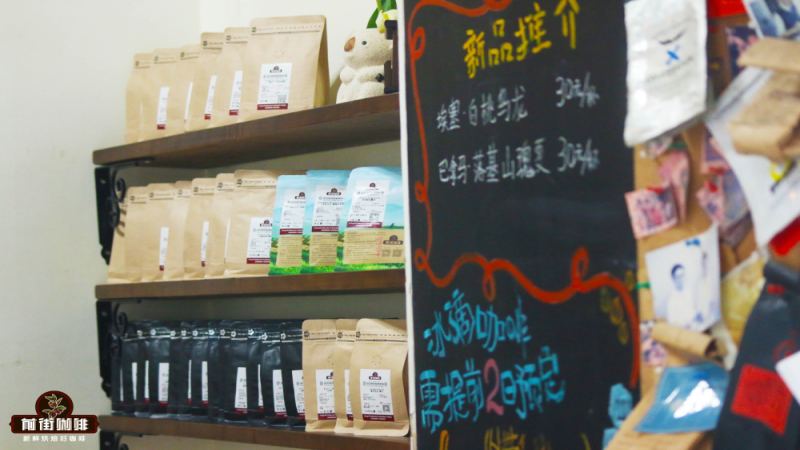
People often ask Front Street: at exactly which step does wet hulling give Mandheling its distinctive flavor? In one corner of Front Street's shop, some green coffee bean samples are on display, and one glass jar contains parchment.
Parchment serves as the final protective layer for green coffee beans and is generally only removed before export. Without the protection of the parchment layer, green beans are directly exposed to the environment and may be affected by mold, yeast, and bacteria. Moreover, during the removal of the parchment layer, excessive heat may cause the green beans to age rapidly, which is why woody and earthy flavors can often be tasted in Sumatran coffee.
Today's young people prefer coffee with pronounced acidity, and some merchants, to cater to this group, roast Mandheling beans lighter to highlight their acidity. However, the lighter the roast, the more Mandheling's rich, full-bodied mouthfeel may disappear, and in addition, some unpleasant flavors may surface.
Front Street Coffee (FrontStreet Coffee)'s bean list includes two Sumatran coffees: one is the Front Street Indonesian Lintong Mandheling everyday drinking bean from the Lintong region, and the other is the Front Street Golden Mandheling from Aceh. To highlight the rich, full-bodied mouthfeel of Front Street Lintong Mandheling and Front Street Golden Mandheling, Front Street Coffee (FrontStreet Coffee) uses a medium-dark roast level.
Front Street's brewing parameters for Front Street Golden Mandheling are as follows:
Dripper: KONO
Water temperature: 88°C
Dose: 15 grams
Coffee-to-water ratio: 1:15
Pour 30 grams of hot water and bloom for 30 seconds, then pour from the center with a thin stream while slowly circling out to 125 grams. When the water level drops to just about to expose the coffee bed, continue circling and pouring to 225 grams. Total extraction time is about 2 minutes.
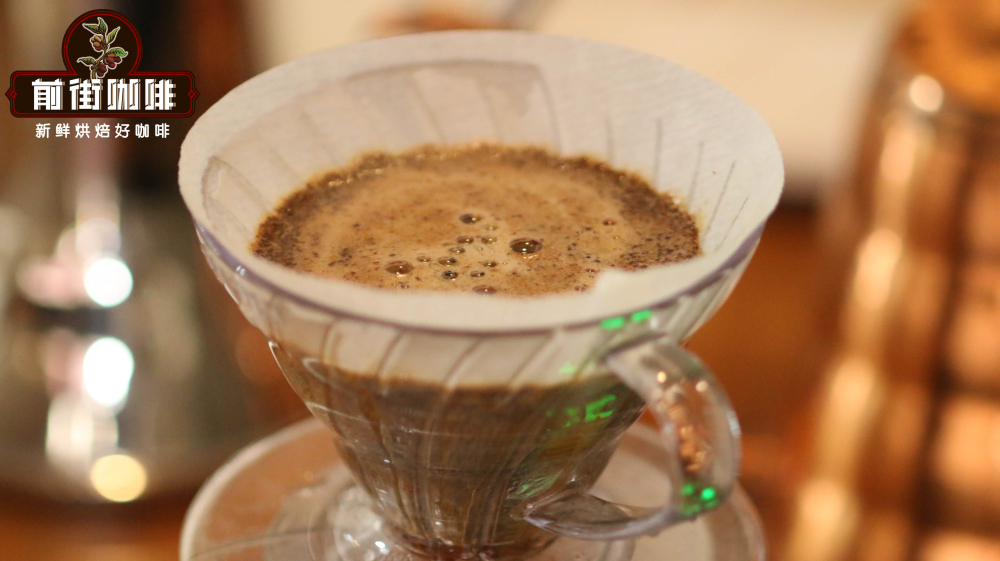
Front Street recommends blooming during brewing: once the coffee grounds are wet, degassing intensifies, promoting the release of carbon dioxide from inside the beans.
However, Front Street has also encountered customers who have no grinding equipment at home, and in such cases we offer a grinding service. It should be noted that once coffee beans are ground, the contact area between the particles and air multiplies, and the rate of flavor loss also speeds up noticeably. Front Street reminds you: if your order notes that you'd like it ground, then there's no need to go through the itch-inducing wait of bean resting—instead, you should finish it as soon as possible to capture the most ideal aroma and mouthfeel.
The above content is compiled by CoffeeHunters, a coffee news website.


