







Search Results for: Sarchimor
Flavor Analysis and Pour-Over Parameter Recommendations for Costa Rican Sarchimor Red Honey Process Coffee Beans
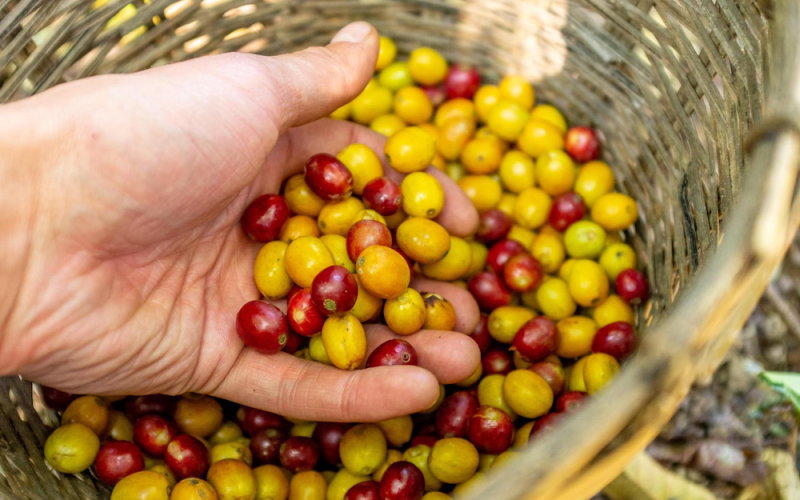
Today, Front Street Coffee would like to share with you a Costa Rican coffee from the Western Valley: a Sachimo variety bean with red honey processing. This bean is produced by the Alchimia Estate and processed at the Cerro San Luis micro-mill, at an altitude of about 1,550 meters. As one of the two mother varieties of disease-resistant coffee worldwide, Sachimo has considerable production in both Costa Rica and Brazil, and its flavor heritage comes from Villa Sarchi. Red honey processing retains about 75% of the mucilage, giving the coffee higher sweetness and caramel notes. This article will provide a complete breakdown of this bean's flavor performance and brewing approach from the perspectives of the mill's background, the principles of honey processing, the traceability of the green bean variety, roast profile design, and pour-over parameter recommendations, for the reference of coffee enthusiasts. [more…]
Sarchimor Variety Analysis: Costa Rican Coffee Bean Flavor Characteristics, Price, and Pour-Over Parameters
Costa Rican coffee is famous for its honey processing method, a technique that falls between natural and washed processing, retaining a clean cup while greatly enhancing sweetness and caramel notes. Sarchimor is a disease-resistant variety originating from a Portuguese breeding institution, with disease resistance inherited from Timor and flavor derived from Villa Sarchi, and it has considerable production in both Costa Rica and Brazil. Front Street Coffee focuses on this bean in this issue, breaking down everything from green bean characteristics and roasting curves to cupping performance, and provides specific pour-over recipes along with sweetness, acidity, and bitterness scores. It also includes a brand recommendation of 227 grams for 95 yuan, costing about 6 yuan per cup, offering outstanding value and suitable for everyday drinking. [more…]
Analysis of Bourbon Family Derivatives: Flavor Comparison of Pacamara, Caturra, Catuai, and Sachimo
Bourbon is one of the most important varieties in coffee history, originating from a mutation of Typica. It was named after being introduced from Yemen to Bourbon Island, and subsequently spread to Brazil, Central and South America, and the island of St. Helena, becoming a consistent winner in cupping competitions for specialty coffee in the Americas. Its green fruit turns bright red when ripe, and it has broad leaves and dense growth. Although it produces a crop every two years with low yield, it possesses a wine-like acidity and a sweet aftertaste. This article, brought to you by Front Street Coffee, introduces four Bourbon-derived or related varieties: Pacamara, Caturra, Catuai, and Sarchimor, systematically covering their origins, plant characteristics, adaptability, and cup profiles. Combined with the performance of specific origins such as Guatemala Borsa, Colombia Cauca, Honduras Sweet Orange Estate, and Costa Rica Monte Soleil, it helps coffee enthusiasts understand how varieties profoundly influence the flavor direction of a cup of coffee. [more…]
Why do some origin places only produce a fixed number of coffee varieties?
At present, some coffee-producing countries basically only produce a few fixed coffee varieties, such as Brazil mainly produces Bourbon, and Jamaican Blue Mountain mainly produces Typica, etc. In fact, in many cases, it is due to the spread of coffee [more…]
Costa Rican Coffee Bean Regions, Varieties, and Flavor Characteristics: Eight Major Producing Areas Including Tarrazú and Front Street Recommendations
Costa Rican coffee has long been renowned for its rich body and bright acidity, making it one of the representatives of high-altitude specialty Arabica. This article systematically reviews the country's main producing regions—Tarrazú, Monte Criso, Alajuela, Cartago, Heredia, and Tres Ríos—and introduces cultivars such as Typica, Caturra, Catuai, Villa Sarchi, Bourbon, and Gesha, as well as washed and drum-dried processing methods. The article also includes purchasing suggestions for Front Street Mozart, Front Street Strawberry Candy, and Front Street Tarrazú, helping coffee enthusiasts gain a comprehensive understanding of the flavor characteristics of Costa Rican coffee and how to choose it. [more…]

Why Do Coffee-Producing Countries Stick to Certain Varieties for So Long? A Panoramic Analysis from the History of Leaf Rust to Laboratory Breeding
When you shop for coffee beans, have you ever noticed that certain origins always seem to grow just a few fixed varieties? Brazil, for instance, is dominated by Bourbon, while Jamaica Blue Mountain is inseparable from Typica. Behind this lies both the logic of variety dissemination and natural adaptation, as well as a chapter of coffee history rewritten by leaf rust. That devastating disease at the end of the 19th century forced many producing countries to turn to research on disease-resistant new varieties, leading to the establishment of national coffee research institutes. This article will walk you through the origins and development of common laboratory varieties such as Catuai, SL28, SL34, Ruiru 11, and H1, and how they became the mainstays of today's producing regions. It will also mention related beans selected by Front Street Coffee, offering you a practical buying reference. [more…]

2024 Nicaragua Cup of Excellence Results Announced: Pacamara Variety Debuts and Wins Runner-Up
The results of the 2024 Nicaragua Cup of Excellence (COE) competition were recently announced, with the Geisha variety continuing its strong performance, sweeping first, third, and fourth places, among which the natural Geisha won the championship with 91.10 points. However, the most eye-catching aspect of this competition was undoubtedly the Parainema variety, which made its first appearance in Nicaragua, winning second place with 89.85 points. This rare variety, which previously won the 2017 Honduras COE, has what kind of genetic origins behind it? Can it break buyers' prejudice against the cup quality of leaf rust-resistant varieties? This article will provide a detailed interpretation of the origins, development, and outstanding performance of Parainema in this competition, while also introducing Front Street Coffee's attention to and recommendation of this variety. [more…]
Costa Rica Baja and Mozart Coffee Beans: A Comprehensive Analysis of Flavor and Mouthfeel Differences
As an important producing country of specialty coffee, Costa Rica has produced many distinctive coffee beans named after musicians. Among them, the Bach and Mozart beans have attracted much attention for their unique varieties and processing methods. This article takes Front Street Coffee's Bach coffee beans as an example to provide an in-depth analysis of their producing region background, the breeding history of the F1 variety, the technical details of the raisin honey processing method, and the cultivation story of the Canet estate. It also compares the differences in flavor and mouthfeel between the two beans, giving you a comprehensive understanding of the unique charm of this "Musician Series" coffee. [more…]
Detailed Guide to Costa Rica Tarrazú Region Canet Estate Musician Series Bach Coffee Beans
Costa Rica is an important representative of coffee cultivation in Central America, and the Tarrazú region is the country's highest-altitude and largest-producing star origin. In the town of San Marcos in Tarrazú, Canet Estate is famous for its Musician Series coffee beans, among which the Bach coffee beans use raisin honey processing and the F1 variety, offering rich and full flavor layers. This article will guide you through Costa Rica's coffee-growing environment, the unique advantages of the Tarrazú region, the origins of Canet Estate's Musician Series, and the breeding background and flavor performance of the F1 variety, as well as introduce the brewing experience of the Bach coffee beans recommended by Front Street Coffee. [more…]
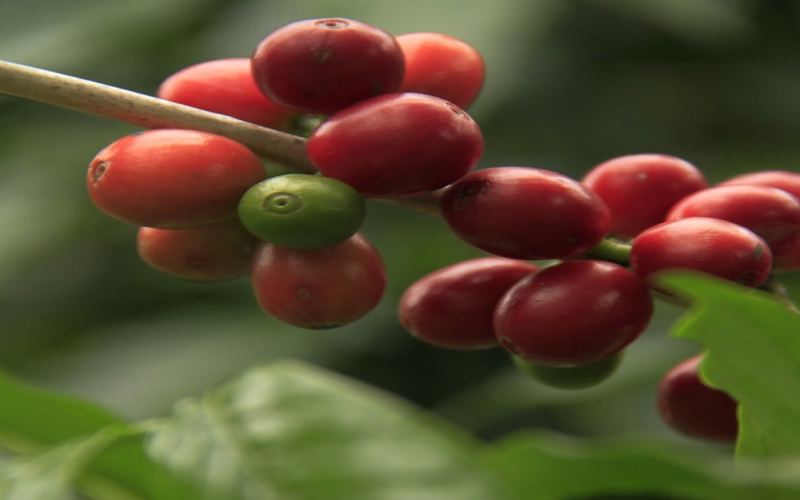
Coffee Leaf Rust: A Disease That Changed the Varietal Landscape
In the history of coffee cultivation, if only one disease were allowed to be recorded, it would have to be leaf rust. This plant plague caused by a fungus once destroyed the entire coffee industry of Ceylon in the nineteenth century, and then over the following hundred-plus years spread to nearly every producing region in the world, profoundly rewriting the varietal landscape and trade patterns of coffee. It [more…]
Front Street Kenya Nyeri Kamoini Washed Coffee: Plum and Grape Flavors with Specialty Processing Craftsmanship
This Kenya Nyeri Kamoini washed coffee from Front Street Coffee is a standout among specialty Kenyan beans. It gives off a bright citrus aroma, with lemon and lime interwoven with notes of tomato, cranberry, black tea, and white grape, plus a champagne-like effervescence on the palate. Such a refined flavor stems from the Red Cherry Project's dedication to quality and the Kamoini washing station's meticulous control over picking, washing, fermentation, and drying. This article will walk you through the Kamoini washing station's geographical advantages, green bean characteristics, and variety background, and taste this limited-edition coffee's plum, raisin, and sweet finish. [more…]

Where in Costa Rica is Front Street Bahia coffee produced? Why does raisin honey processing bring high sweetness?
Front Street Musician Series Bach is a coffee bean from the Tarrazú region of Costa Rica, processed using the raisin honey method, showcasing rich fruity aromas of strawberry, blackberry, and raisin with a wine-like fermented charm. This article will start from the origin information, processing techniques, flavor performance, and products in the same series to analyze the source of sweetness in Bach coffee beans, and introduce the technical characteristics of raisin honey processing, as well as the H1 variety and anaerobic honey processing technique used in the 2020 new crop season of Front Street Mozart. [more…]
A Complete Analysis of the Origin and Raisin Honey Processing Flavor Characteristics of Costa Rica Musician Series Bach Coffee Beans
The Bach coffee beans in Front Street Coffee's Musician series come from the Tarrazú region of Costa Rica and are processed using the raisin honey method, displaying rich fruity aromas of strawberry, blackberry, and raisin. The first sip is intensely sweet and tart, with a tipsy, red-wine-like bouquet in the middle and finish, while the candied sweetness and plum wine notes become even more pronounced as the cup cools. This article will explain in detail Bach's origin information, the process flow and flavor advantages of the raisin honey treatment, and introduce the processing methods and brewing suggestions for the Mozart and Strawberry Candy · Geisha blend in the same series. It will also analyze the H1 hybrid variety used in the 2020 new-crop Mozart and its anaerobic honey treatment characteristics. [more…]
An Interpretation of Costa Rica's Coffee Grading System and a Flavor Analysis of the Musician Series Mozart
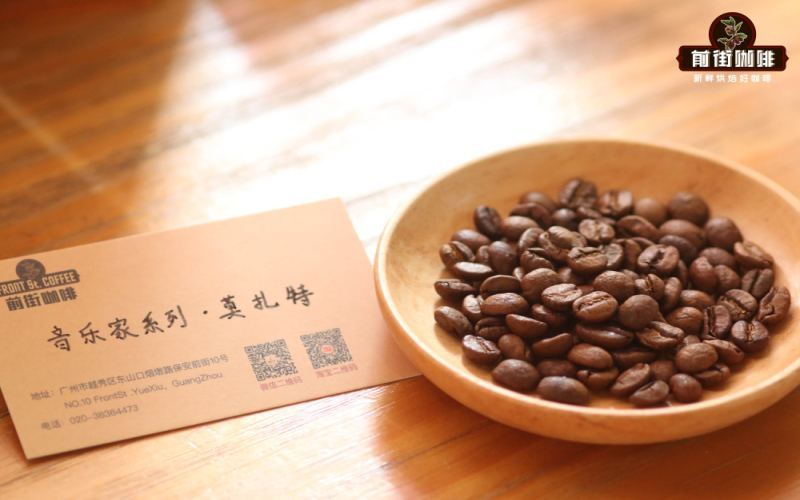
Costa Rica, as a major coffee powerhouse in Central America, has long drawn attention for its grading system and regional characteristics. This article begins with a Mozart coffee bean recommended by Front Street Coffee, providing a detailed introduction to the Tarrazú region, the Canet estate, and the H1 variety, while offering an in-depth analysis of the complex flavors brought by the raisin honey process. Mozart coffee features interwoven floral notes and fermented sauce-like aromas, accompanied by the sweetness of raisins and dried fruit and the acidity of star fruit and berries, retaining its elegant aroma even after cooling. Whether you are new to specialty coffee or a seasoned enthusiast, you will gain a complete understanding of Costa Rican coffee grades and flavors. [more…]
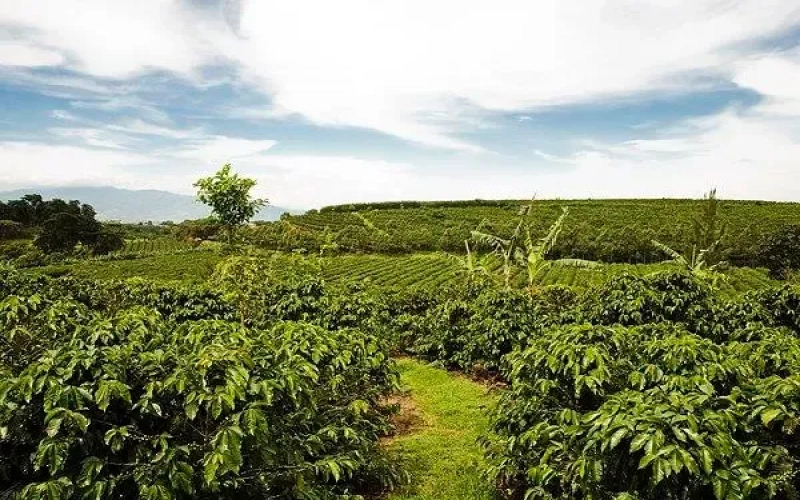
Costa Rica Tarrazú Canet Estate Mozart Coffee Beans: H1 Variety and Raisin Honey Processing Explained
Costa Rica is an important member of the coffee landscape in Central America, and the Tarrazú region is its most representative star-producing area. This article starts with Costa Rica's coffee-growing environment and industry background, gradually focusing on Hacienda Canet within the Tarrazú region, and provides a detailed review of its geographical conditions, estate management methods, and the origin and characteristics of the H1 hybrid variety it cultivates. At the same time, using the Mozart coffee beans produced by Hacienda Canet as an example, it introduces their raisin honey processing method and brewing performance, and includes Front Street Coffee's brewing parameters and flavor description, providing coffee enthusiasts with a complete reference on origin and tasting. [more…]
A Complete Analysis of Honduran Coffee Regions: Flavor Profiles of Six Major Areas and Brewing Tips for Litchi Orchid
Honduran coffee has performed impressively on the international stage in recent years. Unlike traditional producing countries such as Brazil and Colombia, it is a rising star in Central America. This article systematically reviews six major Honduran coffee regions—Copán, Opalaca, Montecillos, Comayagua, El Paraíso, and Agalta—introducing each one's geographical conditions, altitude ranges, common varieties, and cup flavors. It also features Front Street Coffee's recommended Lychee Orchid from the Marcala region, describing its layered notes of lychee, brandy, cream, and chocolate, and explaining how medium roasting balances acidity, sweetness, and bitterness. [more…]

Costa Rica Tarrazú Highlands: A Comprehensive Analysis of the H1 Hybrid Variety and Canet Estate's Musician Series Mozart
Costa Rica, with its high-altitude volcanic terrain and abundant rainfall, has become a representative producer of premium coffee in Central America. Among its regions, the Tarrazú area is renowned for its bright acidity and floral-fruity aromas, and the Canet Estate, located at the highest altitude within this region, has drawn much attention for its Musician Series coffee beans. This article will walk you through Costa Rica's coffee-growing background, the terroir conditions of the Tarrazú region, the Canet Estate's family operation and the origin of the Musician Series naming, along with an in-depth analysis of the unique raisin honey processing method and H1, a new variety bred from a cross between Sarchimor and Rume Sudan. Front Street Coffee has now released two beans, Front Street Mozart and Front Street Bach, offering enthusiasts a chance to taste them. [more…]
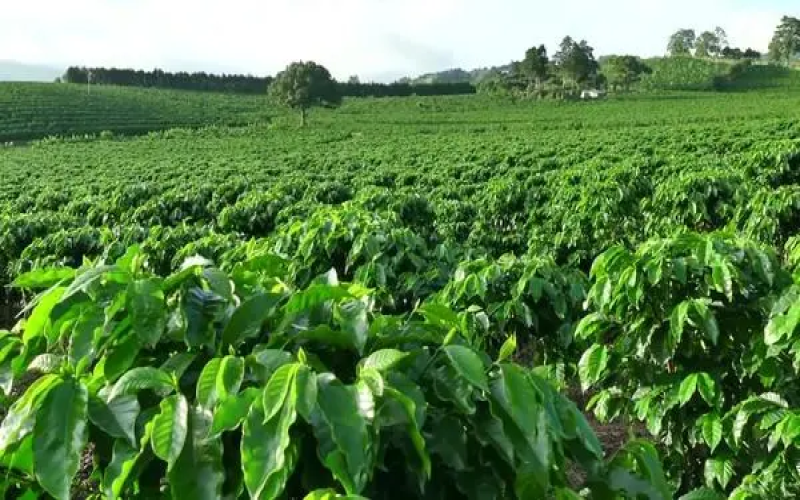
A Comprehensive Analysis of Costa Rican Coffee Varieties: From Bourbon and Caturra to the H1 Hybrid Newcomer
Although Costa Rica is a small country, it has become the world's 14th largest coffee producer thanks to its volcanic soil and forest resources. Since coffee was introduced in the 19th century, the country has continuously promoted variety improvement. In addition to the common Caturra, Catuai, and Bourbon, it has also developed emerging varieties such as Villa Sarchi, Venecia, and H1. This article will sort through the origins, characteristics, and flavor profiles of these varieties one by one, and bring corresponding bean recommendations from Front Street Coffee, helping coffee lovers gain a comprehensive understanding of Costa Rica's variety landscape. [more…]
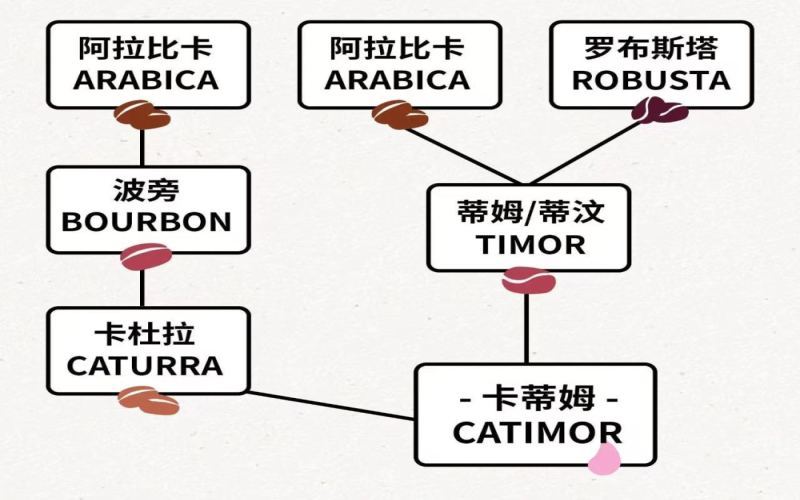
The Origin and Spread of the Catimor Coffee Variety Group: From Leaf Rust Resistance Hybridization to the Transformation of Yunnan Small-Bean Coffee
Catimor is not a single variety, but rather a group of varieties with similar bloodlines, and its birth stemmed from humanity's efforts to combat coffee leaf rust. From the natural hybrid Timor Hybrid found on the island of East Timor to its combination with Caturra, Catimor inherited the flavor potential of Arabica and the disease-resistant genes of Robusta. This variety group is widely cultivated in the Americas and Asia, especially in Yunnan, China, where Catimor replaced the traditional Typica and became the main variety. This article will sort out the origins of Catimor, the representative varieties bred in various places, and its role in Yunnan small-bean coffee, and discuss the relationship between its flavor expression and growing conditions. Front Street Coffee believes that Yunnan Catimor presents a balanced flavor of nuts, brown sugar, and plum. [more…]

Indonesian Coffee Bean Varieties, Flavors, and the Origins of Sumatra: From Mandheling to Wet-Hulling
Indonesian coffee is best known for Mandheling, but its appeal goes far beyond that. From Sumatra and Java to Sulawesi, each producing region shapes a rich, intense classic flavor through its unique terroir and wet-hulling method. This article guides you through the distribution and characteristics of Indonesia's main coffee-producing regions, explains the wet-hulling process and how it shapes flavor, and introduces common varieties such as S795, Tim Tim, USDA 762, Kartika, and Andungsari. Front Street Coffee's everyday Lintong staple beans and PWN Golden Mandheling are both medium-dark roasted, suitable for pour-over, French press, espresso machines, and various other brewing devices, making it easy for enthusiasts to experience authentic Mandheling flavor. [more…]