







How does coffee cultivation shape Tarrazú Canet Estate beans?
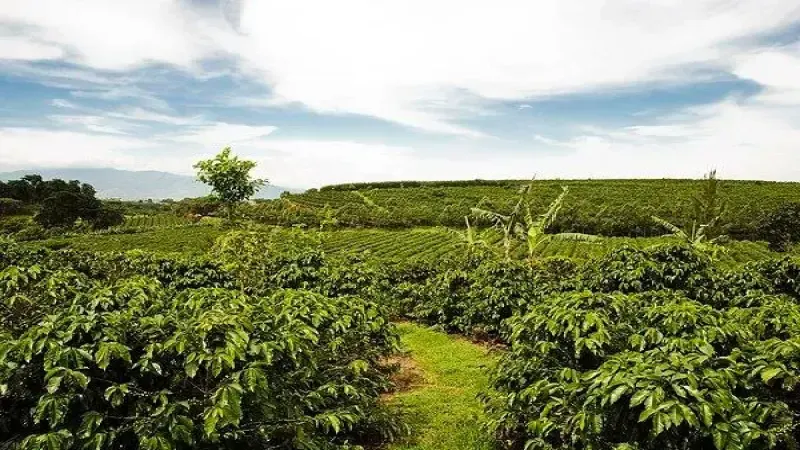
Costa Rica was the first country in Central America to cultivate coffee commercially, and its Tarrazú region is among the most representative origins. Hacienda Canet sits within Tarrazú, growing the H1 hybrid variety and producing Mozart coffee beans through a raisin honey process, which shapes the cup's sweetness and fruit character.
More than 80 percent of Costa Rican coffee regions lie between 800 and 1,700 meters, with temperatures of 17°C to 28°C and annual rainfall of 2,000 to 3,000 mm. The government set up ICAFE in 1933 to handle variety research and quality control. Costa Rica ranks fourteenth worldwide in coffee production.
Costa Rica is an important member of the coffee landscape in Central America, and the Tarrazu region is its most representative star origin. This article starts with Costa Rica's coffee-growing environment and industry background, then gradually focuses on Hacienda Canet within the Tarrazu region, detailing its geographical conditions, estate management practices, and the origin and characteristics of the H1 hybrid variety it cultivates. At the same time, taking the Mozart coffee beans produced by Hacienda Canet as an example, it introduces their raisin honey process and brewing performance, and includes Front Street Coffee's brewing parameters and flavor description, providing coffee enthusiasts with a complete reference on origin and tasting.
The coffee-growing belt stretches across the American continent, and this region has given rise to several renowned coffee-producing countries, including Panama, Honduras, Costa Rica, and Guatemala. Costa Rica holds a special place among the countries of Central America—it was the first country in the region to cultivate coffee and bananas for commercial purposes, and today its coffee production ranks fourteenth in the world.
Costa Rica
Geographically, Costa Rica is located in the Central American isthmus, bordered by Nicaragua to the north and Panama to the south, with the Caribbean Sea to the east and the Pacific Ocean to the west. The coastal areas are mainly plains, while the central part of the country is divided by rolling mountain ranges.
The country has more than two hundred volcanoes and extensive forests, with a forest coverage rate of 52.38%. Its climate is tropical and subtropical, divided into a dry season and a rainy season during the year. Coffee cultivation is mainly concentrated in volcanic areas and fertile soils with lower acidity. More than eighty percent of the country's coffee-producing regions are located at elevations between 800 and 1,700 meters, with temperatures ranging from 17°C to 28°C and annual rainfall reaching 2,000 to 3,000 millimeters. These conditions are all very suitable for coffee growth. In addition, the Costa Rican government places considerable importance on the coffee industry and quality control. As early as 1933, it established the Costa Rican Coffee Institute (ICAFE), which is responsible for research on coffee varieties and cultivation techniques as well as promoting the country's coffee internationally. Since 1989, the country has even prohibited the cultivation of Robusta coffee beans by law to safeguard coffee quality.
Tarrazu
There are eight coffee-producing regions in Costa Rica: Valle Central Occidental, Valle Central, Tarrazu, Tres Rios, Orosi, Brunca, and Turrialba, and they are basically all located along the central mountain range.
The Tarrazu region is Costa Rica's largest and most famous coffee-producing region, and it is also the country's first coffee region to receive a designation of origin. It is influenced by warm, humid air currents from the Pacific, with annual rainfall of about 2,400 millimeters, and coffee trees grow in fertile volcanic soil at elevations of 1,500 to 2,100 meters. As the region's reputation grew, Costa Rica applied in 2019 to register the coffee designation of origin "Café de Tarrazú" with the European Union and the World Intellectual Property Organization (WIPO) to protect the coffee produced in the region. FrontStreet Coffee has a washed Costa Rican Tarrazu coffee bean as an entry-level selected representative, with mild fruit acidity, showing sweet orange, nut, and honey flavors, and a smooth finish.
Hacienda Canet
Hacienda Canet is located in the highest-altitude area of the Tarrazu region, which is also the area with the highest concentration of fruit cultivation in Costa Rica. The estate mainly grows passion fruit, and additionally sets aside specific plots for coffee cultivation, giving them especially meticulous management and harvesting only ripe red cherries. The estate is jointly owned by the families of the three Robles brothers, Leo, Elian, and Melvin, who share a small processing plant.
H1 Coffee Variety
The H1 variety originated from the Sebaco laboratory in Nicaragua. Its full name is Centroamericano, and it is the offspring of a cross between two parents in the F1 first-generation hybrid series, T-5296 (Sarchimor) and Sudan Rume. In cultivation practice in Central America, it has been found that H1 has considerable yield, 22% to 47% higher than ordinary varieties. If planted at high altitudes, it can demonstrate excellent quality, but it also requires more meticulous management. Due to the complexity of hybridization through seed extraction, this variety can only be propagated by cloning.
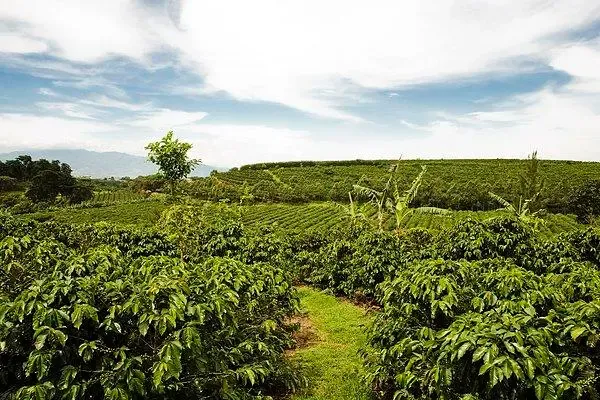
FrontStreet Coffee Costa Rica Musician Mozart Coffee Beans Region: Tarrazu Estate/Processing Plant: Hacienda Canet Altitude: 1,800 meters Variety: H1 Process: Raisin honey process Flavor: fermented aroma, raisin, starfruit, berries, dried fruit, sucrose
This FrontStreet Coffee Costa Rica Hacienda Canet Mozart coffee bean uses the raisin honey process and is roasted to a medium level. Front Street uses a V60 dripper for brewing, with a coffee-to-water ratio of 1:15 and a water temperature of 92°C. You can smell rich layers of floral and fermented sauce aromas; on the palate, it presents raisin and dried-fruit sweetness, as well as starfruit and berry-like acidity. The mouthfeel is silky, and the finish has a sucrose-like sweetness.
The above content is compiled by CoffeeHunters, a coffee news website.


