








How Does the Raisin Honey Process Shape Bach Coffee?
The Bach lot in the Musician Series comes from the Tarrazú region of Costa Rica, grown at 1,950 meters and graded SHB with the Caturra variety. It is processed using the raisin honey method, which keeps the full pectin layer and uses no water. Dry aroma shows strawberry, blackberry, and raisin, and a red-wine note appears in the finish.
The raisin honey method raises the difficulty of processing coffee beans, so timing control is strict. Ripe cherries sink in the tank while floaters are removed, then the fruit dries on raised beds for at least three days before the skin is taken off and drying continues with the pectin retained. As the cup cools, candied sweetness and plum wine flavors grow stronger.
The Bach coffee beans in Front Street Coffee's Musician Series come from the Tarrazú region of Costa Rica and are processed using the raisin honey method, showcasing rich fruity aromas of strawberry, blackberry, and raisin. The cup is sweet and vibrant on entry, with a tipsy, red-wine-like note emerging in the mid-to-finish. As it cools, the candied sweetness and plum wine flavors become even more pronounced. This article will detail Bach's origin information, the process flow and flavor advantages of the raisin honey method, and introduce the processing methods and brewing suggestions for the Mozart and Strawberry Candy · Geisha blend in the same series. It will also analyze the H1 hybrid variety used in the 2020 new-crop Mozart and its anaerobic honey processing characteristics.
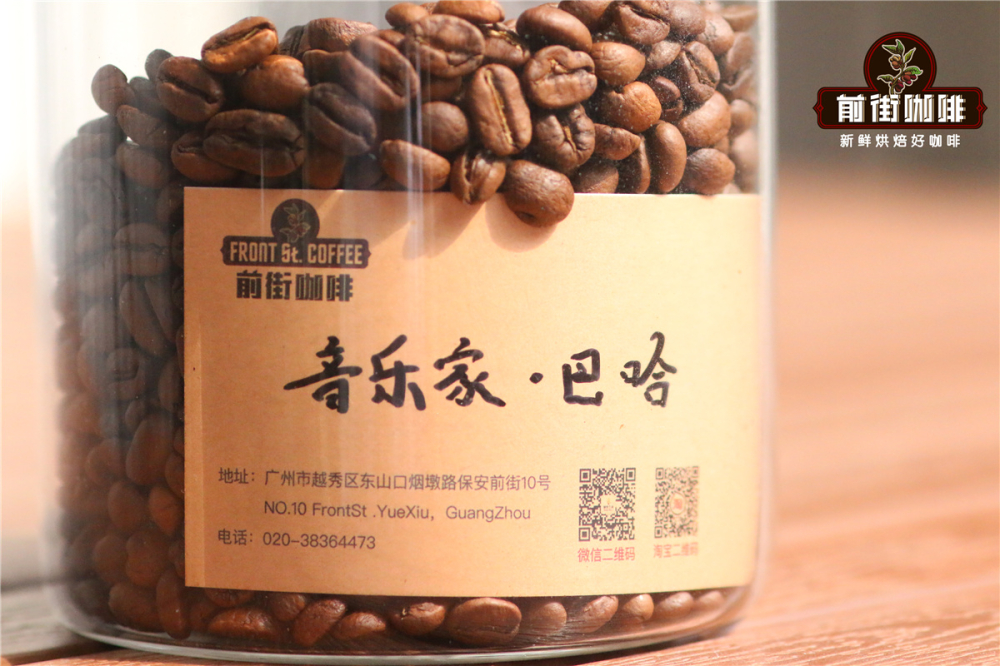
Front Street · Musician Series Bach
Country of Origin: Costa Rica
Region: Tarrazú
Altitude: 1,950 meters
Processing Method: Raisin Honey
Grade: SHB
Variety: Caturra
Bach's music is renowned for its refinement, rich layering, and clear structure. Front Street's Costa Rican raisin honey coffee bean named Bach offers dry aromas of strawberry, blackberry, raisin, and other fruity notes, and it continuously releases bursts of fruit fragrance during brewing. When freshly brewed, the floral and fruity aromas are very prominent; on entry, rich fruit flavors and a sweet-tart sensation spread across the palate, while the mid-to-finish reveals a slight wine aroma reminiscent of red wine. As the temperature drops, a candied sweetness emerges, the wine note becomes clearer, and one can even catch a hint of plum wine. Every sip evokes the Baroque aesthetic's blend of opulence and rigor.
Raisin Honey Processing
The raisin honey processing method uses a 100% pectin-retained, fully water-free approach. This practice increases the operational difficulty of the honey process, so the requirements for timing control are especially strict. On the day the coffee cherries are harvested, the fruit must be poured into a large water tank; ripe, plump cherries sink to the bottom, while underdeveloped or overripe cherries float on the surface, and these floaters must be removed. After screening is complete, the coffee cherries are placed on raised beds to dry for at least three days, after which the cherry skin is removed, the pectin layer is retained, and drying continues.
This is a processing method that can enhance the sweetness of coffee, giving Front Street Bach a white-wine-like mouthfeel and balanced acidity, with more intense fermentation notes in the flavor and a higher degree of pectin retention than other honey processing methods. In addition to Front Street Bach, Front Street Mozart and the Front Street Strawberry Candy · Geisha blend also use the raisin honey process. After medium-light roasting, they retain alluring floral aromas while enhancing the high sweetness brought by fruits such as raisin, ripe pineapple, jackfruit, and sweet orange. They can be extracted by pour-over or French press, and are also suitable for making various iced coffees.
It is worth mentioning that the 2020 new-crop Front Street Musician Series Mozart coffee introduced a brand-new coffee variety, H1. H1 stands for Centroamericano H1, developed through ongoing research at Nicaragua's Sebaco laboratory, and is a hybrid of Rume Sudan and Sarchimor T-5296. Rume Sudan was first discovered in the Rume Valley of Sudan's Boma Plateau, from which it takes its name. This variety has excellent coffee quality and outstanding flavor, but weak disease resistance.
However, varieties hybridized with it can well inherit its genes for excellent flavor. Once its genetics are stable, the H1 variety possesses advantages such as high productivity, potential high quality, strong adaptability, and resistance to leaf rust, but it is susceptible to American leaf spot disease. The new-crop Front Street Mozart also uses an anaerobic honey processing method: the fruit skin is first removed, then the beans are placed in specially made metal tanks for 48 hours of anaerobic fermentation, followed by sun drying. This processing method better highlights its unique raisin aroma.
The above content is compiled by CoffeeHunters, a coffee news website.


