







How does one arabica variety shape the flavor of a cup?
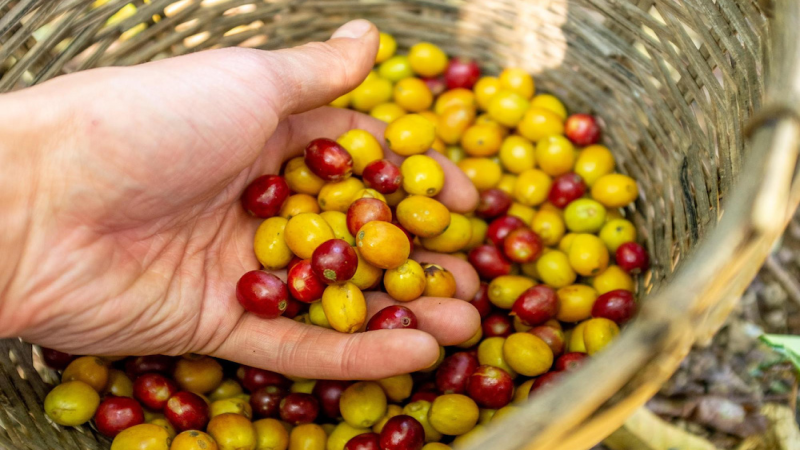
Bourbon is an arabica variety that began as a mutation of Typica, was carried from Yemen to Bourbon Island in 1715, and then spread to Brazil, Central and South America, and St. Helena. It ripens from green to bright red, grows with broad leaves and dense branching, and yields only every two years, yet it cups with wine-like acidity and a sweet finish.
Four related varieties are compared here: Pacamara, discovered in El Salvador in 1950 as a Pacas and Maragogype cross; Caturra; Catuai; and Sarchimor. Origins such as Guatemala Bolsa, Colombia Cauca, Honduras Sweet Orange Estate and Costa Rica Monte Shirley show how each arabica variety shifts the flavor direction in the cup, unlike the older st helena coffee beans planted from the same Bourbon line.
Bourbon is one of the most important varieties in coffee history, originating from a mutation of Typica. It got its name after being introduced from Yemen to Bourbon Island, then spread to Brazil, Central and South America, and St. Helena, becoming a frequent champion in American specialty coffee cupping. Its green fruit turns bright red when ripe, with broad leaves and dense growth. Although it yields only every two years with low productivity, it has a wine-like acidity and sweet finish. In this article, Front Street Coffee introduces four Bourbon-derived or related varieties: Pacamara, Caturra, Catuai, and Sarchimor, outlining their origins, plant characteristics, adaptability, and cup flavors one by one, and combining the performance of specific origins such as Guatemala Bolsa, Colombia Cauca, Honduras Sweet Orange Estate, and Costa Rica Monte Shirley, to help coffee lovers understand how varieties profoundly influence the flavor direction of a cup of coffee.
Bourbon: In the early stages of coffee history, after Typica was introduced to Yemen, a mutation occurred, and the bean shape changed from slender and pointed to round and plump. In 1715, the French brought the round beans of Yemen Mocha to Bourbon Island off the east coast of Africa (renamed Reunion Island after the French Revolution), and the name Bourbon officially appeared. In 1727, Bourbon round beans then spread to Brazil and Central and South America; in 1732, the British introduced Yemen Mocha to St. Helena (later the place where Napoleon was imprisoned), and what was planted there was also Bourbon round beans. With its outstanding performance, Bourbon repeatedly won in American specialty coffee cupping.
Bourbon is a subspecies formed after a mutation of Typica, and together with Typica it is listed as one of the oldest existing coffee varieties. The fruit turns from green to bright red when ripe. Compared with Typica, Bourbon has broader leaves and denser growth. Although its yield is higher than Typica, it also requires two years to reach harvest, and it still belongs to the low-yield varieties. However, its taste is excellent, with a wine-like acidity and sweet finish.
Today Front Street introduces Bourbon variants: Pacamara, Caturra, Catuai, and Sarchimor
[Pacamara]
Pacamara is a variety discovered in El Salvador in 1950, produced by crossing Pacas and Maragogype.
In 1958, researchers in El Salvador successfully cultivated it for the first time. Pacamara is a rare excellent variety in artificial selection. On the one hand, it inherits Pacas's higher productivity, good adaptability to the local climate, and strong resistance to climate change; on the other hand, it also has Maragogype's large size and high cupping quality, with beans at least 70%–80% the size of Elephant Bean. The most prominent characteristic of this variety is its lively and tricky acidity, sometimes with biscuit aroma, sometimes with fruit aroma, and both its body and oily mouthfeel are excellent.
The variety of [Guatemala Bolsa] is precisely Pacamara. Just like its varietal characteristics, it is also rich and varied in flavor, stunningly so. The sweet-acid sensation is obvious yet soft, with the acidity of lemon, passion fruit, and plum, accompanied by brown sugar aroma.
[Caturra]
Caturra is a single-gene variant of Bourbon, discovered in Brazil in 1937. Its productivity and disease resistance are both better than Bourbon, and the tree is shorter, making harvesting easier, but like Bourbon it has the periodic problem of fluctuating productivity every two years. Its flavor is on par with or slightly inferior to Bourbon beans, but more importantly, it has extremely strong adaptability. It does not need shade trees and can grow vigorously even when directly exposed to bright sun, so it is commonly called Sun Coffee. It can adapt to high-density planting, but it must be fertilized more, which increases costs, so early coffee farmers did not accept it very readily.
In the 1970s, bean prices rose sharply, and farmers switched to planting Caturra to increase yields. With vigorous promotion by the authorities in Brazil and Colombia, the results were fruitful. Farmers' acceptance of Caturra meant that planting techniques underwent a major transformation. Brazil and Colombia switched to high-yield, high-density sun-grown planting. By 1990, one million hectares could harvest 14 million bags of coffee beans, increasing productivity by 60%. No wonder high-yield, high-quality Caturra has become a variety that producing countries now rely on.
Caturra is suitable for planting from low altitudes of 700 meters to high altitudes of 1,700 meters. Its altitude adaptability is very strong, but the higher the altitude, the better the flavor and the relatively lower the productivity. This is the fate of specialty beans. Some in academia call Caturra the dense and sun-exposed version of Bourbon, which is very much to the point. There is also a variant in Central and South America called Yellow Caturra (Caturra Amarello), but its reputation is not as good as Yellow Bourbon.
When Caturra is lightly roasted, its acidity and aroma are obvious and overall bright. With proper handling, its sweetness can be very good, but compared with Bourbon, its body is relatively lower, and the cleanliness of the mouthfeel is somewhat lacking. Caturra is usually a red berry, but there are also very rare areas with yellow Caturra, for example a very small amount of yellow Caturra is grown in Hawaii.
The variety of [Colombia Cauca] is Caturra. In flavor, its lime acidity is fairly obvious, with grape juice-like acidity, rich floral aroma, higher acidity, pleasant sweetness, medium body, and a nutty finish in the aftertaste. Overall it is clean, mild, smooth in texture, balanced in taste, and has a lively and varied layering.
[Catuai]
Catuai is a hybrid Arabica variety, a cross between Mundo Novo and Caturra. It has relatively good resistance to natural disasters, especially wind and rain. It inherits the advantage of Caturra's low tree height and changes the shortcomings of Mundo Novo. Another advantage is that the fruit is firmly set and not easy to fall off when strong winds blow, making up for the fragile defect of Arabica cherries. However, its overall flavor expression is more monotonous than Caturra, and also more monotonous than Mundo Novo and lacking in body, which is the greatest regret. In addition, its fruit growth and harvest lifespan is only about ten years; too short a lifespan is also one of its weaknesses.
After its official release in the 1970s, it was promoted to Central American countries and widely planted in Guatemala, Honduras, Panama, and its place of origin, Brazil. Considering flavor alone, under suitable terroir conditions and processing methods, Catuai can have quite wonderful flavors.
Catuai was introduced to Honduras in 1979 and officially commercially released in 1989. It was widely welcomed by farmers and today accounts for more than half of all Honduran production! Because Catuai plants are short, they can be planted densely, and the flavor is also quite good above 1,300 meters. The only drawback is that it is very susceptible to pests and diseases. Honduras's IHCAFE has worked hard to develop hybrids of Catuai and Catimor to improve disease resistance.
The variety of [Honduras Sweet Orange Estate] is Catuai~ It has a dry aroma of spices and roasted peanuts, giving the beans an elegant acidity, soft citrus-like acidity, flavors of orange, cantaloupe, cream, nuts, and dark chocolate, with a Sunkist-like sweetness in the aftertaste.
[Sarchimor]
Sarchimor was initially discovered by a Portuguese breeding research institution, and after research and breeding, it was distributed to coffee-growing countries in Brazil, Central America, and South America.
Sarchimor and Catimor are currently the mothers of the world's two most important disease-resistant bean varieties. Their disease resistance comes from Timo, while their flavor comes from another bean variety. For example, in Sarchimor, the flavor comes from Villa Sarchi, while Catimor's flavor comes from Caturra. Although Sarchimor is not planted as widely as Catimor, it has considerable production in both Costa Rica and Brazil, and the disease-resistant varieties derived from Sarchimor are very numerous, including Cuscatleco, IAPAR 59, Limani, Marsellesa, Parainema, and others.
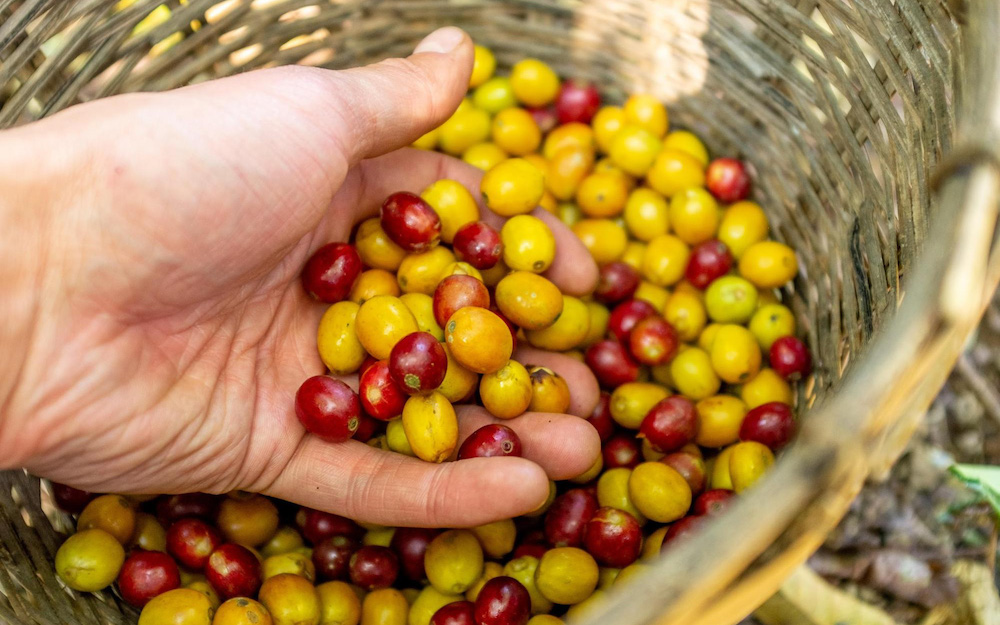
The variety of [Costa Rica Monte Shirley], which is Sarchimor, has an obvious yet soft sweet-acid sensation. The front section has flavors of citric acid and apple, the middle section has grapefruit peel flavor, and the aftertaste has caramel sweetness and a melon-seed finish.
[Conclusion]
This time we have only selected a few varieties to introduce. Whether coffee varieties or Bourbon variants, there are far more than just these few. The world of coffee is still very rich~ Coffee varieties already determine more than half of coffee's flavor, while the coffee-growing environment determines the quality of the coffee variety. So even for the same variety, the flavors expressed are not exactly the same.
For professional coffee knowledge exchange and more coffee bean information, please follow Coffee Workshop (WeChat public account: cafe_style)
For more specialty coffee beans, please add the private WeChat of Front Street Coffee (FrontStreet Coffee), WeChat ID: qjcoffeex
The above content is compiled by CoffeeHunters, a coffee news website.


