







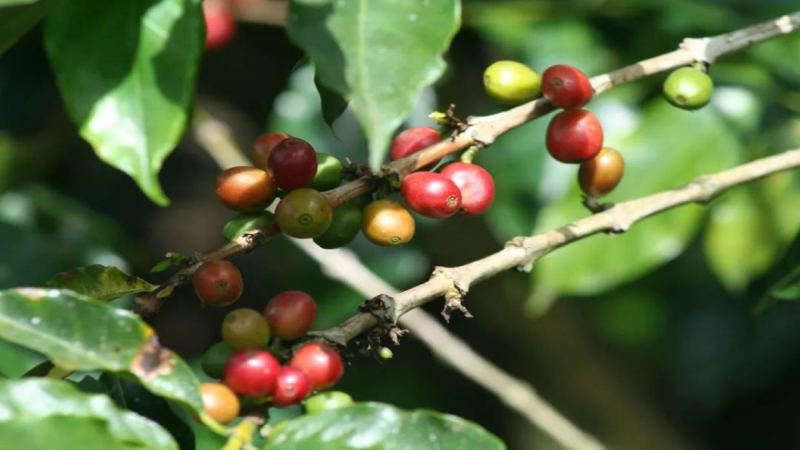
Which growing conditions for coffee define Tarrazu?
Costa Rica's Tarrazu region is the country's highest-altitude and largest-producing origin, and Finca Canet in San Marcos is known for its Musician Series. The Bach lote uses raisin honey processing and the F1 variety. The country's volcanic soil, high elevation, and steady rainfall create the growing conditions for coffee that shape this profile.
Costa Rica holds more than 400 million coffee trees across eight producing regions, mostly along the Central Mountain Range. Temperatures run between 17°C and 28°C, with a rainy season from April to December and roughly 2,000 to 3,000 millimeters of annual precipitation. Since Costa Rica pioneered commercial coffee cultivation in Central America, its coffee cultivation carries weight well beyond Tarrazu.
Costa Rica is a major representative of coffee cultivation in Central America, and the Tarrazu region is the country's highest-altitude and largest-producing star origin. In the town of San Marcos within Tarrazu, Finca Canet is famous for its Musician Series coffee beans, among which the Bach coffee beans use raisin honey processing and the F1 variety, offering rich and full flavor layers. This article will guide you through Costa Rica's coffee-growing environment, the unique advantages of the Tarrazu region, the origins of Finca Canet's Musician Series, and the breeding background and flavor performance of the F1 variety, as well as introduce the brewing experience of the Bach coffee beans recommended by Front Street Coffee.
Coffee trees mostly grow within the so-called "Coffee Belt," which is the equatorial region between the Tropic of Cancer and the Tropic of Capricorn. The equator crosses multiple continents, and the Americas happen to lie within this zone, so many American countries produce coffee, such as Guatemala, Panama, Honduras, and Costa Rica. Among them, Costa Rica set a precedent in Central America for cultivating coffee and bananas for commercial purposes, and thus enjoys great renown.
Costa Rica is located in Central America, with the Caribbean Sea to the east and the Pacific Ocean to the west, and has a tropical and subtropical climate. The country is home to multiple volcanoes that can reach elevations of 2,000 meters, with temperatures ranging between 17°C and 28°C. Ocean currents and sea breezes from the Pacific and Atlantic help regulate the local climate, and the year is divided into a rainy season from April to December and a dry season from late December to April of the following year, with annual precipitation of about 2,000 to 3,000 millimeters. The fertile soil brought by volcanic ash, high-altitude growing conditions, and abundant rainfall together create an extremely ideal coffee cultivation environment in Costa Rica.
Tarrazu Production Region Tarrazu
At present, more than 400 million coffee trees are planted in Costa Rica, with a total of 8 coffee-producing regions, including Valley Central Occidental, Valley Central, Tarrazu, Tres Rios, Orosi, Brunca, and Turrialba. They are basically concentrated in the area of the Central Mountain Range.
Tarrazu is Costa Rica's largest and most famous coffee-producing region, accounting for about 35% of the country's total production. Most of the coffee in this region is grown at elevations of 1,200 to 1,900 meters, making it Costa Rica's highest-altitude production area. The local climate is unique, with abundant rainfall, fertile volcanic ash soil, and shade from dense forests, providing superior growing conditions for coffee beans. As a result, coffee from Tarrazu has pleasant acidity and notes of chocolate, flowers, and fruit. This region was also the first to gain fame, and the Costa Rican government registered the coffee appellation "Café de Tarrazú" in 2019 to protect the Tarrazu region and its coffee. Front Street Coffee has a washed Front Street Costa Rica Tarrazu coffee, which serves as an entry-level selection representative, carrying sweet orange, chocolate, and nutty aromas, with a lasting caramel aftertaste.
Finca Canet Finca Canet
Finca Canet is located in the town of San Marcos in the Tarrazu region, which is also Costa Rica's highest-altitude and most densely fruit-growing area. The estate mainly grows passion fruit, while setting aside specific plots for coffee cultivation and giving them special care. The estate is jointly owned by three brothers from the Robles family, Leo, Elian, and Melvin, who also share a small processing plant.
They launched the Musician Series, which includes four types of beans, each using a different variety and displaying a unique style. The naming of this series of coffee beans comes from the estate owner's obsession with classical music—when tasting a certain coffee, he matches the qualities of the musician it brings to mind with the beans, and thus came Bach, Beethoven, Mozart, and Chopin. Currently, Front Street has two coffee beans: Front Street Mozart and Front Street Bach.
F1 Variety
F1 is the product of a coffee variety breeding program. It should be noted that F1 does not specifically refer to a single variety, but is a general term for a category or group of coffee varieties. In 1970, coffee leaf rust (Hemileia vastatrix), the main pathogen of coffee trees (the causal agent of leaf rust disease), swept across the entire American continent. In response to this disease, the French Agricultural Research Centre for International Development (CIRAD) and the Central American coffee organization PROMECAFE jointly launched a new variety breeding program, with assistance from the Inter-American Institute for Cooperation on Agriculture (IICA) and the Tropical Agricultural Research and Higher Education Center (CATIE) in Costa Rica, developing a new generation of bean varieties with high yield, disease resistance, and excellent flavor through hybridization.
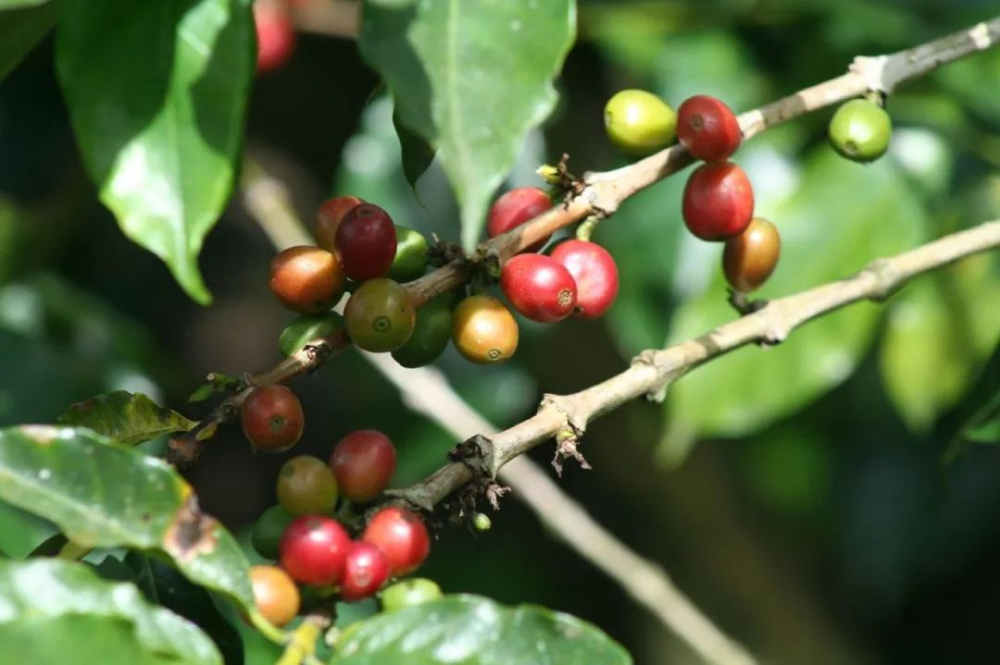
From hundreds of coffee varieties, CATIE selected Caturra, Catuai, Catimor, Sarchimor (a hybrid of Villa Sarchi and Timor), and an ancient African wild variety, Rume Sudan. Using artificial pollination, they extracted pollen from T5296 (a descendant of Sarchimor) and applied it to the stigma of Rume Sudan. After five years of effort, CATIE harvested a total of 100 different new generations, and from them selected 20 with better performance for propagation and cultivation. These first-generation F1 plants not only had stronger disease resistance and better drought tolerance, but also had the advantages of higher yield and excellent flavor. However, F1 also has shortcomings and is difficult to mass-produce, because hybrid vigor begins to decline from the second generation onward. Therefore, most F1 cannot reproduce offspring through conventional self-pollination and can only rely on repeated artificial pollination or cloning to obtain a new batch of F1 plants. This is also one of the reasons why this type of coffee variety is often called F1.
This Front Street Costa Rica Bach coffee obtained by Front Street Coffee uses raisin honey processing, which makes the coffee beans more intense in fermented aroma and richer and fuller in flavor layers. Front Street uses a V60,1:15 ratio and a 92°C water temperature for brewing. You will smell a fermented aroma like ripe berries and rose floral notes; on the palate there will be a blueberry-like sweet-and-sour sensation, a creamy smooth mouthfeel, and a caramel-like finish.
The above content is compiled by CoffeeHunters, a coffee news website.


