







What Makes Tarrazu Coffee Trees and the H1 Variety Distinct?
Costa Rica grows coffee on high-altitude volcanic terrain with rainfall concentrated from April to December, and more than 400 million coffee trees are cultivated nationwide across eight producing regions. Tarrazu, south of San Jose, sits between 1,200 and 1,900 meters, the country's highest growing zone, and is known for bright acidity and floral-fruity aroma.
Canet Estate occupies the highest ground in Tarrazu and names its Musician Series lots after composers. Its Raisin Honey processing method shapes the cup, and the H1 variety, bred from a cross between Sachimo and Rume Sudan, has drawn attention for its performance at these elevations. Costa Rica's coffee institute, ICAFE, has supported small growers since its founding in 1948.
Costa Rica, with its high-altitude volcanic terrain and abundant rainfall, has become a representative producer of quality coffee in Central America. Among its regions, Tarrazu is renowned for its bright acidity and floral-fruity aroma, and Canet Estate, located at the highest altitude within this region, has attracted much attention for its Musician Series coffee beans. This article will guide you through Costa Rica's coffee-growing background, the terroir conditions of the Tarrazu region, the family operation of Canet Estate and the origin of the Musician Series naming, and provide an in-depth analysis of the unique Raisin Honey processing method, as well as H1, a new variety bred from a cross between Sachimo and Rume Sudan. Front Street Coffee has now launched two beans, Front Street Mozart and Front Street Bach, offering enthusiasts an opportunity to taste them.
Costa Rica is located in Central America, with multiple volcanoes reaching elevations of up to 2,000 meters within its borders. It is also influenced by the climate-regulating effects of Pacific and Atlantic ocean currents and sea breezes, with the rainy season concentrated from April to December. Fertile volcanic soil, high-altitude growing conditions, and abundant rainfall together create an extremely ideal coffee cultivation environment in Costa Rica.
The history of coffee cultivation in Costa Rica can be traced back to the early 19th century. The government strongly supported the coffee industry and established the Institute for the Defence of Coffee in 1933, with the core goal of protecting small coffee growers from exploitation. This organization was transformed into the Costa Rican Coffee Institute (ICAFE) in 1948 and continues to operate to this day.
Tarrazu
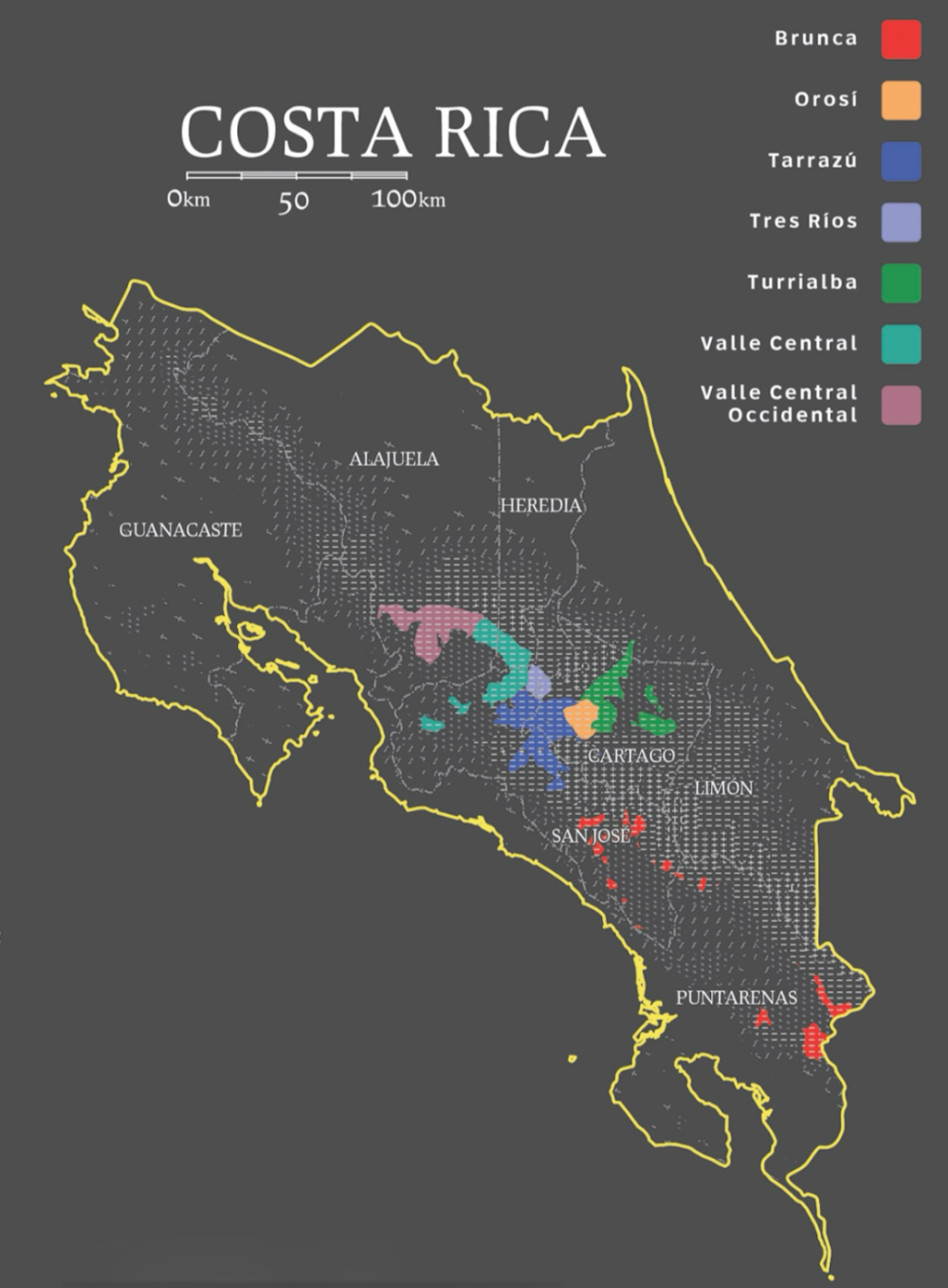
Currently, more than 400 million coffee trees are grown in Costa Rica. The country is divided into 8 coffee-producing regions, including Valley Central Occidental, Valley Central, Tarrazu, Tres Rios, Orosi, Brunca, and Turrialba. These regions are almost all located along the central mountain range.
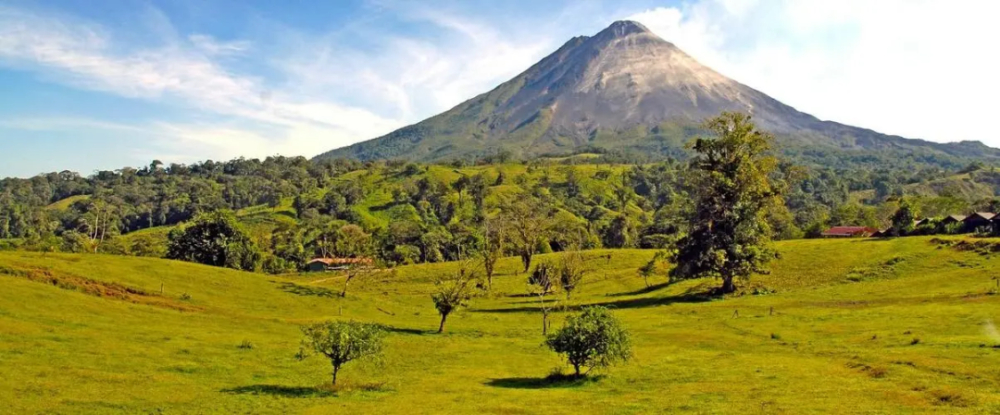
Tarrazu is one of Costa Rica's most important coffee-producing regions, located south of the capital, San Jose. Coffee in this region is grown at altitudes between 1,200 and 1,900 meters, making it Costa Rica's highest-altitude coffee-producing region. It has abundant rainfall, and the surrounding volcanoes provide fertile volcanic soil. As a result, the coffee produced here has bright acidity and floral-fruity aromas, with a balance of sweetness and acidity and an overall harmonious profile.
Canet Estate Musician Series
Canet Estate is located in the highest-altitude area of the Tarrazu region, which is also the area with the greatest concentration of fruit cultivation in Costa Rica. The estate focuses mainly on passion fruit cultivation, with a specific area set aside exclusively for coffee cultivation, which receives special care. The estate is jointly owned by the family of the Robles brothers Leo, Elian, and Melvin, who also share a small processing plant.
They launched the Musician Series, which includes four beans, each using a different coffee variety and displaying a unique flavor personality. The naming of this series stems from the deep love of classical music held by Canet's manager—when tasting a certain coffee bean, the characteristics of the musician it brings to mind match the bean's flavor, hence names such as Bach, Beethoven, Mozart, and Chopin. Currently, Front Street Coffee has two beans on sale, Front Street Mozart and Front Street Bach.
Raisin Honey Processing
Costa Rica is the birthplace of the honey processing method; it can be said that the country's geographical conditions gave rise to honey processing technology. Because Costa Rica is mountainous, high-altitude areas have difficulty retaining water, making it hard to support water-intensive washed processing. At the same time, it also lacks the long sunshine conditions of African countries, making sun-drying processing riskier. Therefore, local producers drew on Brazil's semi-sun-drying method and improved it according to their own conditions, ultimately forming honey processing. Depending on the degree of mucilage retention, it is further divided into categories such as black honey, red honey, yellow honey, and white honey.
The latest honey processing method is Raisin Honey Processing, which retains 100% mucilage and uses zero water treatment throughout, increasing the difficulty of honey processing and placing extremely strict demands on timing control. After harvesting the coffee cherries, they are first poured into a large water tank, where buoyancy is used to remove underdeveloped floating beans. They are then dried on raised beds, with the cherry skin removed and the mucilage retained for drying. During the drying process, they must be constantly turned to ensure even moisture loss. Slow drying helps the coffee ferment, and during this period close attention must also be paid to weather changes. Once the coffee beans' moisture content drops to about 11%, drying is complete. This processing method gives the coffee beans a richer fermentation aroma and fuller, more layered flavors.
H1
H1 comes from the Sebaco laboratory in Nicaragua, and its full name is Centroamericano. It was bred by crossing T-5296 (Sachimo) from the F1 first-generation hybrid series with Sudan Rume. Sudan Rume was discovered in the Rume Valley of the Boma Plateau in Sudan, hence the name. This variety has excellent coffee quality and outstanding flavor, yields 22% more than other traditional American varieties, and has strong resistance to rust, but is susceptible to nematode damage.
The above content is compiled by CoffeeHunters, a coffee news website.


