







How Costa Rican Coffee Production Shaped Its Varieties
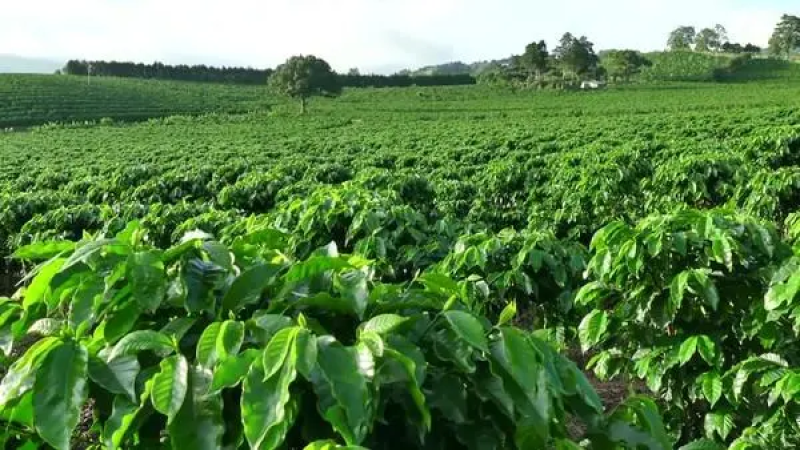
Costa Rica ranks 14th worldwide in coffee production despite its small area, helped by volcanic soil and extensive forest cover. Coffee arrived in the early 19th century, and the country established an institute in 1948, now known as ICAFE, to support the industry. Its fields carry familiar types such as Bourbon, Caturra and Catuai alongside newer options like Villa Sarchi, Venecia and H1.
Bourbon came from a mutation of early Yemeni Typica and reached the Americas around 1860; it yields moderately but resists leaf rust better than Typica and shows layered flavor at high altitude. Hybrid programs later produced additional varieties, which is why so many coffee trees in Costa Rica now carry genetics developed locally rather than imported unchanged.
Although Costa Rica is a small country, it ranks as the world's 14th largest coffee producer thanks to its volcanic soil and forest resources. Since coffee was introduced there in the 19th century, the country has continuously promoted variety improvement. In addition to the common Caturra, Catuai, and Bourbon, it has also given rise to emerging varieties such as Villa Sarchi, Venecia, and H1. This article will sort through the origins, characteristics, and flavor profiles of these varieties one by one, and present corresponding bean recommendations from Front Street Coffee, helping coffee enthusiasts gain a comprehensive understanding of Costa Rica's varietal landscape.
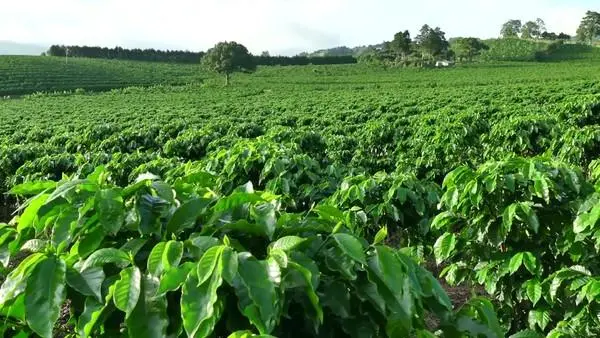
Costa Rica is located in Central America and ranks 14th in the world in coffee production. Although its land area is limited, it has vast forests and mineral-rich volcanic soil, providing ideal conditions for coffee cultivation. The introduction of coffee to the country can be traced back to the early 19th century. The government placed considerable importance on this industry and in 1933 established a coffee defense agency specifically to protect small farmers from exploitation. In 1948, this agency was transformed into the Costa Rican Coffee Institute (ICAFE), which still operates today.
When people mention American producing regions, they usually think of the three major varieties: Caturra, Catuai, and Bourbon. However, as coffee research institutions were established one after another in various producing countries, new varieties created through hybridization continued to emerge. Today in Costa Rica, in addition to the common varieties mentioned above, some local varieties rarely seen on the market are also preserved. Front Street will introduce them one by one below.
Bourbon
Bourbon originated from a mutation of early Yemeni Typica. In the 18th century, the French brought it from Yemen to Bourbon Island (now Reunion Island) off the east coast of Africa, where it took root. It was not until around 1860 that Bourbon was introduced to Brazil and then spread to various countries in Central and South America. This variety's yield is not particularly outstanding, but compared with the delicate Typica, it has stronger resistance to leaf rust. When grown at high altitudes, Bourbon has rich layers of flavor, intense aroma, and soft acidity. In various coffee competitions in Central America, Bourbon is a frequent presence on the winners' podium.
Caturra
Caturra arose from a natural mutation of Bourbon and was first discovered in Brazil in 1937. The plant is shorter and its disease resistance is average, but it is suitable for dense planting and has a higher fruiting rate, so its yield exceeds varieties such as Bourbon, and it is widely cultivated in Central and South America. In terms of flavor, Caturra has bright acidity and a fruity profile. After medium-dark roasting, it displays the sweet aroma of chocolate and nuts. It is likewise a frequent champion in coffee competitions.
Many coffee beans on Front Street's bean list contain Caturra. If you want to experience the flavor characteristics of this variety, Front Street recommends Colombia daily beans, using washed Caturra with excellent cleanliness. To highlight the classic Colombian flavor, Front Street uses medium-dark roasting, bringing aromas of nuts, dark chocolate, and caramel.
Catuai
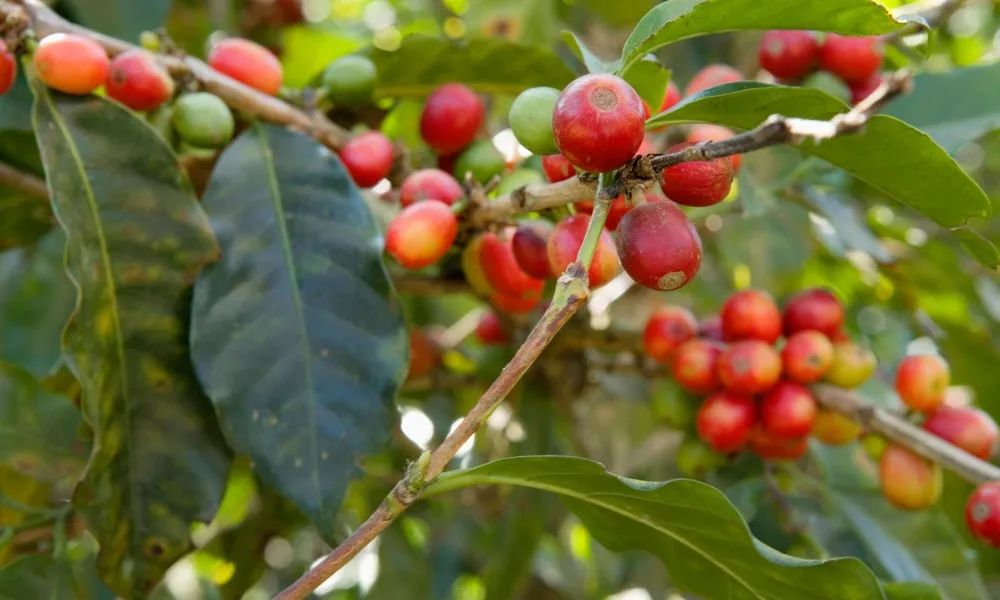
Catuai was created by the São Paulo State Agricultural College (IAC) in Campinas, Brazil, through artificial hybridization of Mundo Novo and Yellow Caturra, initially numbered "H-2077." Mundo Novo is itself a natural hybrid of Bourbon and Typica, first discovered in 1943 in Tietê-Mineiros, São Paulo, Brazil.
Catuai inherited Mundo Novo's high yield, strong disease resistance, and excellent cup performance, while also retaining Caturra's advantages of a short plant, elegant acidity, and suitability for full-sun cultivation. As a result, it has strong disaster resistance, especially against strong winds and heavy rain, and its compact plant type makes dense planting convenient for farmers. Its only shortcoming is susceptibility to coffee leaf rust.
Villa Sarchi, also called La Luisa or Villalobos Bourbon in the industry. In the 1950s, this variety was first discovered in Sarchi, Costa Rica, and was selected through pedigree selection, that is, selecting individual plants over multiple consecutive generations. Villa Sarchi is mainly grown in Costa Rica, but it was not promoted on a large scale. In 1974, the Honduran Coffee Institute (IHCAFE) introduced it.
Villa Sarchi is a natural mutant of Bourbon and is a dwarf plant type (dwarfism). It has strong wind resistance and adapts well to high-altitude environments, but its tolerance to common diseases such as coffee leaf rust, berry disease, and root-knot nematodes is relatively low. This variety has green terminal leaves, an angle of about 45° between lateral branches and the main trunk, short internodes between fruit clusters, and fruit that withstands wind and rain and does not easily fall off. In terms of flavor, Villa Sarchi often presents bright and delicate citrus acidity along with a relatively complex fruity aroma.
Venecia
Venecia was discovered in the San Carlos region of Costa Rica's Central Valley. It is a natural mutant of Caturra and was released by the Costa Rican Coffee Research Center (ICAFE). Starting in 1991, ICAFE carried out research and selection in places such as Turrialba, Coto Brus, and Perez Zeledon. After years of effort, the Venicia variety in the Perez Zeledon region not only had richer flavor, but also better yield and pest and disease resistance. Like Caturra, Venecia is a short plant and has the advantages of high yield, rain resistance, and disease resistance. Venicia is a late-maturing variety. Coffee trees usually take 3 years to begin bearing fruit. The fresh fruit is relatively large, and the seed is hard.
H1
H1 comes from the Sebaco laboratory in Nicaragua. Its full name is Centroamericano, and it was bred by crossing T-5296 (Sarchimor) from the F1 first-generation hybrid series with Sudan Rume. Sudan Rume was discovered in the Rume Valley of Sudan's Boma Plateau, hence the name. This variety has excellent quality and outstanding flavor, but weak disease resistance, while its hybrid offspring can well inherit its flavor advantages.
In terms of yield, H1 is 22% to 47% higher than other traditional American varieties. The plant's leaf tips are green, and it has strong resistance to rust and moderate resistance to coffee berry disease, but it is susceptible to nematodes. The Costa Rica Mozart currently sourced by Front Street is exactly the H1 variety, using raisin honey processing. On the palate, it has complex floral notes and fermented sauce-like aromas, with the acidity of star fruit and berries, as well as the sweetness and lingering finish of raisins and dried fruit.
For professional coffee knowledge exchange and more coffee bean information, please follow Coffee Workshop (WeChat public account: cafe_style).
For more specialty coffee beans, please add the private WeChat of Front Street Coffee (FrontStreet Coffee), WeChat ID: qjcoffeex.
The above content is compiled by CoffeeHunters, a coffee news website.


