







How Are Indonesian Coffee Beans Grown and Processed?
Indonesian coffee beans grown across Sumatra, Java, and Sulawesi share a rich, intense profile shaped by tropical terroir and the wet-hulling method. Sumatra's Mandheling, also called Sumatra coffee, is the most recognized name. North Sumatra mostly grows Gayo, largely the Ateng variety, while the Lintong area around Lake Toba is considered the true Mandheling producing region.
Lake Toba is a high-altitude freshwater lake with an average elevation near 900 meters, and farms in the surrounding highlands sit roughly 1,100 to 1,600 meters up. Common varieties include S795, Tim Tim, USDA 762, Kartika, and Andungsari. Front Street Coffee's Lintong staple and PWN Golden Mandheling are both medium-dark roasted and suit pour-over, French press, and espresso machines.
Indonesian coffee is best known for Mandheling, but its appeal goes far beyond that. From Sumatra and Java to Sulawesi, each producing region shapes a rich, intense classic flavor through its unique terroir and wet-hulling method. This article walks you through the distribution and characteristics of Indonesia's main coffee-producing regions, explains the wet-hulling process and what causes its flavor, and introduces common varieties such as S795, Tim Tim, USDA 762, Kartika, and Andungsari. Front Street Coffee's everyday Lintong staple beans and PWN Golden Mandheling are both medium-dark roasted, suitable for pour-over, French press, espresso machines, and many other brewing devices, making it easy for enthusiasts to experience authentic Mandheling flavor.
For more specialty coffee knowledge, please follow: Front Street Coffee (Frontsteet Coffee)
When it comes to Indonesian coffee, Front Street Coffee (FrontStreet Coffee) believes most people first think of Golden Mandheling. Golden Mandheling is a trademark registered by PWN, and only coffee produced by PWN can be considered authentic Golden Mandheling. Of course, Indonesia's coffee landscape is far more than just this one. Below, Front Street Coffee (FrontStreet Coffee) introduces the characteristics of Indonesian coffee beans.
Indonesian Coffee-Producing Regions
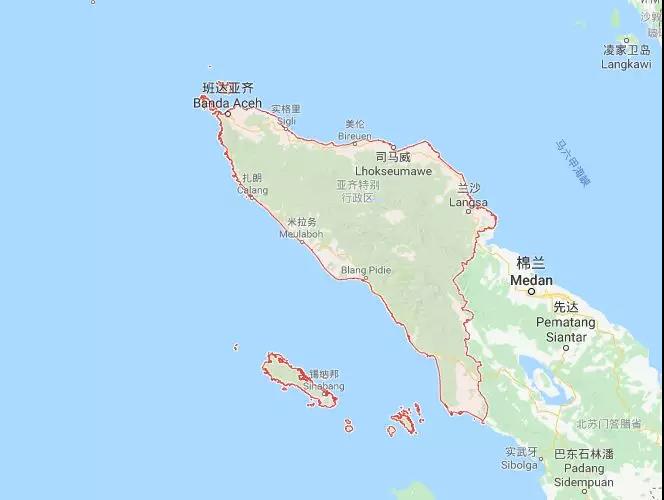
Indonesia's main coffee-producing areas are concentrated on the islands of Sumatra, Java, and Sulawesi, with "Mandheling" from Sumatra being the most famous. Mandheling is also called "Sumatra coffee." North Sumatra mostly grows Gayo, primarily the Ateng variety; the Tawar Lake area at the northern tip can be called Aceh coffee or Tawar Lake coffee; Lintong in South Sumatra and the area around Lake Toba fall within the Mandheling category. Strictly speaking, the Lintong area is the true Mandheling producing region. Mandheling comes from the mountainous areas around Lake Toba, a high-altitude freshwater lake located north of Medan, the provincial capital of Sumatra, with an average elevation of about 900 meters.
Lake Toba is located north of Medan, the provincial capital of Sumatra. It is a high-altitude freshwater lake with an average elevation of about 900 m. The lake is diamond-shaped, 100 kilometers long and 30 kilometers wide, covering an area of 1,130 square kilometers, with an average elevation of around 1,100-1,600 meters, making it the largest volcanic lake in the world. What is commonly called Mandheling refers to Typica or its variant coffee beans grown in the mountainous areas around Lake Toba, with Lintong being the most famous Mandheling-producing region in the Lake Toba area.
Aceh Gayo Mountain Producing Region: The Gayo mountain range area is located in Aceh Province in northern Sumatra. Coffee is mostly grown in the town of Takegon and on the hillsides beside Tawar Lake, at an average elevation of 1,110 to 1,600 meters. Coffee is grown by smallholders under shade trees and processed using the wet-hulling method, exhibiting unusual flavors and a deep yet lively richness. Aceh, located at the northernmost tip of Sumatra, is a fascinating and complex place.
Due to long-term political instability, Aceh is not a place most people would visit. The Gayo mountain range is located in the Aceh producing region of North Sumatra Province, and most people working in coffee there are local farmers. The term "Gayo" originates from a tribe in the Aceh region of Indonesia. The area has ideal growing conditions, a long history and culture, and unique flavors. Coffee is widely grown using organic methods, without chemical fertilizers, and it is considered a green coffee-producing region of the world, which is why Gayo coffee is also often called green coffee or Gayo organic coffee.
Indonesia's Unique Coffee Processing Method — Wet Hulling
Wet hulling, also known as Wet Hulling, is called Giling Basah in the local language and is a traditional Indonesian coffee processing method. Judging by the name alone, wet hulling sounds very similar to wet processing (washed processing), but the cupping flavors of the two are completely different. Coffee processed by wet hulling is usually rich and intense, with a very distinctive character.
Wet hulling can be specifically divided into two stages:
In the first stage, a wooden pulping machine is used to remove the skin and fruit pulp, followed by fermentation for 3 hours and then drying, bringing the moisture content down to 30-50%, which is semi-dry and semi-wet. In the second stage, the pectin and parchment layer are removed, and drying continues in the later stage. The drying process takes 2-4 days, and the moisture content drops to 12-13%.
It should be noted that coffee processed by wet hulling has its parchment layer removed, becoming "naked beans." The drying speed is very fast, and at the same time they are directly exposed to a humid environment, where various microorganisms grow, giving the coffee a unique woody, spicy, and herbal character — what we commonly call the "Mandheling taste."
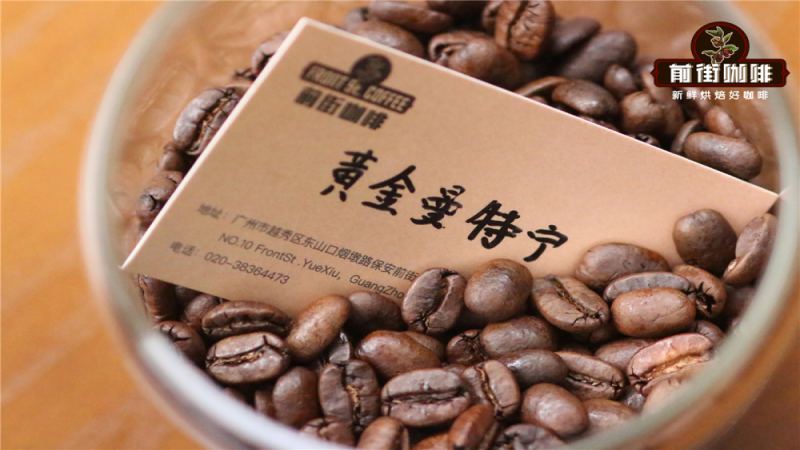
Front Street hopes everyone can taste the classic Mandheling flavor. The two Mandheling coffees sold daily are both medium-dark roasted, including the Lintong producing region Mandheling staple beans and the Aceh producing region Front Street PWN Golden Mandheling coffee. Deep-roasted Mandheling coffee usually presents aromas of dark chocolate, nuts, caramel, and cream. It is not only suitable for pour-over, French press, and other brewing methods, but can also be used in coffee machines, moka pots, and other devices, and under pressure it can extract a rich crema. You can purchase it at the Front Street Tmall flagship store or the Front Street Taobao store.
Five Common Indonesian Coffee Varieties
S795
S795 is one of the most common coffee varieties in Indonesia, and it is widely believed to have a distinctive maple syrup and brown sugar taste. This variety was introduced to the Indonesian coffee industry from India in the 1970s, and it is common in both Bali and Toraja (locals in Toraja also call it Jember).
One of the reasons S795 is so popular is that it is easy to cultivate. S795 is a hybrid of the Kent and Liberica varieties, the latter of which grows at much lower elevations than Arabica plants. It is the DNA of the Liberica coffee bean that gives S795 a strong root system.
TIM TIM
In Indonesia, Tim Tim stands for Timor Timur, a region in southern Indonesia that was once part of the country (now East Timor, also known as Timor-Leste).
Tim Tim, also known as Hibrido de Timor, is a natural hybrid of Arabica and Robusta, first discovered in the early 20th century. It became popular in the 1950s because of its strong resistance to coffee leaf rust and other diseases.
On the island of Sumatra and in Indonesia's Gayo region, Tim Tim became Gayo 1, and it is now famous nationwide. In Bali, by contrast, Tim Tim adapted and eventually became a different variety called Kopyol.
Because it is a hybrid of Arabica and Robusta, some traits of both plants are reflected in the cup. Its flavor is rich and easily reminiscent of Robusta.
Tim Tim is also used as a genetic resource in breeding programs around the world because it is a very resilient variety with resistance to pests and diseases. Some varieties developed from Tim Tim were crossed with other varieties, including Catimor and Sarchimor.
USDA 762
Now widely planted on the islands of Java and Sumatra, USDA 762 was introduced to Indonesia's coffee sector in the 1950s as a selected variety from Ethiopia. It was first discovered in the Mizan Teferi region, not far from where Geisha was originally discovered. As a result, in some coffee-growing areas of Indonesia, USDA 762 has been mistaken for Geisha.
USDA 762 was developed in Indonesia, while Geisha's natural selection occurred in Panama. They are two distinctly different plants with different tastes and morphologies.
In the 20th century, USDA 762 was especially abundant in East Java's Ijen, a major area of volcanic growth in Indonesia. It was originally introduced to Indonesia because of its some resistance to coffee leaf rust. However, today, with the emergence of more resilient Robusta hybrids, its use as a coffee leaf rust-resistant variety has been largely replaced. Therefore, today, USDA 762 is generally planted only in Indonesia's high-altitude areas, where coffee leaf rust resistance is not very important. However, USDA 762 is not as popular among coffee farmers as it once was. Compared with other coffee varieties, it actually lacks a distinctive flavor.
KARTIKA
In Indonesia, Kartika is short for Kopi Arabika Tipe Katai (which translates to Catuai Arabica coffee). As a localized version of the Catuai coffee variety, Kartika is likewise very susceptible to coffee rust and other pests and diseases.
Kartika was originally planted in Indonesia as part of a large-scale variety trial conducted in 1987 by the Portuguese Coffee Rust Research Center (Centro de investigation acao das Ferrugens do Cafeirro). Because of its high-quality flavor, it was initially very popular.
ANDUNGSARI
Similar to Kartika, Andungsari is a relatively short coffee plant. It was originally developed by the Indonesian Coffee and Cocoa Research Institute through the selection of Catimor plants.
Andungsari grows best above 1,250 meters in elevation. It has high productivity (2.5 tons per hectare) and excellent cup performance. However, this coffee variety, like Kartika, requires extremely high maintenance.
The above content is compiled by CoffeeHunters, a coffee news website.


