








Why Do Producing Countries Grow So Few Types of Coffee Trees?
Producing countries tend to concentrate on a handful of varieties because introduced plants that suit local terroir gradually become the main crop, while national research institutes breed and promote their own selections. Brazil is dominated by Bourbon, and Jamaica Blue Mountain is closely tied to Typica, so the range of coffee cultivation in any one origin often looks narrow.
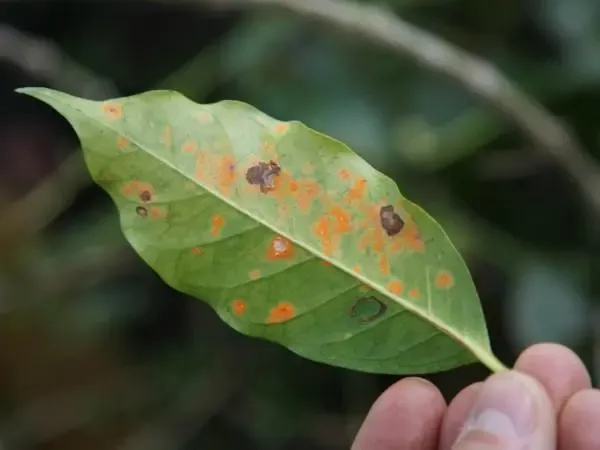
The driver was leaf rust. The largest documented epidemic in the late 19th century nearly destroyed coffee trees across the Eastern Hemisphere, including most of Asia and Africa, and shifted the center of Arabica cultivation toward the Americas. Some countries switched to Robusta; others founded research institutes and bred varieties such as Catuai, SL28, SL34, Ruiru 11, and H1.
When you shop for coffee beans, have you ever noticed that certain origins always seem to grow just a few fixed varieties? Brazil, for instance, is dominated by Bourbon, while Jamaica Blue Mountain is inseparable from Typica. Behind this lies both the logic of variety dissemination and natural adaptation, as well as a chapter of coffee history rewritten by leaf rust. The devastating disease outbreak at the end of the 19th century forced many producing countries to research disease-resistant new varieties, leading to the establishment of national coffee research institutes. This article will walk you through the origins and development of common laboratory varieties such as Catuai, SL28, SL34, Ruiru 11, and H1, and how they became the mainstays of today's producing regions. It will also mention related beans selected by Front Street Coffee, offering you a practical purchasing reference.
Today, many coffee-producing countries around the world seem inclined to concentrate on growing a few specific varieties. Brazil, for example, predominantly grows Bourbon, while Jamaica Blue Mountain is almost synonymous with Typica.
The formation of this situation is often related to the spread of varieties—after a variety is introduced to a certain place, if it adapts well to the local terroir, it gradually becomes the main cultivated crop there. In addition, some national coffee research institutions breed new varieties themselves and vigorously promote them nationwide, which likewise leads to a concentration of varieties in producing regions.
So why do these countries invest resources in researching coffee varieties? The root cause lies in a severe leaf rust disaster that broke out in the 19th century. To combat the disease, research efforts focused on breeding varieties with stronger disease resistance, while also hoping the new trees would combine high yield, disease resistance, and excellent flavor.
According to historical records, the largest documented leaf rust epidemic occurred in the late 19th century, nearly destroying coffee trees across the Eastern Hemisphere—including most of Asia and Africa. Afterward, the center of Arabica coffee cultivation began shifting to the Americas in the Western Hemisphere.
Faced with this disaster, some producing countries chose to switch to the more robust Robusta variety; others set about establishing national coffee research institutes, attempting to breed disease-resistant varieties through scientific means. However, research and development required enormous investment, and once new results emerged, governments naturally promoted nationwide planting, so the main varieties in these countries remained dominated by domestically developed types for a long time.
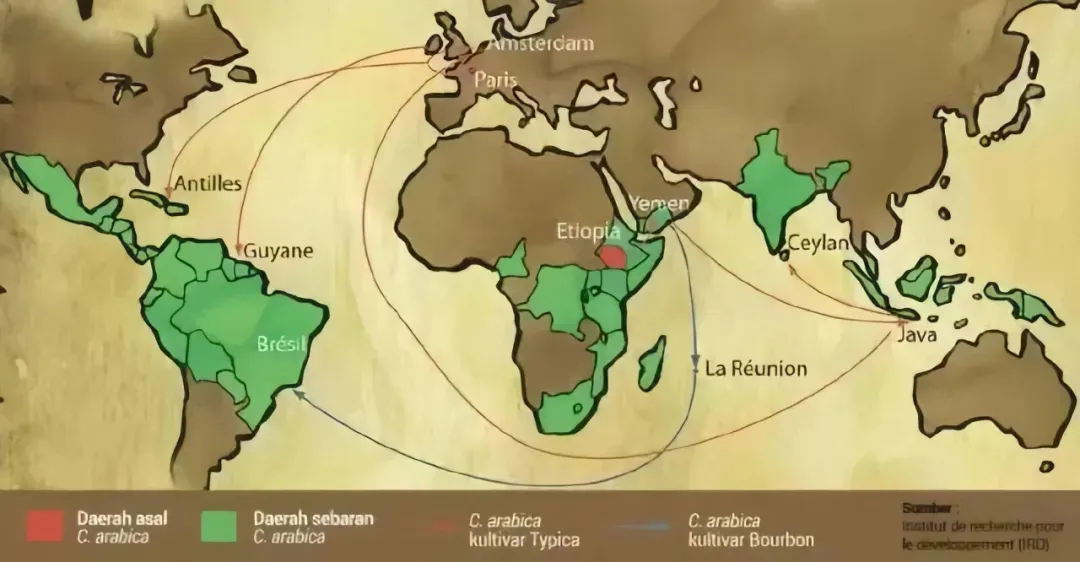
Currently, the more common laboratory varieties include Kenya's SL28, SL34, and Ruiru 11, the F1 hybrid H1 more commonly seen in Latin America, and Catuai, which is now widely grown around the world.
Catuai
Catuai is a variety obtained by crossing Mundo Novo with Caturra, bred by the Agronomic Institute of Campinas (IAC) in São Paulo, Brazil. It features high yield and a short plant size, making it suitable for dense planting, and is therefore grown in many countries across the Americas.
SL28, SL34, Ruiru 11
In the late 1930s, the Kenyan government commissioned the former Scott Laboratories (now the National Agricultural Laboratories) to study 42 varieties, evaluating indicators including yield, quality, and drought and disease resistance, naming these varieties with the laboratory abbreviation SL plus a number. Ultimately, SL28 and SL34 stood out for their quality and flavor, with high yields too, but their drawback was susceptibility to coffee diseases.
Ruiru 11, on the other hand, used Catimor as the female parent, with a complex hybrid combination as the male parent. In 1968, Kenya suffered an outbreak of coffee berry disease (CBD), causing green bean yields to drop by about 50%. The coffee research institute located in Ruiru then launched a breeding program aimed at developing a variety immune to CBD. Researchers spent years first constructing the male parent of Ruiru 11, bringing together the excellent traits of multiple varieties including K7, SL28, N39, and Rume Sudan. In 1985, Ruiru 11, named after the local place name, was officially released. It has high yield, good quality, resistance to berry disease, and some resistance to leaf rust, but is susceptible to nematode attacks.

Therefore, when buying Kenyan coffee beans today, SL28, SL34, or Ruiru 11 are common options. For example, Front Street Coffee's Kenya Asalia coffee beans use the SL28 and SL34 varieties.
H1
The H1 variety originated from the F1 coffee breeding program, jointly initiated by the French Agricultural Research Centre for International Development (CIRAD) and the Central American coffee organization (ROMECAFE), aiming to address increasingly severe coffee diseases. The Central American Agricultural Research Institute (IIAC) and Costa Rica's Tropical Agricultural Research and Higher Education Center (CATIE) assisted in implementation. CATIE selected Caturra, Catuai, Catimor, Sarchimor (a hybrid of Villa Sarchi and Timor), and the ancient African wild variety Rume Sudan from hundreds of varieties, and through artificial pollination, applied pollen from T5296 (a descendant of Sarchimor) to the stigma of Rume Sudan.
After five years of effort, CATIE obtained a total of 100 different new generations, from which 20 outstanding individuals were selected for propagation and cultivation. These F1 first-generation plants not only have stronger disease resistance and drought tolerance, but also combine high yield with excellent flavor.
H1 is a member of the first-generation F1 hybrid group, bred by crossing T-5296 (Sarchimor) from the F1 first-generation hybrid series with Sudan Rume (Rume Sudan). This coffee has good quality, excellent flavor, yields about 22% more than traditional American varieties, has strong resistance to rust, but is susceptible to nematode attacks. Currently, Costa Rica grows more H1, and Front Street Coffee's Costa Rica Mozart coffee beans use the H1 variety.
The above content is compiled by CoffeeHunters, a coffee news website.


