







Search Results for: Refrozen Ice Cubes

Why Does Coffee Shop Ice Melt More Slowly? A Complete Guide to Hand-Brewed Ice—from Ice Machines to Choosing the Right Ice Type
When drinking iced Americano, have you ever noticed that the ice cubes at coffee shops always seem to melt more slowly than the ones at home? From equipment differences to ice cube shape, and even the actual amount used, every detail affects the taste and staying power of cold coffee. Starting from the role of ice cubes, this article analyzes the differences between commercial ice machines and household refrigerators, explains why coffee shops tend to use smaller, more uniformly shaped ice cubes, and also shares the reasons Front Street Coffee insists on using refrigerator ice along with actual comparison tests. If you want your iced pour-over to cool down properly without being overly diluted, the answer you're looking for may be here. [more…]

How Much Ice Makes an Authentic Iced Americano? A Deep Dive into the Secret Behind Coffee Shop Ice That Resists Melting
When drinking iced coffee, have you ever agonized over how much ice to add and how to add it properly? In fact, ice in iced coffee is far more than just a way to cool things down—it also plays multiple roles, such as locking in aroma, maintaining a low temperature, and balancing concentration. Starting from the principles behind how ice works, this article breaks down in detail the differences between solid ice and hollow ice, the advantages of refrozen ice, and, for different categories such as iced Americano, iced latte, iced pour-over, and cold brew and ice drip, provides specific ice-to-coffee ratios and Front Street brand recommendations to help you make a cup of iced coffee at home that isn't watered down and has plenty of aroma. [more…]

The Art of Adding Ice in Iced Coffee Making: A Full Analysis of Cooling, Aroma Locking, and Ratio Techniques
Whether iced coffee tastes good often hinges on the step of adding ice. Ice is not just a cooling tool; it also locks in aroma and maintains a cold mouthfeel. How much ice to add, what kind of ice to choose, and how to ratio different coffees—these questions trouble many enthusiasts. Drawing on Front Street Coffee's practical experience, this article first explains the three major functions of ice in coffee, then analyzes the differences between solid and hollow ice, and between large and small ice, and finally provides specific ice-adding plans for iced Americano, iced latte, iced pour-over, and cold brew/ice drip, helping you make consistently delicious iced coffee at home. [more…]

Kenya Coffee Pour-Over Tutorial: A Complete Brewing Guide from Double Washed Processing to Iced Pour-Over
Kenyan coffee is renowned for its bright, uplifting fruit acidity and rich, full-bodied berry mouthfeel, making it a classic representative among African specialty beans. This article begins with Kenya's growing terroir and the SL-28 and SL-34 varieties, then provides a detailed analysis of how its signature K72 double washed processing method shapes the flavors in the cup. Combined with Front Street Coffee's brewing experience, it shares extraction approaches for Kenyan coffee and the specific steps for iced pour-over, helping you better bring out this bean's berry-like sweet-tartness and juicy texture. [more…]
Where do the floral aromas and fruity acidity of Kenyan specialty coffee come from? Which extraction methods and brewing recipes suit it?
Kenyan coffee is renowned for its bright, elevated fruit acidity and full, substantial berry mouthfeel, making it one of the representative profiles of acidity-driven style in specialty coffee. Its flavor formation is inseparable from the SL-28 and SL-34 varieties, as well as the distinctive double-fermentation washed (K72) process. This article will start from the terroir of the origin, the background of the varieties, and the processing method flow, to analyze the floral and berry notes of Kenyan coffee, and provide extraction approaches such as ice hand pour, ice drip, and cold brew that are suitable for showcasing its acidity, while retaining Front Street Coffee's specific brewing parameters and product recommendations for coffee enthusiasts' reference. [more…]
Kenyan Coffee Flavor Characteristics, K72 Double Washing Process, and Iced Pour-Over Practical Guide
Kenyan coffee is renowned for its bright, uplifting fruit acidity and full, rich berry mouthfeel, making it a unique presence among African specialty beans. This article will draw on Front Street Coffee's cupping experience to outline Kenya's growing terroir, the background of the two major varieties SL-28 and SL-34, and break down in detail the region's signature K72 double washed processing method. It will also combine the Little Tomato coffee beans and the Asalia processing station beans currently sold at Front Street's stores to provide specific parameters and operating steps for iced pour-over, helping coffee enthusiasts understand the source of Kenyan coffee's acidity and the extraction methods best suited to it. [more…]
Where Does Kenyan Coffee Flavor Come From? A Full Breakdown of Varieties, K72 Double Washing, and Iced Brewing
Kenyan coffee is renowned worldwide for its bright, uplifting fruit acidity and full, berry-juice-like mouthfeel. The formation of this unique flavor is inseparable from the local high-altitude volcanic soil, the two major varieties SL-28 and SL-34, and the signature K72 double washed processing method. This article will systematically sort out the core characteristics of Kenyan coffee, from terroir and variety origins to processing techniques, roasting, and extraction, and introduce the flavor performance of several representative Kenyan beans available at Front Street Coffee shops. In addition, it will share three iced drink methods suitable for showcasing Kenya's acidity—ice hand pour, ice drip, and cold brew—to help coffee lovers who enjoy fruity acidity brew a refreshing and pleasant cup of Kenyan coffee at home. [more…]
Where Does Kenyan Coffee Flavor Come From? Analyzing the Causes of Its Juicy Character, the Double Washing Process, and Three Iced Coffee Brewing Methods
Kenyan coffee is famous for its bright, uplifting fruit acidity and full, rich berry-juice body. Where exactly does this unique flavor come from? This article analyzes the causes of Kenyan coffee's flavor from three dimensions: the terroir of its origin, the characteristics of the SL-28 and SL-34 varieties, and the K72 double washed processing method, and also introduces in detail the flavor performance of two representative Kenyan beans in Front Street Coffee stores, Asalia and Little Tomato. In addition, in response to the prominent acidity of Kenyan coffee, the article also shares the specific brewing parameters and operating steps for three kinds of iced coffee: ice hand brew, ice drip, and cold brew, making it suitable for coffee lovers who enjoy fruity acidity to refer to and practice. [more…]

Can a Hot Dirty Coffee Be Achieved? Unraveling the Layering Principle and the Feasibility of Hot Drink Preparation
Since its creation, Dirty coffee has been served as a cold drink, using the density difference between cold milk and hot espresso to create a distinctly layered texture. But many coffee enthusiasts have raised the question: can Dirty be made as a hot beverage? This article begins with Front Street Coffee's secret menu, traces the origins and core production of Dirty, and deeply analyzes the feasibility of hot Dirty. Through actual testing with a specially made ice ball to rapidly cool the espresso and heating the milk, an attempt is made to replicate the layered effect, and the flavor differences between the iced and hot versions are compared. The article also explores the limitations of hot Dirty in café service, answering for coffee enthusiasts why hot Dirty is difficult to become a regular option. [more…]

Complete Guide to Making Coffee Ice Cubes: Do Cold Brew and Iced Coffee Need Coffee Ice Cubes?
On a hot summer day, a glass of iced coffee is a favorite for many, but ordinary ice cubes melt and dilute the coffee into a bland, watery drink. How can you enjoy the chill without sacrificing the rich flavor of the coffee? The answer is coffee ice cubes. In this article, Front Street Coffee will explain in detail how to make coffee ice cubes, including the different approaches for basic coffee ice cubes, cold brew coffee ice cubes, espresso ice cubes, and milk coffee ice cubes, and will also answer whether cold brew and iced coffee really need coffee ice cubes. With just a little advance preparation, every iced drink can keep its rich, full-bodied taste. [more…]
Can stainless steel ice cubes be used to cool coffee? A practical test comparing their effect and usability against homemade ice cubes
When drinking iced coffee in summer, it tends to become diluted toward the end, so some people have thought of using stainless steel ice cubes instead of traditional ice. Are these reusable metal ice cubes really suitable for coffee? Front Street conducted an actual comparison test, analyzing the structure of stainless steel ice cubes, their cooling speed, and their impact on flavor. The results show that although stainless steel ice cubes have the advantage of not melting, their cooling effect is far inferior to homemade ice cubes, especially performing poorly in the ice pour-over step. The article also shares a pour-over plan using a mix of the two types of ice cubes, and explores why coffee shops rarely use stainless steel ice cubes. [more…]
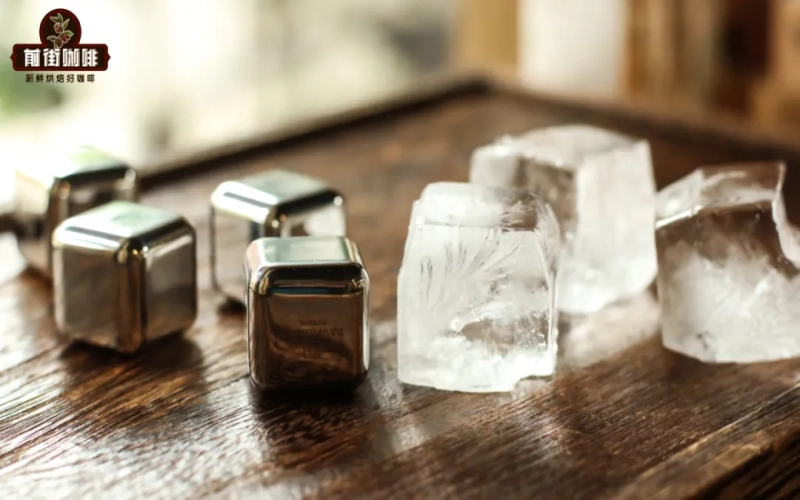
Replacing Regular Ice with Stainless Steel Ice Cubes for Iced Pour-Over? Front Street Tests Cooling Effect and Flavor Differences
On a scorching summer day, you want to drink iced pour-over but worry the flavor will be watered down, so a friend suggests: use stainless steel ice cubes to cool down hot pour-over—wouldn't that give you both full flavor and a refreshing chill? This idea sounds beautiful, but through comparative experiments, Front Street Coffee found that although stainless steel ice cubes can preserve coffee concentration, they fall short of traditional ice cubes in temperature and mouthfeel. This article documents in detail the parameter differences between regular iced brew and the experimental iced brew with stainless steel ice cubes, the actual measured temperature results, and the inherent shortcomings of stainless steel ice cubes—slow cooling and not cold enough—to help you decide whether they are worth using in iced pour-over. [more…]
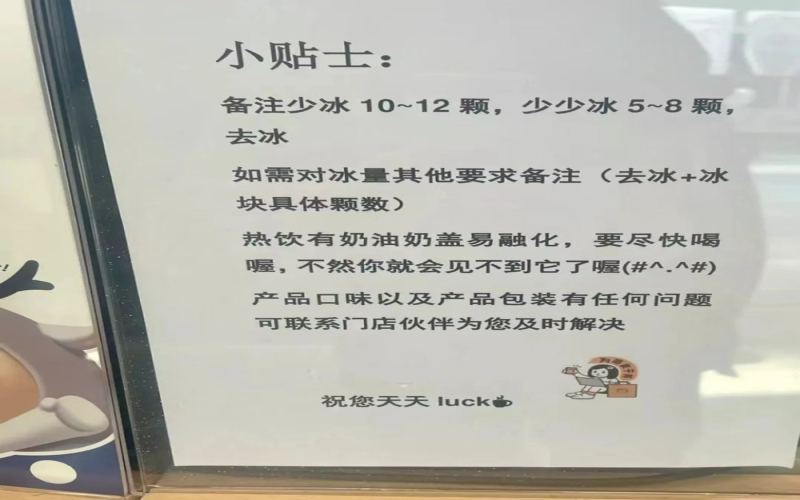
Luckin's ice-amount controversy keeps simmering: office workers pushed to the brink of breakdown by notes telling them to "count the ice cubes"
Luckin's cold drinks do not offer a "no ice" option, and the problem of excessive ice has repeatedly trended on social media. To get a drink that suits their taste, consumers have begun to "report" the exact number of ice cubes in the remarks section, and even make various demands about the shape and temperature of the ice, leaving store employees utterly exhausted. From "less ice, 10–12 cubes" to "two little heart-shaped ice cubes," and even "no ice but with a frosty feel," these bizarre remarks not only reflect consumers' obsession with ice levels but also push Luckin's workers into a dilemma where "whatever they do is wrong." This article compiles a large number of real order remarks, presenting this tug-of-war over ice cubes. [more…]

Luckin Store's Refusal to Provide Ice Ignites Debate: How to Balance Food Safety Rules and Customers' Emergency Needs
Recently, a post about a Luckin Coffee store refusing to provide ice to a customer for her child to use as a cold compress to reduce swelling sparked widespread discussion online. The customer, whose child had suffered a head injury and urgently needed ice, was politely declined by staff citing company policy, and was suggested to seek help at the KFC across the street. Behind this incident lies the dilemma that chain beverage brands face between food safety control and customers' emergency needs. Luckin employees revealed that the rule against providing ice separately stems from a previous incident in which someone sent store ice for testing, triggering an economic dispute. Since then, bar-counter surveillance has been monitoring in real time, and those who violate the rule may face bonus deductions. However, when customers face special emergencies, should there be room for flexibility? Front Street Coffee takes you into an in-depth discussion of this topic. [more…]

Regulators Investigate Luckin Coffee Over Black Foreign Object in Ice, Food Safety Back in the Spotlight
Recently, a Luckin Coffee store in Huanggang, Hubei, was complained about by a consumer after black spot-like foreign objects were found in the ice in a drink. The incident quickly spread online and trended on social media. The customer said they vomited after drinking it, the store has refunded the money, and the local market supervision department intervened in the investigation. An initial inspection found no signs of mold. Luckin responded that it attaches great importance to the matter and has launched an internal review, but has not yet announced the results. The incident has triggered public discussion about hygiene management in chain coffee shops, and also prompted us to re-examine the potential risks in the ice-making process. [more…]

Is It Feasible to Use Dry Ice Instead of Ice Cubes for Iced Pour-Over? A Comprehensive Analysis of Cooling Methods for Pour-Over Coffee
Iced pour-over coffee needs rapid cooling, but ordinary ice cubes melt and dilute the coffee's strength. Some friends suggested using non-melting stainless steel ice cubes, but that attempt failed; then someone else recommended dry ice, which cools quickly and doesn't cause dilution. Dry ice can indeed chill coffee rapidly without turning into water, but when it sublimates it releases carbon dioxide, which dissolves into the coffee and turns a cup of iced pour-over into carbonated coffee—essentially deviating from what's wanted. This article provides a detailed analysis of dry ice's physical properties, its everyday uses, and why it's unsuitable for making pour-over coffee, along with Front Street Coffee's key points from their dry ice experiments and a recommended bean list. [more…]

How to Make Coffee Ice Cubes? Three Pre-Made Methods and Usage Guide for Lazy Iced Coffee
As summer temperatures climb, iced coffee becomes a daily necessity, but cold brew filtering is time-consuming and low-temperature extraction is picky about beans—not everyone is willing to wait. Front Street shares a pre-made solution that gets you out the door in one minute—freeze coffee liquid into cubes ahead of time, then dilute with water or milk when drinking, easily recreating iced Americano, iced latte, and iced pour-over. Although overnight freezing loses oils and some aroma, its advantage lies in being simple, convenient, and fast. Below are the extraction parameters, dilution ratios, and step-by-step instructions for three types of ice cubes, along with a Big Belly脐 pour-over demonstration, for time-pressed coffee lovers to reference. [more…]

Cold Brew Coffee Bean Recommendations | How to Make Cold Brew Coffee? Cold Brew Coffee Extraction Time, Coffee-to-Water Ratio, and How Much Ice to Use?
For more specialty coffee knowledge, please follow our WeChat official account: Front Street Coffee (FrontStreet Coffee). When it comes to iced coffee, the first thing that comes to mind for many might be methods like ice drip or cold brew. Today, Front Street is sharing another very simple iced coffee method: ice extraction. [more…]
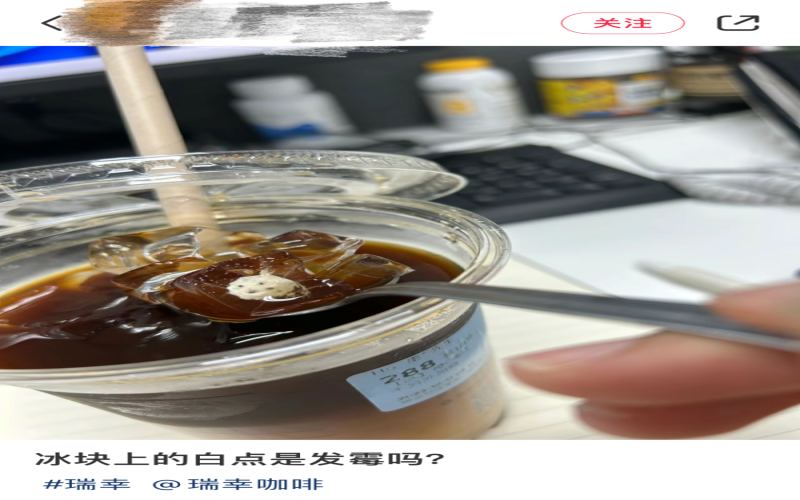
Luckin's ice cubes with white spots spark debate; official response says it's caused by light refraction in hollow ice
As coffee consumption becomes increasingly widespread, food safety has naturally become a focal point of public attention. Recently, a post circulating on social media questioned whether the white spots on ice cubes in beverages were mold, quickly sparking heated discussion among netizens. In response, Luckin officially stated that the ice cubes have a hollow structure, and when preparing drinks, air or foam enters the grooves, causing light refraction that visually appears as white spots, which disappear after stirring. Meanwhile, an on-duty barista came forward to detail Luckin's ice machine cleaning procedures and handwashing standards, vigorously proving that the store's hygiene standards are strict. Whether this incident stems from consumer misunderstanding or hidden hygiene risks, opinions vary. Front Street will also continue to monitor food safety developments in the coffee industry, providing reliable information for enthusiasts. [more…]
Comparison of Two Dilution Methods for Iced Pour-Over Coffee: Flavor Differences and Key Operational Points Between Diluting with Ice and Diluting Over Ice
On a scorching summer day, iced coffee naturally becomes a hot topic of discussion among coffee lovers. Some coffee enthusiasts have raised the question: for iced pour-over coffee, is it better to simply add ice to dilute it, or to let the coffee liquid flow over ice to dilute it? To this end, Front Street specially carried out a round of comparative experiments, selecting Costa Rican巨石 Estate coffee beans and using the same brewing parameters to prepare an add-ice group and an ice-flow group separately, conducting a comprehensive comparison from flavor performance and mouthfeel layers to operational stability. This article will break down in detail the principles, operating procedures, and experimental results of the two dilution methods, helping you make iced pour-over coffee at home that suits your own taste. [more…]