







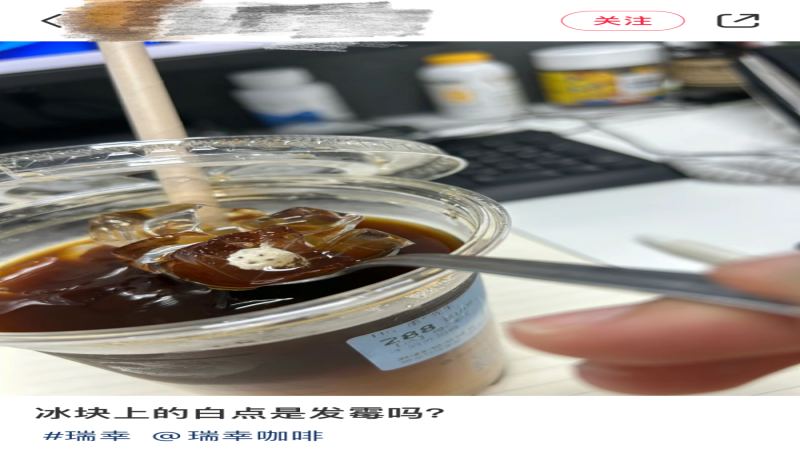
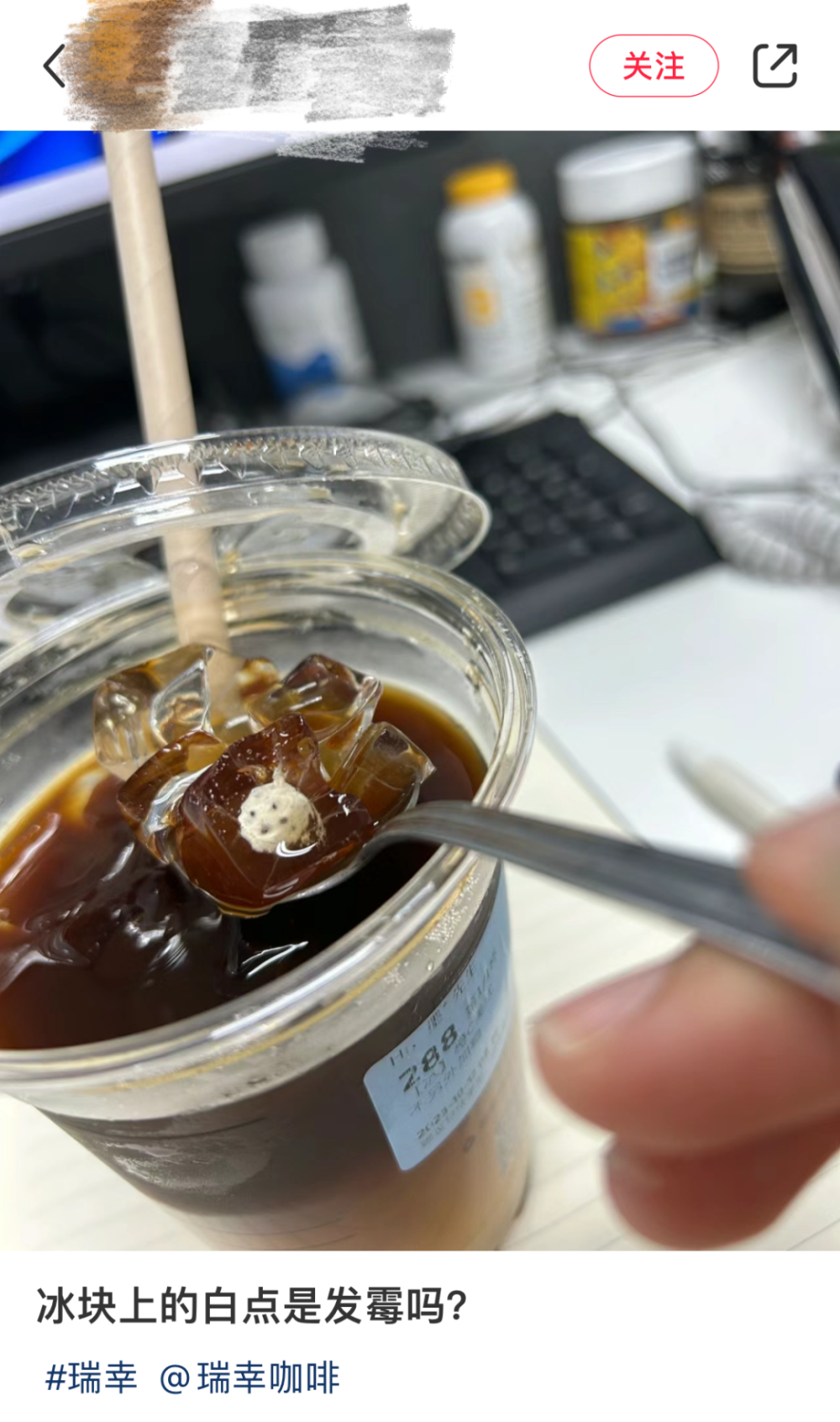
Is the white spotting on ice actually coffee mold?
A social media post asking whether white spots on ice cubes in drinks were coffee mold spread quickly and triggered a food safety discussion. Luckin Coffee responded that the ice has a hollow structure, and that air or foam entering the grooves during drink preparation causes light refraction that looks like white spots. The spots disappear after stirring, according to the company.
An on-duty barista also described the chain's ice machine cleaning routines and handwashing standards to show store hygiene procedures are followed. Critics in the comments questioned whether the ice machine had been cleaned properly, while others noted that low freezer temperatures inhibit most microbial growth. Regular washing coffee machines and monitoring remain the practical safeguards the industry relies on.
As coffee consumption becomes increasingly widespread, food safety has naturally become a focal point of public attention. Recently, a post circulating on social media questioning whether the white spots on ice cubes in beverages were mold quickly sparked heated discussion among netizens. In response, Luckin Coffee officially stated that the ice cubes have a hollow structure, and when preparing drinks, air or foam enters the grooves, causing light refraction that visually appears as white spots, which disappear after stirring. Meanwhile, an on-duty barista came forward to detail Luckin's ice machine cleaning procedures and handwashing standards, vigorously proving that the store's hygiene standards are strict. Behind this incident lies the question of whether it is consumer misunderstanding or a hygiene hazard, with different parties offering different accounts. Front Street will also continue to monitor food safety developments in the coffee industry, providing reliable information for enthusiasts.
▲
Click to follow | Daily specialty coffee culture magazine Coffee Workshop
Coffee is one of the most consumed beverages globally, and food safety topics surrounding it always touch people's hearts. As more and more people drink coffee, everyone's concern about coffee drinking safety has also risen.
Recently, a post on social media asking "Are the white spots on ice cubes mold?" attracted a large number of netizens to watch and discuss.
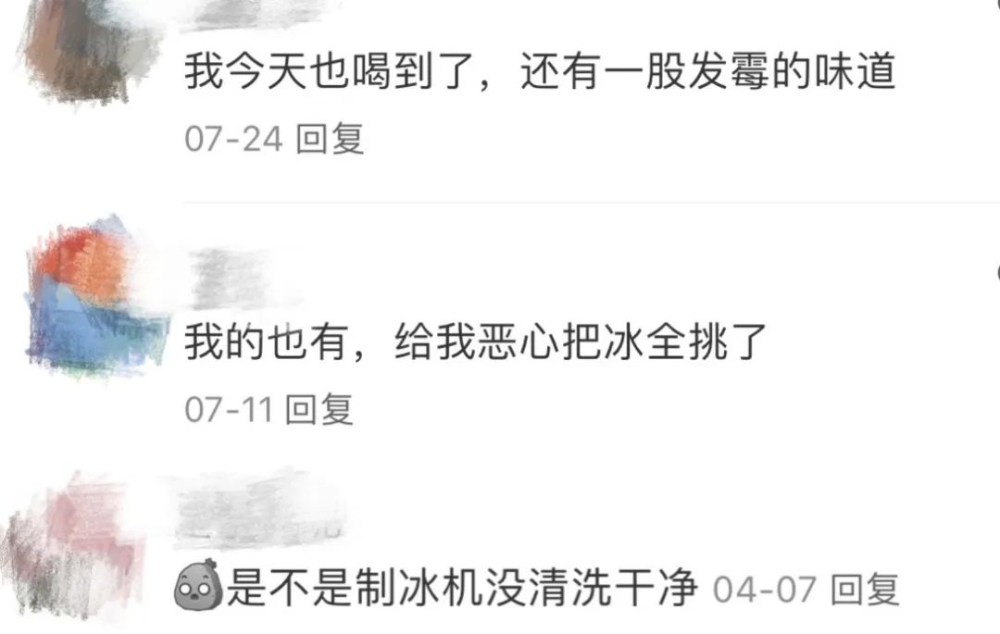
In the comments section, some bystanders speculated, "Is it because the ice machine wasn't cleaned properly?" "I encountered this today too, and there was a moldy smell."
However, some netizens held different views: "This is because air got in when the ice machine was freezing the ice cubes." "Ice is just a bunch of water—unless organic matter is mixed in, bacteria simply can't grow, and the low temperature is enough to inhibit many bacteria." Logically speaking, the low-temperature environment inside an ice machine can indeed inhibit microbial reproduction, and generally would not breed bacteria and mold.
Looking at it from another angle, this kind of situation seems quite common—posts about moldy ice cubes in drinks abound on social media. What exactly is causing this?
In response to these posts, Luckin Coffee verified each one and gave a reply: "Hello, because the ice cubes are hollow, when preparing drinks, the grooved side faces down, and air or foam enters the grooves. Light refracts through the ice, visually creating this effect. It will disappear after stirring, so please drink with confidence~"
At this point, an on-duty Luckin barista stepped forward to explain that Luckin's ice machines are directly connected to the drinking water pipe, and cleaning the ice machine is a fixed weekly task. The cleaning process is roughly: wash hands ➡️ wear disposable gloves ➡️ wipe the ice scoop and ice bucket with a disinfectant powder cloth ➡️ scoop ice ➡️ then wipe the ice scoop and ice bucket again with a disinfectant powder cloth to finish.
Furthermore, those familiar with Luckin know that the brand is quite strict about food safety control, and every store is equipped with a timer. Employees must use hand soap every time they wash their hands, scrubbing from the inside out for 20 seconds (this is an internal Luckin exam question). Such strict hygiene requirements are meant to ensure customers can enjoy safe, hygienic drinks in the store.
In addition, a Luckin barista joked, "Luckin's cleaning is cleaner than my wallet."
Regarding this incident, both sides have their own points. If consumers have indeed misunderstood Luckin, we hope the company can clearly explain the specific reasons to the public to prevent the misunderstanding from spreading further. If Luckin's hygiene environment truly has problems, then it should rectify and handle the matter properly as soon as possible—satisfying consumers is the ultimate goal.
At present, the food service industry must strictly abide by laws and regulations, earnestly fulfill food safety responsibilities, and promptly investigate and prevent various food safety hazards. Front Street also looks forward to Luckin Coffee continuing to step up its service and quality, bringing consumers safer and more reliable products.
Image source: Internet
Disclaimer: Some images in this article are from the Internet, and some content on the website such as images—we will respect the original authors' copyright and indicate the source, but due to the large quantity, some images and texts may not have been credited in time. Please forgive us. If the original author has any disputes, they can contact the website for handling. Once verified, we will correct it immediately. Compiled and edited by "Coffee Workshop." Please indicate the source when reposting. If there is infringement, please inform us for deletion. Thank you~!
The above content is compiled by CoffeeHunters, a coffee news website.


