







Does Front Street Coffee Recommend Stainless Steel Ice Cubes?
Front Street Coffee tested replacing regular ice with stainless steel ice beads in iced pour-over and found the trade-off does not favor the metal cubes. The stainless steel version kept the coffee more concentrated, but it cooled the drink slowly and left it noticeably less chilled than 120g of regular ice, so the mouthfeel fell short.
The comparison used 15g of coffee at an Ek43 grind of 9.5 versus 10, with 92°C water and a V60. Regular ice ran a 1:10 ratio; the stainless steel batch used 1:15 to offset slower melting. That difference in dilution and chill is the deciding factor, and it matters more than how long coffee lasts in the freezer.
In the sweltering summer heat, you crave iced pour-over but worry the flavor will be diluted, so a friend suggests: use stainless steel ice cubes to cool down a hot pour-over, wouldn't that give you both full flavor and a chilled taste? This idea sounds beautiful, but Front Street Coffee found through comparative experiments that although stainless steel ice cubes can preserve coffee concentration, they fall short of traditional ice cubes in terms of temperature and mouthfeel. This article documents in detail the parameter differences between regular iced pour-over and experimental iced pour-over using stainless steel ice cubes, the measured temperature results, and the inherent shortcomings of stainless steel ice cubes—slow cooling and insufficient chill—to help you decide whether they are worth using in iced pour-over.

1:15 (225ml) | ||


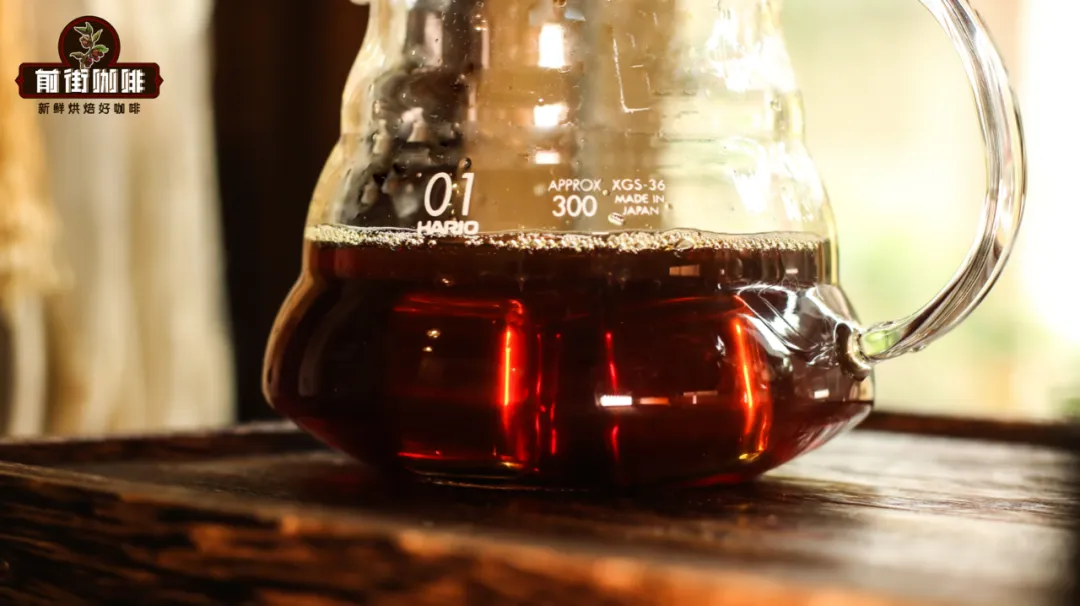

Recently, the most frequently asked question at Front Street Coffee's shop has been: "When making iced pour-over, can we replace regular ice cubes with stainless steel ice cubes?"
Everyone knows that if you want to taste the fullest coffee flavor in a pour-over, hot brewing is undoubtedly the best approach. With sufficient hot water, the premium flavor compounds in the coffee can be extracted more completely. In contrast, iced pour-over has an inherently lower extraction efficiency, because we have to reduce the amount of water poured to raise the coffee concentration, in order to offset the dilution effect caused by rapidly melting ice. Precisely because of this, no matter how aggressively you extract, iced pour-over coffee struggles to present the same complete flavor profile as hot brewing.
So a group of coffee enthusiasts who, in the scorching heat, neither want to drink hot pour-over nor want to compromise on flavor, unanimously devised a "seemingly win-win" solution: "As long as we use stainless steel ice cubes to cool down a hot pour-over, won't we get an iced pour-over with full flavor?"
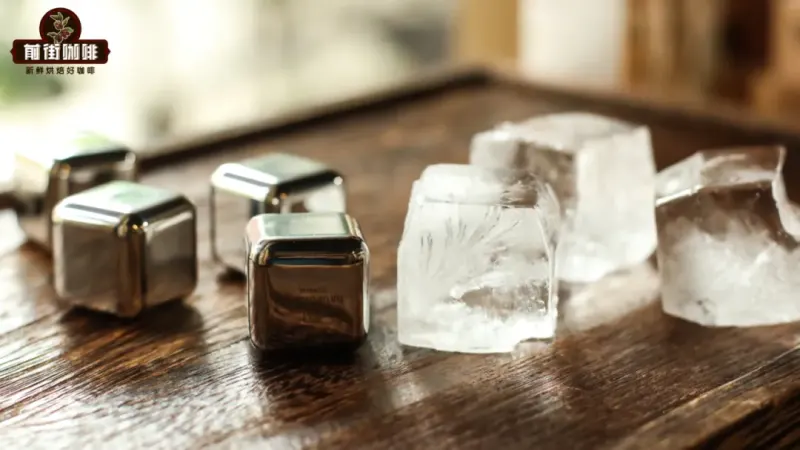
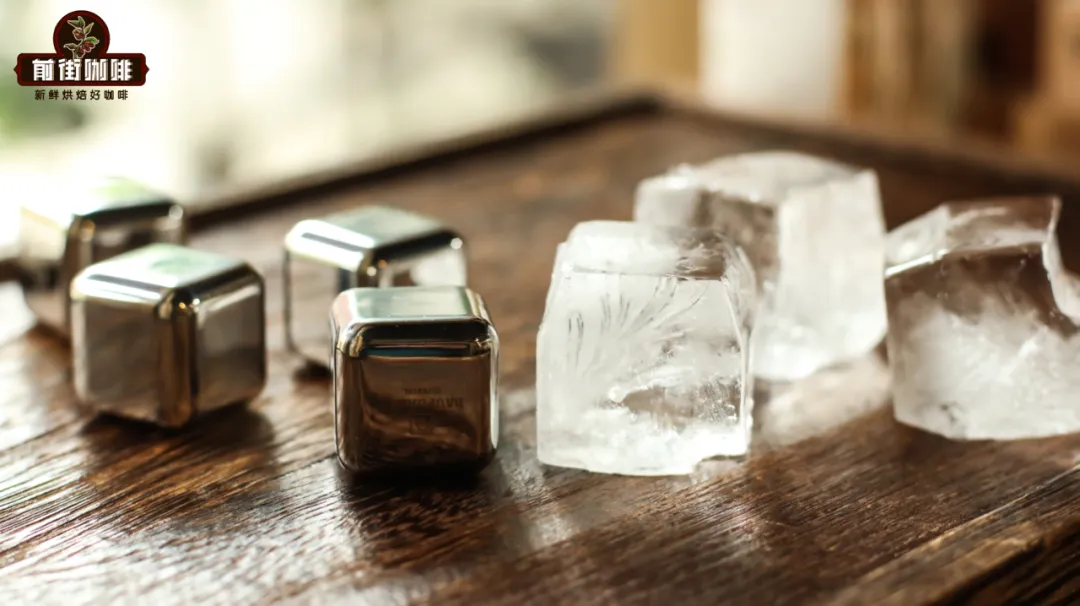
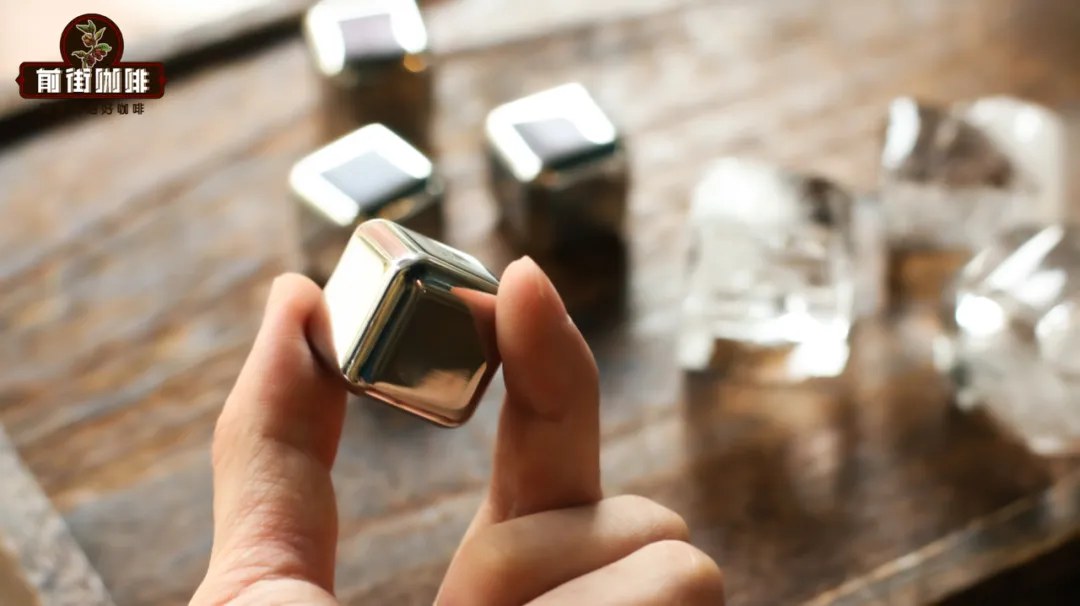
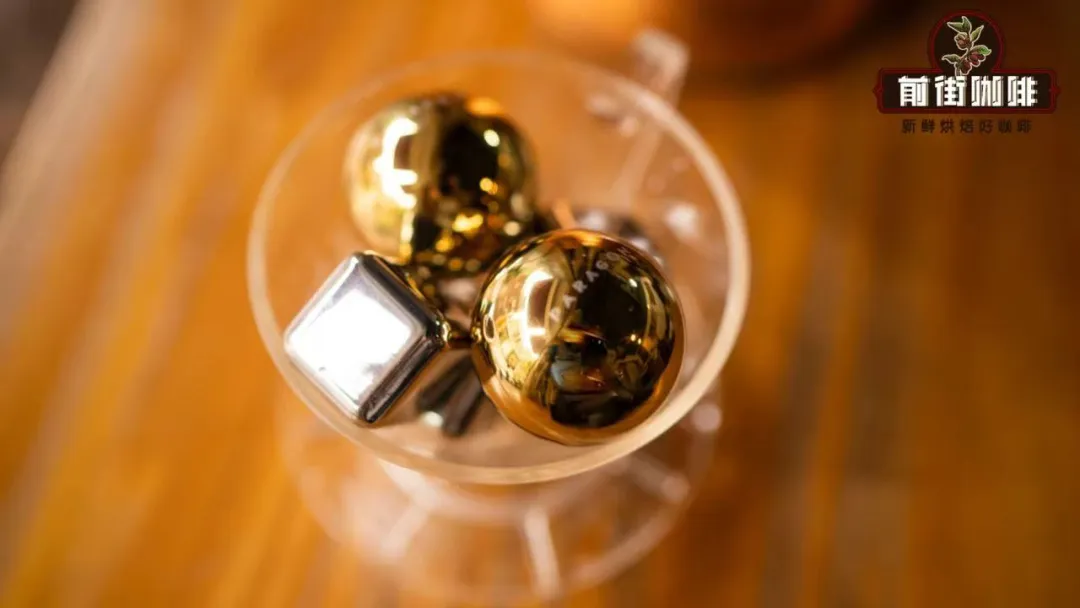
So-called stainless steel ice cubes are block-shaped beads with an outer shell made of 304 or 316 stainless steel. Their interior is neither solid nor hollow—instead, they are filled with a colorless, odorless cooling liquid, usually a mixture of water and alcohol or glycerin. At room temperature, shaking them lets you feel the liquid sloshing inside. A brief stint in the freezer is all it takes for them to perform a function similar to ice cubes.
Theoretically, this does make sense: stainless steel ice cubes, which do not melt, cool the coffee without changing its concentration—cooling the coffee while preserving full flavor and concentration. However, though the idea is beautiful, the actual results always deviate.
In fact, Front Street Coffee conducted related tests last year, and although the results proved that stainless steel ice cubes can produce a certain effect, they are hard-pressed to truly replace ice cubes. Why do we say that? Take a look at this set of comparative experiments Front Street Coffee conducted:
Regular Iced Pour-Over
Experimental Iced Pour-Over
Coffee Dose
15g
15g
Grind Setting
Ek43 setting 9.5
Ek43 setting 10
Coffee-to-Water Ratio
1:10 (150ml)
1:15 (225ml)
Water Temperature
92°C
92°C
Brewing Method
Three-pour method
Three-pour method
Dripper Used
V60
V60
Ice Used
120g (4 cubes)
6 stainless steel ice beads
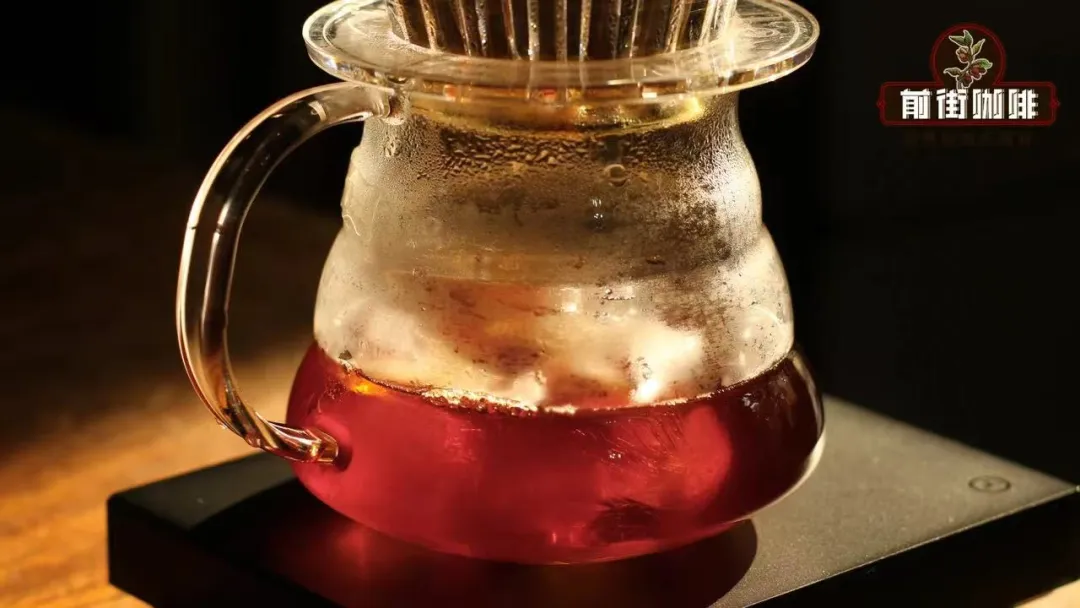
Front Street Coffee brewed two pots of iced pour-over separately: one made according to the regular iced pour-over process, and the other first brewed hot, then cooled by dropping in stainless steel ice cubes. The specific parameters are shown in the table above. After brewing was complete, Front Street Coffee stirred both pots to ensure the ice fully cooled the coffee, then measured the temperature of each pot with a thermometer. The final results were 6°C and 16°C respectively.
The coffee beans used in Front Street Coffee's experiment were Panama Boquete Geisha. Brewed as regular iced pour-over, it presented flavors of citrus, white florals, and green tea; the pot brewed hot then cooled with stainless steel ice cubes had a more pronounced flavor expression, with a distinct coffee finish. But this does not mean the iced coffee made with stainless steel ice cubes is superior, because its performance beyond flavor is unimpressive, especially in terms of mouthfeel.
Although the difference is only 10°C, the difference in mouthfeel is quite striking. The pot using stainless steel ice cubes tasted far less icy than the iced pour-over made with regular ice cubes—just a hint of coolness. Even though the flavor was complete, the mouthfeel on the palate was lackluster, somewhat like a glass of room-temperature americano.
Moreover, stainless steel ice cubes have another shortcoming: their cooling speed is rather slow. Front Street Coffee spent more stirring time than with regular iced pour-over to bring the hot coffee down to 16°C. The reason is simple—there were not enough stainless steel ice cubes, and there is no phase change process; they rely on the internal cooling liquid slowly releasing its chill. Therefore, their heat absorption rate is far lower than that of ordinary ice cubes, and the cooling effect is naturally less than ideal.
Of course, you can't blame them for this. After all, the core function of stainless steel ice cubes is to keep things cold rather than to cool them down, so being unable to cool quickly is only reasonable.
In summary, the disadvantages of using stainless steel ice cubes to cool coffee are that they are not cold enough and do not cool fast enough. But these two problems are actually easy to solve! As long as you pile up the number of stainless steel ice cubes and win by quantity, you can boost both the speed and intensity of cooling.
But you should know that the improvement from piling on more is not as great as everyone imagines. As we said, the main function of stainless steel ice cubes is to keep cold rather than to cool down. So this is also why, to date, few coffee shops use stainless steel ice cubes to serve iced pour-over.
Overall, if you want to experience full flavor in an iced pour-over, don't mind the hassle, and can accept a less-than-stellar mouthfeel, then stainless steel ice cubes can indeed come in handy. If not, it's still safest to make iced pour-over with traditional ice cubes—sacrificing only a little flavor to get the temperature and mouthfeel you want, without all the fuss.
You can't have your cake and eat it too. How to choose is up to you. Last but not least, Front Street Coffee reminds all friends: if you decide to use stainless steel ice cubes for cooling, then when you're ready to stir the brewed coffee to speed up cooling, be sure to remember to "stir it slowly." Otherwise, the hard-surfaced stainless steel ice cubes could very likely poke a big hole in your glass container, and that would be more trouble than it's worth.
- END -
The above content is compiled by CoffeeHunters, a coffee news website.


