








For more coffee origin news and coffee knowledge, please followCoffeeHuntersToutiao account
When it comes to iced coffee, the first thing that comes to mind might be methods like ice drip or cold brew. Today, Front Street Coffee would like to share another very simple iced coffee method: ice extraction.
Front Street Coffee will first clarify the differences between these three terms. Ice drip emphasizes ice water dripping drop by drop into coffee grounds, extracting and filtering out the coffee liquid; cold brew, also called cold immersion, usually involves soaking coffee grounds in cold water and extracting coffee in a low-temperature environment; ice extraction involves directly placing ice cubes in contact with coffee grounds to extract coffee. The main materials needed for ice extraction are very simple—just a large dripper, ice cubes, and coffee grounds. The operation is also very simple and straightforward: place a filter paper on the dripper, pour in the coffee grounds, add ice cubes on top of the coffee grounds, and leave the rest to time.

Some friends may have tried this ice extraction method long ago, and some may have figured it out on their own, experimenting until they landed on this iced coffee-making method. The principle and general approach are almost identical; what may differ is some details in the parameters. So those who have learned the method can also take a look at the parameters and learn from each other.

In terms of coffee bean selection, Front Street Coffee recommends choosing coffee beans with relatively rich flavors. For example, in this demonstration, Front Street Coffee uses Front Street Coffee's Xizhua coffee beans, which when made into iced coffee will have flavors of grape, blueberry, and passion fruit, with a full juicy feel. As for the dose, you need to consider the size of the dripper. It is best that the coffee grounds do not exceed 1/2 the height of the dripper, because the capacity for adding ice later also needs to be considered. Front Street Coffee uses a Hario V60 02 dripper, with a dose of 30 grams. The coffee grind should be coarser than for pour-over, with a 65-68% pass rate on a No. 20 sieve.

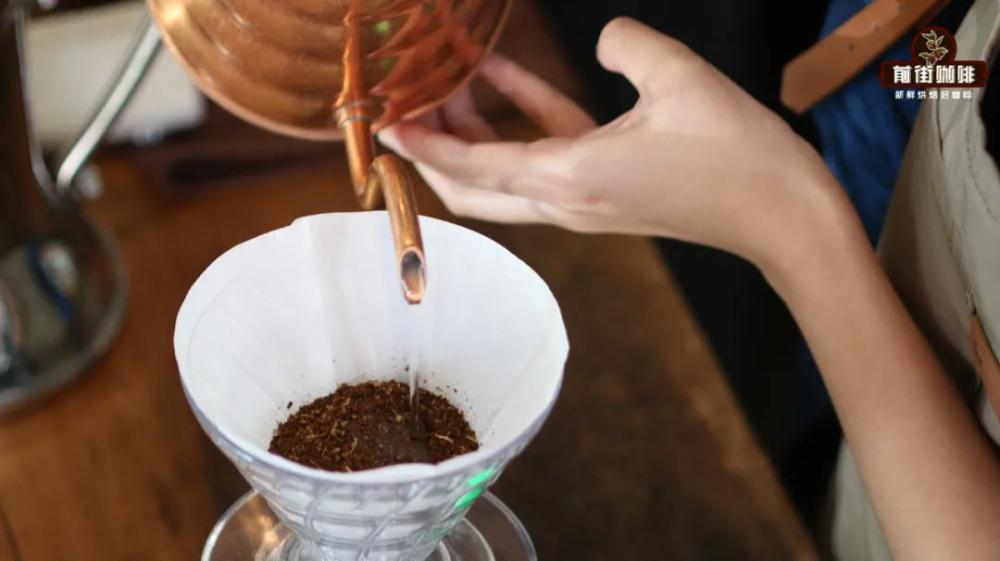
After grinding the coffee, pour it into the dripper, gently tap it level, then pour in 30ml of cool water to moisten the coffee bed, in order to avoid severe uneven extraction.
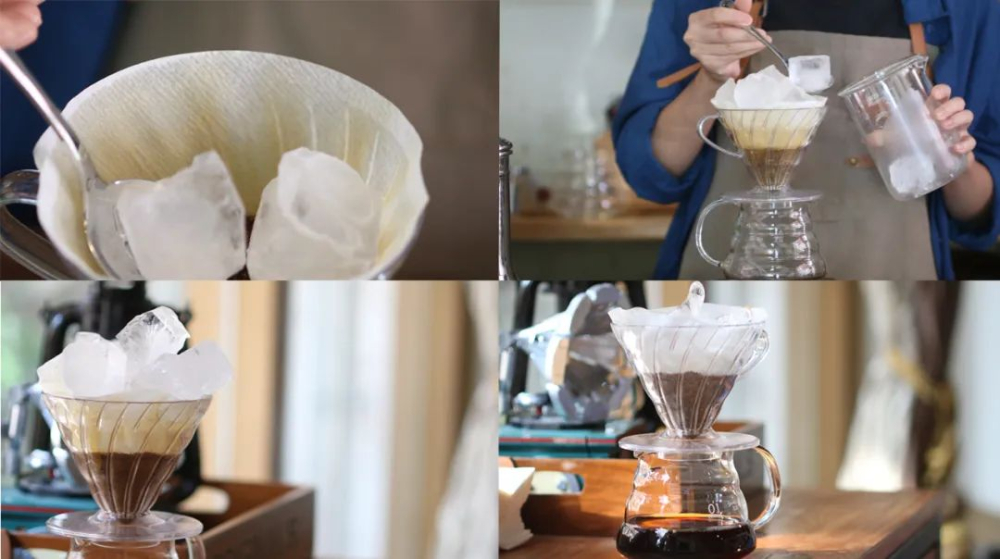
Then you can move the pot aside and wait at room temperature for the ice cubes to slowly melt and extract the coffee.
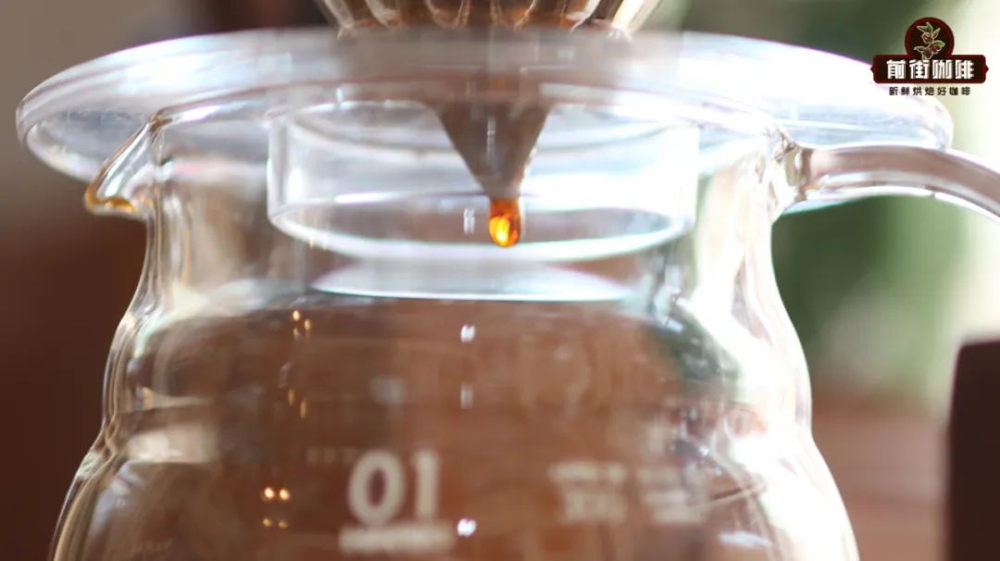
The time it takes for all the ice cubes to melt is about 5 hours. After the ice cubes have all melted, you can remove the dripper. The extracted coffee liquid can be drunk immediately. When drinking, you can add 1-2 large ice cubes to keep the coffee at a low temperature for a better mouthfeel; you can also refrigerate it for a while before drinking.
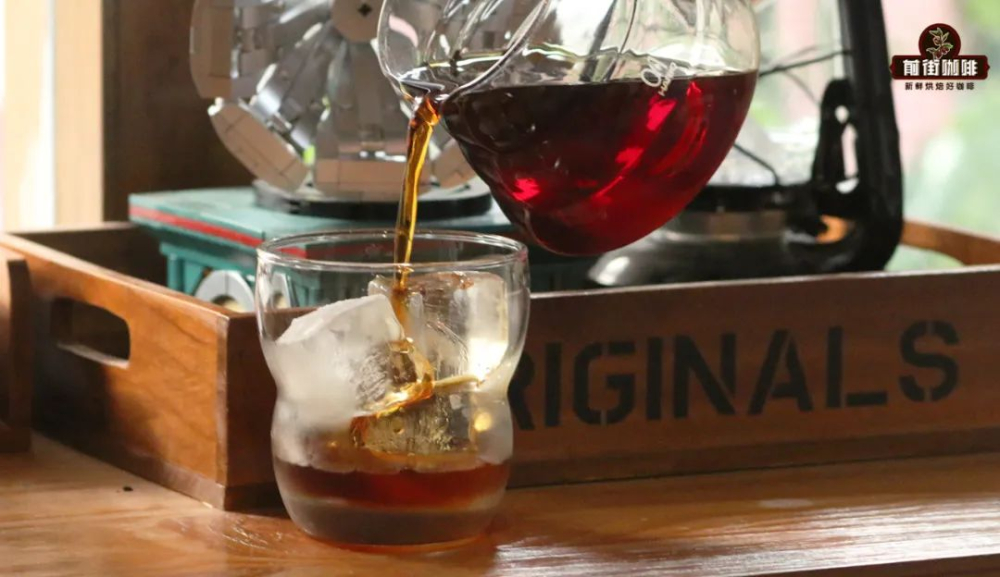
Although this ice extraction method has many uncertainties in extraction, such as the melting speed of the ice cubes being difficult to control and the flow direction of the water after the coffee melts being difficult to control, in practice the fault tolerance is very high. In other words, for daily drinking, the coffee made this way tastes good.
The above content is compiled by CoffeeHunters, a coffee news website.

