







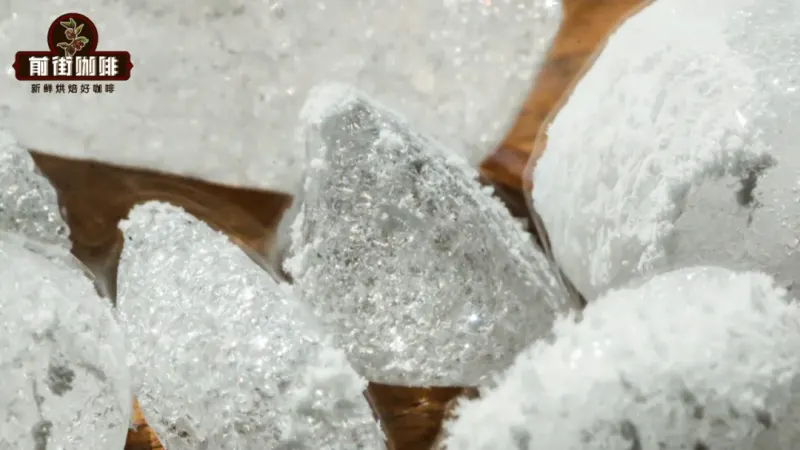
Can dry ice work for hand brew coffee cooling?
Dry ice cools coffee quickly and does not dilute it, but as it sublimates it releases carbon dioxide that dissolves into the liquid. The result is carbonated coffee rather than the intended iced pour-over, so the method departs from what hand brew coffee meaning implies for flavor. Stainless steel ice cubes failed earlier for a different reason: they cannot chill the brew fast enough.
Ice hand brew relies on rapid chilling, and melting ice dilutes the cup. The usual fix is a high-concentration, low-extraction approach: brew a stronger concentrate first, then let the ice offset the dilution. Hot hand brew remains the more complete option for flavor layers because it uses more water and extracts more thoroughly, which is why dry ice is unsuited to cafe service.
Ice hand-brewed coffee needs rapid cooling, but ordinary ice melting will dilute the coffee's strength. Some friends suggested using non-melting stainless steel ice cubes, which ended in failure; then someone else suggested dry ice, which cools quickly and doesn't cause dilution. Dry ice can indeed rapidly cool coffee without turning into water, but after sublimation it releases carbon dioxide, which dissolves into the coffee and turns a cup of ice hand-brew into carbonated coffee, essentially deviating from the need. This article provides a detailed analysis of dry ice's physical properties, everyday uses, and why it's unsuitable for hand-brewed coffee, along with Front Street's key points from dry ice experiments and recommended bean list.
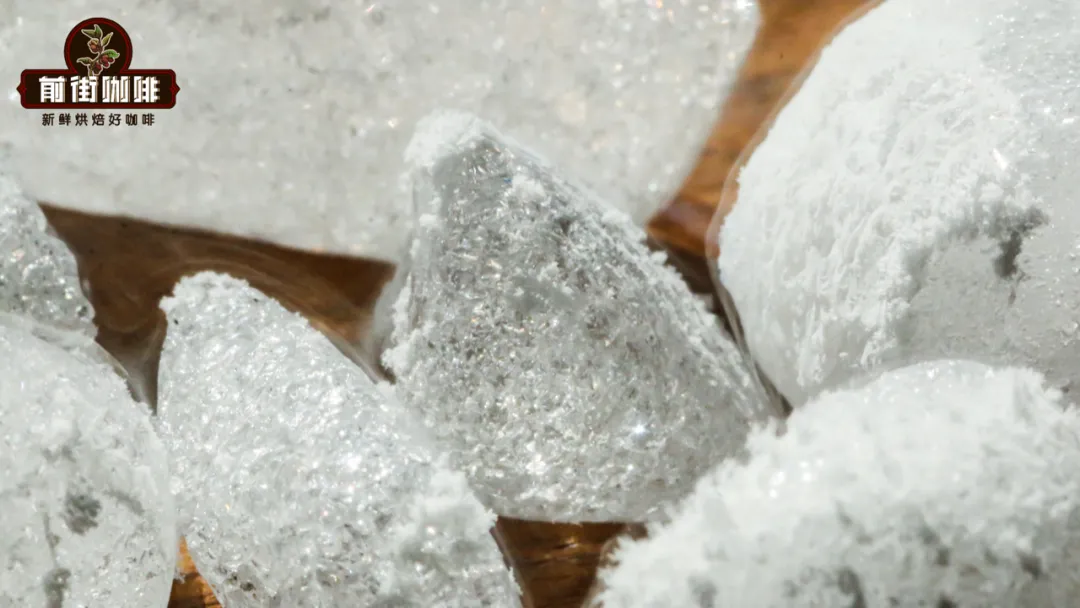
"If you want to experience the most complete flavor layers in hand-brewed coffee, hot hand-brew is always the first choice." Whenever customers ask Front Street whether a certain bean is more suitable for ice brew or hot brew, Front Street gives this answer. The reason isn't complicated: hot hand-brew uses more water, and the extraction process is more thorough.
Ice hand-brew, on the other hand, must rely on ice cubes to rapidly cool the coffee in a short time. But melting ice cubes will dilute the coffee liquid. If you don't want to drink a cup of coffee that tastes bland and feels thin, you need to adopt the "high concentration, low extraction" approach—first getting a cup of higher-concentration coffee, then using it to offset the dilution caused by melting ice.
When the water volume decreases, extraction efficiency drops accordingly, the total amount of dissolved substances also decreases, and the completeness of the coffee's flavor is compromised. Earlier, a friend asked whether non-melting stainless steel ice cubes could replace ordinary ice cubes for ice hand-brew, and the result was obvious—it ended in failure.
Stainless steel ice cubes, due to various reasons (please refer to that article for details) , cannot bring the coffee down to the ideal temperature in a short time. So many friends left comments suggesting switching to "dry ice," which cools rapidly and doesn't cause dilution, to make ice hand-brew.

Honestly, dry ice does deliver a rapid cooling effect and doesn't dilute the coffee. But! It! Is! Also unsuitable for making hand-brewed coffee, especially for café service.
What is dry ice ?
Ordinary ice is water solidified into a solid at low temperature—that is, the solid form of water—and after absorbing heat it turns back into water. Dry ice is completely different! Although its name also contains the word "ice," it is worlds apart from the ice cubes we use daily.
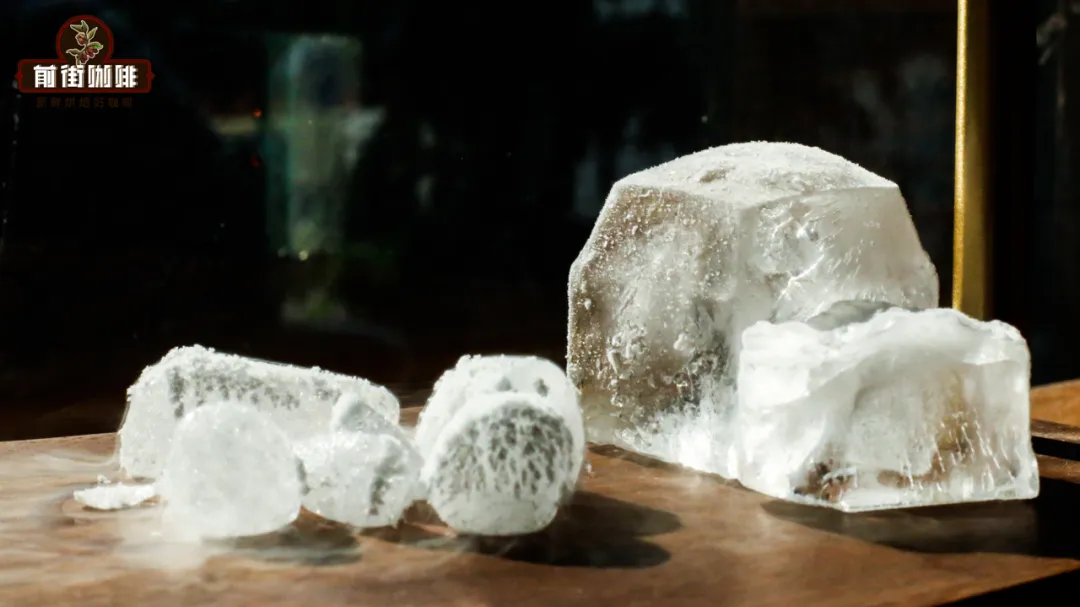
(The small piece on the left of the image is dry ice)
Dry ice is a solid made from carbon dioxide—in plain terms, solid carbon dioxide. Front Street believes everyone is already very familiar with carbon dioxide, because the gas we exhale when breathing is carbon dioxide.
Carbon dioxide does not exist in liquid form under standard atmospheric pressure (it can form a liquid under specific high-pressure conditions) but it will directly condense into a solid when the temperature is below minus 78.5°C. And when the temperature rises above minus 78.5°C, solid carbon dioxide will directly sublimate into gas. Because solidified carbon dioxide looks not much different from ordinary ice, and the entire phase change skips the liquid stage, with no liquid form—meaning it doesn't melt into water when heated—people simply and neatly named it "dry ice."
(Note: in addition to low temperature, everyday dry ice also requires high pressure to be made)

In fact, dry ice is not rare in daily life and has quite a wide range of uses. As Front Street mentioned earlier, dry ice directly sublimates into gas, and during sublimation it absorbs a large amount of heat from its surroundings. This causes water vapor in the air to liquefy into tiny droplets due to the temperature drop, forming mist. Many performance occasions—such as concerts, stage plays, and even some restaurants and bars—use large amounts of dry ice to create dreamy smoke effects.
In addition, because dry ice absorbs a large amount of heat and lowers the surrounding temperature when it sublimates, it can lower food temperature through direct or indirect contact, serving to preserve freshness and cool things down. At the same time, since it doesn't liquefy into water, there's no need to worry about food being soaked or concentration being diluted.
At this point, Front Street believes everyone already fully understands dry ice's structure and functions—it can indeed rapidly cool coffee without diluting its strength. So here's the question: why does Front Street say it's unsuitable for making hand-brewed coffee?
The reason is simple: dry ice releases carbon dioxide after sublimation! When we put dry ice into coffee, although the coffee cools rapidly, the dissolved carbon dioxide combines with the coffee, and what we end up with is not a cup of ice hand-brewed coffee, but a cup of ice-cold carbonated coffee .
Even if the cooling goal is achieved, the essence of the coffee has changed, and it deviates far from our needs, so dry ice naturally cannot be used by us.
Perhaps some friends will suggest: "Wouldn't cooling it in a water bath work?" That may be so, but it's very cumbersome to do and not efficient. Front Street believes there's no need to perform such a complicated operation just to make up for this small portion of flavor. The key point is that ordinary ice cubes can accomplish this task, so there's absolutely no need to use dry ice.
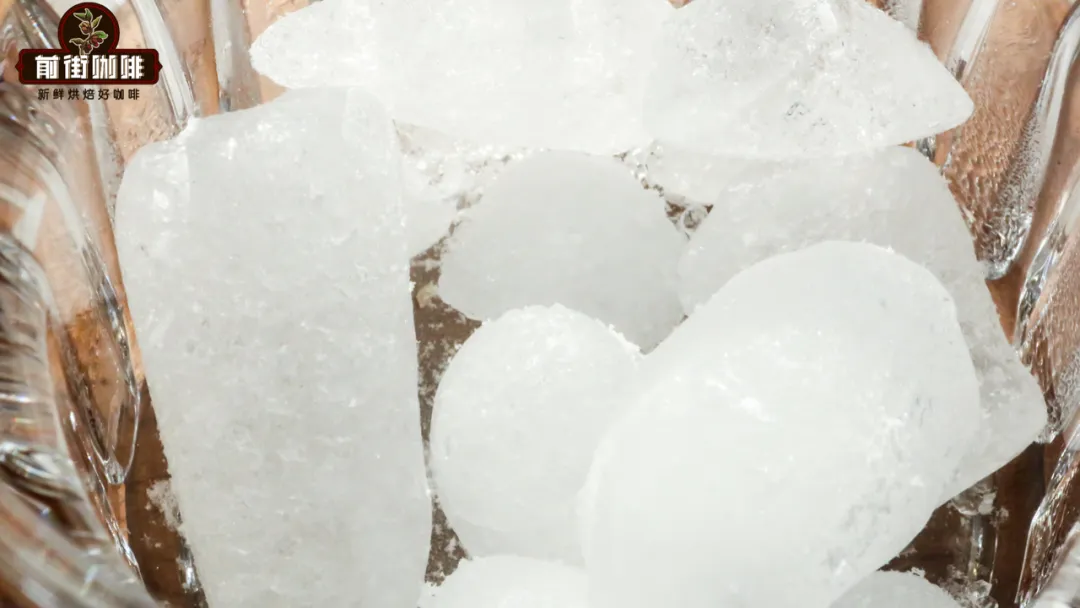
So, no need to agonize over it—just use ordinary ice cubes for hand-brewed coffee~ But if you really want to try using dry ice instead of ice cubes to make coffee, you can refer to these three points shared by Front Street:
①: Use a 2:1 ratio of coffee liquid to ice, that is, 200ml of coffee liquid with about 100g of ice, so as to achieve a rapid cooling effect. (The suggestion here refers to coffee liquid at 70°C just after brewing)
②: Not all coffees taste good made into a "carbonated version," such as those with overly prominent acidity or bitterness. Therefore, we can choose coffee beans with higher sweetness to make it! For example, Front Street Geisha Blend · Strawberry Candy, or Front Street Ethiopia · Huakui, both have relatively ample sweetness~
③: Be sure to pay attention to all the usage precautions for dry ice!
Dry ice is still rather dangerous, in every respect. So before use, be sure to review the precautions for dry ice first to prevent accidental injury from dry ice.
④: Don't pour in too much dry ice at once, or prepare a taller bottle for making the coffee. Otherwise... you'll be as flustered as can be...
- END -
The above content is compiled by CoffeeHunters, a coffee news website.


