








Are stainless steel ice cubes a practical way to chill coffee?
Stainless steel ice cubes do not melt, but they cool coffee far less effectively than homemade ice. Front Street's comparative tests found the metal beads lag well behind water ice, particularly in iced pour-over, where the drink stayed closer to room temperature and the chilled, concentrated flavor profile of the first sips faded.
The beads are sealed shells of 304 or 316 stainless steel filled with a water-and-alcohol or water-and-glycerin mix. They chill in about an hour and can be reused, while ordinary ice needs four to six hours in a mold. The article also outlines a pour-over method that combines both types of ice and explains why coffee shops stick with regular ice.
Iced coffee tends to get diluted as you drink it in summer, so some people came up with the idea of using stainless steel ice cubes instead of traditional ice. Are these reusable metal ice cubes really suitable for coffee? Front Street conducted hands-on comparative tests, analyzing the structure of stainless steel ice cubes, their cooling speed, and their impact on flavor. The results show that although stainless steel ice cubes have the advantage of not melting, their cooling effect is far inferior to homemade ice cubes, especially in the ice pour-over step. The article also shares a pour-over method that uses both types of ice together, and explores why coffee shops rarely use stainless steel ice cubes.

A while ago, when chatting with a friend about iced pour-over, Front Street noticed that most coffee shops use ordinary ice to cool things down, but by the time you reach the bottom of the cup, the iced coffee has often returned to room temperature, and the flavor is no longer as rich as it was at the first sip—it may even take on a slightly watery taste. So my friend asked Front Street privately: why not use stainless steel ice cubes?
What are stainless steel ice cubes?
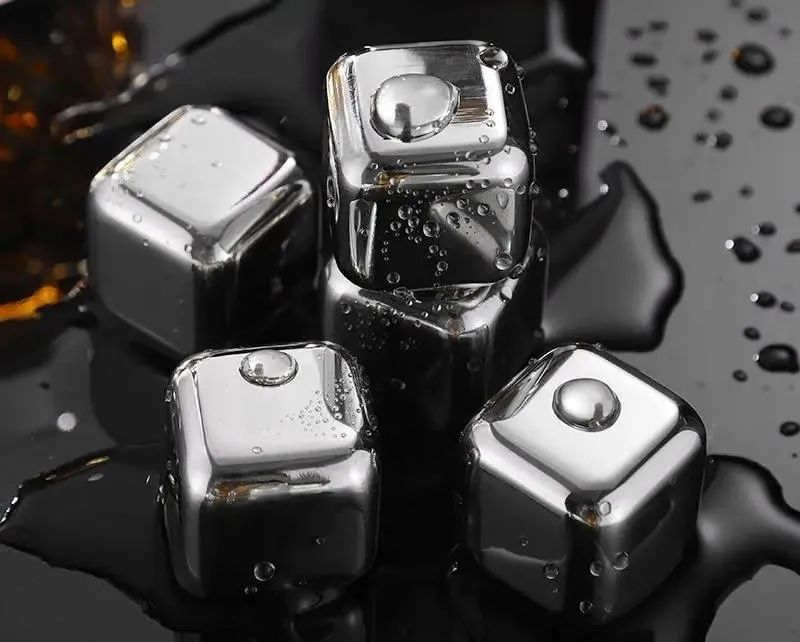
Stainless steel ice cubes, also called stainless steel ice beads by some, usually have an outer layer made of 304 or 316 stainless steel. The inside is not solid; instead, it is sealed with a colorless, odorless liquid, and when shaken at room temperature you can hear the sound of the liquid moving. There are two common types on the market: one is a mixture of water and alcohol, and the other is water and glycerin.
Looking at the structure alone, compared with traditional pure-water ice, stainless steel ice cubes do have several advantages. First, they will not melt as the liquid warms up, so they can stay in the cup the whole time; as long as their temperature is lower than that of the drink, they can continue to provide a cooling effect.
Second, these non-melting ice beads are relatively convenient to use. Ordinary edible ice needs to be frozen in molds 4–6 hours in advance, while stainless steel ice cubes can be taken out and used after about 1 hour in the freezer. After use, just wash them and put them straight back in the freezer to store, then take them out again next time.
But since they are called “ice cubes,” what everyone cares about most is still their cooling capacity and how practical they are in actual use. To answer my friend’s question, Front Street specially bought 4 stainless steel ice beads. Below is a comparison from several angles to see whether this so-called cooling miracle is actually any good in the coffee field.
Comparison of volume/weight/cooling speed
By comparison, the edible ice that Front Street stores normally use is on the larger side, a small cube 2.5 cm wide, with each piece weighing about 30 grams. Stainless steel ice cubes look more compact, shaped like a 1.5 cm wide die, and each piece weighs close to homemade ice, about 29.7 grams.
Then, following the merchant’s suggestion (1 stainless steel ice cube gives the best cooling effect for 50 ml of drink), Front Street took two identical glasses, poured 100 ml of drinking water into each, and measured the water temperature at room temperature as 27°C. Next, 1 homemade ice cube and 2 stainless steel ice cubes were placed into the two glasses of room-temperature water respectively, and the cooling process was observed and recorded.
In the first two minutes after adding the ice, both glasses of water began to cool rapidly, but the homemade ice cooled noticeably faster. At 2 minutes 30 seconds, the homemade ice group had dropped to 12°C, while the stainless steel group had only dropped to 19°C. Also, metal ice is denser and sinks directly to the bottom of the glass, so the lower layer of water cools first while the surface water has not yet cooled down. After five minutes, the edible ice had almost completely melted and absorbed heat, bringing the water temperature down to 8.1°C; the stainless steel ice group had no change in liquid volume, but the temperature still remained at 16°C.
Front Street then replaced the two glasses of water with room-temperature cola and milk. Although the cooling range differed slightly, the stainless steel ice cubes were far slower than homemade ice in every case.
This shows that although metal ice cubes have the advantage of not turning into water, their cooling effect is mediocre, and it is very difficult to use them in the cooling step of coffee extraction—after all, iced pour-over has another name: “flash-chilled pour-over.” So if they are used to keep brewed iced coffee cold, is the effect long-lasting?
Let’s try a pot of iced pour-over
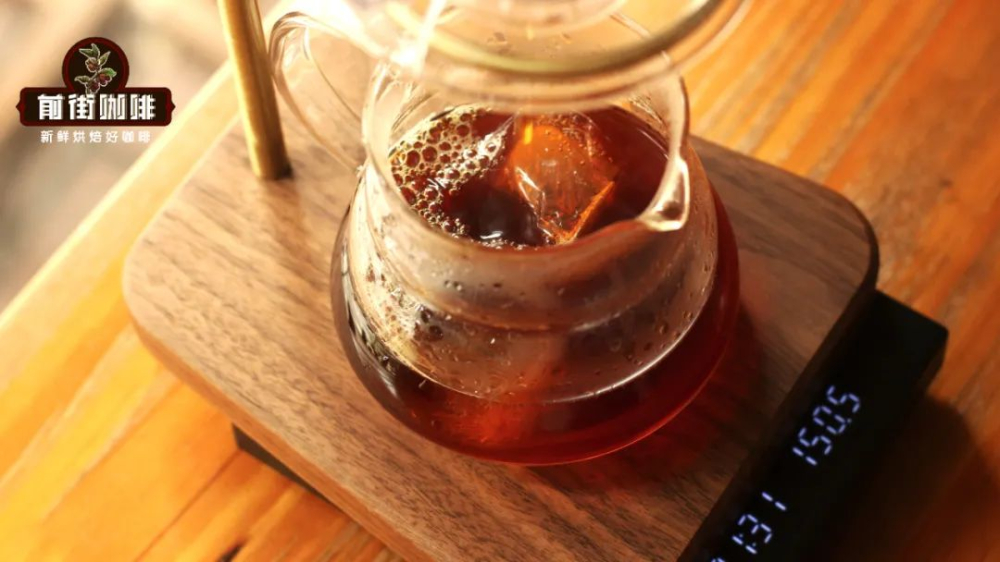
Considering that the stainless steel ice cubes on hand were not enough and their cooling speed was rather slow, and wanting the coffee to achieve a better iced taste and flavor, Front Street adjusted the original iced pour-over method by replacing 2 of the clear ice cubes with 4 stainless steel ice cubes.
This adjustment had two goals: first, to reduce the watery dilution caused by too much ice melting; second, to hopefully cool the coffee as quickly as possible while maintaining a moderate flavor concentration.
Coffee beans: Sidamo · Huakui 8.0 Dose: 16 g Coffee-to-water ratio: 1:10 (160 g hot water) Ice: 180 g (2 homemade ice cubes + 4 stainless steel ice cubes) Grind size: Ek43s setting 9.5 Water temperature: 92°C Dripper: V60
Pouring technique: three-stage pour
For comparison, Front Street also used the regular iced pour-over method (adding 120 g ice, i.e. 4 cubes) to extract the same coffee beans with the same parameters. Finally, the two pots of coffee were poured into pre-prepared ice cups.
In terms of taste, the mixed-ice pour-over coffee was tasted at 18.9°C. It was not icy on entry but rather slightly cool, with aromas of raisins, sweet orange, and black tea, a round mouthfeel, and it began to warm up after about 17 minutes.
The second pot, the pure-ice group, relied only on homemade ice for cooling. The coffee liquid almost instantly dropped to an iced mouthfeel of 6.9°C the moment it was swirled, with aromas of citrus, blueberry, and cranberry, and the fruit acidity was clearer. As all the ice melted into water, the coffee gradually began to warm up after 11 minutes, and the earlier flavors also weakened slightly.
Taking all factors into account, as a new type of reusable ice, stainless steel ice beads are actually hard to replace traditional edible ice in terms of cooling effect, taste support, practicality, or safety (they easily crack glass). And when these requirements are placed in the coffee brewing step, the role of ice is immediately obvious. For this reason, Front Street suspects this is why few coffee shops use stainless steel ice cubes in their drinks~
- END - Front Street Coffee
No. 10, Baoqian Street, Yandun Road, Dongshankou, Yuexiu District, Guangzhou, Guangdong Province
The above content is compiled by CoffeeHunters, a coffee news website.


