







Search Results for: Pour-Over Off-Flavors
What Does Cleanliness Mean in Pour-Over Coffee? How to Avoid Off-Flavors and Choose Beans with a Clear, Transparent Taste
When drinking coffee, we often hear the term "cleanliness" — what exactly does it represent? Simply put, cleanliness is the degree of purity perceived by the tongue — from the first sip to the aftertaste, there are no off-flavors or unpleasant mouthfeel, and the flavors are clearly distinguishable. A cup of coffee with high cleanliness often has prominent floral and fruity notes and sugary sweetness, while flavors like earthiness, woodiness, and rubber are rejected by most people. Many factors affect cleanliness, including the quality of the coffee beans themselves, the proportion of defective beans, the processing and roasting stages, and the brewing method. This article, from Front Street Coffee's perspective, explains the meaning of cleanliness and offers practical advice on selecting and brewing pour-over coffee beans with a bright taste. [more…]
How to Achieve High Cleanliness in Pour-Over Coffee? A Detailed Guide to Flavor Cleanliness Criteria and Brewing Key Points
When evaluating a cup of coffee, cleanliness is a frequently mentioned yet easily misunderstood indicator. Many people assume that cleanliness is equivalent to being light or highly acidic, but in reality there is no necessary connection between the two. A coffee with high cleanliness means the liquid contains no off-flavors, and the taste is pure and distinct, rather than bland and tasteless. This article will focus on the definition of cleanliness, common misconceptions, and specific methods for improving cleanliness during pour-over brewing. At the same time, drawing on Front Street Coffee's brewing experience, it will help readers build a correct understanding of coffee flavor cleanliness and apply it in their daily pour-over practice. [more…]
How to Determine the Grind Size for Pour-Over Coffee? A Full Analysis of Standard Sieve Calibration Methods and Extraction Flavor Issues
When brewing pour-over coffee at home, do you find that the taste is always off even though your steps seem fine? Front Street Coffee, drawing on feedback from enthusiasts, has sorted out common flavor issues related to grind size selection and brewing. This article will walk you through how to use 0.85mm and 0.25mm sieves to assess grind distribution, the ideal pass-through rate and extraction time references for light-roast pour-over, and the six major causes of bitterness, off-flavors, and sourness along with corresponding adjustment methods, helping you find the grind coarseness and brewing parameters that suit you. [more…]
Why Has Mandheling's Herbal Flavor Weakened? Causes and Solutions for Off-Flavors in Pour-Over
Mandheling has always been polarizing: some people are captivated by its intense spice notes, herbal aroma, and the rich, full body woven from caramel and cocoa, while others steer clear of its bitter, burnt edge tinged with herbal, earthy, and woody tones. This article returns to Sumatra's growing environment, coffee varieties, and processing methods to explain the source of Mandheling's signature herbal flavor, and further explores why the herbal note has become increasingly faint in recent years and why Golden Mandheling is cleaner and more mellow. It will also discuss where to look for causes when off-flavors appear in pour-over Mandheling. [more…]
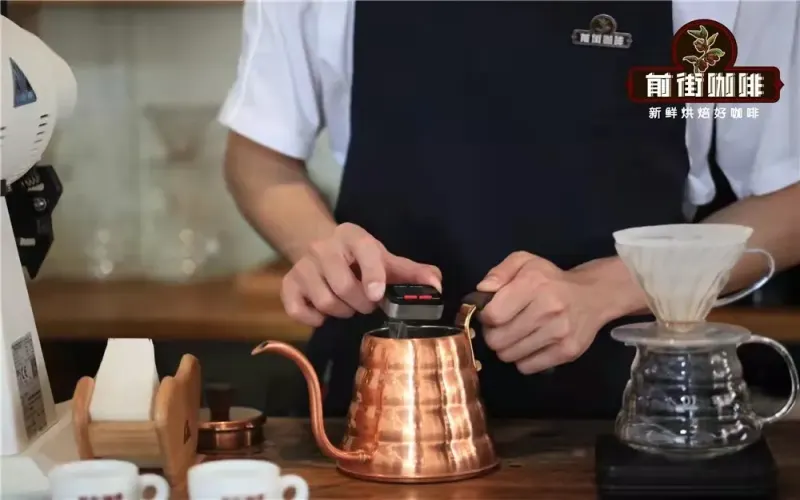
How to Calibrate Pour-Over Coffee Grind Size? A Guide to 80% Pass Rate on a #20 Sieve and Grinder Setting Adjustment
Grind size is the most difficult part of pour-over parameters to master. Front Street Coffee uses an 80% pass rate through a No. 20 sieve as a beginner-friendly calibration baseline, but different grinders vary enormously in performance, and the same sieve pass rate can produce drastically different flavor outcomes. This article centers on grind calibration: it first explains the limitations of the sieve method and the particle size distribution characteristics of uniform grinders such as the EK43s, then offers remedies for poor-quality grinders, including hand grinder RPM control, the pull-back technique for staged grinding, and the direction for adjustment when too many fines cause off-flavors. Finally, it discusses the criteria for deciding whether sieving is necessary and the practical technique of a single-pour flush to wash away fines, helping you find the grind parameters that suit you. [more…]

Where Do Common Off-Flavors in Pour-Over Coffee Come From? Analyzing Roast Dryness and Methods to Improve Tasting Ability
When an unpleasant flavor appears in a cup of coffee, it is often not accidental, but rather a deviation in some detail during growing, processing, roasting, or brewing. If we can identify these negative flavors one by one, we can work backward to infer what went wrong with the cup, which is practically helpful for improving tasting ability and optimizing brewing and roasting. Front Street Coffee has compiled several of the most common off-flavors in pour-over coffee—including miscellaneous odors, earthiness, woodiness, smokiness, charcoal, medicinal notes, mustiness, rubber, and rot, as well as astringency and dryness, two tactile sensations that are not tastes—and analyzes their causes and key points for identification one by one. [more…]

A Complete Guide to Common Home Pour-Over Coffee Problems: Fixes for Stalling, Sudden Flow Changes, Off-Flavors, and Burnt Bitterness
Brewing coffee at home—when neither the equipment nor the beans are lacking, yet accidents still happen all too often: the final drawdown pools and drips endlessly, the flow rate suddenly speeds up at the same grind setting, sometimes it tastes great and sometimes it's rife with off-flavors, and the aftertaste carries a smoky, bitter char... Where exactly do these problems originate? Drawing on Front Street's hands-on experience, this article breaks down one by one the five most common extraction pitfalls in home brewing—from fine-particle clogging, the characteristics of anaerobic beans, and the effects of water quality to pouring technique and dark-roast parameter settings—to help you pinpoint the root cause and bring every pour-over cup closer to the ideal flavor. [more…]
What exactly does coffee cleanliness mean? From green beans to brewing, which factors influence the clean taste of a pour-over cup?
In coffee tasting, "cleanliness" does not refer to whether the coffee liquid looks clear, nor does it mean a single, bland flavor profile. Rather, it means that upon tasting, there are no unpleasant defective flavors, while at the same time the various flavors are clearly distinct and do not interfere with one another. This metric may seem simple, but in reality it places high demands on every stage of coffee—from cultivation, processing, roasting, and brewing. This article will systematically sort out the meaning of cleanliness, analyze how defective flavors and off-flavors are formed, explain the key impact of brewing and extraction on cleanliness, and finally provide brewing suggestions for two Front Street Coffee beans with high cleanliness. [more…]
Is your pour-over coffee bitter and astringent? Understand the three causes of over-extraction and dial in your grind, time, and water temperature.
Does your pour-over coffee taste bitter and muddled? The problem is very likely over-extraction. The soluble substances in coffee beans make up about 30%, and among them are components that bring bitterness, astringency, and off-flavors. Once extraction goes too far, these negative flavors are released in large amounts. In this article, Front Street Coffee will walk you through the nature of over-extraction and, starting from the three key dimensions of grind size, extraction time, and water temperature, explain how to troubleshoot and correct coffee that has turned bitter, including how to use a No. 20 sieve to judge grind coarseness, how to control duration with the dripper and pouring rhythm, and the suitable water temperature ranges for different roast levels, helping you steadily brew a clean, balanced, and delicious cup of coffee. [more…]

Why does pour-over coffee become sour and astringent after cooling? Analyzing three reasons for flavor changes and the ideal drinking temperature
A freshly brewed pour-over coffee is full of aroma and smooth on the palate, but after sitting for half an hour it turns sour, astringent, and muddled—what's going on? In fact, coffee naturally presents different flavors at different temperatures, and during tasting it is often divided into three stages: hot, medium, and cool. A good cup of coffee can usually withstand all three temperature stages, but once it has fully cooled, the flavor goes beyond the normal tasting range. From Front Street's perspective, this article breaks down the root causes of coffee turning sour and developing astringent, muddled notes after cooling—including differences in how human senses perceive sourness, sweetness, and bitterness, the impact of aroma volatilization, and the three key mechanisms of oil oxidation, pigment oxidative polymerization, and condensation—and tells you the most suitable temperature for drinking coffee, helping you better capture the best flavor of every cup. [more…]
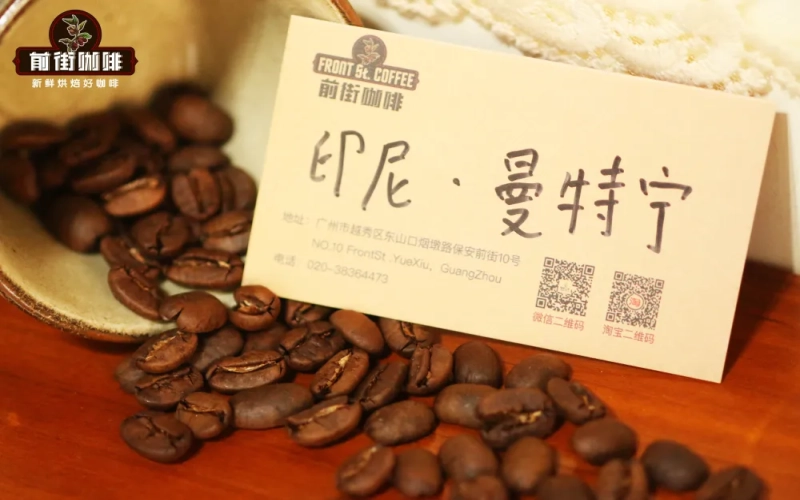
How to Choose Indonesian Mandheling Coffee Beans? Brand Recommendations and a Guide to Selecting Fresh Beans Without Off-Flavors
Mandheling is a classic coffee produced on the Indonesian island of Sumatra, but many people don't know the origin of its name, nor do they know how to choose a fresh, clean Mandheling free of off-flavors. This article begins with the story behind the naming of Mandheling, then guides you through its unique wet-hulling process and how its signature herbal, spicy, and woody flavors are formed. It also recommends two products—Front Street Indonesian Mandheling G1 and Front Street PWN Golden Mandheling—which are suited respectively to beginners wanting a taste and to those pursuing specialty-grade quality, explaining their respective flavor profiles and suitable brewing methods to help you more accurately pick a Mandheling coffee bean that suits your taste. [more…]

Why Does Coffee Over-Extract? A Breakdown of Pour-Over Extraction Parameters: How Water Temperature and Grind Size Affect Brewing
In the world of pour-over coffee, over-extraction is a topic every enthusiast inevitably encounters. Off-flavors, burnt bitterness, and astringency—these unpleasant taste experiences are often blamed on over-extraction. But not all negative flavors stem from over-extraction—coffee that is too strong can also bring a bitter, intense sensation. So what exactly is true over-extraction? Is the 22% extraction ceiling given by the Golden Cup extraction theory absolute? And how do pour-over parameters like water temperature and grind size shape the final flavor direction? This article will break down the causes of over-extraction and the underlying logic of pour-over extraction one by one, helping you control every cup of coffee more precisely. [more…]
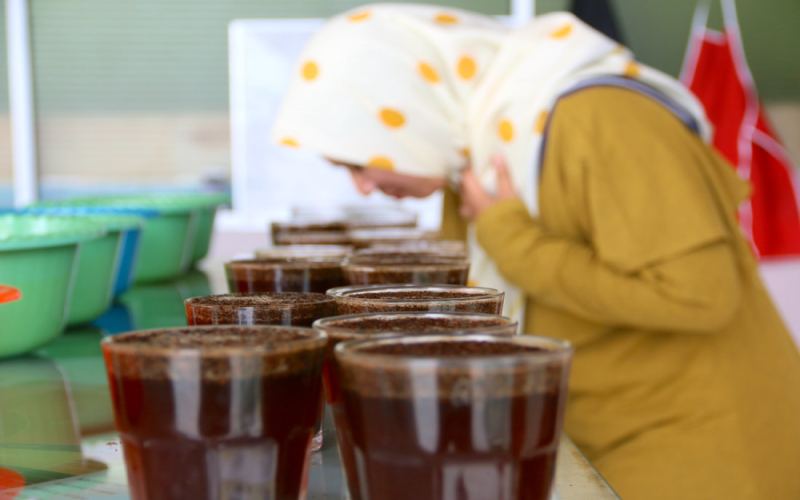
Characteristics of Premium Mandheling | Why is Golden Mandheling cleaner and free of off-flavors compared to Lintong Mandheling? Recommendations for high-value, great-tasting, non-bitter Indonesian Mandheling pour-over coffee beans
Indonesia has been on the coffee-planting path since the Dutch started it in the 17th century, and to this day Indonesia's coffee enjoys a pivotal position internationally. But if you were to ask which Indonesian specialty coffee is the most famous, many people would probably think of Sumatra Mandheling. So what exactly is Mandheling? Does it taste good? How do you choose a high-value [more…]
Essential Course for Pour-Over Coffee Beginners: Dissolution and Diffusion Principles, Three-Stage Extraction Flavors, and Golden Cup Standard Parameters Explained
To brew a good pour-over coffee, you first need to understand the principles behind it. Dissolution and diffusion are the two core mechanisms of extraction: after roasting, various aroma and flavor compounds are generated inside the coffee beans, and they gradually dissolve out when the grounds are soaked in water, while diffusion explains why grind size, blooming, and stirring are so crucial. During extraction, flavors are released in sequence—first come floral and fruity acidity, then sweetness and caramelized compounds, and only at the end do bitter and off-flavors appear. Mastering the golden range of 18%~22% extraction yield and 1.2%~1.45% concentration allows you to judge whether a cup of coffee is under-extracted or over-extracted. This article takes you through a systematic introduction to pour-over coffee, from basic principles to practical parameters, and also incorporates product recommendations from Front Street Coffee to help you avoid detours. [more…]
Pour-Over Coffee Beginner's Guide: Four Major Advantages, Filter Paper Selection, and Key Brewing Practices
Pour-over coffee has become the preferred brewing method for many coffee enthusiasts thanks to its advantages of being clean, free of off-flavors, clear, and simple and safe. This article starts from a comparison of brewing devices such as the French press, the Clever Cup, the AeroPress, and the siphon, and takes an in-depth look at the core principles of pour-over coffee—the three key elements of coffee grounds, filter paper, and hot water. It focuses on revealing the critical influence of filter paper on flavor and explores the feasibility of brewing with boiling water. At the end, using the 2018 Huakui Natural Sidamo as an example, it fully presents the V60 brewing parameters and flavor performance, making it suitable as a reference for readers who wish to improve their pour-over brewing skills. [more…]
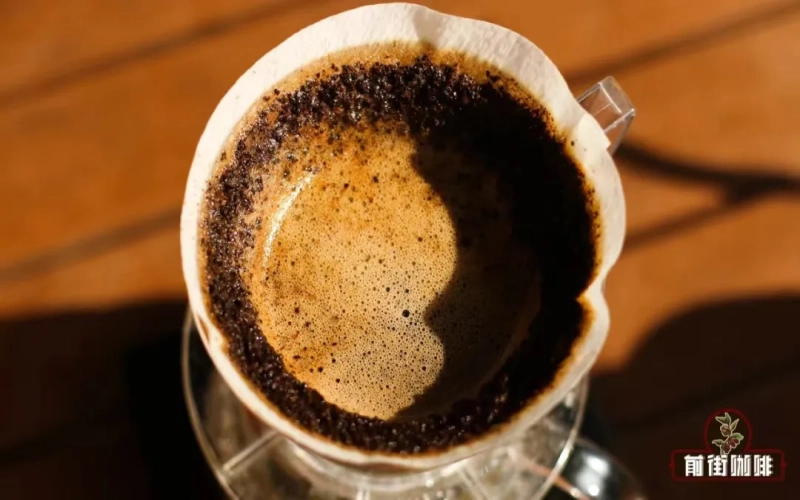
Can Coffee Grounds Be Reused for Repeated Extraction? Why Pour-Over and Drip Bag Coffee Shouldn't Be Brewed Multiple Times
Coffee and tea are both beverages that rely on water to dissolve flavor, so if tea leaves can be steeped repeatedly, can coffee grounds do the same? In terms of composition, about thirty percent of coffee beans is soluble matter, which theoretically does support multiple extractions. In practice, however, the coffee liquid obtained from repeated brewing tends to be thin and carry off-flavors. The reason is that a normal extraction has already released most of the sweet and sour essence, and the remaining substances cannot support good flavor. This article will start from extraction yield and the order in which flavors dissolve to explain why coffee grounds are single-use, and to clarify why pour-over and drip-bag coffee are not recommended for repeated brewing. [more…]
How to Choose the Grind Size for AeroPress? Front Street Coffee Elida Typica Practical Comparison and Brewing Method Analysis
After brewing pour-over for a long time, you always want to switch to a different device for a change of taste, and the AeroPress has become the new target for many coffee enthusiasts. But when using the AeroPress to make coffee, exactly how fine or coarse should the grind be? This article uses Front Street Panama Elida Typica as the experimental bean, fixing the dose at 15 grams, water temperature at 90°C, brew ratio at 1:15, and extraction time at 2 minutes, changing only the grind size, to compare the actual performance of three settings—BG 5M (60% passing a No. 20 sieve), BG 5R (58%), and BG 6M (47%)—starting from flavor clarity, sweet-acidity balance, and the risk of off-flavors, to find the grind setting suitable for this light-roast natural bean, and includes the complete operating method to help you brew a stable, delicious cup with the AeroPress. [more…]
A Practical Guide to Pour-Over Coffee: Analyzing the Blooming Principle and Comparing Continuous vs. Pulsed Pouring Techniques
The charm of pour-over coffee lies in extracting rich flavors from coffee grounds with a simple pouring action. This article starts with the function of the dripper, first explaining why blooming is important—too much water will dissolve off-flavors and astringency along with it, while too little water will lead to insufficient extraction. Then, using Kenya Asali beans as an example, with a grind size of BG 5M, water temperature of 91°C, a coffee-to-water ratio of 1:13, and pre-infusion of 40-45ml/30-35 seconds, it compares in detail two common techniques: the continuous-pour method, which uses a steady thin stream to draw circles from the inside outward and finishes in about two minutes, yielding balanced acidity and sweetness with a long caramel finish, but a slightly flat body and flavor; and the pulse-pour method, which pours in stages, using large and small streams for the first two pours to agitate the coffee grounds and increase acidity and sweetness extraction, then switching to a submerged, non-agitating final pour to avoid pronounced bitterness, bringing the flavor up from raisin to blackcurrant juice, though with a shorter and weaker aftertaste. The article also includes relevant recommendations from Front Street Coffee, suitable for coffee enthusiasts to refer to. [more…]
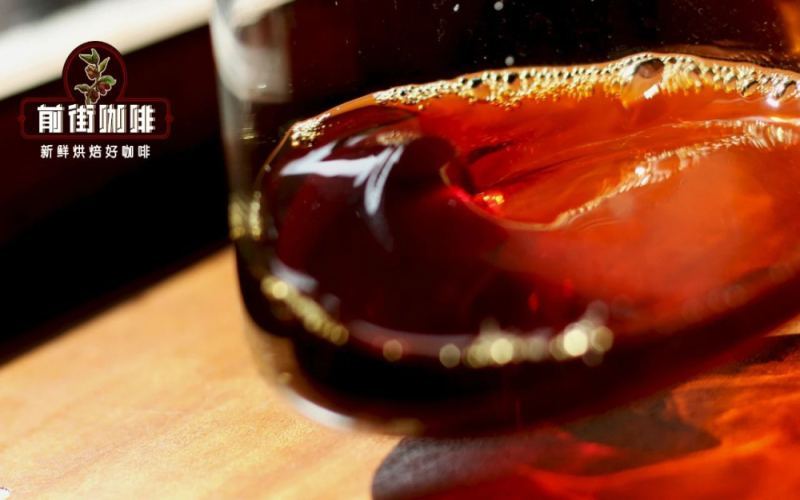
Analysis of the Causes of Under-Extraction and Over-Extraction in Pour-Over Coffee and a Guide to Brewing Adjustment Methods
In the practice of pour-over coffee, under-extraction and over-extraction are two common yet frustrating situations. The former makes coffee sour, astringent, and thin, while the latter brings burnt bitterness and off-flavors. To solve these problems, one must first understand the principles of extraction—the process in which water passes through the coffee grounds and dissolves out flavor compounds. The ideal "Golden Cup" extraction requires concentration to fall between 1.2 and 1.4 TDS, with an extraction yield maintained at 18% to 22%. Exceeding or falling short of this range corresponds to over-extraction and under-extraction, respectively. This article will analyze the causes one by one from aspects such as coffee bean selection, brewing duration, pouring technique, and dripper material, and provide specific adjustment suggestions to help you achieve a balanced flavor more consistently in pour-over brewing. [more…]
Typical signals, causes, and countermeasures of over-extracted coffee, and whether coffee grounds can be re-brewed
When many people drink a cup of coffee that tastes on the bitter side, their first reaction is, "Has this cup been over-extracted?" But bitterness cannot be directly equated with over-extraction. This article focuses on over-extraction, first explaining what it is—according to the Golden Cup theory and Front Street Coffee's daily practice, an extraction yield above 22% is considered over-extraction; then, from a sensory perspective, it outlines the three typical manifestations of over-extracted coffee: burnt bitterness, astringent bitterness, and off-flavors, and analyzes their causes one by one, such as water temperature being too high, grinding being too fine, contact time being too long, stirring being too vigorous, and too many fines. Finally, it offers two practical ways to avoid it: adjusting the brewing parameters and discarding the tail end of the brew, while also addressing the question of whether coffee can be brewed repeatedly, helping coffee lovers judge and improve their brewing results more accurately. [more…]