








What Actually Counts as Coffee Over-Extraction?
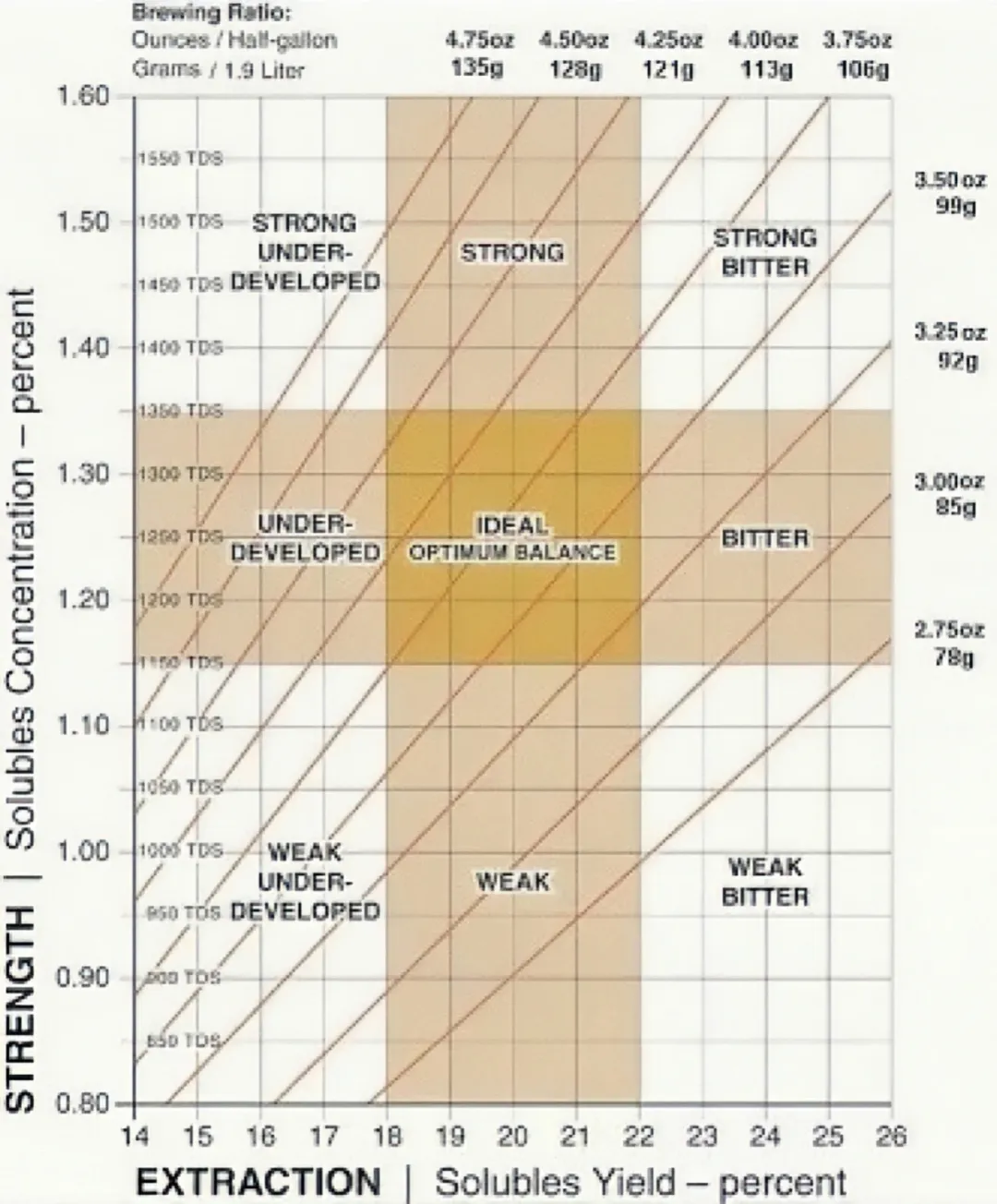
Over-extraction means an extraction yield above roughly 22 percent, the ceiling in the Golden Cup extraction theory. Within the 18 to 22 percent range, most people find the cup tastes good; past 22 percent, unpleasant flavors appear. Off-flavors, burnt notes, bitterness and astringency are the usual signs, but not every harsh taste comes from over-extraction.
Coffee brewed too concentrated also tastes sharply bitter, which is a strength problem rather than over-extraction. In coffee brewing, water temperature, grind size and other pour-over parameters steer the final extraction yield and flavor, so controlling those variables is more useful than blaming every unpleasant note on extraction alone.
In the world of pour-over coffee, over-extraction is a topic every enthusiast inevitably encounters. Off-flavors, burnt bitterness, and astringency—these unpleasant taste experiences are often blamed on over-extraction. But not all negative flavors stem from over-extraction; coffee that is too strong can likewise bring about a harsh bitterness. What exactly is true over-extraction? Is the 22% extraction ceiling given by the Golden Cup extraction theory absolute? How do pour-over parameters like water temperature and grind size steer the final flavor? This article will break down the causes of over-extraction and the underlying logic of pour-over extraction one by one, helping you control each cup of coffee more precisely.

Indeed! Once coffee is over-extracted, it often presents certain unpleasant flavors or mouthfeels, and these negative expressions are enough to make one reject the drink—even find it hard to swallow. Precisely for this reason, avoiding over-extraction becomes a top priority in the coffee brewing process.
Off-flavors, burnt notes, bitterness, and astringency—these are the common taste characteristics of over-extracted coffee. Because over-extraction causes such a wide variety of negative effects, people are especially sensitive to it, and over time an ingrained way of thinking easily forms—whenever an uncomfortable taste is encountered, it is all attributed to over-extraction. Yet this is not the case; not all unpleasant bitterness comes from over-extraction.
For example, when coffee concentration is too high, the flavors become overly clustered, forming an intense bitterness. This kind of bitterness does not fall under the category of over-extraction. So the question arises: what kind of coffee truly counts as over-extracted?
There are mainly two ways of understanding the definition of over-extraction. Let us start with its original source—the over-extraction described in the Golden Cup extraction theory.
The Golden Cup extraction theory states that coffee's extraction yield (and concentration) has a range that is most widely favored. As long as the extraction yield is kept between 18% and 22%, most people will find the coffee tastes good, because within this range negative flavors rarely appear.
Once the extraction yield exceeds 22%, the coffee easily releases unpleasant tastes. Therefore, when the extraction yield is above 22%, it is judged as over-extraction in the traditional definition.
However, practice shows that not all coffee with an extraction yield above 22% develops an off-putting taste. This depends largely on the composition of the substances contained in the coffee beans themselves. So today we tend to define over-extraction by flavor performance—when bitterness, astringency, off-flavors and other undesirable tastes appear in the coffee, it is deemed over-extraction, rather than relying solely on the number of the extraction yield.
If over-extraction happens only occasionally, that is entirely normal. After all, ambient temperature and humidity are always changing, and the condition of the coffee beans themselves keeps changing too; we cannot guarantee that the same set of parameters will suit every bean. But if over-extraction occurs frequently, that indicates a serious problem with your extraction plan.
The above content is compiled by CoffeeHunters, a coffee news website.


