





Why Has Mandheling Coffee Lost Its Herbal Flavor?
Mandheling splits drinkers. Fans come for spice aromas, herbal notes and a thick mouthfeel of caramel and cocoa; critics find only bitter, burnt character with herbal, earthy and woody tones. In recent years the herbal flavor has grown fainter, and Golden Mandheling is described as cleaner and more mellow, a shift that traces back to growing conditions, varieties and processing on Sumatra.
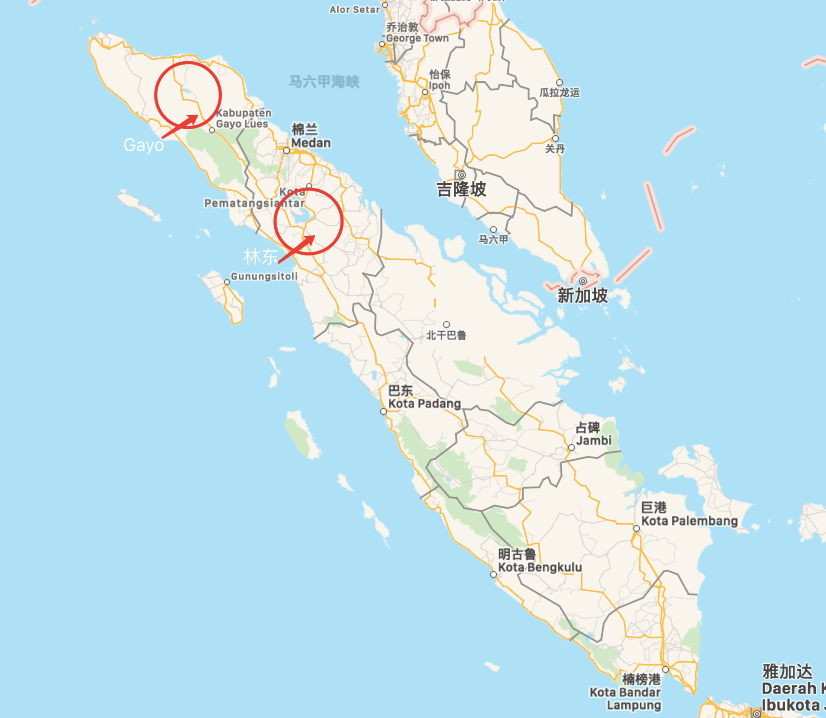
Mandheling is Arabica grown on Sumatra, mainly around Lake Toba and Lake Tawar, in the Lintong and Gayo Mountain areas at roughly 1,100 to 1,600 meters. The Dutch expanded plantations there in the early 18th century with Typica and Bourbon, and after leaf rust struck in 1876 new varieties were introduced, leaving Ateng, TimTim, Typica, Catuai and Robusta in the ground today.
Mandheling has always polarized opinions: some people are captivated by its intense spice aromas, herbal notes, and the thick mouthfeel woven from caramel and cocoa, while others steer clear of its bitter, burnt character tinged with herbal, earthy, and woody tones. This article returns to Sumatra's growing environment, coffee varieties, and processing methods to explain the source of Mandheling's signature herbal flavor, and further explores why the herbal taste has become increasingly faint in recent years and why Golden Mandheling is cleaner and more mellow. It will also discuss where to look for causes when off-flavors appear in pour-over Mandheling.
For more specialty coffee knowledge, please follow the WeChat official account: Front Street Coffee (FrontStreet Coffee)
Mandheling is a coffee bean with highly divided reviews. Those who love it are captivated by its bold spice notes, herbal fragrance, the sweet aroma of caramel interwoven with cocoa, and its exceptionally thick mouthfeel; those who dislike it often find that beyond its bitter, burnt character, it carries flavors of herbs, earth, and wood.
To understand where Mandheling's unique herbal aroma comes from, we need to look at three aspects: the growing conditions of its origin, the coffee varieties, and the green bean processing methods.
Mandheling coffee refers to Arabica coffee grown on the island of Sumatra. The main producing areas are distributed around Lake Toba and Lake Tawar, with the Lintong region being well-known around Lake Toba, and the Gayo Mountain region being familiar around Lake Tawar. The local altitude ranges from about 1,100 to 1,600 meters, which is suitable for cultivating high-quality coffee. In the early 18th century, the Dutch expanded coffee plantations to Sumatra, giving this land a very long history of coffee cultivation.

Variety may be one of the reasons Indonesian coffee exhibits herbal and earthy notes. In the 18th century, the Dutch planted varieties such as Typica and Bourbon on the island. By 1876, leaf rust broke out on a large scale, forcing the Indonesian authorities to introduce new varieties from around the world to maintain coffee production. Since then, Indonesia has become a melting pot of coffee varieties.
Currently, common varieties on Sumatra include Ateng (local Catimor), TimTim (local Tim), Typica, Catuai, and Robusta. Mandheling's main varieties, Ateng and TimTim, carry Robusta lineage, making them prone to exhibiting grassy and earthy notes.
However, the most commonly cited explanation for Mandheling's herbal flavor is the region's unique wet-hulling process. The reason wet-hulling is used is that Sumatra has consistently high humidity, with unpredictable alternation between sunny and rainy days. Only by using wet-hulling to compress drying time can coffee bean quality be preserved as much as possible.
The general process of wet-hulling is: first use a depulper to remove the outer skin and pulp of the coffee cherries, then wash the beans. If the weather cooperates, after just three to four days of drying, the moisture content of the beans can drop to around 30% to 40%. At this point, the beans are in a semi-soft, semi-hard state. Then a huller is used to remove the parchment on the surface, followed by several more days of drying until the moisture content reaches 12% to 13%. If the natural sun-dried method were used, the entire process could take three weeks.
So why has Mandheling's herbal flavor become increasingly weak today? Among the many Mandhelings, Golden Mandheling almost no longer carries herbal and earthy notes, instead presenting a mellow, clean, and translucent mouthfeel.
Golden Mandheling is a product under the green bean company Pawani, and its trademark was registered as early as 2003. Pawani itself does not participate in cultivation but instead visits various producing regions to find the best-quality coffee beans in Indonesia. Currently, Pawani's Golden Mandheling comes from Gayo Mountain in Aceh. Similarly, this Golden Mandheling's variety is also Ateng, which likewise contains Robusta genes, but the cup does not have the earthy funk of Catimor. Therefore, some experts believe Ateng has adapted to Indonesia's terroir, while others believe Ateng is a backcross of Catimor and Typica, with Robusta genes further diluted.
In terms of processing method, although everyone calls it wet-hulling, the actual operations may differ considerably. For example, whether removing the parchment at different moisture contents changes the flavor; whether more meticulous drying—away from the ground, turned multiple times, and dried evenly—can reduce earthy and herbal notes. The detailed processing steps are not known to outsiders, but Front Street can indeed see different characteristics in the green beans.
In the 2018 Golden Mandheling, the "goat hoof bean" characteristic was relatively obvious; starting in 2020, Golden Mandheling's "goat hoof beans" became fewer. This should be the result of improvements in the processing flow.
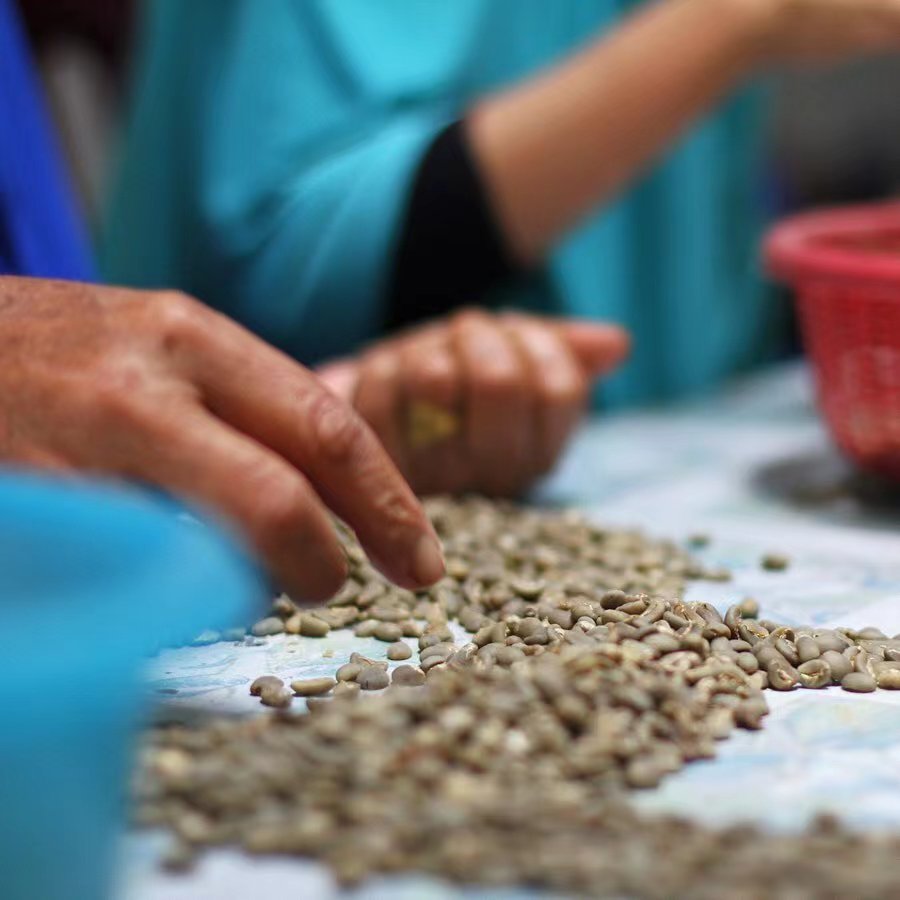
Golden Mandheling is also considerably more expensive than ordinary Mandheling because Pawani, after purchasing green beans, performs three rounds of hand sorting to remove defective beans, small beans, and beans with poor appearance. What remains are large, plump beans with few defects. This measure improves the coffee's cleanliness.
The above content is compiled by CoffeeHunters, a coffee news website.


