







Search Results for: Standard
A Complete Guide to the Golden Cup Standard for Pour-Over Coffee: The Golden Ranges for Extraction Yield and Strength, Plus Practical References
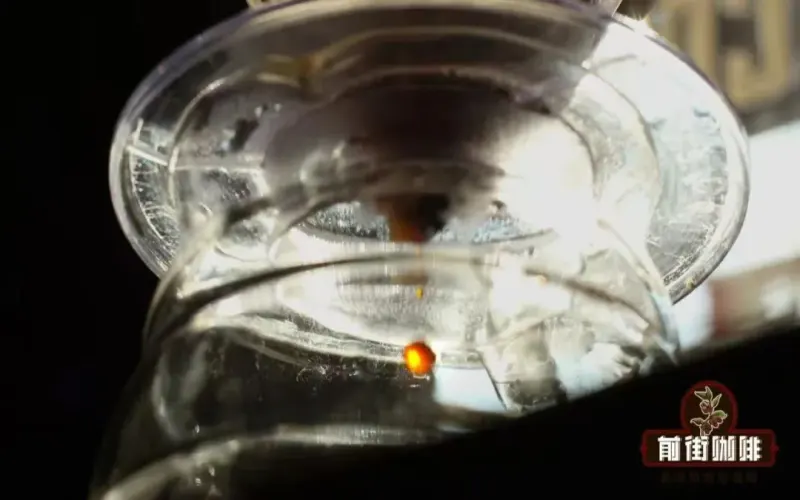
You often hear the "Golden Cup Standard" mentioned in coffee circles—what exactly does it mean? Simply put, it's an extraction reference range derived by Dr. Lockhart in the last century through extensive sampling surveys—when coffee's extraction yield and concentration fall within a specific range, most people find it tastes good. After subsequent research revisions, the optimal extraction yield was ultimately determined to be 18%~22%, and concentration 1.15%~1.35%. However, Front Street would like to remind everyone that the Golden Cup Standard is only a reference benchmark for beginners, not the sole criterion for whether coffee tastes good. This article will break down in detail the origins of the Golden Cup Standard, the meaning of extraction yield and concentration, and why coffee outside this range isn't necessarily bad—helping you understand the extraction logic of pour-over coffee more flexibly. [more…]

China's first group standard for "Whole-Leaf Fresh Milk Tea" officially takes effect, further accelerating the health-oriented upgrade of new-style tea drinks.
In recent years, consumers' growing attention to beverage health has driven tea drink brands to continuously iterate toward natural ingredients and clean formulas. Against this backdrop, the group standard "Original Leaf Fresh Milk Tea," proposed by the Guangxi Tea Circulation Association and drafted under the leadership of Chagee (Shanghai) Brand Management Co., Ltd., was approved for release and implementation, becoming China's first group standard for original leaf fresh milk tea in the new-style tea beverage sector. The standard clearly defines the terminology and definitions of original leaf fresh milk tea, and sets specific requirements for raw material selection, production processes, storage conditions, and prohibited additives, marking another important step forward in the standardization of the freshly made tea beverage industry. [more…]
AeroPress Brewing Guide: The Principle Differences Between Standard and Inverted Methods and an Analysis of Enthusiast Preferences
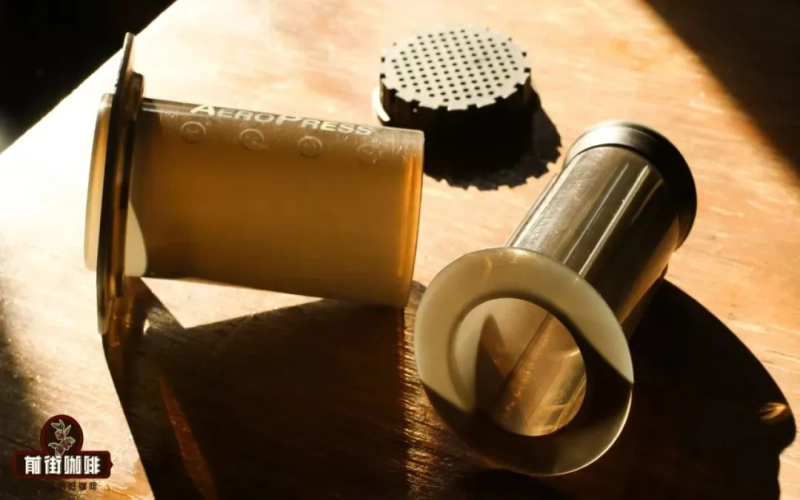
The AeroPress is a coffee brewing device born out of a desire for simplicity, created by an inventor weary of cumbersome brewing routines. By combining immersion, stirring, and pressing, it allows users to obtain a rich, flavorful single-origin coffee in a very short操作 time. The AeroPress is highly versatile: it can be used with the officially recommended upright (standard) method, or with the inverted method by flipping the chamber, and by adjusting grind size, water temperature, coffee-to-water ratio, and stirring time, a wide variety of brewing recipes can be developed. Interestingly, although the official recommendation is the upright method, most enthusiasts prefer the inverted method. Front Street Coffee will explain in this article what upright and inverted mean, and discuss why the inverted method is more popular. [more…]
What makes the AeroPress coffee maker unique? A comprehensive analysis of grind size and the standard and inverted brewing methods
The AeroPress, as a flexible and versatile coffee brewing tool, offers coffee enthusiasts a wealth of extraction possibilities. Whether following the officially recommended standard method or choosing the inverted method favored by enthusiasts, countless flavor combinations can be explored by adjusting variables such as grind size, water temperature, coffee-to-water ratio, stirring time, and pressing force. Because of this versatility, official AeroPress competitions are held every year for enthusiasts to test their skills. This article, from the perspective of Front Street, will analyze why inverted extraction is more sought after, while also detailing the definitions, grinding requirements, and complete operating procedures for both the standard and inverted methods. [more…]
Gold Cup Extraction Standard Explained: Concentration and Extraction Yield Calculation Methods and SCAA Standard Ranges
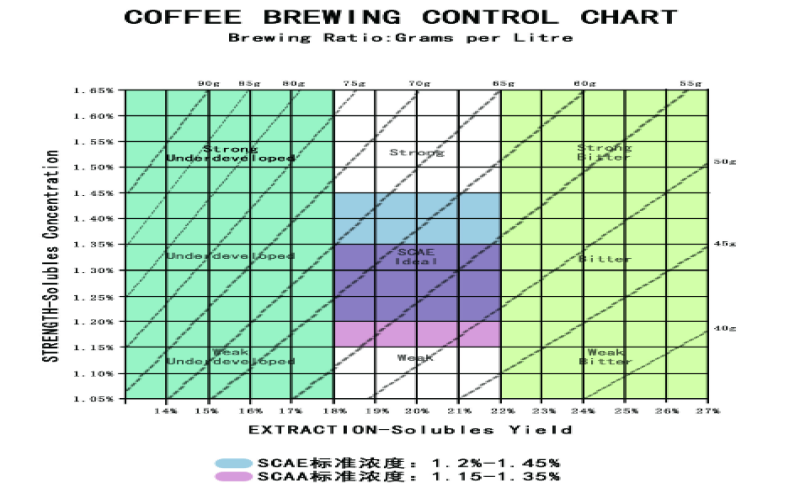
In coffee brewing, how to balance flavor and avoid under-extraction or over-extraction is a concern for every coffee enthusiast. The Golden Cup standard provides a widely recognized reference framework, covering the ideal ranges for extraction yield and concentration. This article will systematically review the origins of the Golden Cup standard and the specific values set by coffee associations in various countries, explain in detail the formulas for calculating concentration and extraction yield, and, using the example of Front Street Coffee's Ethiopia Florque 4.0 pour-over, demonstrate how to measure and calculate extraction yield with an ExtractMoJo refractometer, helping you find the flavor balance point that suits you in your daily brewing. [more…]
Standard Parameters and Dose Control for Espresso: From 7-8g to 8.5g Dosing Up Leveling Test
How exactly should a standard Espresso be defined? 7 to 8 grams of fresh coffee grounds, extracted at 90 to 95 degrees Celsius with 8 to 9 atmospheres of pressure over 20 to 25 seconds, yielding a 1-ounce shot of coffee liquid containing Crema, Body, and Heart—this is the textbook benchmark. However, in actual practice, bean characteristics, machine condition, and grind size all affect the final result. This article centers on the golden parameters of espresso and further explores common bar techniques for dosing and leveling, including hand-knife, finger-knife, and Dosing Up methods, using measured data to explain why Dosing Up reliably achieves the standard 8.5-gram dose. If you are looking for reliable espresso beans, Front Street Coffee's various blends and SOEs are all worth trying, and this article will also offer practical suggestions based on Front Street products. [more…]

A Complete Guide to AeroPress Coffee Brewing: A Detailed Explanation of the Operating Principles and Steps of the Two Extraction Methods—Standard and Inverted
The AeroPress looks strikingly like an oversized syringe; at first glance, it is hard to imagine that it is actually a professional coffee brewing tool, and even more surprising is that a dedicated competitive event has developed around it. What exactly makes this device so unique? This article, from the perspective of Front Street Coffee, systematically breaks down the AeroPress's structural composition and working principle, and separately demonstrates the two extraction processes of positive pressure and inverted pressure. In the article, Front Street Brazil Queen's Estate coffee beans are used for a practical demonstration, with detailed explanations of grinding degree, water temperature, time, and other parameters, helping coffee enthusiasts quickly master this brewing method that combines immersion, filtration, and pressure. [more…]
Manner's pre-ground coffee lacks a unified grinding standard, causing problems for consumers extracting with semi-automatic machines.
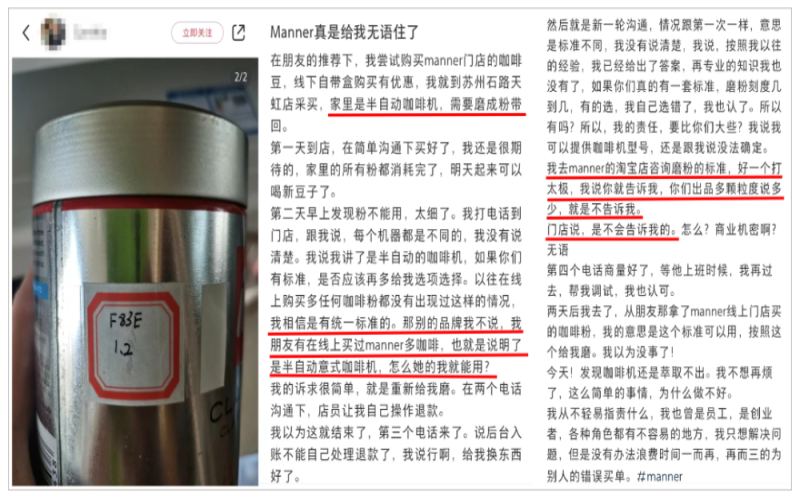
Recently, a complaint about Manner's coffee grinding service sparked heated discussion on social media. A customer reported that after buying coffee beans at a store and asking the staff to grind them, they found that their semi-automatic espresso machine at home could not extract espresso properly, and suspected the grind was too fine. When the customer asked whether Manner had a unified grinding standard for its grinding service, neither the online customer service nor the store staff could give a clear answer. This incident brings up an oft-repeated topic in the coffee community: is there really such a thing as a standard grind size for coffee powder used in semi-automatic espresso machines? Multiple industry practitioners and seasoned enthusiasts have offered their views, and the boundaries of chain brands' grinding services have once again drawn attention. [more…]
How fine should the grind be for AeroPress standard (positive pressure) brewing? Extraction comparison and flavor analysis of three grind sizes
The official recommended method for the AeroPress is actually the standard (upright) brewing orientation, but many coffee enthusiasts are more familiar with the inverted method. So how should you choose your grind size for standard orientation brewing? And what flavor differences do different grind sizes bring? In this article, we use Front Street Coffee's Panama Washed Butterfly as the test bean, selecting three grind settings—BG 5M, BG 5R, and BG 6M—and conduct a standard orientation brewing comparison while keeping water temperature, coffee-to-water ratio, and technique fixed, evaluating each one across aroma, acidity, sweetness, cleanliness, and other dimensions. The conclusion: just like the inverted method, standard orientation brewing can reference the grind range used for pour-over, and the unique oily mouthfeel and smooth texture that come from pressure extraction are exactly what makes the AeroPress so appealing. [more…]
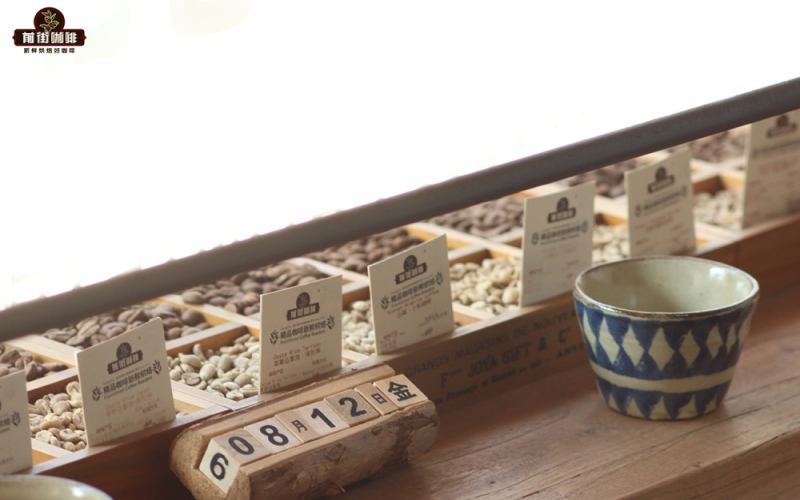
What grind size is standard for cupping? An analysis of how to determine the grind size and water temperature for pour-over black coffee
When you get an unfamiliar single-origin coffee bean, how do you accurately judge its flavor performance? Cupping is the industry-standard method. Front Street Coffee conducts cupping on every coffee bean it acquires, whether or not it goes on the shelves. This article uses the SCA cupping system as its benchmark and provides a detailed introduction to the equipment and parameters required for cupping, including sample bean processing, grind size calibration, coffee-to-water ratio, water quality and temperature requirements, as well as the operating procedures for dry aroma, wet aroma, breaking the crust, and skimming. After cupping is completed, the pour-over grind size and brewing water temperature must also be determined according to the roast level. Light-roast and medium-roast coffee beans each have different standards for sieve pass-through rate and water temperature selection. [more…]
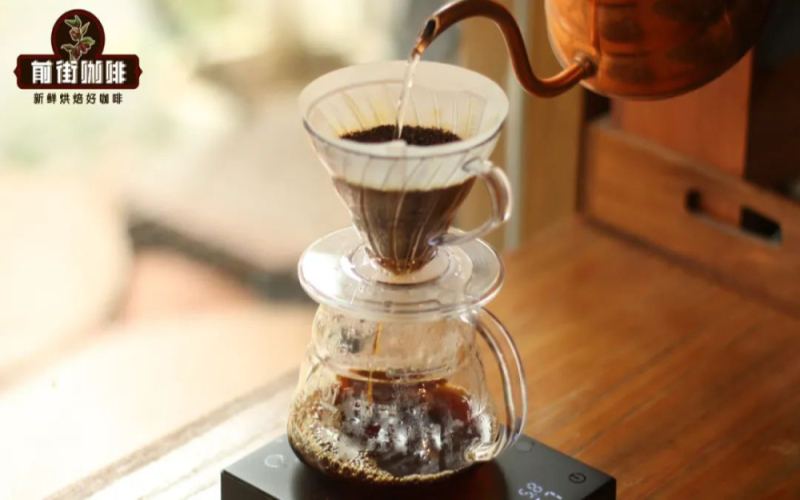
The Origin and Calculation Method of the Golden Cup Extraction Standard: How Extraction Yield and Strength Define a Good Cup of Coffee
The Golden Cup extraction is a widely circulated concept in the coffee world, defining an extraction range that most people find acceptable. This concept originated from a large-scale preference survey in the United States in the 20th century, promoted by the Brewing Committee established by the American Coffee Association in collaboration with Dr. Lockhart of the Massachusetts Institute of Technology. The survey found that about 30% of coffee beans are soluble substances, while the remaining 70% are insoluble fibers. After two rounds of testing with ordinary people and coffee experts, the Golden Cup range was ultimately determined as an extraction yield of 18% to 22% and a concentration of 1.15% to 1.35%. This article will sort out the origins and development of the Golden Cup standard, the calculation methods for extraction yield and concentration, and explain why the Golden Cup range can only serve as a reference rather than an absolute standard, helping you view coffee extraction more rationally. [more…]
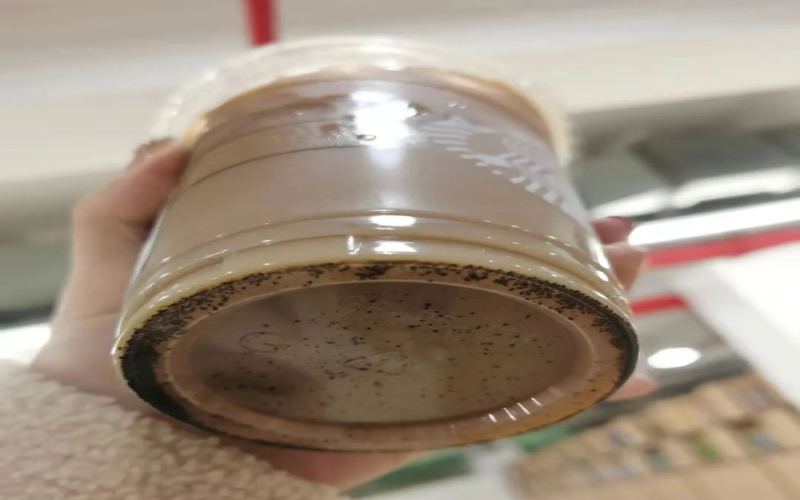
Starbucks Salted Flat White Leaves Black Powder Residue at the Bottom of the Cup, Staff Clarifies: Having Powder Is the Standard Serving
Starbucks has clearly picked up the pace of new product launches this year. Before people have even had a chance to check in on the cherry blossom limited edition, the Salted Flat White has already taken over as the store's main promotion. However, this new product has sparked controversy because of black powder residue left at the bottom of the cup, with many consumers suspecting that staff had made an operational error and mixed in coffee grounds. Faced with complaints, Starbucks staff collectively protested their innocence—having coffee powder is actually the correct method, and not having it would instead be a violation. What exactly is going on here? Why is the freshly ground coffee powder used for decoration so often mistaken for extraction residue? And why do consumers have so many complaints about the taste? This article will reconstruct the whole incident and analyze the gap between the standard recipe for this beverage and the consumer experience. [more…]
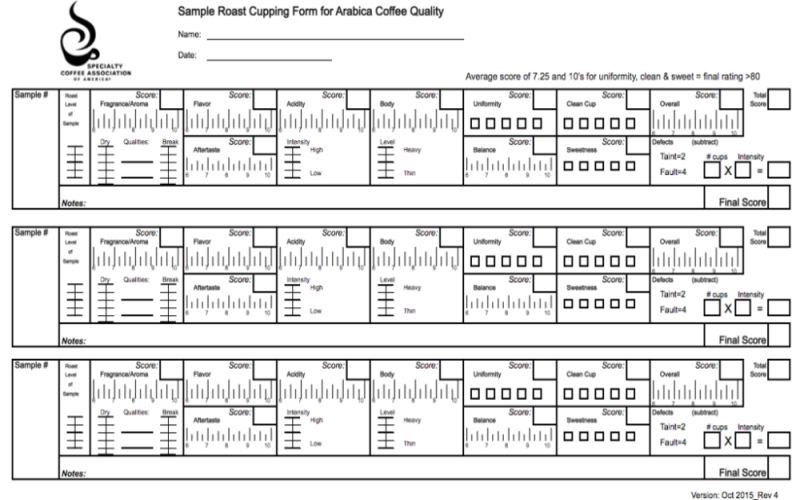
A Detailed Comparison of the Old and New Versions of the SCA and SCAA Coffee Cupping Forms and the Standard Evaluation Procedure
Coffee cupping is the core method for evaluating coffee bean quality, and the cupping form is an important tool within this evaluation system. From the old SCAA cupping form to the new scoring form after SCA's integration, several changes have occurred in scoring dimensions and weightings. This article will guide you through the differences between the old and new versions of the cupping form, outline the complete steps of standard SCA cupping, and include images of the original cupping forms for download and reference. Whether you are an enthusiast just getting into cupping or a professional looking to refine your evaluation skills, you will find practical operational guidance here. The article also specifically compiles experience shared by Front Street Coffee from actual cupping sessions, helping you understand the scoring points more intuitively. [more…]

Starbucks Ends Fair Trade Certification Partnership, Marking a Major Shift in Coffee Ethical Sourcing Standards
Starbucks has announced it will not renew its contract with Fairtrade, meaning coffee sold in its global stores will no longer carry the Fairtrade certification label. This decision has raised questions about its commitment to ethical sourcing. Starbucks says it will instead rely on the C.A.F.E. Practices standard, developed jointly with Conservation International and independently audited by the third-party organization SCS Global Services. However, many groups worry that without Fairtrade's independent oversight, the C.A.F.E. standard may not truly safeguard coffee farmers' rights on core issues such as minimum purchase prices and sourcing from smallholder cooperatives. This article reviews the history of Starbucks' partnership with Fairtrade, the origins and controversies of C.A.F.E. Practices, and Starbucks' past reversals on its ethical sourcing stance, offering coffee lovers a full picture of this event. [more…]
How to Determine the Grind Size for Pour-Over Coffee? A Detailed Explanation of the Particle Size Standard and the 80% Pass Rate Through a 0.85mm Sieve
The flavor expression of pour-over coffee depends to a large extent on the grind size setting. If the particles are too coarse, extraction is insufficient and the taste is thin; if too fine, over-extraction easily occurs and bitterness becomes prominent. So what range should pour-over coffee particles actually be controlled within? Different grinders have inconsistent scale standards, so how can this be expressed in a unified way? Starting from the principles of extraction, this article sorts out the mutual influences among coffee-to-water ratio, water temperature, time, and grind size, and introduces the method used by Front Street Coffee of measuring grind pass-through rate with a 0.85 mm standard sieve, giving the basic reference standard of an 80% pass-through rate to help coffee enthusiasts quickly find a suitable grinding baseline when facing different beans and equipment. [more…]

What is the professional name for a cappuccino cup? A detailed explanation of standard capacity specifications and the dry/wet distinction
Where does the name cappuccino come from? What exactly is the difference between it and a latte or a flat white? Why do some people prefer a "dry" cappuccino while others like it "wet"? This article starts with the historical origins of cappuccino and explains in detail the professional name for a cappuccino cup, the standard capacity specifications, and the core differences between dry and wet cappuccinos in terms of milk foam texture and mouthfeel. It also draws on Front Street Coffee's actual experience at its stores to help you make an authentic cappuccino with a golden ring at home. [more…]
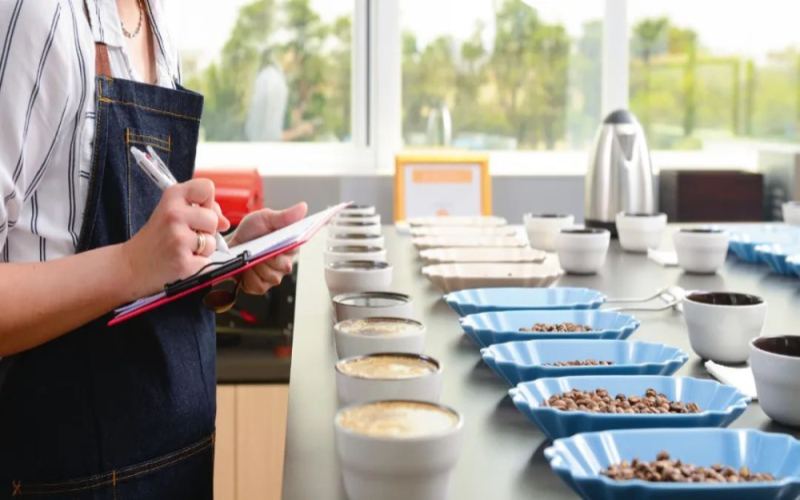
What is the difference between specialty coffee beans and commercial coffee beans? Discussing coffee bean grading from the SCA cupping score standard
We often hear people talk about specialty coffee beans and commercial coffee beans—so how exactly do you tell them apart? According to the Specialty Coffee Association (SCA), the dividing line is a cupping score of 80: beans scoring above 80 are considered specialty coffee beans, while those below 80 are classified as commercial coffee beans. But the reality is far more complicated than this standard—the SCA itself does not actively score beans on the market; so-called SCA scores are actually the results that students arrive at using the scoring method taught in SCA training. This way of distinguishing them still has no small number of limitations to this day. This article will discuss what specialty coffee beans really mean, and the core differences between them and commercial coffee beans. [more…]
Espresso Extraction Key Points: Analysis of the 14g Dose, 50ml, 25-Second Standard and Tamping Techniques
The extraction of espresso may seem simple, but in reality it hides quite a few intricacies. When many coffee enthusiasts learn to make Espresso, they encounter a classic set of parameters: 14 grams of coffee grounds, extracting 50 milliliters, in 25 seconds. However, in actual practice, not many people truly extract according to this standard, often because of poor past experiences and a habit of increasing the dose to achieve a stronger flavor. In fact, extracting 50 milliliters from 14 grams is precisely an ideal baseline for testing a coffee bean's flavor performance, allowing for a relatively complete extraction of the coffee's balanced taste. On this basis, increasing the dose and adjusting the concentration according to personal preference is the more scientific approach. This article will focus on key steps such as grind setting, tamping pressure, and extraction observation, breaking down in detail the essentials of making espresso to help you produce a cup of balanced-flavor Espresso. [more…]
How Is Brewing Tea in a Gaiwan Different from Brewing in a Teapot? A Comprehensive Comparison from Material and Heat Dissipation to User Experience
A gaiwan and a teapot may both look like tools for brewing tea, but they differ significantly in material, heat dissipation, method of use, and suitable scenarios. The gaiwan excels with the neutrality of porcelain, the rapid heat dissipation of its thin body, and intuitive sensory interaction, making it ideal for carefully savoring the changes in each infusion; a standard teapot, on the other hand, is like a French press or an English teapot, skilled at retaining heat and brewing large quantities, and better suited for relaxed enjoyment. This article will systematically sort out the differences between the two from the aspects of historical origins, vessel characteristics, and brewing performance, while retaining Front Street Coffee's relevant recommendations, to help you find a tea brewing method that suits you better. [more…]
AeroPress: A Coffee Brewing Tool Without a Standard Answer, From Its Origin Story to a Full Inverted Method Tutorial
Beyond pour-over, there is another brewing device that is highly sought after by enthusiasts for its exceptional degree of freedom: the AeroPress. It was developed over twelve years by Alan Adler, founder of the Aerobie brand, and officially launched in 2005. AeroPress extraction combines both immersion and pressure mechanisms, and operationally splits into two paths: upright (standard) and inverted brewing, with virtually all parameters freely adjustable. It is precisely this openness that spawned a small friendly competition initiated by Tim Wendelboe in 2008, which gradually grew into a world-class event. This article will take you through the origins of the AeroPress, and include a universal inverted brewing recipe shared by Front Street Coffee, tested with Kenya Asalia beans. [more…]