







Coffee Cleanliness: From Green Beans to Brewing
Coffee cleanliness refers to the absence of unpleasant defective flavors and a clear separation of distinct tastes in the cup. It is not about the visual clarity of the liquid or a thin, bland flavor. Achieving cleanliness requires careful attention at every stage: cultivation, processing, roasting, and brewing. Defective flavors can arise from unripe cherries, poor processing that causes mold or over-fermentation, and uneven roasting that produces smoky or hay-like notes. Off-flavors also reduce cleanliness, making the coffee less enjoyable.
Brewing and extraction play a key role in highlighting or masking cleanliness. Proper techniques, such as using filtered water and controlling grind size and time, help preserve clean flavors. For those seeking high-cleanliness coffees, Front Street Coffee offers options like green Geisha beans from Panama. These beans, when brewed as pour-over or hand brew, can showcase bright acidity and clarity. Understanding what does bright acidity mean in coffee further helps appreciate how clean flavors express themselves in a well-extracted cup.
In coffee tasting, "cleanliness" does not refer to whether the coffee liquid looks clear, nor does it mean the flavor is single and bland. Rather, it means there are no unpleasant defective flavors upon tasting, while all flavors are clearly distinct and do not interfere with each other. This metric may seem simple, but in reality it places high demands on every stage of coffee from cultivation, processing, roasting, to brewing. This article will systematically sort out the meaning of cleanliness, analyze how defective flavors and off-flavors form, explain the key influence of brewing and extraction on cleanliness, and finally provide brewing recommendations for two high-cleanliness beans from Front Street Coffee.
The cleanliness referred to here is neither about whether the coffee liquid looks transparent, nor does it mean the coffee tastes thin and lacks layers. Rather, it means that after tasting, there are no unpleasant defective flavors, and the various flavors of the coffee are not muddy but can be clearly distinguished. Although it may sound not difficult to achieve, in reality it places quite harsh demands on coffee quality. From cultivation, processing, roasting all the way to brewing—in other words, every step from seed to cup—needs to be treated carefully and meticulously.
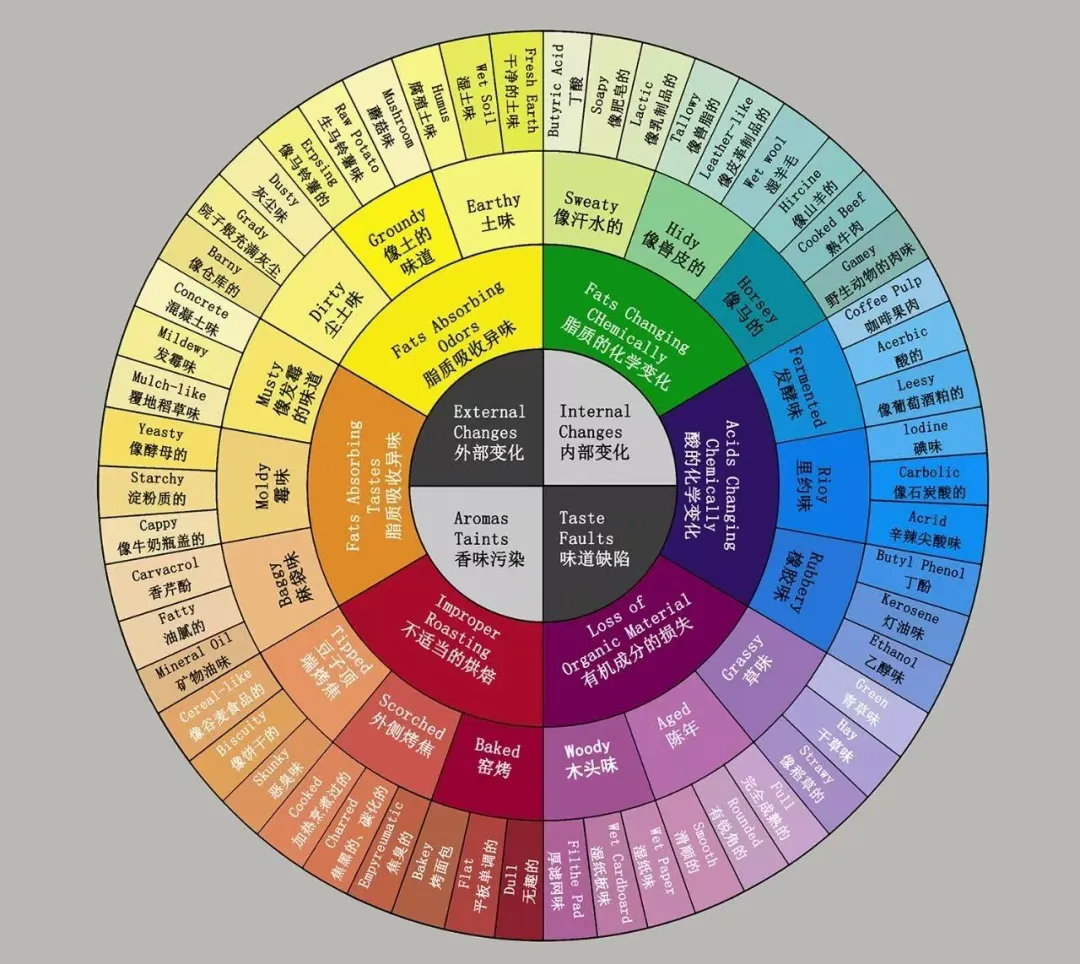
In the era before the concept of specialty coffee became widely popular, exported coffee beans often carried some unpleasant flavors due to overly rough handling methods by farmers at origin. In the old SCAA flavor wheel, a "negative flavor wheel" was specifically set up to categorize defective flavors.

The so-called negative flavor wheel refers to the fact that the flavors listed on this version of the flavor wheel are all defective flavors recognized by the industry as unappealing and capable of causing discomfort upon tasting. As Front Street Coffee mentioned earlier, these defective flavors can arise at every stage of the coffee industry chain. For example, if unripe fruits are mixed into coffee beans, the coffee will exhibit grassy or straw-like notes, mainly because unripe cherries were picked during harvest; or if care during the processing stage is not meticulous enough, causing the coffee to mold or over-ferment, this brings negative notes such as mustiness; another example is uneven roasting causing scorching on the bean surface, which introduces smoky notes, while insufficient roast development tends to produce hay-like flavors...
In addition to defective flavors, off-flavors also affect coffee cleanliness. Off-flavors are a concept relative to cleanliness; they include defective flavors but are not limited to them. For example, when Front Street Coffee is tasting a cup of coffee dominated by fruit notes such as berries and citrus, if it finds nutty, cocoa, or toasted bread-like flavors mixed in. These flavors themselves are not negative, but when they appear in a coffee with fruit as the main axis, they tend to make it feel chaotic and insufficiently clear—like a cup that has everything in it but is arranged haphazardly. This can likewise be classified as a manifestation of insufficient cleanliness.
With the arrival of the specialty coffee era, people at every stage of the industry chain are paying attention to coffee quality. Whole ripe cherry harvesting has become a basic requirement in the vast majority of producing regions, and processing techniques in each region are increasingly refined, basically helping us avoid undesirable flavors from the source as much as possible. As downstream coffee end consumers, as long as we choose a trustworthy roaster (for example... Front Street Coffee is quite reliable
), then our attention can almost be placed on the final brewing stage. Because bean scouts and roasters have already screened and checked at each level, it is basically unlikely that poor-quality beans will end up in your hands.
Of course, the brewing and extraction stage should not be underestimated either. For coffee cleanliness, proper extraction is equally crucial. In most cases, a cup of coffee with unsatisfactory cleanliness and excessive off-flavors is the result of improper extraction. For example, when doing pour-over, we may cause over-extraction due to factors such as too high water temperature, too fine grinding, too long time, or too much agitation from pouring, causing excessive release of bitter macromolecular substances, ultimately making the coffee's flavors suppressed by messy tastes such as woodiness and bitterness.
In addition, things like brewing equipment not being cleaned thoroughly and retaining oil residue, filter paper having too strong a pulp smell, or coffee beans being too fresh and carrying a "dry" sensation will all cause off-flavors in the coffee and lower its cleanliness. Therefore, it is not only the extraction parameters; various details in the brewing process also need to be strictly controlled. Only in this way can a cup of high-cleanliness coffee be brewed.
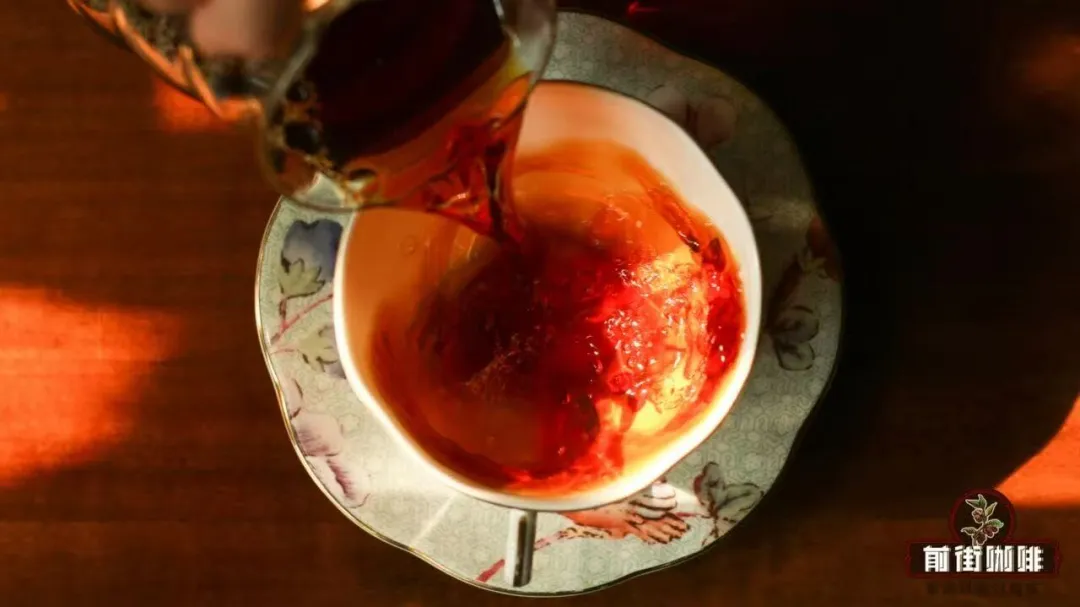
But overall, as long as the selected coffee beans are of excellent quality and the extraction parameters are reasonable, the brewed coffee will basically have relatively high cleanliness. If you also want to experience a cup of coffee with outstanding cleanliness, you might try the Front Street Coffee Panama Emerald Estate·Washed Green Label Geisha and Front Street Coffee Ethiopia·Natural ALO from the Front Street Coffee bean list. With 92°C water temperature, a 1:16 coffee-to-water ratio, an extraction time of 2 minutes to 2 minutes 20 seconds, and a grind size reaching a 75%~80% pass-through rate on a No. 20 sieve, you can get coffee with very high cleanliness. The former clearly reveals the aromas of citrus, jasmine, and green tea upon tasting, while the latter's flavors present mango, pineapple, and magnolia. Both have a flavor profile dominated by sweetness and acidity, with a creamy and smooth mouthfeel, and a clean, bright, and uplifting cleanliness. - END - Front Street Coffee Frontstreet coffee
No. 315, Donghuadong Road, Dadong Street, Yuexiu District, Guangzhou, Guangdong Province
The above content is compiled by CoffeeHunters, a coffee news website.


